Tickets Utah Riders Get Most Often
There’s nothing quite like the thrill of exploring Utah’s vast and varied terrain on your ATV or UTV. But as exciting as hitting the trails or cruising through a trail-friendly town can be, the buzz can quickly turn into a headache if you find yourself on the wrong side of the law. Nobody wants a ticket ruining their adventure, especially when many common infractions are completely avoidable. This guide is here to walk you through the most frequent tickets Utah riders receive, so you can stay safe, legal, and stress-free on your next outing.
Riding Unregistered or Without Current Paperwork
This is probably the number one reason I hear about riders getting stopped and ticketed. It's easy to get caught up in the excitement of a new machine or just plain forget when your renewal is due. But an unregistered or improperly documented OHV is a beacon for law enforcement, and it's something they're always on the lookout for, whether you're at a popular trailhead or just taking a short hop down a street.
Expired or Missing Registration
The most straightforward violation is simply having an expired registration or no registration at all. Maybe you just bought a used machine and haven't gotten around to transferring the title and registering it in your name yet. Or perhaps life got busy, and that renewal notice slipped your mind. Whatever the reason, if your OHV isn't currently registered with the state of Utah, you're at risk. Officers can easily check registration status, and if it's not current, they'll issue a citation. This isn't just about the sticker; it’s about the underlying paperwork being up to date. Many riders don't realize how quickly this can happen. You might think, "Oh, I'm just riding on my buddy's property for a bit," but if you cross any public land, even momentarily, you're fair game. Make it a habit to check your registration dates annually, just like you would your car. It’s a simple preventative measure that saves a lot of grief. For a deeper dive into the repercussions, check out [Penalties for Riding Unregistered in Utah].
Incorrectly Displayed or Missing Decals
Even if your registration is current, if you haven't properly displayed your OHV decal, you could still face a ticket. Utah requires that these decals be affixed correctly to your machine in a visible location. For ATVs, that’s usually on the rear fender or a clear, flat surface where it's easily seen. For UTVs, it might be on the side panel or front hood. The idea is that an officer should be able to quickly verify your registration without having to search for it. [Utah OHV Decals and Where They Go] provides a great overview of where exactly those stickers need to be. Riders often lose decals due to pressure washing, rough riding, or simply forgetting to apply them after renewal. A decal that’s peeling, illegible, or not in its designated spot is just as bad as not having one in the eyes of the law. Always take a moment before heading out to ensure your decal is securely in place and clearly visible. A quick visual check can prevent an unnecessary stop and a frustrating ticket, saving you from a potential fine like the one discussed in [The Fine for an Expired OHV Registration in Utah].
Lacking Proof of Registration on the Trail
Beyond the decal, you need to carry proof of your current registration with you whenever you're operating your OHV on public lands or approved roads. This usually means the physical registration card that comes from the DMV. While some officers might accept a clear photo on your phone, it's always best to have the original document or a high-quality copy. [What Paperwork Utah Riders Must Carry] explains this in detail. Imagine you're deep in the backcountry, enjoying a beautiful day, and a ranger stops you for a routine check. If you can't produce proof of registration, even if your machine is registered, it can lead to a citation for not having the required documentation. It’s a common oversight, often because riders assume the decal is enough. Don't take that chance. Keep your registration card, and your OHV education certificate if you're under the age requiring one, in a waterproof bag in a secure compartment on your machine.
Street-Legal Conversion Mistakes and Road-Riding Violations
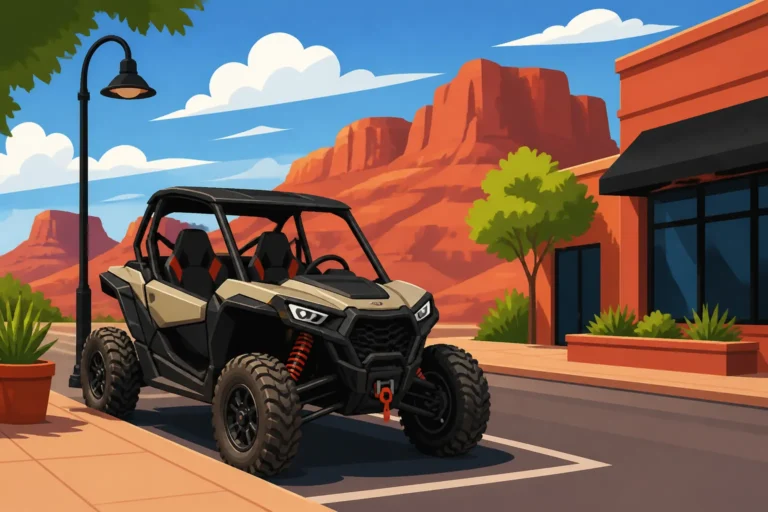
Making your UTV street-legal in Utah opens up incredible possibilities, allowing you to connect trails, ride through charming towns, and explore more of our beautiful state. However, with that freedom comes a whole new set of rules, and many riders get tripped up on the specific equipment requirements or simply forget they’re now sharing the road with cars.
Missing or Non-Compliant Street-Legal Equipment
Utah has very specific requirements for what constitutes a street-legal OHV. It's not just about slapping a license plate on it. You need proper turn signals, a horn, mirrors on both sides, a windshield or eye protection, headlights, tail lights, and often mud flaps, among other things. Riders sometimes cut corners here, either unknowingly or hoping they won't get caught. For instance, using just hand signals instead of proper turn signals is a no-go. Or having a small mirror that barely gives you a view might not pass muster with an officer who's looking for compliance. Many riders turn to aftermarket companies like SuperATV for their street-legal kits because these kits are often designed with state-specific regulations in mind, helping ensure you have all the necessary components. Even small details, like a license plate light, can lead to a ticket if overlooked. It’s easy to focus on the big items and forget the smaller ones, but law enforcement checks for all of it. [Utah Street-Legal ATV Equipment Requirements] dives deep into every piece of equipment you'll need. Don't wait until you're pulled over to realize your setup isn't up to snuff.
Speeding and Noise Violations in Trail Towns
When you're accustomed to open trails and wide-open spaces, it can be easy to forget the lower speed limits and noise restrictions in towns. Popular OHV-friendly towns like Moab, Kanab, or Marysvale have specific ordinances to manage the impact of OHVs on residents and other visitors. Cruising through town at 35 mph in a 15 mph zone, or revving your engine loudly, will definitely attract attention. [Moab's Speed Limit for OHVs on City Streets] is a prime example of specific local rules. These aren’t just suggestions; they are enforceable laws designed to keep everyone safe and preserve the peace. Riders often get so excited about the road access that they forget basic traffic etiquette. A loud exhaust, while perhaps fun on the trail, can be a major source of complaints in residential areas and lead to a ticket. Many aftermarket exhaust systems from brands like SuperATV offer options for quieter operation or include spark arrestors that are often also required for trail use. Remember, even if your machine is street-legal, it's still an OHV, and local authorities are often more vigilant about enforcing these rules than they might be for a regular car. Drive respectfully, keep your speed down, and be mindful of your noise. For more on local noise laws, see [Moab's Noise Ordinance and What It Measures].
Operating Without a Valid Driver's License or Insurance
Just because your UTV is street-legal doesn't mean the standard rules of the road don't apply to you. To drive a street-legal OHV on public roads, you absolutely need a valid driver's license, just like you would for any other vehicle. And perhaps even more critically, you need proper insurance. Many riders mistakenly assume their regular OHV liability insurance covers road use, or that their auto insurance will automatically extend. This is rarely the case. Street-legal OHVs require specific insurance coverage that meets Utah's minimum liability requirements for road vehicles. [Insurance for a Street-Legal Machine in Utah] details what you need to know. Getting caught without a license or adequate insurance can lead to significant fines, points on your driving record, and even impoundment of your machine. It’s a serious offense that can turn your fun outing into a major financial and legal headache. Before you ever hit the pavement, confirm with your insurance provider that you have the right coverage for road-legal operation.
Safety and Operating Rules: Age, Helmets, and Impaired Driving
These tickets aren't just about paperwork or equipment; they're about safe operation and protecting yourself and others. Ignoring these rules can lead to serious consequences, not only in terms of fines but also potential injury or even worse. Utah is serious about safety, especially when it involves minors or impaired driving.
Minor Operating Violations: Age and Supervision
Utah has clear rules about the age at which someone can operate an OHV, and whether they need to be supervised or have an OHV education certificate. For instance, children under a certain age are typically prohibited from operating OHVs on public land, and older minors often require direct adult supervision or a completed safety course. [Utah Helmet Rules for Riders Under 18] highlights the rules around protective gear, which often goes hand-in-hand with age-related violations. Parents or guardians who allow minors to operate machines outside these guidelines can be ticketed. It’s easy for families to let kids try out the machine in a seemingly safe area, but if that area falls under public land jurisdiction, the rules apply. Even on private land, if the minor then ventures onto public access, the responsibility falls back on the adult. Always be absolutely sure your young riders meet the age and supervision requirements for where you are riding. For driving street-legal machines, there are also specific age considerations, as seen in [Age to Drive a Street-Legal ATV in Utah].
Helmet Law Infractions
While adults 18 and over might not always be required to wear a helmet when operating an OHV off-road in Utah, the rules change for minors and for any street-legal operation. Anyone under the age of 18 must wear a helmet when riding an OHV on public lands, and if you're operating a street-legal OHV on public roads, helmet laws may apply to all occupants depending on specific circumstances and local ordinances. This is a ticket that law enforcement takes seriously because it directly impacts safety. It’s an easy thing to forget, especially on a hot day or when you’re just doing a quick loop. But that momentary lapse can result in a fine. Don’t gamble with safety or your wallet. Always carry helmets for all riders, especially if there’s a chance you might cross into an area where they are required, or if you have youth riders with you.
Operating Under the Influence (OUI)
This is by far the most serious ticket an OHV rider can receive, and it carries consequences just as severe as a DUI in a passenger vehicle. Operating an OHV, whether on a trail or a street-legal road, while impaired by alcohol or drugs is illegal and incredibly dangerous. [DUI Rules on an ATV in Utah] outlines the specifics, and believe me, they are stringent. It’s all too common to see groups enjoying a few adult beverages around the campfire and then someone decides to take a "quick spin." This is a recipe for disaster and a guaranteed ticket, if not worse. Law enforcement is very aware of this issue, especially in popular riding areas. The penalties include hefty fines, loss of driving privileges (for all vehicles, not just your OHV), and potential jail time. There is zero tolerance for impaired operation. If you’re going to drink, do not get on your machine. Appoint a designated driver or just enjoy the campfire without the engine running.
Common Missteps on the Trail and in Sensitive Areas
Beyond the obvious legal requirements for your machine and your person, there are rules that govern how and where you ride. These often relate to environmental protection, respecting private property, and ensuring everyone can enjoy Utah's incredible outdoors safely and responsibly.
Off-Trail Riding and Resource Damage
Utah's trails are clearly marked for a reason: to protect sensitive ecosystems, prevent erosion, and respect private land boundaries. Riding off designated trails, through washes, or in closed areas is a surefire way to get a ticket. Not only does it damage the environment, but it also reflects poorly on the entire OHV community. Many riders, especially those new to an area, might inadvertently stray from the path. This is why having up-to-date maps, a GPS, or an app like onX Offroad is crucial. Always double-check where you're allowed to ride. The fines for resource damage or trespassing can be substantial, and rangers are actively patrolling these areas. Don't be "that rider" who gives the sport a bad name. Stick to the marked routes.
Open Container Violations
While less severe than an OUI, having an open container of alcohol on your OHV in public areas is also against the law, similar to operating a passenger vehicle. This means no unsealed beer cans, open bottles of liquor, or even a glass of wine in a cup holder. If it's open, it's a violation. Many riders make the mistake of thinking that because they're "off-road," these rules don't apply. However, most public lands and designated OHV trails are still subject to these regulations. This is often a secondary ticket issued if you're already stopped for another reason, but it can quickly add to your troubles. Keep all alcoholic beverages sealed and stored in a cooler until you're safely parked at camp.
Excessive Noise in Quiet Zones or Residential Areas
While we touched on noise violations in trail towns, it's worth reiterating the impact of excessive noise in any area where quiet might be expected. This could be near campgrounds, designated quiet zones, or even passing through remote residential areas that happen to be adjacent to trails. Some aftermarket exhaust systems can be quite loud, which is fine on private land or specific open riding areas, but can be problematic elsewhere. Companies like SuperATV often provide exhaust systems designed to meet sound regulations, but ultimately, the responsibility lies with the rider. If your machine is especially loud, be extra considerate when riding near people or homes. This isn't just about avoiding a ticket; it's about being a good neighbor and preserving trail access for everyone. Consistent noise complaints can lead to stricter regulations and even trail closures, which none of us want.
Here's a quick summary of common violations:
| Violation Category | Common Examples | Potential Consequences (General) | How to Avoid |
|---|---|---|---|
| Registration/Decal | Expired registration, missing decal, no card | Fines, potential impoundment, delayed riding | Annual renewal, proper display, carry documentation |
| Street-Legal Compliance | Missing mirrors, no turn signals, improper lights | Fines, required repairs, off-road only restriction | Install compliant parts (e.g., from SuperATV), verify setup |
| Road Rules | Speeding in town, running stop signs, improper lane use | Fines, points on license, increased insurance | Follow all traffic laws, respect local ordinances |
| Age/Supervision | Minor operating without certificate, no adult supervision | Fines for guardian, rider restriction, safety concerns | Ensure minors meet age/certification rules, provide supervision |
| Safety Gear | No helmet (minors), no eye protection (street-legal) | Fines, increased injury risk | Wear appropriate helmets and eye protection, know local laws |
| Impaired Operation | Riding under influence of alcohol/drugs, open container | Heavy fines, license suspension, jail, machine impoundment | Absolutely NO drinking and riding; keep alcohol sealed |
| Trail Etiquette/Environment | Off-trail riding, littering, damaging resources | Fines, environmental restoration costs, trail closures | Stay on marked trails, "leave no trace," dispose of trash |
It's clear that many of these tickets stem from a lack of awareness or simple oversight rather than malicious intent. By understanding the rules and taking a few proactive steps, you can significantly reduce your chances of getting a ticket and ensure your Utah OHV adventures are memorable for all the right reasons. [What a Utah Trooper Checks at a Trailhead] gives you a peek into what law enforcement is looking for. A little preparation goes a long way!
Disclaimer
This article is for general informational purposes only and does not constitute professional advice. Laws, prices and regulations vary by location and change over time. Consult a qualified professional for guidance on your specific situation.