Taking a UTV Through a Drive-Through
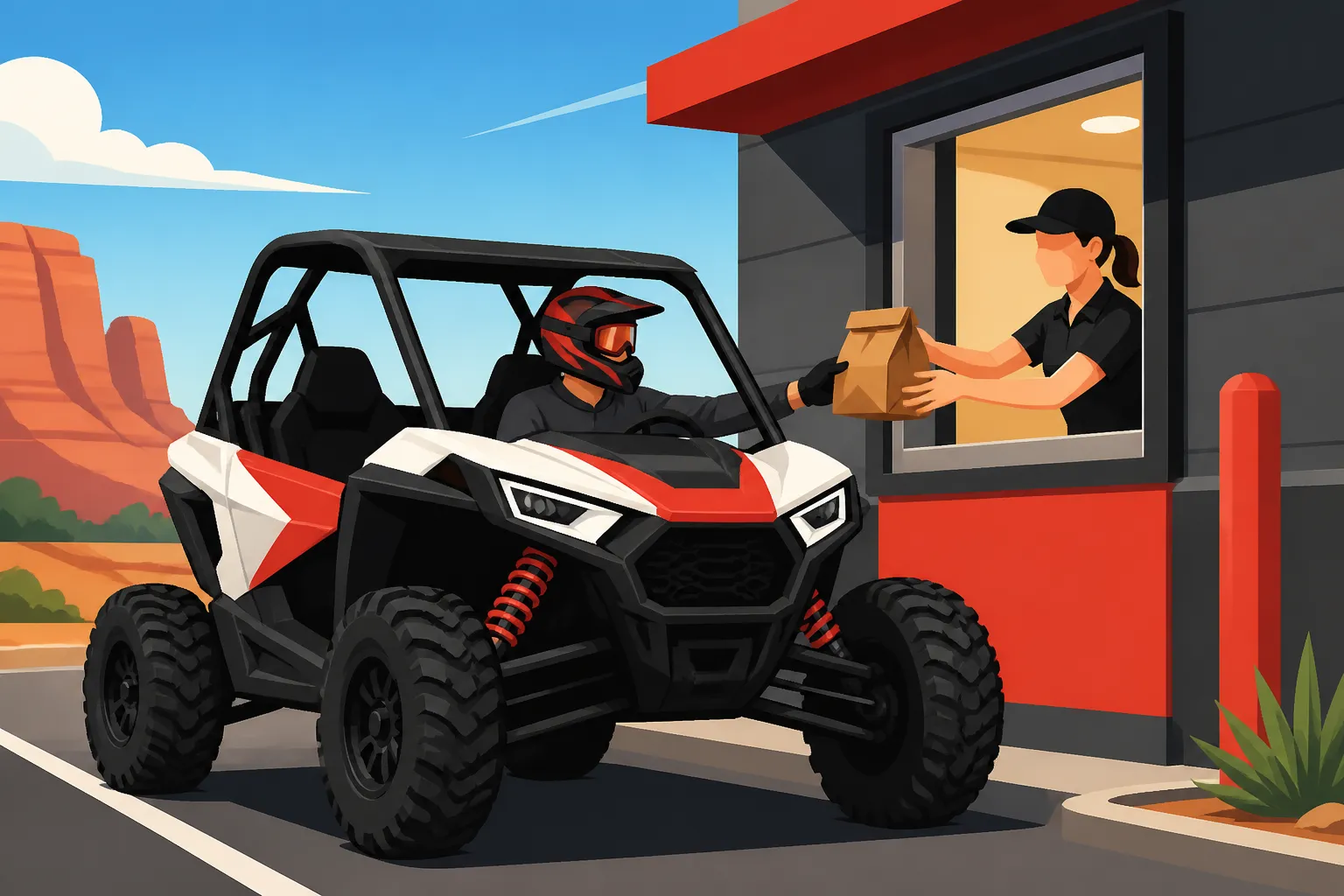
You've been out on the trails all day, dust coating everything, the sun beating down, and suddenly, that craving for a quick burger or a frosty drink hits hard. The idea of peeling off your helmet, shaking off the trail dust, and walking into a restaurant sounds like way too much effort. So, you start eyeing that drive-through lane. Can your UTV actually roll through? This guide will dive deep into the real-world considerations, legal requirements, and practical tips for navigating a drive-through with your side-by-side in Utah, helping you avoid awkward situations and get that well-deserved treat.
The Legalities of Drive-Throughs for UTVs in Utah
Let's be completely honest upfront: if your UTV isn't street legal, the dream of rolling through a drive-through is a non-starter. You simply cannot operate an unregistered, non-street-legal off-highway vehicle on any public road in Utah, and that includes the access roads and parking lots of most businesses. Trying to do so could lead to a hefty fine and a very uncomfortable conversation with a local officer, ruining your post-trail snack plans.
Street-Legal Status: The Absolute Must-Have
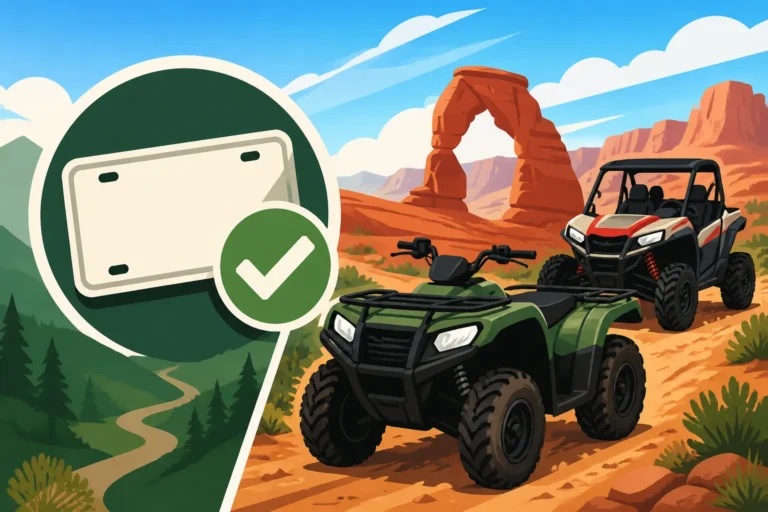
The foundational requirement for even considering a drive-through is that your UTV must be legally street-legal in Utah. This isn't just a suggestion; it's the law. Many riders, especially those new to the sport or visiting from out of state, don't fully grasp the comprehensive nature of Utah's street-legal requirements. It’s not just about slapping on a license plate; it's a full conversion that brings your off-road machine up to road-worthiness standards.
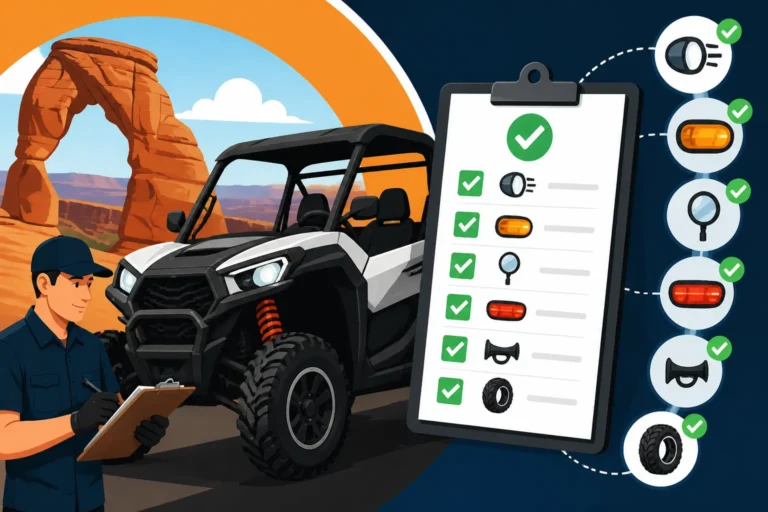
To be street-legal, your UTV needs all the same safety equipment as a regular vehicle. We’re talking about headlights, tail lamps, turn signals for both front and rear, brake lights, a horn, a lighted license plate bracket, at least one rearview mirror (though two are highly recommended for better visibility), and either a windshield or eye protection for all occupants. You also need to meet specific tire requirements, ensure your brakes are in tip-top shape, and have a muffler that keeps noise within legal limits. Your machine will need to pass an inspection by a certified mechanic, who will verify that all these components are correctly installed and functional. Only after passing inspection can you register it as street-legal with the DMV and get your actual license plate. Without that plate, without all those working lights and signals, you’re essentially operating an unregistered vehicle on public roads, and that’s a ticket waiting to happen. You can find a comprehensive breakdown of what's involved in [Making a UTV Street Legal in Utah]. It's a process, but it opens up a whole new world of riding convenience, including those coveted drive-through runs.
Understanding Local Ordinances and Business Rules
Even once your UTV is street-legal, you're not entirely in the clear regarding every drive-through. While statewide laws dictate what makes your UTV legal for the road, individual cities, towns, and even specific businesses can have their own rules or practical limitations. This is where things can get a little nuanced, and frankly, frustrating for riders who just want to grab a quick bite.
Think about the physical layout of many fast-food drive-throughs. They're typically designed for cars and trucks, which means tight turns, narrow lanes, and sometimes low overhangs for signs or awnings. Your UTV, even if it's a standard two-seater, might be wider than a typical sedan. If you’ve got a four-seater or a custom build with wider axles or larger tires, navigating those concrete curbs and tight corners can become a real challenge, potentially leading to scuffs or even more serious damage. Beyond the physical constraints, some businesses might have policies against UTVs in their drive-throughs, simply because it's not what they're accustomed to. While rare for street-legal machines, it’s not entirely out of the question for a manager to ask you to park and walk inside, especially if your machine is particularly large or loud. It’s always a good idea to assess the situation visually before committing to the drive-through lane. If it looks too tight, or if there's a low-hanging canopy, it's probably best to find another option. Many trail towns, however, are quite accustomed to seeing UTVs, and often make accommodations.
Practical Considerations for a Drive-Through Experience
Beyond the legalities, there are some very real, practical hurdles to jump when attempting to use a drive-through with your UTV. It’s not quite the same seamless experience you get in your family sedan, and being prepared for these differences can save you a lot of hassle.
Maneuvering and Visibility Challenges
UTVs are simply built differently than cars. They have a wider stance, often a longer wheelbase, and a turning radius that can feel substantial in tight quarters. That narrow, curving drive-through lane, designed for a Toyota Camry, can suddenly feel like an obstacle course for your side-by-side. You'll need to pay close attention to the concrete curbs, signposts, and the vehicle in front of you. A wider machine means you might be hugging the curb on one side, while barely clearing the speaker box on the other. This requires careful, slow maneuvering to avoid scrapes and dings.
Visibility is another big one. Many UTVs, especially those with full cabs, doors, or aftermarket windshields, can have significant blind spots. Depending on your setup, seeing directly beside you or even slightly behind you through a rear window (if you have one) can be difficult. This makes navigating the tight turns and ensuring you don't cut off other vehicles or clip a curb even more challenging. You might find yourself leaning forward or adjusting in your seat just to get a clear line of sight, which isn't ideal when you're trying to order. Also, don't forget the noise. UTVs are inherently louder than passenger cars. Between the engine, the exhaust, and any wind noise, hearing the often-muffled voice from the drive-through speaker can be surprisingly difficult. You might have to turn your machine off or put it in neutral with the parking brake on to hear properly, and even then, you might find yourself asking the attendant to repeat themselves a few times. This is especially true if you have a more aggressive exhaust system. If you're going to be riding through town frequently, consider some sound-dampening modifications, or at least be prepared to speak clearly and listen intently. Remember that [What Utah's 50 mph Limit Means for Riders] also relates to being acutely aware of your surroundings and machine's capabilities on public roads, including slower-speed areas like drive-throughs.
Safety and Courtesy for Riders and Staff
Rolling up to a drive-through in a UTV is bound to turn heads, and how you conduct yourself can make a big difference in the experience for everyone involved. Safety and courtesy should always be at the forefront of your mind, whether you're on the trail or making a quick stop for food.
First and foremost, slow speeds are paramount. Drive-through lanes are usually congested, with pedestrians walking in and out of the restaurant, and other vehicles moving slowly. Treat it like a busy parking lot, with extreme caution. Be aware of your surroundings, especially if you have passengers or children in your UTV. If your machine is dusty from the trails, try to approach and idle in a way that minimizes kicking up excessive dust, especially near the drive-through window where food is being handed out. Nobody wants a side of sand with their fries! Being mindful of the drive-through staff is also key. They might not be used to serving UTV riders, and they might even be a little surprised. A friendly wave and a clear "hello" can go a long way. Be patient if they're a little slow or unsure about handing out your order. Remember, you're representing the OHV community. As for gear, if you're wearing a helmet, you'll need to remove it to communicate clearly and safely. Make sure you have a place to put it down securely in your UTV. If you're wearing gloves, you might want to take them off to handle money or a credit card more easily. These small considerations can smooth out the interaction considerably. A friendly demeanor and a bit of common sense go a long way to ensure a positive interaction, just like a Utah trooper looks for careful driving when checking for [What a Utah Officer Looks for on a Street-Legal ATV].
Gear and Modifications That Help (or Hinder)
The beauty of UTVs is how customizable they are. Many aftermarket accessories can enhance your street-legal experience, making those quick trips into town, including a drive-through run, much more comfortable and convenient. However, some modifications, while great for the trail, might actually hinder your drive-through ambitions.
Enhancements for Communication and Comfort
One of the biggest challenges in a noisy UTV at a drive-through is communication. If you frequently ride with passengers, you might already have an intercom system for trail chatter. These systems, often Bluetooth-enabled, can be incredibly helpful for ordering food. You can speak clearly into your headset, and your passengers can hear the attendant's response, making the whole process much smoother. Some systems even have a push-to-talk button that could theoretically allow you to talk directly to the drive-through speaker, though testing this beforehand is always a good idea!
Windshields and full cab enclosures, while not strictly required for street legality in all situations (eye protection is the alternative), can dramatically improve comfort on the road, especially in cold weather or dusty conditions. Companies like SuperATV offer a fantastic range of windshields, from full glass options to half-windshields and flip-up designs. These can keep the elements out, making your ride to the drive-through much more pleasant. Just be aware that a full enclosure might make it slightly trickier to lean out and grab your food, depending on the window design. For visibility, consider adding wider mirrors, or even an additional rearview mirror. Many UTVs come with minimal mirror setups, but improving your field of vision is crucial for road safety and navigating tight spaces. Better mirrors mean fewer blind spots and less craning your neck, allowing you to focus on the task at hand. Check out your options for [Windshield or Eye Protection in Utah] and [Mirrors Utah Requires on Both Sides] to see what will work best for you.
Things to Watch Out For: Size, Height, and Noise
While many modifications enhance the UTV experience, some can make drive-throughs quite the ordeal. Size and height are chief among these. Lift kits, for instance, are popular for increasing ground clearance and allowing for larger tires, which is excellent for tackling aggressive trails. However, that added height can quickly become a liability in a drive-through. Many establishments have low overhangs for their menu boards, awnings, or even the drive-through window itself. What looks fine in your truck might be a head-knocking, roof-scraping hazard in your lifted UTV. Always know your machine's exact height, especially if you've added a roof rack or light bar, and scout the drive-through for clearances before you commit. We've got a detailed guide on [Lift Kits and Utah Street-Legal Rules] that explains the nuances.
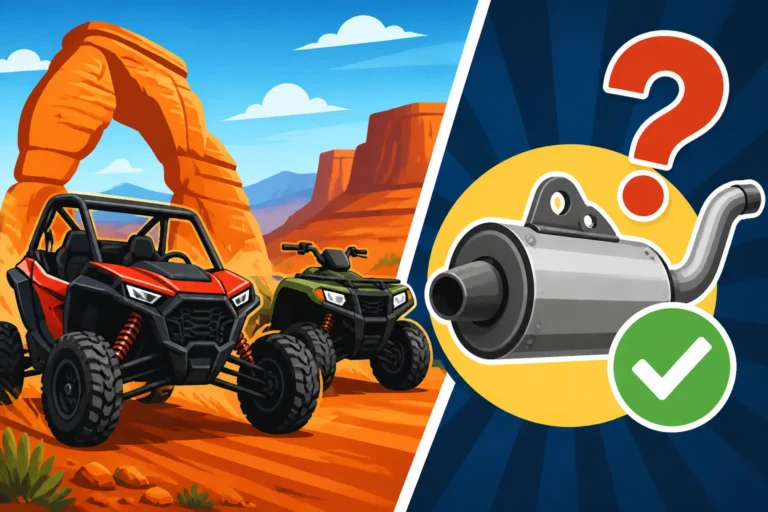
Similarly, wide tires and modified suspension that push your wheels further out can make those already narrow drive-through lanes even more daunting. You might find yourself having to drive with one wheel slightly up on a curb, which is neither safe nor good for your tires or suspension components. Lastly, noise is a big one. Many aftermarket exhaust systems are designed for performance and a more aggressive sound, which is awesome on the trail. But in a quiet drive-through lane, a loud exhaust can be incredibly disruptive. It makes it hard for you to hear, hard for the attendant to hear you, and it can be generally unpleasant for other patrons. If you've got a particularly boisterous exhaust, consider if a drive-through is truly the best option, or be prepared to turn off your engine for a moment at the speaker. Remember that Utah has specific regulations regarding [Horns, Mufflers and Utah Noise Limits] for street-legal machines, and while you might pass inspection, being courteous in close quarters is always appreciated.
Tips for a Smooth Drive-Through Experience
Now that we've covered the legal and practical hurdles, let's talk about how to make your UTV drive-through experience as smooth and painless as possible. A little preparation and foresight can go a long way in turning potential frustration into a quick, satisfying stop.
Preparation Is Key
Think of a drive-through run in your UTV like a mini-mission. The more prepared you are, the better the outcome. Before you even pull into the lane, decide what you want to order. Fumbling with a menu on the screen while trying to keep your noisy UTV from stalling and listening to the attendant can be a recipe for stress. Have your order locked in before you approach the speaker.
Just as important, have your payment ready and easily accessible. Whether it's cash or a card, make sure it's in a pocket or cubby that's easy to reach with one hand. Trying to dig through your wallet or bag while leaning out of the UTV and trying to reach the attendant can be awkward and hold up the line. If you're paying with a card, consider using a mobile payment app if the restaurant supports it, as this can sometimes be quicker and easier than physically handing over your card. Before entering the lane, take a quick scan for potential hazards. Are there low-hanging branches from trees? Are the turns particularly sharp? Are there tight pylons? A quick visual assessment can prevent you from getting into a tricky spot. This kind of awareness is part of being a responsible rider, whether you're navigating the streets of a small town or looking for a [Fuel Stops and Parking in Utah Trail Towns].
Alternative Solutions If a Drive-Through Doesn't Work
Sometimes, despite your best efforts, a drive-through just isn't going to work out for your UTV. Maybe the lane is too tight, the overhang is too low, or the establishment simply isn't set up for it. Don't despair! There are always other options to get that grub.
One straightforward alternative is to simply park your UTV in a regular parking spot and walk inside. This completely sidesteps all the drive-through specific issues. Of course, you'll still need to be street-legal to get to the parking lot, but once parked, you're just another customer. Make sure you park courteously, not taking up excessive space, and if your machine is particularly dusty, try to choose a spot away from other cars. Another excellent solution, especially if you're planning a longer ride, is to pack a picnic lunch or snacks. This is often the most cost-effective and convenient option for trail riding anyway. You can stop at a scenic overlook, enjoy the fresh air, and not worry about restaurant rules or drive-through lines. Lastly, in some towns, especially those that cater to OHV riders, you might find local restaurants that are very UTV-friendly. Some might even offer curbside pickup if you call ahead, allowing you to pull up to the front, grab your order, and be on your way without ever entering a drive-through lane or walking inside. This can be a great compromise!
| Consideration | UTV in Drive-Through: Pros | UTV in Drive-Through: Cons |
|---|---|---|
| Convenience | Quick, stays in machine, no need to ungear/regear fully | Requires street-legal status, potential for awkward maneuvering |
| Legality | Permitted if street-legal and obeying local laws | Illegal if not street-legal; risk of fines/impoundment |
| Maneuvering | Can be done carefully with practice | Tight turns, narrow lanes, blind spots, risk of scrapes |
| Communication | Possible with intercoms or turning off engine | Noise interference, difficulty hearing attendant, shouting required |
| Visibility | Manageable with good mirrors, leaning out | Limited rear/side visibility, challenging in crowded lanes |
| Height/Width | No issue if machine is standard height/width | Lifted UTVs may hit overhangs; wide machines may not fit lanes |
| Cleanliness | Can minimize dust by idling carefully | Dusty machines can affect restaurant image, other patrons |
| Speed | Efficient for a quick grab-and-go | Slowing the line if struggling with turns or communication |
| Experience | Unique, fun, can be a conversation starter | Stressful, potentially frustrating, negative perception if disruptive |
Disclaimer
This article is for general informational purposes only and does not constitute professional advice. Laws, prices and regulations vary by location and change over time. Consult a qualified professional for guidance on your specific situation.