School Zones and Street-Legal Machines
It's an increasingly common sight to see street-legal ATVs and UTVs cruising Utah's roads, a fantastic development for riders who want to connect trails or simply run an errand. But with this newfound freedom comes a responsibility to understand the nuances of road rules, especially when you find yourself in sensitive areas like school zones. Many riders feel a real pang of anxiety wondering if their cool side-by-side, perfectly legal on the open road, suddenly becomes a hazard or a target for a ticket when passing an elementary school. This guide aims to clear up that confusion, diving deep into Utah's regulations for street-legal off-highway vehicles (OHVs) in school zones, ensuring you can navigate these areas safely, courteously, and legally.
Utah's Foundation: What Makes an OHV Street Legal?
Before we even talk about school zones, it’s absolutely crucial to understand what "street legal" actually means in Utah. This isn't just a casual term; it refers to a specific set of equipment and registration requirements that transform an off-highway vehicle into something that can share public roads with cars and trucks. Without meeting these foundational requirements, your machine isn't street legal at all, and any discussion about school zones becomes moot because you shouldn't be on the road in the first place.
Essential Equipment for Road Use
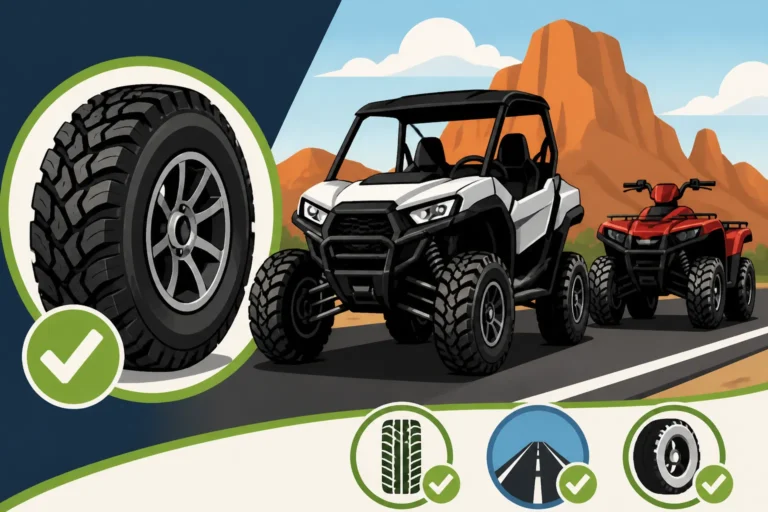
Converting an OHV to street-legal status in Utah isn't just about slapping a license plate on it. There's a comprehensive checklist of specific equipment that must be present and fully functional. Think of it as ensuring your machine can communicate its intentions and be seen by other drivers, just like any other road-going vehicle. This typically includes DOT-approved tires, working headlights and tail lights, turn signals, brake lights, mirrors on both sides, a horn, and a license plate light. Many riders turn to aftermarket solutions for these components, and reputable brands like SuperATV offer conversion kits that bundle many of these necessary items, simplifying the process of getting your machine up to snuff. Neglecting any of these can lead to fines and the immediate revocation of your street-legal status, making any journey, especially through a school zone, a risky proposition. You can find more details in [Utah Street-Legal ATV Equipment Requirements].
Registration, Title, and Inspection
Beyond the hardware, the paperwork side of being street legal is equally important. Your OHV needs to be properly titled and registered as street legal with the Utah Division of Motor Vehicles (DMV). This typically involves proving ownership, paying the necessary fees, and, critically, passing a safety inspection. This inspection is where a certified mechanic verifies that all your street-legal equipment meets Utah's standards. Without a current street-legal registration and a valid inspection sticker, even if your machine looks like it meets all the equipment requirements, it's not truly legal for road use. It's a two-part process – the right gear and the right paperwork – both are non-negotiable for anyone planning to drive their OHV on public roads, particularly in areas with increased pedestrian traffic like school zones.
Navigating School Zones with Your Street-Legal OHV
Once your OHV is genuinely street legal, you gain the privilege of using most public roads, but certain areas, like school zones, demand extra vigilance and adherence to specific rules. These rules are in place to protect children and ensure the safety of the community. Ignoring them, even unintentionally, can have serious repercussions.
Understanding School Zone Speed Limits
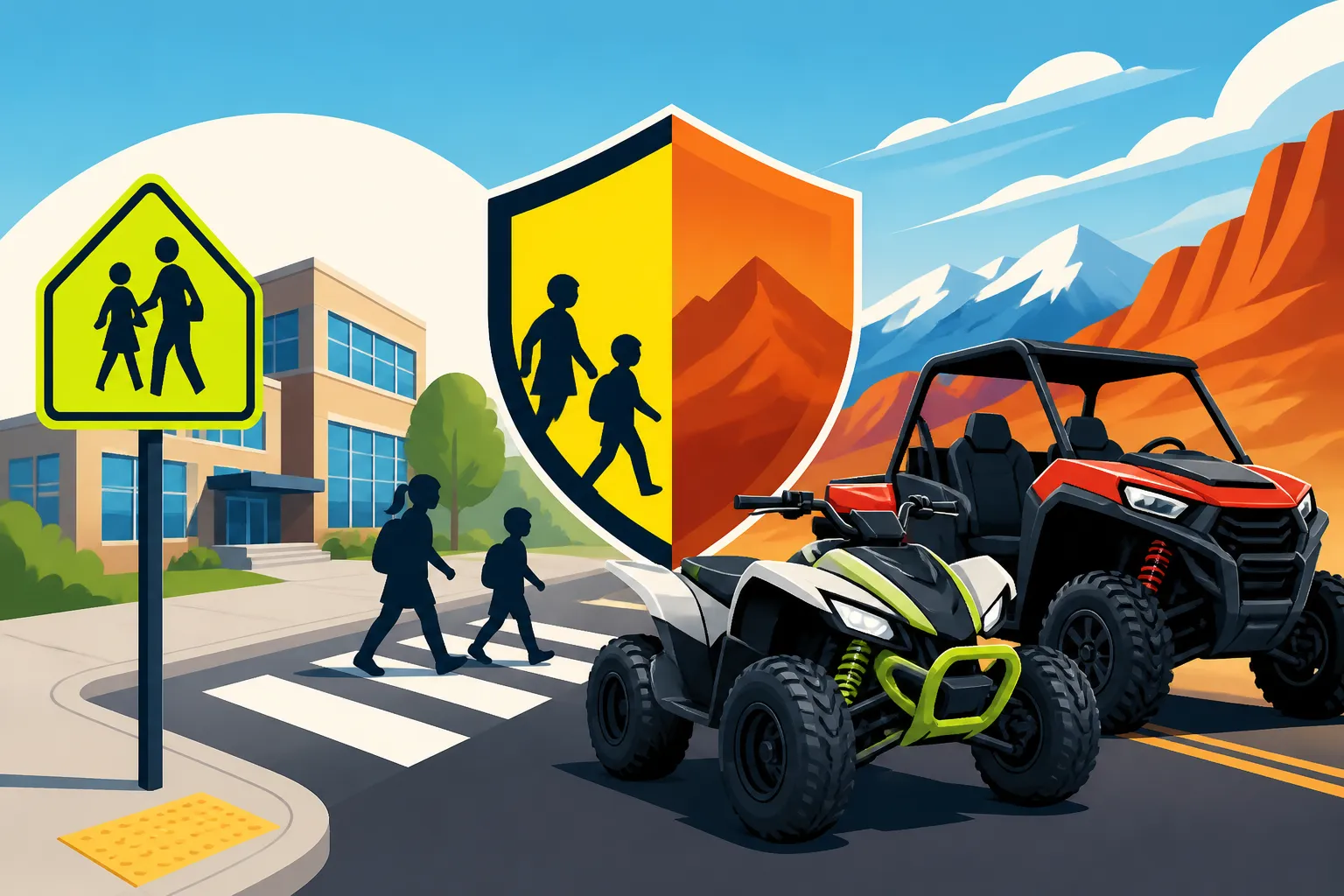
One of the most critical aspects of driving through a school zone, regardless of whether you're in a car or a street-legal UTV, is the reduced speed limit. In Utah, these zones often have clearly marked lower speed limits, typically 20 mph, during specific hours when children are present or going to and from school. It's not enough to simply follow the general speed limit of the road; you must actively look for and obey these posted school zone signs. Speeding through a school zone in your OHV not only endangers children but also significantly increases your chances of receiving a hefty traffic ticket. The perception of an OHV, already a less common sight on roads, being driven carelessly in such an area can also draw unwanted attention from law enforcement and the community. This vigilance is paramount, as Utah traffic laws generally apply equally to street-legal OHVs as they do to other vehicles. More on general road rules can be found in [Utah Traffic Rules for Street-Legal Side-by-Sides].
Yielding to Pedestrians and Crossing Guards
School zones are bustling with pedestrians, especially children, and their parents. It's not just about speed; it's about constant awareness. Street-legal OHV operators must exercise extreme caution and be prepared to stop suddenly. Always yield to pedestrians in crosswalks, and pay particular attention to crossing guards, who have the authority to direct traffic. Their signals must be obeyed immediately. Think about the sightlines your OHV might have compared to a taller vehicle, or conversely, how easily a small child might be obscured from your view. It's a different perspective from inside a side-by-side, so you need to adjust your driving accordingly. A momentary lapse in attention could have severe consequences, far beyond just a traffic violation.
Prohibited Times or Areas for OHVs Near Schools
While street-legal OHVs are generally permitted on most public roads, some local municipalities or specific school districts might have additional ordinances or restrictions regarding OHV access, particularly in very dense residential areas or immediately adjacent to school grounds. It's always a good idea to be aware of any local rules. For instance, a small town might have a blanket ban on OHVs on certain residential streets during school hours, even if they are technically street-legal. While Utah's state law generally allows street-legal OHVs on most public roads, it's worth checking with city or county regulations, as mentioned in [City and County OHV Rules Across Utah]. If you're a parent considering dropping off your child at school in your street-legal UTV, ensure you understand both state and any specific local rules governing school access.
Safety and Courtesy in Residential and School Areas
Beyond the letter of the law, there's an unwritten code of conduct that comes with operating an OHV on public roads, especially in neighborhoods and near schools. Being a responsible rider isn't just about avoiding tickets; it's about being a good neighbor and ambassador for the OHV community.
Noise, Dust, and Respecting Residents
Let's be honest: OHVs, especially those with aftermarket exhausts, can be louder than a typical passenger car. While your street-legal conversion might meet the basic muffler requirements, you still need to be mindful of the noise you're creating, particularly in residential areas and around schools. Early mornings, late evenings, and during school hours are times when excessive noise can be particularly disruptive and draw negative attention. Similarly, while street-legal machines are designed for roads, they can kick up dust, especially if you're briefly transitioning onto a dirt shoulder or a less-maintained road near a school. Be considerate of homes and playgrounds by minimizing dust creation. A little courtesy goes a long way in ensuring that street-legal OHVs remain a welcome sight, rather than a nuisance, in the community. You can review [Fines for a Loud UTV in Moab] for examples of how seriously noise can be taken.
Safe Driving Practices and Visibility
Driving defensively is always important, but it's paramount when you're in a vehicle that might be less expected on the road. For street-legal OHVs, this means being hyper-aware of your surroundings, using your turn signals well in advance (many turn signal kits from SuperATV are excellent for this), and ensuring your lights are always on for maximum visibility, even during the day. Remember, children, especially, can be unpredictable; they might dart out from behind parked cars or not look both ways. Maintain extra following distance, particularly from school buses, and be prepared to stop. Think about your ride height and how it might impact visibility for smaller children, or conversely, how your smaller profile might make it harder for other drivers to spot you. Being seen and being predictable are your best defenses.
Setting a Positive Example for Younger Riders
Many children are naturally fascinated by ATVs and UTVs. When you're driving your street-legal machine through a school zone or residential area, you're not just a driver; you're often an example for potential future riders. Operating your OHV responsibly, observing all traffic laws, wearing appropriate safety gear (especially helmets for those under 18, as discussed in [Helmet and Age Rules on Utah Roads]), and driving courteously sets a crucial positive example. It helps foster an environment where OHVs are viewed as legitimate, responsible recreational vehicles, rather than noisy toys. This is especially true for families who might be considering [Registering a 50cc Quad for an Eight-Year-Old] or other youth models for their own kids.
Potential Consequences of Non-Compliance
Driving a street-legal OHV through a school zone or any public road in Utah comes with the same responsibilities and penalties as driving a car. Failing to adhere to the rules, whether it's speeding, operating an improperly equipped machine, or demonstrating general recklessness, can lead to a variety of undesirable outcomes.
Traffic Citations and Fines
The most immediate consequence of violating traffic laws in a school zone is receiving a traffic citation. Speeding in a school zone, for example, often carries increased fines compared to speeding in a regular zone, and sometimes comes with additional points on your driving record. A Utah Highway Patrol trooper or a local police officer will treat a street-legal OHV offense exactly like a car offense. These fines can quickly add up, turning what was supposed to be a convenient shortcut into a very expensive trip. It's a clear reminder that while your machine is unique, the rules of the road are universal. For insight into what officers look for, check out [What a Utah Officer Looks for on a Street-Legal ATV].
Impoundment and Registration Issues
In more serious cases, especially if your OHV is found to be non-compliant with street-legal equipment requirements or if you're involved in a reckless driving incident, your machine could be impounded. If your street-legal registration is found to be invalid, perhaps due to an expired inspection or issues with your title, you face the same risks as driving any unregistered vehicle. This can be a significant hassle, involving impound fees, potential repairs or modifications to meet compliance, and further fines. Keeping all your paperwork in order, from your street-legal registration to your proof of insurance, is crucial. If you're wondering about common issues, [Tickets Utah Riders Get Most Often] offers a good overview of what riders face.
Impact on Community Perception and Future Access
Every time a street-legal OHV is driven irresponsibly through a school zone or residential area, it tarnishes the image of the entire OHV community. This can lead to increased complaints from residents, stricter enforcement, and even calls for new, more restrictive local ordinances that could limit where street-legal machines can operate. We've seen how valuable [Riding Through Town to the Trailhead in Utah] can be, but that access is fragile. Maintaining positive community relations is vital for preserving the ability to use street-legal OHVs on public roads. By operating your machine safely and courteously, particularly in sensitive areas like school zones, you contribute to a positive perception that benefits all riders, helping to secure the future of street-legal OHV access in Utah.
Here's a quick reference on key considerations when driving a street-legal OHV near schools:
| Aspect | General Road Rule (Street-Legal OHV) | School Zone Specifics (Street-Legal OHV) |
|---|---|---|
| Speed Limit | Follow posted speed limits (e.g., 25 mph residential, 45 mph arterial) | Strictly obey reduced speed limits, typically 20 mph, during posted hours. |
| Pedestrian Safety | Yield to pedestrians in crosswalks, be aware of surroundings. | Extreme vigilance for children, crossing guards; be prepared for sudden stops. |
| Noise Level | Must meet state muffler requirements, avoid excessive noise. | Be extra mindful of noise; aim for minimal disturbance during school hours. |
| Visibility | Lights on, use turn signals, maintain mirrors for all-around view. | Ensure maximum visibility; assume you may not be easily seen by children. |
| Local Ordinances | Generally allowed on public roads unless specifically prohibited. | Check for any specific local (city/county) restrictions around school grounds. |
| Passing School Bus | Obey all school bus stop arm laws (stop when arm extended). | Same as general road rule, but exercise enhanced caution and awareness. |
| Consequences | Traffic citations, fines, points on license, potential impoundment. | Increased fines for violations, impoundment more likely for reckless conduct. |
Remember, the freedom to operate your street-legal OHV on Utah's roads, including school zones, comes with the immense responsibility to do so safely, legally, and courteously. It's about blending in, not standing out for the wrong reasons. So, whether you're heading to [Sand Hollow and Sand Mountain: A Rider's Guide] or simply [Commuting to Work on a Side-by-Side], be mindful of your surroundings, especially when kids are present.
Disclaimer
This article is for general informational purposes only and does not constitute professional advice. Laws, prices and regulations vary by location and change over time. Consult a qualified professional for guidance on your specific situation.