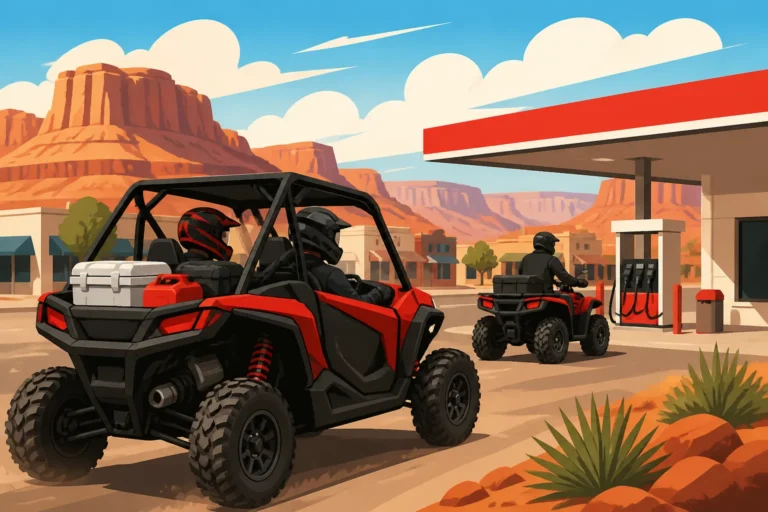
Sidewalks, Bike Lanes and Utah OHV Law
One of the trickiest parts about owning a street-legal ATV or UTV in Utah isn't necessarily getting it plated – it's understanding where you can actually ride it once you have those street-legal plates. Many riders assume "street legal" means they can go anywhere a regular car can, and that often leads to confusion, frustration, and even tickets when it comes to areas like sidewalks and bike lanes. This guide is here to cut through that confusion and give you a clear understanding of Utah's OHV laws concerning sidewalks and bike lanes, so you can ride confidently and legally.
Understanding Street-Legal OHVs on Utah Roads
Before we dive into sidewalks and bike lanes, it’s crucial to establish what "street legal" actually means in Utah. When you invest in the modifications and paperwork to make your UTV or ATV street legal, you’re essentially getting permission to operate it on designated public roads. This is a huge benefit for connecting trails, running into town for supplies, or simply enjoying scenic drives. However, it's not a blanket permission slip for all paved surfaces. The state's intent is to allow OHVs to integrate safely with vehicular traffic on roads, not necessarily with pedestrian or cycling traffic on their dedicated pathways.
What "Street-Legal" Actually Means and Doesn't
Achieving street-legal status for your OHV in Utah means meeting a specific set of equipment requirements, like turn signals, mirrors, a horn, and often a windshield. [Utah Street-Legal ATV Equipment Requirements] details all the bits and pieces you'll need. Once you’ve got everything installed – maybe with a great kit from a company like SuperATV – and passed your inspection, you'll receive a license plate. This plate signifies your machine is approved for use on public roads with a posted speed limit of 50 mph or less, unless specifically prohibited by local ordinance. It allows you to legally drive from your campsite to the trailhead, or even grab a burger in town.
But here’s the crucial "doesn't" part: "Street legal" does not automatically grant you the same rights as a car or motorcycle in every single scenario. It's a conditional privilege. You're still operating an Off-Highway Vehicle, even if it's dressed up for the road. The laws that apply to pedestrians, bicycles, and other specific modes of transport on their dedicated infrastructure are generally separate from those governing motorized vehicles on roadways. This distinction is vital when considering sidewalks and bike lanes, as these are primarily designed for non-vehicular traffic. Always remember that while your machine might be capable of going anywhere, the law says otherwise for certain areas.
The Core Principle: Roads, Not Sidewalks or Lanes
The fundamental rule for street-legal OHVs in Utah is that they are to be operated on the roadway itself. Think of it this way: your street-legal UTV is treated much like a compact car or a motorcycle when it comes to traffic laws. Just as you wouldn't typically drive your pickup truck down a sidewalk or in a bike lane (unless it was explicitly designated for shared use or an emergency), you generally shouldn't do so with your street-legal OHV. The purpose of street-legal conversion is to allow you to share the road with cars, obeying traffic signals and speed limits, not to create a hybrid vehicle that can jump between different types of infrastructure.
Local municipalities can also add their own rules, so while [Where Street-Legal ATVs Can Drive in Utah] covers the state law, it's always good to check local ordinances. This means that while you might be riding through Moab on Main Street, you need to stick to the vehicle lanes, just like any other driver. The primary goal of these regulations is safety – separating high-speed or heavy motorized traffic from vulnerable pedestrians and cyclists. Ignoring this core principle not only puts you at risk of a ticket but, more importantly, endangers others.
Sidewalks: A Clear "No-Go" Zone for OHVs
Let's get straight to it: generally speaking, sidewalks are unequivocally off-limits for street-legal OHVs in Utah. This isn't just a suggestion; it's a fundamental traffic safety law designed to protect pedestrians. Sidewalks are built for walking, running, and sometimes for wheelchairs or strollers. They are not designed to accommodate the weight, speed, or maneuverability of a motorized vehicle, even a relatively small one like an ATV or UTV.
Why Sidewalks are Off-Limits for OHVs
The reasons for this prohibition are simple and centered on safety. Imagine trying to navigate a sidewalk crowded with families, dog walkers, and children on scooters in your UTV. It’s a recipe for disaster. Pedestrians often move unpredictably, and the sight and sound of an OHV on a sidewalk can be startling and dangerous. Sidewalks also have obstructions like light poles, benches, and sudden drops or inclines that are perfectly manageable for someone on foot but hazardous for a motorized vehicle. The risk of collision, property damage, or serious injury is extremely high.
Furthermore, state and local laws clearly define what constitutes a "roadway" versus a "sidewalk." Utah law, like most states, designates sidewalks as distinct from the roadway and restricts their use primarily to pedestrians. Even if your street-legal machine has all the bells and whistles, like a full SuperATV windshield or upgraded lights, it doesn't grant you permission to leave the road for the sidewalk. A Utah officer who spots you riding on a sidewalk will almost certainly issue a citation, regardless of your vehicle's street-legal status. It falls under dangerous operation and operating outside of designated areas.
Exceptions? (Spoiler: Very Rare, if Any)
Are there any exceptions? In almost all cases for personal OHV use, the answer is no. You should operate under the assumption that sidewalks are always off-limits. There might be extremely rare, highly specialized circumstances for municipal or utility vehicles that are specifically authorized to operate on sidewalks for maintenance or emergencies, but these are not applicable to the general public or recreational OHV use. For example, a city worker might use a utility vehicle on a sidewalk to trim trees or repair a sprinkler system, but this is done under specific authorization and protocols for safety.
For the average rider, even if you just need to move your UTV a short distance to access your driveway from the street, you should aim to do so on the roadway, even if it's a tight squeeze. Pulling over onto a sidewalk to let traffic pass or to check a map is also generally not advised and can be seen as operating where prohibited. If you find yourself in a situation where the only way seems to be the sidewalk, it's a strong indicator that you need to re-evaluate your route or parking strategy.
Bike Lanes: A Different Kind of Restriction
Bike lanes present a slightly different, but equally important, set of considerations for street-legal OHV riders. Unlike sidewalks, bike lanes are part of the paved road infrastructure, but they are specifically designated for bicycles. This designation often means they are off-limits for motorized vehicles, even if your OHV is street legal.
Understanding Bike Lane Purpose
Bike lanes are created to provide a dedicated and safer space for cyclists, separating them from faster-moving vehicular traffic. They are often marked with specific paint, signage, and sometimes even physical barriers. The intent is to encourage cycling by making it safer and more comfortable, and to improve traffic flow by giving cyclists their own predictable path. When a motorized vehicle, including a street-legal UTV, enters a bike lane, it defeats this purpose and introduces significant hazards for cyclists. The speed differential, the size of the vehicle, and the potential for a sudden stop or turn all create risk where there should be safety.
Many [Utah Traffic Rules for Street-Legal Side-by-Sides] are identical to those for cars, but this specific nuance about bike lanes is where the distinction often lies. Just because your OHV can legally be on the road doesn't mean it can legally be in every part of the road. Bike lanes are a prime example of this. They are essentially specialized lanes with specific user groups in mind, and that group generally does not include motorized vehicles.
Motorized Vehicles in Bike Lanes: The General Rule
The general rule in Utah, and most places, is that motorized vehicles are prohibited from operating in bike lanes. This includes your street-legal ATV or UTV. While your OHV is allowed on the main roadway, it needs to stay out of the dedicated bicycle lane. The only common exceptions for motorized vehicles in bike lanes are typically for turns – where a vehicle might briefly merge into a bike lane to make a right-hand turn safely, often indicated by specific road markings or signage. However, simply driving down a bike lane as if it were a regular travel lane is illegal and dangerous.
You might encounter situations where a bike lane seems empty, or it’s the only clear path during heavy traffic. Resist the temptation to use it. Doing so puts cyclists at risk, violates traffic laws, and can result in a citation. For example, if you're riding your street-legal UTV through St. George and come across a road with a clear bike lane, you should stay in the main vehicle lane, just as you would in a regular car. Many municipalities have strict [City and County OHV Rules Across Utah] that specifically address this, often imposing fines for violations.
Are There Any Scenarios Where It's Okay?
As mentioned, the primary exception where a motorized vehicle might briefly enter a bike lane is when making a right-hand turn. In some jurisdictions, traffic laws permit or even require vehicles turning right to merge into the bike lane before the intersection to prevent "right hook" collisions with cyclists. Look for broken white lines or specific signage that indicates this. Even then, you must yield to any cyclists already in the lane.
Beyond turning, it is highly unlikely you will find a scenario where a street-legal OHV is legally permitted to travel within a bike lane for any sustained period in Utah. If a section of road is designated as a "shared use" path where bicycles and motorized vehicles are both explicitly allowed, it will be clearly marked as such, and it won't be called a "bike lane" in the traditional sense. These shared paths are typically separate from standard roads and are rare for high-speed motorized vehicles. Therefore, err on the side of caution: if it looks like a bike lane, stay out of it with your OHV.
Consequences and Best Practices for Legal Riding
Understanding the specific rules for sidewalks and bike lanes is not just about avoiding a ticket; it's about ensuring safety for everyone on Utah's roads and trails. Ignoring these rules can lead to serious legal repercussions, financial penalties, and, most importantly, puts you and others at risk. A street-legal OHV is a privilege, and with that comes the responsibility to operate it safely and legally.
Penalties for Misuse
Riding a motorized vehicle on a sidewalk or in a bike lane (outside of legally permitted turning maneuvers) can lead to significant penalties. These typically include:
- Fines: You can expect a traffic citation with a monetary fine. These fines vary by municipality and the severity of the offense, but they can quickly add up. For example, [What a Utah Officer Looks for on a Street-Legal ATV] might include checking for proper lane usage.
- Points on Your Driving Record: Depending on the specific violation, points might be assessed on your driving record, potentially affecting your insurance rates.
- Vehicle Impoundment: In more egregious cases, or repeat offenses, your OHV could even be impounded. [Impound Risk for Unregistered Machines in Utah] is a real concern, and misuse of a registered machine also has consequences.
- Accident Liability: If you cause an accident while operating on a sidewalk or in a bike lane, you would almost certainly be found at fault, leading to significant personal liability for injuries or property damage. This could extend beyond your OHV insurance, which might not even cover incidents when operating illegally.
It's simply not worth the risk. Always adhere to the designated roadways and respect the infrastructure designed for pedestrians and cyclists.
Safe and Legal Riding Practices
To ensure you stay on the right side of the law and prioritize safety, here are some best practices for operating your street-legal OHV in Utah:
- Stay on the Roadway: Unless explicitly marked as a multi-use path that allows motorized vehicles, assume all sidewalks and bike lanes are off-limits. Treat your street-legal OHV like any other car on the road.
- Review Local Ordinances: While state law provides the general framework, [City and County OHV Rules Across Utah] can add specific restrictions or allowances. Before riding in a new area, a quick search of the local city or county OHV ordinances can save you a lot of trouble.
- Yield to Pedestrians and Cyclists: Even when legally crossing a sidewalk (e.g., entering or exiting a driveway) or if a cyclist is in the main lane, always yield the right of way. Their safety is paramount.
- Maintain Proper Equipment: Keep your street-legal modifications, like those from SuperATV, in good working order. Proper lighting, mirrors, and a horn aren't just for passing inspection; they're essential for safe operation on shared roads.
- Be Visible: Wear bright clothing, use your headlights (even during the day), and consider a whip flag, especially if transitioning from a trail system to a road. Visibility is your best friend when sharing the road with other vehicles, and especially with more vulnerable users.
- Educate Yourself: Understand [Utah's Street-Legal ATV Inspection, Step by Step] and what it means for your responsibilities as a driver. Know the speed limits, traffic signals, and general road rules. Don't forget [Helmet and Age Rules on Utah Roads], even if you’re street-legal.
- Plan Your Route: If you're [Riding Through Town to the Trailhead in Utah], plan your route to minimize exposure to heavy pedestrian or cycling areas, or to avoid roads where bike lanes might be prevalent and cause confusion. Sometimes, an extra mile on a main road is safer than a shortcut that puts you in questionable legal territory.
By following these guidelines, you'll not only avoid potential penalties but also contribute to a positive image of OHV riders in Utah, fostering better relations between all road and trail users.
| Infrastructure Type | General Rule for Street-Legal OHVs | Primary Users | Safety Rationale |
|---|---|---|---|
| Roadway (Vehicle Lanes) | Allowed, following traffic laws | Motorized Vehicles | Designed for vehicular traffic; designated speed limits |
| Sidewalks | Prohibited | Pedestrians | Protects pedestrians from vehicle speed/weight |
| Bike Lanes | Prohibited (except for specific turns) | Bicycles | Protects cyclists, encourages safe cycling |
Disclaimer
This article is for general informational purposes only and does not constitute professional advice. Laws, prices and regulations vary by location and change over time. Consult a qualified professional for guidance on your specific situation.