Registering a Vintage Three-Wheeler in Utah
Ah, the classic three-wheeler! There's a special place in many Utah riders' hearts for these machines, bringing back memories of simpler times and thrilling adventures. But if you're looking to get that vintage beauty out on Utah's incredible public lands, you might run into some head-scratching moments trying to navigate the registration process. It's not always as straightforward as registering a shiny new side-by-side, especially when titles are elusive or paperwork is decades old. This guide is here to untangle the specific challenges and walk you through getting your beloved three-wheeler legally registered so you can enjoy those nostalgic rides with peace of mind.
Understanding Utah's Stance on Vintage Three-Wheelers
Before we dive into the nitty-gritty of paperwork, it's really important to understand how Utah views these classic machines. You might think, "It's old, maybe it's exempt?" but generally speaking, if you want to ride it on public land, it needs to be registered.
The Definition of an OHV in Utah
First things first, let's talk about what Utah considers an "Off-Highway Vehicle," or OHV. The state's definition is pretty broad and includes a wide range of vehicles designed for off-highway use, such as ATVs, UTVs, dirt bikes, and, yes, your three-wheeler. Regardless of its age, if it fits the description of being primarily designed for off-road travel and has an engine, it's likely an OHV in the eyes of Utah law. This means that for the vast majority of cases, if you plan to enjoy the expansive trail systems or designated riding areas, your three-wheeler will need to comply with Utah's registration requirements. It's not just about the type of machine, but how and where you intend to use it. If it’s leaving your private property, registration is almost certainly in your future. To get a fuller picture of what falls under this umbrella, check out [Which Machines Utah Registers as Off-Highway Vehicles].
Age-Related Titling Exemptions and Your Three-Wheeler
Here's where things get particularly interesting for vintage three-wheelers. Utah has a specific rule regarding titles: machines manufactured in 1987 or earlier are generally exempt from requiring a physical title. This can be a huge relief if you've inherited a classic three-wheeler, purchased one from a long-time owner, or found a "barn find" that never had a title to begin with.
However, "no title required" doesn't mean "no proof of ownership required." Even for these older machines, you still need to prove to the Division of Motor Vehicles (DMV) that you are the rightful owner. This usually comes down to a clear and concise bill of sale. We'll delve into the specifics of what that bill of sale needs to include shortly, but for now, understand that while you might not be chasing down an elusive paper title, establishing ownership is still paramount. Don't underestimate the importance of this step; it's the foundation of your registration. For more on how these age cutoffs work, you might find [Utah's Title Rule for 1988 and Newer Machines] helpful, even though it focuses on newer machines, it clarifies the context for older ones. There’s also specific guidance if you’re looking at [Registering a 1987 ATV in Utah] which will be very similar to your three-wheeler.
Essential Documentation for Vintage Registration
Okay, so you know your three-wheeler needs to be registered and you understand the title nuances for older models. Now, let's talk brass tacks: what papers do you actually need to gather? This is often the biggest hurdle for vintage machine owners, but with a bit of preparation, it's entirely manageable.
Proving Ownership When There's No Title
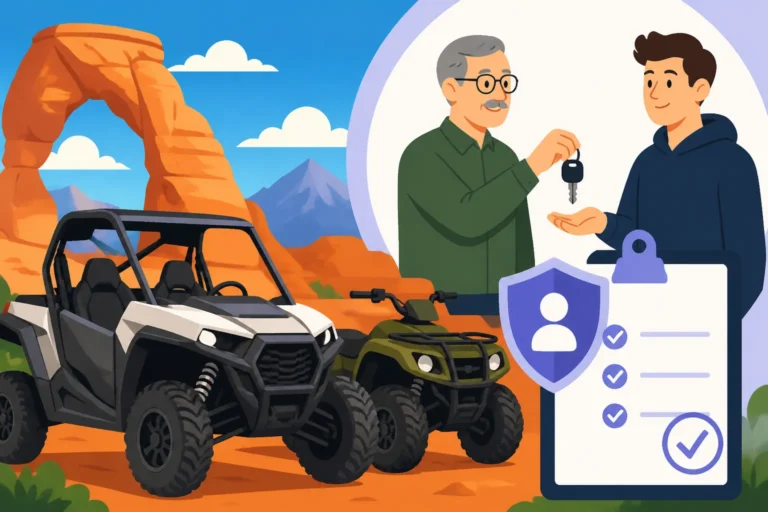
Since many vintage three-wheelers fall into that pre-1988 category, a traditional title might not exist. In these cases, your bill of sale becomes your most crucial document. It's not just a casual receipt; it's the legal document that establishes the transfer of ownership from the previous party to you.
So, what absolutely must be on this magical bill of sale?
- Buyer's Information: Your full legal name and current address.
- Seller's Information: The previous owner's full legal name and current address.
- Machine Details: The make, model, year, and crucially, the Vehicle Identification Number (VIN) of the three-wheeler. If you also include engine size and color, that’s great, but the VIN is non-negotiable.
- Purchase Price: The agreed-upon selling price. This is important for calculating any sales tax owed, even on older machines.
- Date of Sale: The exact date the transaction took place.
- Signatures: Both the buyer's and seller's signatures. While Utah doesn't always require a notarized bill of sale for OHVs, it certainly adds a layer of authenticity and can prevent future headaches, especially if you're dealing with a private party and a machine that lacks a title. If you're looking for a reliable template, resources like LawDepot offer customizable bill of sale forms that ensure all necessary fields are covered. Using a professional template like those from LawDepot can give you peace of mind that you're not missing any vital information. For a deeper dive into what makes a bill of sale robust, check out [Bill of Sale Requirements for a Utah ATV Sale].
Now, what if you bought your three-wheeler decades ago, and the original bill of sale has long since vanished? This is a common scenario. In such cases, you might need to sign an affidavit of ownership, essentially a sworn statement detailing how and when you acquired the machine. The DMV will provide specific forms for this. They need a clear paper trail, even if it's a sworn statement from you. If you really have no title from the seller and it's a newer machine, or you just want to understand the state's expectations, then [No Title From the Seller: What Utah Requires] offers more general guidance.
The VIN Inspection Challenge
Every three-wheeler, regardless of its vintage, will have a Vehicle Identification Number (VIN). This unique serial number is like your machine's fingerprint, and it's absolutely crucial for registration. Even if you don't have a title, the VIN links your machine to its identity.
Finding the VIN: On most three-wheelers, the VIN is typically stamped directly into the frame. Common locations include:
- On the steering head (the part of the frame where the handlebars attach).
- On one of the main frame rails, often near the engine or under the seat.
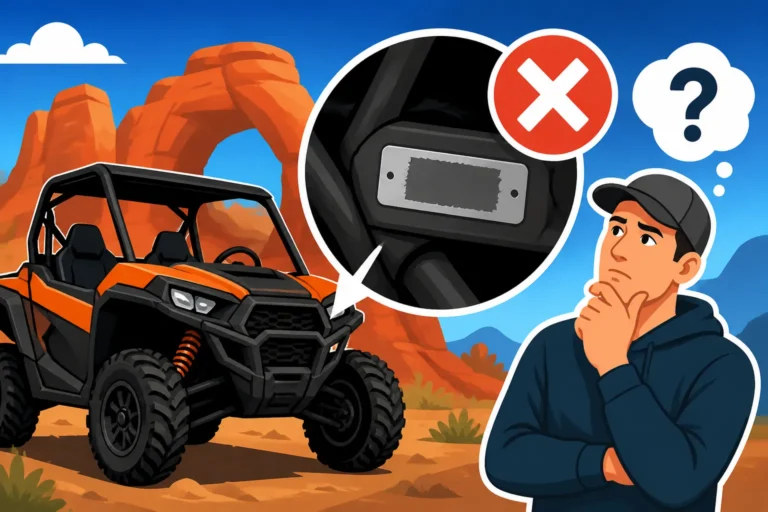
- Sometimes on a manufacturer's plate, though these can be lost or damaged over time.
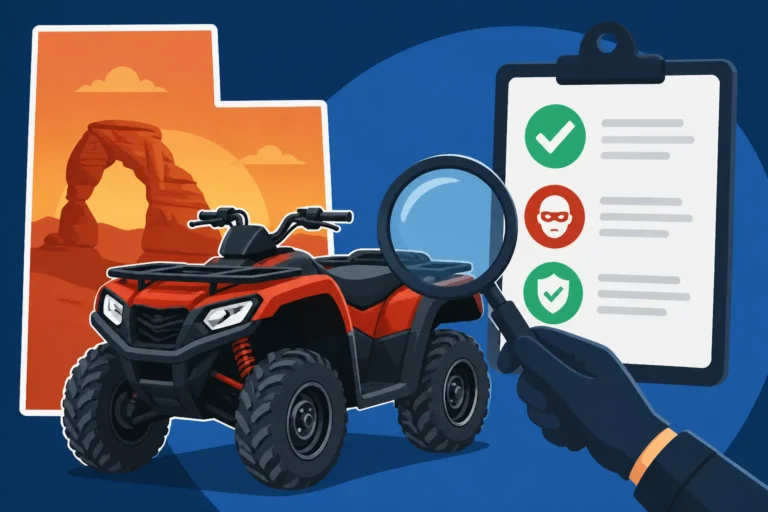
You’ll need to locate this VIN because a VIN inspection is a standard part of the registration process for any OHV in Utah, and it's especially important for older machines without clear title history. A certified law enforcement officer or a designated DMV employee will need to visually verify that the VIN on your machine matches the VIN on your paperwork. They're checking for alterations, missing numbers, or any signs that the machine might be stolen.
What happens if the VIN is unreadable, rusted out, or missing entirely? This is a tough spot, but not insurmountable. You’ll need to work closely with the DMV and potentially law enforcement. They might require a special inspection, or in rare cases, assign a new VIN to the vehicle if its original identity cannot be established. This process can add significant time and complexity, so it's always best to try and locate a clear, legible VIN first. To prepare for this part of the process, familiarize yourself with [VIN Inspections for Utah ATV Paperwork].
Additional Documents to Prepare
Beyond your proof of ownership (bill of sale or affidavit) and a clear VIN, you'll need a few other standard items when you head to the DMV:
- Your Valid Photo ID: Typically a driver's license or state ID card.
- Proof of Utah Residency: This could be your driver's license, a utility bill, or other official mail showing your current Utah address.
- OHV Registration Application Form: You can usually download and fill this out beforehand from the Utah DMV website, or they'll have copies at the office. Filling it out in advance saves time!
- Payment: Be ready to pay the registration fees, uniform fees, and any sales tax (if applicable). Most DMV offices accept various forms of payment, but it’s always wise to check their specific options beforehand.
Having all these documents organized and ready will make your visit much smoother. Think of it as preparing your trail bag: you don't want to be halfway to the trailhead only to realize you forgot your helmet! For a comprehensive list that applies broadly to OHVs, see [Documents to Bring to the Utah DMV for an ATV].
The Registration Process Itself
You've got your documents in hand, your vintage three-wheeler is clean and ready, and you're mentally prepared. Now, let's talk about the actual trip to the DMV and what you can expect when you go to register your classic machine.
Navigating the DMV for a Classic Machine
Let's be realistic: registering a vintage three-wheeler might not be an everyday occurrence for every DMV clerk. While they are experts in their field, machines with unique titling situations or those from an era before strict digital record-keeping can sometimes present novel questions.
Expect potential confusion (and patience pays off!): Don't be surprised if the clerk needs to consult with a supervisor or look up specific guidelines. This isn't a reflection on you or your paperwork, but rather the unique nature of older machines. Go in with a friendly attitude, and bring a little extra patience. It helps to have copies of any relevant Utah state statutes you might have found online regarding OHV titling if you've done your research.
Be prepared with all your paperwork, neatly organized: Have your bill of sale, ID, proof of residency, and any other supporting documents clearly separated and easy to present. This makes it much easier for the clerk to process your request efficiently.
Going to the right DMV office: While many DMV offices can handle OHV registrations, some smaller ones might have limited services. It’s always a good idea to check online or call ahead to confirm that the specific office you plan to visit can process OHV registrations, especially if your situation involves unique circumstances like a missing title affidavit. Some offices are better equipped than others for these less common transactions. For help finding the right spot, refer to [Which Utah DMV Offices Handle OHV Paperwork].
Understanding Fees and Uniform Fees
When you register your three-wheeler, you'll encounter a couple of different types of fees. Understanding them can help you budget and avoid surprises.
- The Base Registration Fee: This is the standard fee for registering any OHV in Utah. It contributes to the OHV program, supporting trail maintenance, enforcement, and education. This fee is relatively consistent across all OHVs.
- The Age-Based Uniform Fee: This is where vintage machines often catch a break. Utah assesses a "uniform fee" based on the age and estimated value of the OHV. For older machines, particularly those from the 70s or 80s, the assessed value is typically quite low, resulting in a much smaller uniform fee compared to a brand-new UTV. This means that while you still pay it, the impact on your wallet might be less than you expect. This fee is in lieu of property tax.
- Sales Tax: If you've recently purchased your three-wheeler, you'll likely need to pay Utah sales tax on the purchase price. Even if it's a private sale, sales tax is generally due. The DMV will collect this at the time of registration.
- Online Convenience Fees: If you plan to use an online renewal service in the future, be aware there's usually a small convenience fee added for digital transactions.
It's difficult to give exact figures here, as fees can change, but generally, the cost of registering a vintage three-wheeler is quite reasonable, especially with the lower uniform fee. For a breakdown of the typical costs, you can look at [Utah OHV Registration Fees, Start to Finish], and specifically for how the age of your machine affects costs, consider [The Age-Based Uniform Fee on Utah OHVs].
What to Expect After Registration
Congratulations! You’ve navigated the paperwork and paid your fees. What’s next?
- Your New Registration Card: You'll receive a physical registration card. This card is your proof of legal registration and you must carry it with you whenever you're riding on public lands. A digital copy on your phone is usually acceptable, but having the physical card is always a good backup.
- The OHV Decal: You'll also be issued an OHV decal, which is a sticker that you need to affix to your three-wheeler in a visible location. This decal signifies that your machine is legally registered for the current period. Make sure to put it on correctly so it doesn't peel off on your first ride! [Utah OHV Decals and Where They Go] provides specific guidance on where these decals belong.
- Understanding the Two-Year Registration Option: When you register, you might have the option for a two-year registration period. This is a fantastic convenience, as it means you only have to go through this process half as often. It's usually worth the upfront cost for the extended peace of mind. For more details on this, see [The Two-Year Registration Option at Utah DMV].
Now, with your registration card and decal in hand, you're ready to responsibly and legally hit the trails and enjoy your vintage ride!
Common Pitfalls and Troubleshooting
Even with careful preparation, unique situations can arise when dealing with vintage machines. Here are some scenarios you might encounter and how to approach them.
"Barn Find" Scenarios and What to Do
The mythical "barn find" – an old three-wheeler unearthed from a dusty corner of a forgotten shed, often without any previous paperwork or a clear owner history. This is perhaps the trickiest situation for registration.
If you've found or purchased a machine where the previous owner is untraceable, or there's simply no documentation whatsoever, you’ll have a significant challenge. Utah's process for truly abandoned vehicles (like cars towed off roads) is very specific and rarely applies to OHVs found on private property. You generally cannot simply claim ownership of an OHV because you found it.
Your best bet here is to try everything possible to track down the last known owner. This might involve running the VIN through a police department to check for theft (always a good first step!) or seeing if any records exist through past registration if the machine was ever registered in Utah or another state. If you genuinely cannot establish a paper trail, you might face an uphill battle. In some cases, states offer a "bonded title" process for vehicles where ownership is murky, but this isn't universally applied to OHVs in Utah. This is a complex area, and it's best to discuss your specific situation with the DMV directly. Sometimes, a vehicle is simply too much of a legal gray area to ever be registered for public use. If you are ever trying to register a machine that was abandoned, [Recovering a Title for an Abandoned ATV in Utah] might shed some light on the official process, though it's typically for abandoned situations handled by authorities.
Dealing with Previous Out-of-State Registrations
What if your vintage three-wheeler hails from across state lines? Maybe it came from a family member in Colorado or you bought it on a vacation in Idaho. Even if the machine is old and didn't require a title in its original state, you still need to prove ownership for Utah registration.
The key here is the bill of sale from the transaction, regardless of which state it occurred in. As long as that bill of sale clearly identifies the machine (VIN, make, model, year) and the buyer and seller, Utah should accept it as proof of ownership for a pre-1988 machine. The DMV will likely want to see that the machine was legally transferred to you.
If the machine did have an out-of-state title (even if Utah wouldn't require one for its age), bring that title along. It provides additional layers of proof. The main goal is to show a clear chain of custody. For more on how the state handles vehicles from elsewhere, [How Utah Handles a Title From Another State] covers general principles that would also apply to your three-wheeler.
Safety Considerations and Trail Access for Three-Wheelers
While not directly about registration, it's crucial to touch on safety and access for vintage three-wheelers. These machines handle very differently from modern ATVs or UTVs, and their inherent design (a single wheel at the front) can make them less stable for some riders, especially on challenging terrain.
- Ride Within Your Limits: Always remember that your vintage three-wheeler might not have the suspension, braking, or stability of a newer machine. Ride cautiously, understand its capabilities (and limitations), and always wear appropriate safety gear, including a helmet, eye protection, and sturdy riding gear.
- Trail Access: Generally, if your three-wheeler is registered and compliant with sound requirements, you can ride it on any OHV trail open to ATVs. However, always double-check local regulations. Some trails might have width restrictions that could impact larger custom three-wheelers, or other specific rules. While most trails are welcoming, it's always smart to be informed. Remember, some trails might be marked for side-by-sides only due to width, but for a standard three-wheeler, this is less common.
By being diligent with your paperwork and mindful of safe riding practices, you can ensure your vintage three-wheeler continues to bring joy on Utah's amazing trails for years to come.
| Machine Year | Utah Title Required? | Primary Proof of Ownership | Additional Considerations |
|---|---|---|---|
| 1987 or Older | No | Bill of Sale / Affidavit | VIN inspection crucial; may need to explain lack of old paperwork |
| 1988 or Newer | Yes | Original Title | VIN inspection required; title must be properly signed over |
| Out-of-State (Old) | No (if pre-1988) | Bill of Sale | May need to provide previous state's rules on titling for clarity |
| Out-of-State (New) | Yes | Out-of-State Title | Title must be transferred to Utah; VIN inspection required |
Disclaimer
This article is for general informational purposes only and does not constitute professional advice. Laws, prices and regulations vary by location and change over time. Consult a qualified professional for guidance on your specific situation.