What to Do About a Missing VIN Plate
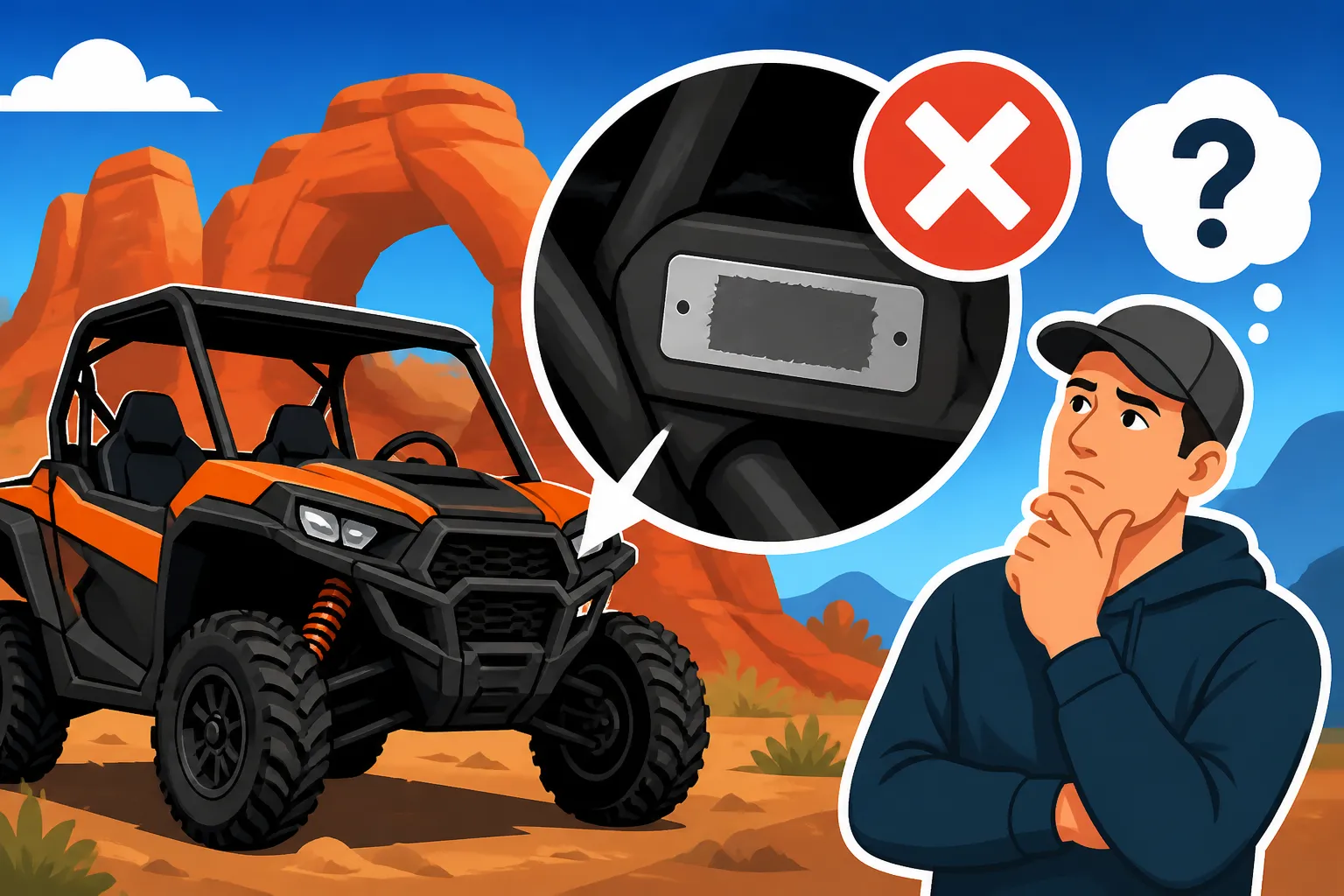
Finding out your beloved ATV or UTV has a missing Vehicle Identification Number (VIN) plate can be incredibly unsettling, immediately bringing up fears of theft, endless DMV hassles, and a machine that might never be legal to ride. It's a frustrating situation that many Utah riders face, whether they've just bought a used machine, are rebuilding one, or simply noticed it gone one day. This guide is here to walk you through exactly what to do, clearing up the confusion and helping you navigate the process to get your off-highway vehicle (OHV) legal and ready for Utah's incredible trails.
Why a VIN is Absolutely Critical for Your OHV in Utah
The VIN isn't just a random set of numbers on your ATV or UTV; it's the unique identifier for your machine, much like a fingerprint or a Social Security number for a person. In Utah, this number is paramount for almost every official interaction you'll have regarding your off-highway vehicle. Without it, your machine's identity is effectively lost, creating a host of legal and practical problems that can quickly derail your riding plans.
The Legal Backbone of Your OHV
From the moment you acquire an ATV or UTV in Utah, the VIN is central to its legal existence. It's the number the state uses to title your machine, ensuring clear ownership and creating a public record that tracks its history. When you go to register your OHV, the Utah Division of Motor Vehicles (DMV) uses this VIN to match it to its title, confirm it's not reported stolen, and properly assess any applicable fees. Think of it as the foundational piece of information for everything from insurance to law enforcement checks on the trail. Trying to register a machine without a VIN, or with a VIN that can't be found, means the DMV has no way to properly identify it, effectively stopping the registration process dead in its tracks. This is why a missing VIN plate isn't just an inconvenience; it's a significant roadblock to legal operation.
Moreover, the VIN is crucial for establishing provenance, especially for older machines or those acquired through private sales. Without it, there's no easy way to confirm the machine's year, make, or model definitively, which impacts its value and the parts you might need. It also creates a huge red flag if you ever try to sell the machine down the road. Potential buyers, and rightfully so, will be very wary of purchasing an OHV that lacks this fundamental identifier, as they would face the same hurdles you're encountering now.
Theft Prevention and Recovery
Beyond registration, the VIN is your first line of defense against theft and your best friend if your machine ever goes missing. Law enforcement agencies rely heavily on VINs to identify stolen vehicles and return them to their rightful owners. If your ATV or UTV is stolen and recovers, but its VIN plate is missing or tampered with, verifying that it's indeed your machine becomes significantly more difficult, prolonging the recovery process and adding unnecessary stress. This is why, even if you’re riding on private land and feel like registration isn't a priority, a missing VIN still carries a substantial risk. The theft and recovery systems are built around this unique identifier.
Furthermore, a missing VIN plate can sometimes be an indicator of a stolen machine itself. Thieves often remove or alter VIN plates to obscure a vehicle's true identity, making it harder for law enforcement to track. If you've just purchased a machine and discovered a missing VIN plate, it should immediately raise questions about its origin. While there are legitimate reasons for a plate to be missing due to age, damage, or reconstruction, it's always best to approach the situation with caution and ensure you're not inadvertently involved with stolen property. Checking a used Utah ATV for theft records using its VIN (if you can find an alternative stamping) is always a smart move.
What Utah Requires for OHV Identification
Utah state law, like most jurisdictions, mandates that OHVs have a visible and intact VIN. For machines manufactured after a certain year (typically 1988 and newer, though it varies for specific vehicle types), a title is also required, and that title is inextricably linked to the VIN. When you visit the Utah DMV to register, renew, or transfer ownership, the VIN will be the first piece of information they look for. They need to verify that the VIN on the machine matches the VIN on the title and other paperwork. [Utah's Title Rule for 1988 and Newer Machines] dives deeper into these requirements.
Even during a routine stop on the trail by a Utah Trooper, one of the first things they'll likely check is your registration and, by extension, the VIN on your machine to confirm its identity and legal status. A missing VIN plate can lead to fines, impoundment, and a lot of explaining, even if you have legitimate ownership documents. It essentially renders your machine unidentifiable in a legal sense, which is a serious issue in the eyes of the law. You can explore [What a Utah Trooper Checks at a Trailhead] for more details on what to expect.
Your First Steps When You Discover a Missing VIN Plate
Finding that the VIN plate is gone can send a jolt of panic through any rider. It's a moment that immediately raises questions about whether your machine is even legitimate or if you'll ever be able to register it. But don't despair! There's a clear process to follow in Utah to address this issue, starting with some crucial detective work and gathering documentation. Taking these steps methodically will save you a lot of grief down the road.
Thoroughly Inspect Your OHV for Secondary VIN Locations
Before you assume the VIN is entirely lost, take a deep breath and conduct a meticulous search of your entire ATV or UTV. Many manufacturers stamp the VIN in multiple locations on the frame, not just on an easily visible plate. These secondary stampings are often less obvious but are there precisely for situations like a missing or damaged primary plate. Think of areas that are more protected from wear and tear, or are integral to the frame structure itself.
Common places to check include the frame near the steering head (where the handlebars connect), under the seat, on the frame rails near the footpegs, or even on a cross-member near the engine or suspension mounting points. Sometimes, it's stamped directly into the metal, not on a separate plate, and might be obscured by dirt, paint, or rust. A wire brush and a flashlight can be your best tools here. You might be surprised to find a hidden VIN that can save you a significant amount of hassle. Referencing a service manual for your specific make and model can also provide diagrams showing common VIN locations. Understanding [Where the VIN Sits on Most Side-by-Sides] can give you a head start on your search.
Gather All Available Ownership Documentation
Once you've exhausted your search for a VIN stamping, your next step is to pull together every piece of paperwork you have related to your OHV. This includes the bill of sale, the original title (if you have one), any previous registration cards, service records, or even old insurance policies. These documents, even if they don't contain a VIN, can help establish a chain of ownership and prove that the machine belongs to you. The more evidence you have that you are the rightful owner, the smoother the process will be. If you bought the machine privately, your bill of sale is incredibly important. If you don't have a formal one, now might be the time to consider creating a robust document (perhaps even with a service like LawDepot if you need something more formalized for other purposes) that details the sale, even if it's retrospective.
The goal here is to construct a narrative of your ownership that the DMV can understand and verify. If you bought it from a dealer, dig out that original purchase agreement. If it was a private sale, hopefully you received a proper bill of sale. [Buying a Used ATV in Utah: The Paperwork] offers excellent advice on what paperwork you should have received. Even if the documents themselves are missing the VIN, they establish that this particular machine (by description, year, make, model) was legally transferred to you. This becomes critical if the DMV needs to assign a new VIN, as they need confidence in your ownership claim. Without this proof, the process becomes significantly more challenging, as the state needs to ensure it's not inadvertently legitimizing a stolen vehicle.
Contact Law Enforcement to Rule Out Theft
This step is crucial and shouldn't be skipped, especially if you recently acquired the machine. You need to contact your local law enforcement agency – this could be your city police department or county sheriff's office – and report the situation. Explain that you have an OHV with a missing VIN plate and that you're trying to get it properly identified and registered. They will likely check their databases for any matching stolen vehicle reports based on the machine's make, model, and any partial VINs or identifying features you might have found. This is an essential safeguard both for you and for the public.
Even if you're certain the machine isn't stolen (perhaps you've owned it for years and the plate just fell off due to corrosion or damage), getting an official report or a statement from law enforcement confirming it's not in their stolen vehicle database is highly beneficial. This report demonstrates to the DMV that you've done your due diligence and are proactively addressing the issue. Some DMVs may even require this step as part of their process for assigning a new VIN. Having a clean record from law enforcement significantly strengthens your case when you approach the DMV, showing that you've responsibly investigated the machine's history.
The Utah DMV Process for a Missing VIN Plate
Once you've thoroughly searched for a hidden VIN, gathered all your ownership documents, and cleared your machine with law enforcement, it's time to tackle the Utah DMV. This process can feel daunting, but approaching it with all your ducks in a row will make it much smoother. The goal is to prove legitimate ownership and get the state to assign a new, official VIN to your ATV or UTV.
Applying for a New VIN Assignment
The first formal step is to visit a Utah DMV office that handles OHV titling and registration. Not all offices do, so it's wise to call ahead or check online to ensure you're going to the right place. You'll need to explain your situation: your OHV has a missing VIN plate, and you're seeking a new VIN assignment. The DMV will provide you with specific forms you need to complete. These forms are designed to capture all available information about your machine and your claim of ownership. You'll typically need to provide details like the make, model, year (to the best of your knowledge), any engine numbers, and how you acquired the machine.
Along with the forms, you'll submit all the ownership documentation you gathered. This includes your bill of sale, any old titles, registration cards, and the report from law enforcement confirming the machine isn't stolen. The DMV staff will review these documents to establish a credible chain of ownership. This is where your meticulous preparation in the previous steps pays off. Without sufficient proof of ownership, the DMV will be hesitant to proceed, as they need to protect against titling or registering stolen property. You might also need to fill out an affidavit detailing how the VIN plate went missing and affirming your ownership. Services like LawDepot can be useful if you're looking for templates to create affidavits or other legal declarations to support your case.
Required Vehicle Inspections
A critical part of the new VIN assignment process in Utah is a mandatory vehicle inspection. This isn't just a quick look-over; it's a thorough examination by a certified inspector, often a DMV investigator or a law enforcement officer, to verify key aspects of your OHV. The purpose of this inspection is twofold: first, to confirm the physical characteristics of the machine match your description on the forms, and second, to search for any other hidden or secondary VIN markings that you might have missed. They are trained to find these manufacturer stampings, which could potentially still be present even if the primary plate is gone.
During the inspection, they'll meticulously examine the frame, engine, and other components for any factory-stamped numbers. They'll also look for signs of tampering, cutting, welding, or other alterations that might suggest foul play. If they do find any existing VINs, they will verify their authenticity and cross-reference them with databases to ensure the machine isn't stolen or salvaged under a different identity. This inspection is a serious step, designed to protect both the state and the eventual owner from potential fraud. If no VIN can be positively identified during this process, the inspector will then confirm that the machine is eligible for a new VIN assignment. [VIN Inspections for Utah ATV Paperwork] offers more insights into what these inspections entail.
Receiving Your New VIN and Paperwork
Once the inspection is complete and the DMV is satisfied with your ownership proof and the legitimacy of your request, they will issue a new, state-assigned VIN for your ATV or UTV. This new VIN will be unique to your machine and will be permanently affixed to the frame, usually through a new metal plate or a stamped impression. It's crucial that this new VIN is installed securely and prominently, as it will be the official identifier for your OHV going forward. You cannot simply write the number on; it must be a state-approved, permanent attachment.
After the new VIN is assigned and affixed, the DMV will update their records and issue you a new title that reflects this new VIN. This new title will be clean, indicating the state-assigned VIN as the official identifier. At this point, you can proceed with the standard registration process, if you haven't done so already. You'll pay the applicable registration fees and receive your new registration card and OHV decals. This entire process might take some time, involving multiple visits and waiting periods, so patience is key. However, once completed, your OHV will be fully legitimate, titled, and registered under its new identity, ready for the trails. [How to Register an ATV or UTV in Utah] will guide you through the subsequent steps once your machine has a valid VIN.
Overcoming Potential Roadblocks and Special Situations
While the general process for a missing VIN plate is fairly straightforward, there are always unique circumstances that can throw a wrench into the works. It’s important to anticipate some of these potential issues and know how to navigate them. Dealing with an OHV that has a missing VIN can sometimes feel like a detective novel, but with the right approach, even the trickiest situations can often be resolved.
What if the Machine is Very Old or Homebuilt?
For very old ATVs or UTVs, especially those manufactured before the standardized VIN system or before Utah had strict titling laws for OHVs, the situation can be a bit different. Similarly, if you have a homebuilt or custom-fabricated side-by-side, it wouldn't have come from a factory with a VIN plate to begin with. In these cases, the absence of a VIN plate isn't necessarily a "missing" problem, but rather a "never had one" situation that still requires a state-assigned VIN for legal operation. [Registering a 1987 ATV in Utah] or [Registering a Homebuilt or Kit UTV in Utah] can shed more light on specific scenarios.
The process for these machines will still involve an inspection by the DMV to verify the machine's construction and ensure it meets safety standards (where applicable). You'll still need to provide as much documentation as possible to prove ownership of the components or the machine itself. This might include receipts for parts, photos of the build process, or affidavits from witnesses. The DMV wants to ensure that even without a factory VIN, the machine is legally yours and safe to operate before issuing a new state-assigned VIN. Your ability to demonstrate legitimate ownership and provenance is paramount in these unique cases.
Dealing with Discrepancies or Suspicious Circumstances
Sometimes, during the inspection or review of your paperwork, discrepancies might arise. Perhaps a hidden VIN is found that doesn't match a previous bill of sale, or there are signs of extensive tampering that go beyond simple plate loss. These are serious red flags for the DMV and law enforcement. If the inspector believes the VIN was intentionally removed or altered to obscure a stolen identity, or if there's any other suspicious activity, your application for a new VIN will likely be put on hold or even denied. In such cases, law enforcement might open an investigation, and your OHV could be impounded while its history is thoroughly checked.
The best way to avoid this is honesty and transparency. If you have any reason to suspect the machine might have a questionable history, it’s far better to disclose everything upfront. If you purchased a machine that seemed too good a deal, or the seller was evasive about paperwork, you might be dealing with something stolen. Be prepared to explain any inconsistencies in your ownership chain. Proactively performing a VIN check (if you find any numbers) before buying a used machine is always advised. [Checking a Used Utah ATV for Theft Records] can help you understand how to protect yourself.
The Cost and Time Commitment
Getting a new VIN assigned isn't usually free, nor is it a quick trip to the DMV. You can expect to pay fees associated with the inspection, the VIN assignment itself, and eventually the titling and registration. While specific figures are not something I can provide, anticipate a monetary cost for these services. The total cost will depend on the specifics of the inspection and assignment process, plus the regular fees for [Utah OHV Registration Fees, Start to Finish].
Beyond the money, be prepared for a significant time commitment. Scheduling inspections, waiting for DMV processing, and potentially needing to provide additional documentation can take weeks, or even months, in complex cases. It's not a process you can rush, especially if an investigation is initiated. The best strategy is to start early, be patient, and follow up regularly with the DMV. Keep copies of all forms submitted, any receipts, and notes from conversations with DMV personnel or law enforcement. This meticulous record-keeping will be invaluable if you need to trace your steps or clarify any issues during the process.
Here's a quick overview of the typical steps for a missing VIN:
| Step | Description | Key Action Items |
|---|---|---|
| 1. Thorough Inspection | Search for any secondary or hidden VIN stampings on the frame. | Physically inspect all common and uncommon VIN locations. Use a flashlight, wire brush if needed. Consult owner's manual for specific locations. |
| 2. Document Gathering | Collect all paperwork proving your ownership and machine details. | Locate bill of sale, title (if any), previous registrations, service records, insurance papers. If no formal bill of sale, consider creating one with available details, potentially using resources like LawDepot for templates. |
| 3. Law Enforcement Contact | Report the missing VIN and request a check against stolen vehicle databases. | Contact local police or sheriff's office. Obtain a report or letter confirming the machine is not reported stolen. This provides crucial credibility for the DMV. |
| 4. DMV Visit & Application | Apply for a new VIN assignment at a Utah DMV office. | Visit a DMV office that handles OHV titling. Complete required forms for VIN assignment. Submit all gathered ownership documents and the law enforcement report. |
| 5. Vehicle Inspection | Schedule and undergo a physical inspection by a certified inspector. | The DMV will arrange for an inspector to examine the OHV for existing VINs, signs of tampering, and verify its physical description. Be ready to transport your OHV for this inspection if required. |
| 6. New VIN Assignment & Paperwork | Receive your new state-assigned VIN, new title, and complete registration. | Once approved, a new VIN will be affixed to your OHV. You'll receive a new title reflecting this VIN. Proceed with standard registration and decal application. [How Long Utah OHV Registration Takes to Process] can give you an idea of timeframes. |
Disclaimer
This article is for general informational purposes only and does not constitute professional advice. Laws, prices and regulations vary by location and change over time. Consult a qualified professional for guidance on your specific situation.