Questions the Utah DMV Will Ask About Your UTV
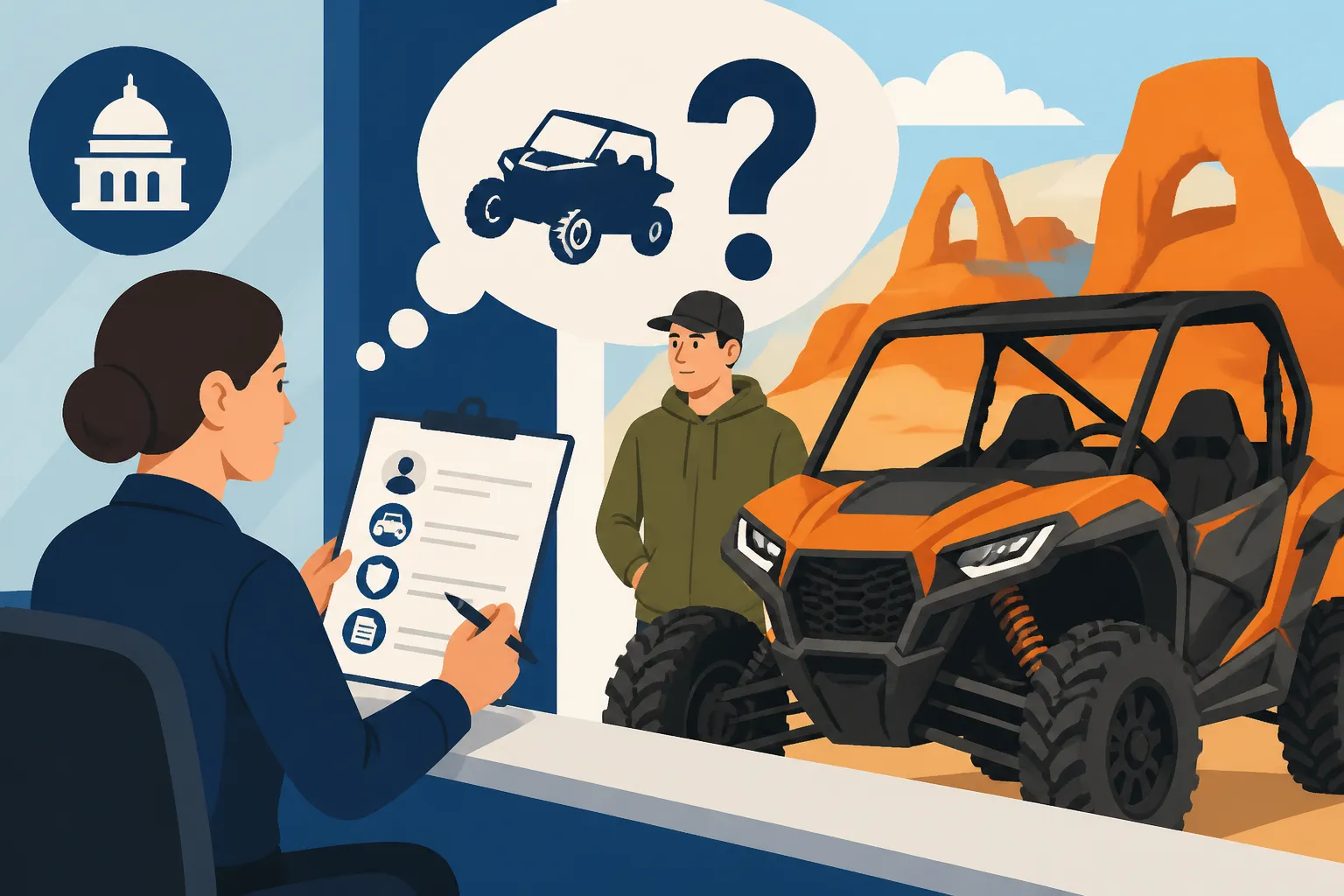
Walking into the Utah DMV, especially if it’s your first time registering an off-highway vehicle, can feel like stepping into a pop quiz you didn't study for. You've got your UTV, you're excited to hit the trails, but then comes the stack of paperwork and a series of questions that can make even the most seasoned rider a little nervous. This guide is here to pull back the curtain, giving you a clear picture of what the Utah DMV will likely ask you about your UTV so you can walk in prepared and confident, getting your machine street legal or trail-ready without a hitch.
Understanding Why the DMV Asks So Many Questions
It's easy to feel like the DMV asks too many questions, or that they're trying to make things difficult. Trust me, I've been there, clutching a handful of papers and wondering why they need to know my grandma's maiden name. But when it comes to registering an OHV, every question usually has a solid, practical reason behind it, designed to protect everyone involved and keep our beautiful Utah trails well-maintained. It's not about being nosey; it's about ensuring everything is above board.
Protecting Against Fraud and Theft
One of the primary reasons for all the detailed questions is to combat fraud and prevent the registration of stolen vehicles. Imagine buying a UTV, only to find out later it was reported stolen, and you're now out a significant investment. The DMV acts as a gatekeeper, verifying ownership and the vehicle's history to protect you and other buyers down the line. They scrutinize VINs (Vehicle Identification Numbers), check previous titles, and cross-reference databases to ensure the machine you're trying to register legitimately belongs to you. This is why a clear chain of ownership is so crucial.
They're looking for discrepancies – a VIN that doesn't match the paperwork, an owner's name that doesn't quite line up with previous records, or an incomplete bill of sale. These aren't just minor clerical errors; they can be red flags that indicate a larger problem. A thorough check at the registration desk can save everyone a lot of heartache (and legal trouble) later on. It’s their way of keeping our OHV community safe and ensuring that the machines out on the trails are rightfully owned.
Ensuring Proper Taxation and Fees
Another big reason for the DMV's detailed inquiries is to correctly assess the taxes and fees associated with your UTV registration. Utah has specific rules for sales tax, uniform fees, and registration costs, and these often depend on the machine's age, value, and how it was acquired. They need to know the purchase price if you bought it recently, or an estimated market value for gifted or inherited machines, to calculate the correct sales tax. They also need to know the model year and other details to determine the [The Age-Based Uniform Fee on Utah OHVs].
Without this information, it would be impossible for them to collect the right amount of revenue, which, by the way, often goes back into maintaining our incredible OHV trail system. Think of it this way: every dollar collected through proper registration helps fund trail grooming, signage, and facilities that we all enjoy. So, while it might feel like a lot of numbers and paperwork, it’s all part of the system that keeps Utah's OHV experience top-notch. They're making sure you pay your fair share, and no more, to keep the trails open and accessible.
Verifying Safety and Compliance
Sometimes, the DMV's questions touch on the physical attributes or intended use of your UTV, especially if you're trying to make it street legal or if it falls into a special category. They might ask about modifications, such as whether it has turn signals, a horn, or mirrors, to ensure it meets [Utah Street-Legal ATV Equipment Requirements]. These questions aren't just bureaucratic hurdles; they're essential for public safety, making sure that a machine intended for road use is equipped to navigate traffic safely.
For instance, if you're registering a machine that's quite old, they might have specific questions about its original titling status, given that [Utah's Title Rule for 1988 and Newer Machines] dictates certain requirements. Or, if you're trying to register a homebuilt or kit UTV, they'll have a unique set of questions to verify its origins and safety. Each question is designed to ensure that your UTV complies with state regulations, making sure that when you hit the road or trail, you and others around you are as safe as possible.
Key Information You'll Need to Provide
To make your DMV visit as smooth as a fresh trail after a rain, the best thing you can do is come prepared with all the necessary information and documents. It really does save a lot of back-and-forth and frustration. Think of it as packing your trail bag: you wouldn't head out without water and a map, so don't head to the DMV without your essential paperwork.
Your Machine's Specifics: VIN, Make, Model, Year
This is the absolute bedrock of your registration. The DMV will undoubtedly ask for your UTV's Vehicle Identification Number (VIN). This 17-character code is like your UTV's fingerprint – unique and critical for identification. They'll also need the make (e.g., Polaris, Can-Am, Honda), model (e.g., RZR, Defender, Foreman), and the manufacturing year. This information is vital for cross-referencing against their databases, checking for theft records, and accurately assessing fees. You can usually find the VIN stamped on the frame, often near the front left wheel well, on the dashboard, or sometimes under the seat. If you're unsure, consulting your owner's manual or doing a quick online search for your specific model can help you locate it. Don't go to the DMV without this ready; it's the very first thing they'll ask for.
Knowing the exact make, model, and year is crucial for two main reasons. First, it helps the DMV verify the machine's identity and history. They'll use this to confirm it aligns with any existing title records. Second, this data directly impacts the [How Utah Values a UTV for Its Uniform Fee] calculation. Older machines often pay a different uniform fee than newer ones, and specific models can sometimes influence value assessments. Having this information accurately and readily available will prevent delays and ensure you're charged the correct amount, avoiding any overpayments or underpayments that could lead to issues later.
Proof of Ownership Documents
This is where many people get tripped up. The DMV needs to see concrete evidence that you are the legal owner of the UTV. If you bought it new from a dealer, you'll typically have a Manufacturer's Statement of Origin (MSO) or Manufacturer's Certificate of Origin (MCO), along with a bill of sale. For a used UTV bought from a private party, you'll need the properly signed-over title (if the UTV is 1988 or newer) and a bill of sale. Even if the machine was never titled, or if you're bringing in a UTV from out of state, there are specific forms and procedures to establish ownership.
This part can feel like a maze, especially if you're navigating a private sale. A good, comprehensive bill of sale is your best friend here. It should include the VIN, make, model, year, sale price, buyer's and seller's names, addresses, and signatures, and the date of sale. Websites like LawDepot offer customizable bill of sale templates that can help you ensure you're including all the necessary information, protecting both parties and satisfying DMV requirements. Having this documentation in order is paramount to demonstrating your legitimate claim to the UTV.
Personal Identification and Residency
Of course, the DMV also needs to know who you are. You'll need to present a valid form of personal identification, typically a government-issued photo ID like a driver's license or state ID card. This verifies your identity and ensures that the registration is correctly assigned to you. They will also confirm your current Utah address to ensure the registration and any future correspondence go to the right place.
If you're a new resident to Utah, there might be additional questions or documents required to establish your residency and demonstrate that you're legitimately making Utah your home. This is often tied to how soon new residents are expected to register their vehicles here. For example, some states have grace periods for new residents, but it's always best to be prepared to prove your new address. Make sure the address on your ID matches your current Utah residence, or bring supplemental proof of address like a utility bill if needed. This step confirms you're a real person, and that the state knows where to send your renewal notices or other important documents.
| Question Type | Information Needed | Example Scenario |
|---|---|---|
| Vehicle Identification | VIN, Make, Model, Year | "What is the VIN for this Polaris RZR 1000?" |
| Proof of Ownership | Title, Bill of Sale, MSO/MCO | "Do you have the signed-over title from the previous owner?" |
| Purchase Details | Purchase Price, Date of Sale | "How much did you pay for the UTV, and when did you buy it?" |
| Acquisition Method | Private Sale, Dealer, Gift, Inherited | "Was this machine purchased new, used, or was it a gift?" |
| Personal Identity | Valid Photo ID | "Can I see your Utah driver's license, please?" |
| Residency | Current Utah Address | "What is your current physical address in Utah?" |
| Intended Use | Off-Highway, Street-Legal, Farm | "Will this UTV only be used off-highway, or are you seeking street-legal registration?" |
| Previous Registration | State/Country, Registration Number | "Has this UTV ever been registered or titled in another state?" |
Common DMV Questions and How to Answer Them
Even with all your paperwork in order, the actual conversation with the DMV clerk can bring up questions you hadn't anticipated. It's helpful to understand the typical lines of inquiry they follow, as this often reveals the underlying purpose of their questions and helps you provide the most accurate, concise answers. Remember, they're just doing their job to ensure compliance and accuracy.
Questions About How You Acquired the UTV
One of the first things the DMV will want to know is how you came into possession of your UTV. This question isn't just casual conversation; it determines which paperwork is necessary and how taxes and fees are calculated.
-
"Did you buy this UTV from a dealer or a private party?"
- If from a dealer: Be ready with your MSO/MCO and the purchase agreement. Dealers typically handle a lot of the initial paperwork and tax collection, making this a smoother process. However, you'll still need to formally register it in your name.
- If from a private party: This is where the properly endorsed title and a detailed bill of sale become critical. The DMV needs to see a clear transfer of ownership. If you're struggling with getting the right documents for a private sale, a service like LawDepot can provide forms that cover all the necessary legal points, ensuring your [Bill of Sale Requirements for a Utah ATV Sale] are met. Don't forget, if the UTV is older than a certain year, it might not have a title, in which case you'll be navigating the process of [Registering a UTV in Utah Without a Title].
-
"Was this UTV gifted to you, or did you inherit it?"
- If the UTV was a gift, you'll still need a bill of sale, often stating a nominal value (like $1) or indicating "gift" in the price field, signed by both parties. You might also need a specific Affidavit of Gift form. While sales tax usually applies to the purchase price, gifting can sometimes have different tax implications, but a uniform fee based on market value will still likely apply.
- For inherited machines, you'll likely need documentation proving your inheritance, such as a death certificate and testamentary documents (like a will or affidavit of heirship), to transfer the title into your name. This ensures that the vehicle is legally transferred from the deceased owner to you.
-
"Did you purchase this UTV out of state?"
- If you bought your UTV outside of Utah and are now bringing it into the state, the DMV will have specific questions about its origin. You'll need the out-of-state title (if applicable), the bill of sale, and possibly a VIN inspection. Utah wants to ensure proper sales tax is collected if it wasn't paid in full elsewhere, and that the machine meets Utah's identification standards. This process is covered in detail in guides like [Buying an ATV Out of State and Registering It in Utah].
Inquiries Regarding Your UTV's Intended Use
How you plan to use your UTV affects its registration type and certain fees. The DMV needs to know if it's strictly for off-road use or if you intend to make it street legal.
-
"Will this UTV only be used off-highway, or are you planning to make it street legal?"
- Off-Highway Only: If your UTV is just for the trails and private property, the standard OHV registration applies. This involves paying the registration fee and the uniform fee, and you'll receive your OHV decal. This is generally the most straightforward path.
- Street Legal: If you plan to drive your UTV on public roads, this is a whole different ballgame. The DMV will want to know if it has all the necessary equipment: headlights, tail lights, turn signals, mirrors, a horn, and a license plate light. You'll need to undergo a safety inspection before full street-legal registration can be granted. This leads to additional fees and requirements, essentially registering it as both an OHV and a street-legal vehicle. Check out articles like [Making a UTV Street Legal in Utah] for all the details.
-
"Will this UTV be used primarily for farm or ranch work?"
- Utah does offer some exemptions for OHVs used exclusively for agricultural purposes on private land, sometimes allowing them to avoid full registration, especially if they only cross public roads to get from one piece of private property to another. However, these exemptions have strict rules and limitations. The DMV will ask specific questions to determine if your UTV truly qualifies under these [Farm and Ranch Exemptions in Utah OHV Law]. It's not a blanket exemption, so be prepared to explain its intended use.
Clarifying Questions About Past Registrations or Titles
The UTV's history, especially regarding titles and registrations, is vital for proper record-keeping and ensuring legality.
-
"Has this UTV ever been titled or registered in another state or country?"
- This is a common question, particularly if you're [Moving to Utah With an ATV You Already Own]. The DMV will need the out-of-state title and registration documents to verify the machine's history and transfer it into the Utah system. They'll want to see how the title from another state is handled and whether it aligns with Utah's standards.
-
"Was this UTV ever titled anywhere, or has it always been unregistered?"
- This question often comes up with older machines, utility vehicles, or those bought with less-than-perfect paperwork. If the UTV was never titled, you might need to go through a process of establishing ownership through a sworn statement, a bill of sale, and possibly a VIN inspection. This is a situation where having all supporting documents, even old receipts or maintenance records, can be helpful to prove continuous possession. The process for [Registering a UTV That Was Never Titled Anywhere] can be more involved but is certainly doable with the right approach.
Preparing for a Smooth DMV Visit
Knowing what to expect is half the battle. The other half is taking proactive steps to ensure your visit to the Utah DMV is as efficient and painless as possible. A little preparation goes a long way in avoiding unnecessary trips and frustrating delays.
Gathering All Necessary Paperwork Before You Go
Before you even think about driving to the DMV, take some time to meticulously gather and organize all your documents. Create a checklist based on the type of transaction you're making (e.g., new registration, title transfer, street-legal conversion). For general registration, this usually includes:
- Your valid photo ID.
- The original title, properly signed over to you by the seller (or an MSO/MCO from a dealer).
- A comprehensive bill of sale, even if you acquired it through a gift or trade. If you used a service like LawDepot for your bill of sale, ensure all fields are filled out correctly.
- Proof of Utah residency (if your ID doesn't reflect your current address).
- Proof of any required inspections (like a VIN inspection if applicable, or a safety inspection for street-legal machines).
- Method of payment for fees and taxes.
Make copies of everything for your own records before you hand over the originals. Having all these documents neatly organized in a folder will not only impress the DMV clerk but also ensure you don't forget anything vital. This is your essential [A First-Time Buyer's OHV Paperwork Checklist in Utah].
Considering Online Options or Appointments
While you can't typically complete a brand-new UTV registration entirely online, especially if a title transfer or VIN inspection is involved, you can often start parts of the process or schedule an appointment. Many Utah DMV locations allow you to schedule an appointment online, which can drastically cut down on wait times. Imagine showing up and being seen within minutes versus waiting an hour or more – it’s a game-changer!
Additionally, if you're simply renewing an existing registration, Utah offers convenient online renewal options. It's always a good idea to check the Utah DMV's official website for your specific county to see what services are available online or if appointments are recommended. This small step can save you significant time and hassle, letting you get back to planning your next ride. Knowing the options for [Renewing a Utah OHV Registration Online] can be very helpful for future transactions.
Knowing When to Seek Professional Help
Sometimes, despite all your best efforts, you might encounter a particularly tricky situation. Maybe the previous owner never titled the UTV, you've inherited a machine with unclear documentation, or you're dealing with a UTV that was significantly rebuilt. These complex scenarios can involve affidavits, bonds, or even legal counsel to establish clear ownership.
If you find yourself in a situation where the DMV's requirements seem overwhelming or you're missing critical documents, don't hesitate to seek professional help. This could mean contacting a title service, an attorney specializing in vehicle law, or even calling the DMV's main customer service line for guidance on unusual circumstances. While this article provides a good overview, every situation is unique, and sometimes an expert opinion is the best way to navigate those particularly murky waters. For instance, if you're dealing with [Registering a UTV You Only Use on Your Own Land], you might still have specific requirements to meet.
Disclaimer
This article is for general informational purposes only and does not constitute professional advice. Laws, prices and regulations vary by location and change over time. Consult a qualified professional for guidance on your specific situation.