Utah Bill of Sale: What It Must Say
Many riders feel completely overwhelmed when buying or selling an ATV or UTV privately here in Utah, especially when it comes to the dreaded paperwork. One document that causes a lot of confusion is the Bill of Sale – what exactly does it need to say to be legally sound and protect both parties? This guide is here to walk you through every critical detail your Utah Bill of Sale must contain, ensuring your next off-highway vehicle transaction goes smoothly and without a hitch.
Why a Bill of Sale Is Absolutely Essential for Your Utah OHV Transaction
You might be thinking, "It's just a handshake and cash, right?" or "The title is all that really matters." But here in Utah, a well-drafted Bill of Sale for your off-highway vehicle (OHV) – whether it's an ATV, UTV, dirt bike, or snowmobile – is far more than just a formality. It’s a foundational piece of documentation that serves multiple crucial purposes, protecting both the buyer and the seller from potential headaches down the line. Overlooking its importance can lead to legal disputes, registration nightmares, and even financial losses.
Proof of Ownership and Liability Protection
Imagine you've just handed over a good chunk of cash for that sweet used side-by-side, you've got the title in hand, but the seller didn't provide a Bill of Sale. A week later, you find out the machine was reported stolen, or worse, someone tries to claim it's still theirs. Without a clear, dated Bill of Sale, proving the transfer of ownership becomes incredibly difficult. It's not just about theft, either; it's about establishing a clear chain of custody. If anything happens to the machine after the sale, but before the title is officially transferred, that Bill of Sale becomes your first line of defense, clearly marking the exact moment the responsibility shifted from seller to buyer. It's the moment you can finally breathe easy and know that machine is officially yours.
Furthermore, it protects the seller from liability. Once you've sold your old quad, you don't want to be held responsible for anything that happens to it afterward. A properly executed Bill of Sale with a clear date and time of transfer helps sever that legal tie. This is particularly important for things like accidents, property damage, or even unpaid parking tickets if the machine was street-legal. Think of it as your official "goodbye" to the machine, legally speaking. If you're using a template from a reputable source like LawDepot, these liability clauses are often built in, providing an extra layer of peace of mind.
A Critical Document for Utah DMV Registration
For the buyer, the Bill of Sale is often an indispensable document when it comes time to register the OHV with the Utah Division of Motor Vehicles (DMV). While the title is paramount for proving legal ownership, the Bill of Sale substantiates the purchase details, including the purchase price, which directly impacts the sales tax you’ll pay and the uniform fee assessed by the state. Without it, the DMV might have questions, or you might even be required to provide additional sworn statements about the sale. This can cause frustrating delays in getting your new machine out on the trails.
Utah's process for registering an off-highway vehicle requires careful attention to detail. The DMV uses the Bill of Sale to confirm the transaction date and the amount paid, ensuring proper calculation of sales tax. If you buy a used machine from a private seller, and they don't have a title – perhaps it's an older machine, or they simply lost it – the Bill of Sale often becomes even more critical. In some cases, for older machines (pre-1988), it might even be the primary document of ownership, as not all very old OHVs were issued titles in Utah. This is why understanding [No Title From the Seller: What Utah Requires] is so important. A complete and accurate Bill of Sale helps you avoid those moments where the DMV clerk looks at you and asks for "more paperwork."
The Non-Negotiable Information Your Utah Bill of Sale Must Include
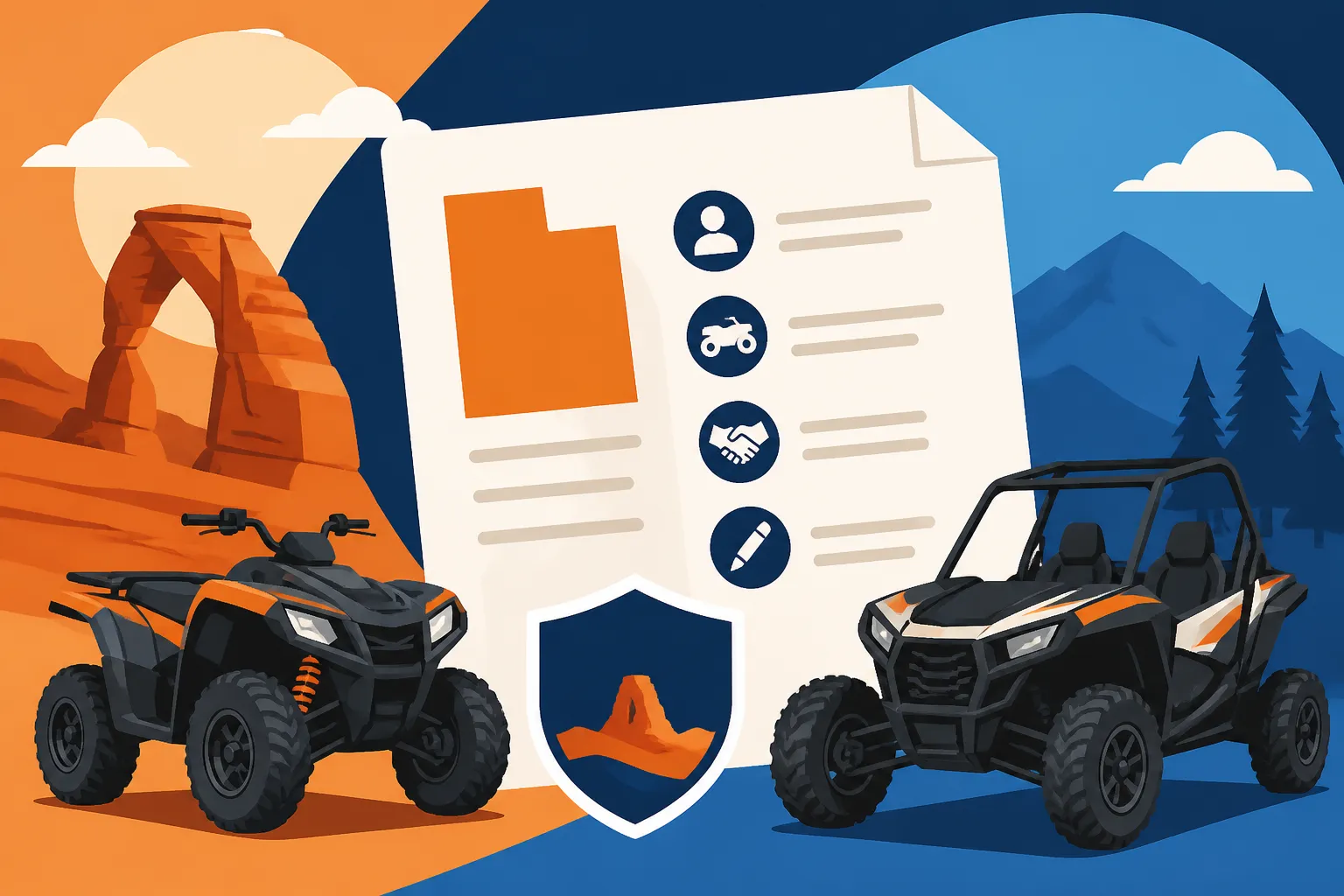
When you're creating or receiving a Bill of Sale for a Utah ATV or UTV, there are certain pieces of information that are absolutely critical. Missing even one of these details can weaken the document's legal standing and create problems during registration or in the event of a dispute. Think of these as the building blocks of a solid, legally recognized transaction.
Identifying the Buyer and Seller
This might sound obvious, but it's often where mistakes creep in. The Bill of Sale needs the full legal names and current addresses of both the buyer and the seller. This isn't just for formality; it's about clearly establishing who is relinquishing ownership and who is acquiring it. If the seller is a business or a trust, the legal name of the entity, along with the authorized representative's name and title, must be clearly stated. This removes any ambiguity about who participated in the transaction.
Make sure to spell out names completely and accurately, matching what's on their government-issued identification. Using nicknames or initials can lead to confusion. For example, "John Smith" is much better than "J. Smith." Including a phone number and email address for both parties, while not strictly legally mandated, is a good idea for any follow-up questions or issues, though these are secondary to the legal names and addresses. Sometimes, even when you're transferring an ATV title between family members in Utah, these details are still crucial to make the transfer legitimate.
Detailed Description of the Off-Highway Vehicle
This is where you paint a clear picture of the specific machine being bought or sold. Simply writing "one ATV" isn't going to cut it. You need to include:
- Year, Make, and Model: For example, "2020 Polaris RZR XP 1000."
- Vehicle Identification Number (VIN): This is the most important identifier. The VIN uniquely identifies the machine and links the Bill of Sale directly to that specific vehicle. Always double-check that the VIN on the Bill of Sale exactly matches the VIN stamped on the machine itself. This is critical for preventing fraud and ensuring you're registering the correct vehicle. Running a [Running a VIN on a Used UTV Before You Pay] is always a smart move to check for theft records.
- Odometer/Hour Meter Reading (if applicable): While not legally required for OHVs in the same way it is for cars, noting the mileage or hours at the time of sale can be helpful for both parties, especially when dealing with warranties or assessing wear and tear.
Without a complete and accurate description, especially the VIN, your Bill of Sale is essentially worthless as proof of ownership for that specific machine. The DMV will certainly scrutinize this information when you present your paperwork to them. If you're wondering [Which Machines Utah Registers as Off-Highway Vehicles], this detailed description will help clarify whether your vehicle falls under those rules.
The Agreed-Upon Purchase Price
The monetary consideration for the sale needs to be explicitly stated on the Bill of Sale. This is not just for transparency; it's the figure the Utah DMV will use to calculate your sales tax and sometimes the basis for the uniform fee. State the full price in U.S. dollars, both numerically and in written form, to prevent any disputes over the amount. For example, "$5,500.00 (Five Thousand Five Hundred Dollars and Zero Cents)."
If the machine is being gifted, the Bill of Sale should clearly state "Gift" or "$0.00" as the purchase price, though you may still owe taxes on the fair market value. If there's a trade involved, clearly delineate the value of the trade and any additional cash exchanged. Clarity here prevents future arguments and streamlines the tax calculation process.
The Date of the Sale
The date the transaction took place is fundamental. It establishes the exact point in time when ownership officially transferred from the seller to the buyer. This date is crucial for determining liability, calculating tax deadlines, and verifying the validity of the document itself. Always include the full date, including the year. For instance, "October 26, 2024." Without a date, the document is incomplete and its legal effectiveness is significantly diminished. If you’re buying a used ATV in Utah, the paperwork often hinges on this date.
Smart Additions to Your Bill of Sale for Extra Protection
While the previous sections covered the absolute necessities, there are several other elements that, while not strictly mandated by Utah law for a basic Bill of Sale, can provide significant additional protection and clarity for both parties. These are the kinds of details that turn a bare-bones receipt into a robust legal document, especially if any issues arise after the sale.
Disclosures and "As Is" Clauses
When selling a used OHV, it’s common practice to sell it "as is." This means the buyer accepts the machine in its current condition, with all its faults, latent or apparent, and the seller makes no guarantees about its future performance or condition. Including a clear "as is" clause on your Bill of Sale is a powerful protection for the seller, minimizing their liability for any problems that surface after the sale. This clause should be prominent and unambiguous, such as: "The Buyer acknowledges that this vehicle is sold 'as is, where is,' without any warranties, express or implied, including but not limited to any warranty of merchantability or fitness for a particular purpose."
For the buyer, while an "as is" clause means you're taking on risk, it also prompts you to be extra diligent during your pre-purchase inspection. It’s a signal to thoroughly check the machine, ask questions, and perhaps even have a mechanic look at it. If the seller is making any specific guarantees (e.g., "new tires," "engine rebuilt last year"), those should also be clearly noted on the Bill of Sale to protect the buyer. LawDepot's customizable templates often include options for these types of clauses, allowing you to tailor the document to your specific situation.
Signatures, Witness, and Notarization Considerations
For a Bill of Sale to be legally binding, it must be signed by both the buyer and the seller. Their signatures confirm their agreement to the terms outlined in the document. Without both signatures, the document is just a piece of paper. Each party should sign their full legal name, ideally matching the name printed at the top of the document.
While not always legally required in Utah for a Bill of Sale to be valid (you might be surprised to learn about [Do You Need a Notarized Bill of Sale in Utah?]), having the document witnessed and/or notarized adds significant weight and helps prevent disputes over authenticity.
- Witnesses: Having a disinterested third party witness the signing by both buyer and seller, and then sign the document themselves, provides additional verification that the signatures are genuine and that the parties willingly entered into the agreement.
- Notarization: A notary public verifies the identities of the signers and confirms that they signed the document willingly. This carries more legal weight than a simple witness and is an excellent practice for higher-value transactions or if there's any concern about potential future disputes. While the Utah DMV may not always require notarization for a Bill of Sale specifically, it can certainly smooth the process for other parts of [The Order to Do Utah OHV Paperwork In].
Always ensure each party receives a signed copy of the Bill of Sale. This ensures everyone has a complete record of the transaction.
Common Pitfalls and How to Avoid Them
Even with the best intentions, it's easy to make small errors that can cause big headaches down the road when dealing with ATV and UTV paperwork in Utah. Knowing what these common pitfalls are can help you steer clear of them and ensure a smooth transaction.
Incomplete Information and Illegible Details
One of the most frequent issues with privately drafted Bills of Sale is missing or unclear information. People rush, they scrawl, or they simply forget to fill in every blank. An incomplete address, a missing VIN digit, or an unstated purchase price can all render the Bill of Sale ineffective for its primary purposes. The Utah DMV is looking for accuracy and completeness; anything less can lead to delays or outright rejection of your registration application.
How to avoid it:
- Use a template: Reputable templates, like those found on LawDepot, ensure all the necessary fields are present. This acts as a checklist, making it harder to forget crucial information.
- Take your time: Don't rush the paperwork. Sit down in a quiet place and fill out all the details carefully.
- Type it out: If possible, type the Bill of Sale. This ensures legibility for everyone involved, especially for the DMV clerks who will be reviewing it. If handwritten, use clear, block letters.
- Double-check everything: Before anyone signs, have both the buyer and seller review the entire document, especially the VIN, make, model, year, and purchase price. It’s easy to make a typo, and catching it before signatures saves a lot of trouble. This careful review also helps prevent [Mistakes That Void an ATV Title Transfer].
Understanding the Role of the Title vs. Bill of Sale
A very common misunderstanding is the difference in purpose between a Bill of Sale and the OHV title. Some people mistakenly believe that having one negates the need for the other. This simply isn't true, especially in Utah. The title is the ultimate proof of legal ownership. It's issued by the state and identifies the registered owner. The Bill of Sale, on the other hand, is proof of the transaction – it documents the sale, the price paid, and the transfer of possession. While they are distinct, they work together to form a complete paper trail.
How to avoid it:
- Demand both: As a buyer, always ensure you receive both a properly signed-over title (for 1988 and newer machines) and a complete Bill of Sale. Even if a machine is old enough not to require a title, a Bill of Sale is still critical. You'll need the title to legally transfer ownership in your name at the DMV. Understanding [Utah ATV Title Requirements Explained] is key.
- Don't release the title without payment: As a seller, never sign over or hand over the title until you have received full payment and the Bill of Sale is signed by both parties. This protects you financially.
- Know the exceptions: For older machines (typically pre-1988), a title may not exist, and the Bill of Sale becomes the primary proof of ownership for registration purposes. However, for most modern machines, both are absolutely necessary. If you're selling an ATV in Utah, remember that the title and a Bill of Sale go hand-in-hand. When a Utah trooper checks your paperwork at a trailhead, they're often looking for proof of current registration, which relies on these initial documents being correct.
Making sure your Utah Bill of Sale contains all the necessary information and that you understand its role alongside the OHV title will save you countless headaches, whether you're buying that dream machine or selling your trusty trail companion.
Disclaimer
This article is for general informational purposes only and does not constitute professional advice. Laws, prices and regulations vary by location and change over time. Consult a qualified professional for guidance on your specific situation.