Proof of Out-of-State Residency Utah Asks For
A Utah riding trip can turn into a paperwork problem if you arrive with an out-of-state machine but cannot show that you qualify for the visitor permit. The practical fix is to sort out residency evidence before you travel, especially if your ID has an old address or your household includes riders with different home states. Here’s what to prepare, what not to assume, and how to handle an unclear case.
Why Utah asks visitors to prove residency
Utah’s non-resident OHV permit is intended for eligible visitors riding off-highway vehicles in Utah. Proof of out-of-state residency helps establish that you qualify to buy that permit. It is a separate question from whether your machine is registered, whether you have completed required rider education, or whether a particular riding area charges an entrance fee.
That distinction matters. An out-of-state registration card may show where the machine is registered, but it does not necessarily prove where its owner lives. Likewise, a reservation, hotel receipt, utility bill for a Utah vacation property, or the fact that you drove in from another state does not by itself establish your legal residence. Utah is asking about the rider’s eligibility, not just the machine’s origin or the trip’s starting point.
If you are new to the permit rules, begin with Utah’s Non-Resident OHV Permit Explained and Who Needs a Utah Non-Resident OHV Permit. Those guides cover the broader permit question. This article focuses on the evidence you may need when you are purchasing or carrying a visitor permit.
In ordinary situations, a current government-issued ID from your home state is the most straightforward document to have available. But an ID is only useful if it meets the current instructions for the permit transaction and the information on it supports your situation. If your driver license is expired, shows a former address, or conflicts with other records, do not assume that a registration card or a verbal explanation will automatically substitute.
A useful way to think about the process is:
- Residency evidence supports your eligibility to buy a non-resident permit.
- The permit itself shows that you have obtained the required Utah visitor permit.
- Machine registration or other documentation concerns the vehicle’s legal status and ownership.
- An OHV education certificate, when required for a rider, is a separate qualification.
- Area entry fees or passes are separate from the statewide visitor permit.
A visitor can have one of these items and still need another. For example, carrying a valid out-of-state registration does not necessarily replace a Utah non-resident permit, and a permit does not necessarily replace a required education certificate. For what to keep on hand after purchase, see Carrying Your Certificate and Permit on the Trail.
| What you need to establish | Evidence that may be relevant | What it does not establish by itself |
|---|---|---|
| Your eligibility as a non-resident | Current government-issued identification or other evidence accepted under the current permit instructions | That your OHV is registered or that you have an education certificate |
| The machine’s status | Registration, title, or other machine documents when applicable | Your personal residency |
| Permit compliance | The permit or proof of purchase in the form Utah accepts | Entry to every recreation area or compliance with every local rule |
| Rider education compliance | The required certificate or accepted equivalent, when applicable | Residency or machine ownership |
The exact evidence Utah accepts can depend on the current purchase process and on the details of your case. Treat the permit application’s instructions as the deciding guide, not an old forum post, a friend’s recollection, or an assumption based on what another state accepts.
Which documents to prepare
Start with current identification
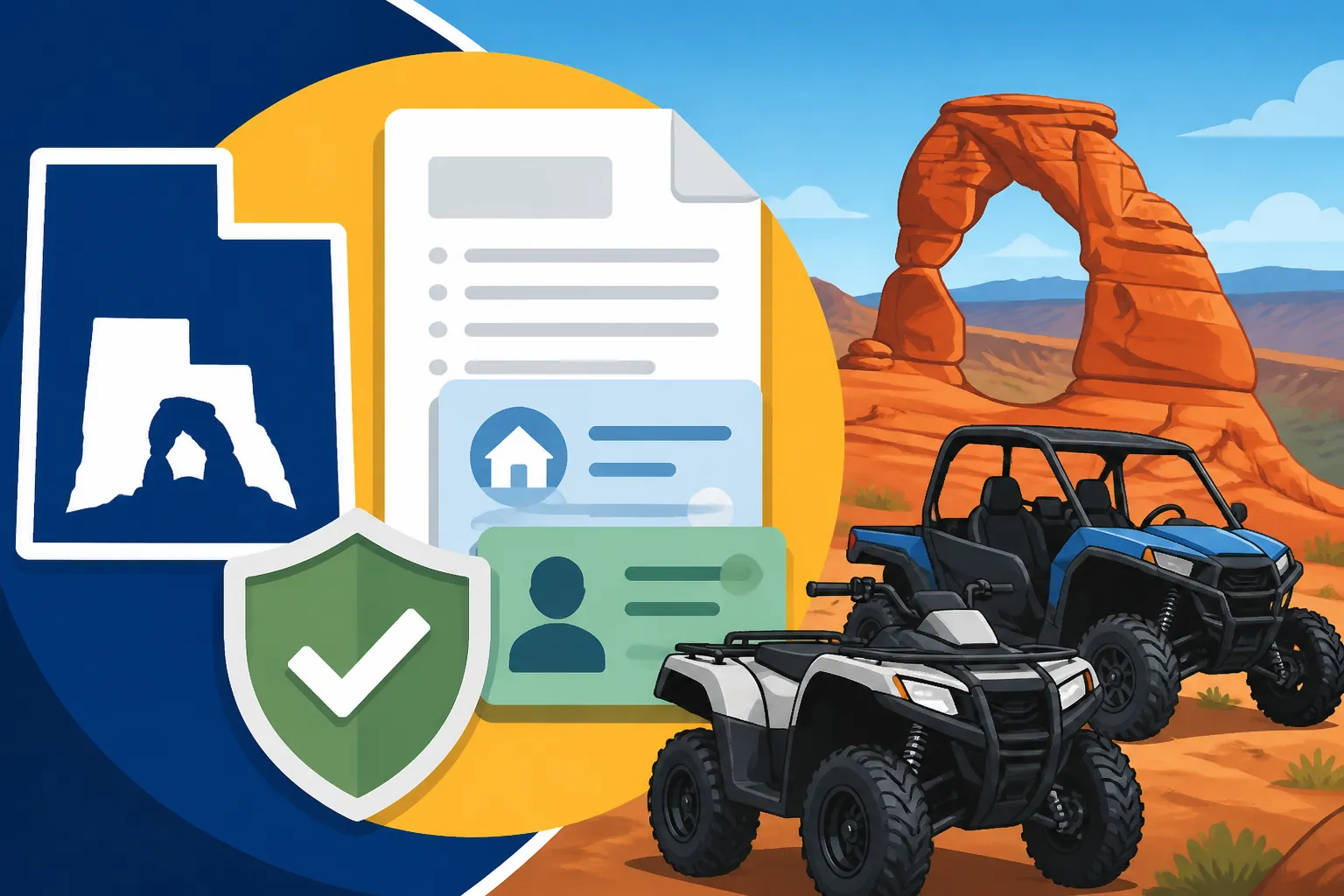
If you have a valid state-issued driver license or identification card showing your current out-of-state address, keep it accessible when you apply and when you ride. It is usually the clearest starting point because it identifies you and ties you to a home-state address.
Check the details before relying on it:
- Is it current rather than expired?
- Does it show the address where you currently reside?
- Does the name match the name you use for the permit?
- Is the image or document legible if the application asks you to provide it?
- Does the address support the state of residency you intend to declare?
A card can be valid for driving while still creating a question about residency if it shows an old address. If you have moved recently, update your identification when required by your home state and check Utah’s current permit instructions before purchasing. Don’t try to resolve an address mismatch by entering an address that is no longer yours.
Have supporting records ready if the situation is unusual
Some riders have a straightforward case; others do not. A person who recently moved, attends school away from home, is stationed temporarily elsewhere, or lives between two states may need to explain which state is their residence. In those situations, it is sensible to gather relevant records before starting the application.
Depending on the circumstances and the current instructions, potentially useful supporting records might include a current state-issued identification document, a document showing a current residential address, or official paperwork that explains a temporary status. These are examples to help you prepare, not a promise that Utah will accept any particular item as a substitute for the requested proof. Confirm acceptable alternatives with the official permit provider before relying on them.
Keep the records consistent. If your identification lists one state, your permit application lists another, and your machine paperwork lists a third, that does not automatically mean you are ineligible—but it can prompt a question. Be ready to explain the difference accurately and provide whatever evidence the current process requires.
A mailing address and a residential address are not always the same. A post office box, work address, family member’s address, or seasonal mailing address may be useful for receiving correspondence, but it may not demonstrate where you legally reside. If the application asks for your residence, answer that question rather than supplying whichever address is easiest to access.
Make sure the rider and purchaser are not being confused
A family trip can involve several riders, several machines, and one person handling the paperwork. Keep clear records of who is applying, who will ride, and which machine is associated with each permit or requirement. A parent’s ID does not automatically establish a child’s residency, and one adult’s permit should not be assumed to cover everyone else.
If you are buying permits for multiple people, verify whether each rider needs an individual permit and what identification or residency information the transaction requires for each person. The rules may differ by rider age, machine type, or other exemption, so don’t assume that one adult’s successful purchase settles every family member’s requirements. For related questions, see Do You Need a Permit for Each Machine? and Utah OHV Rules for Visiting Families.
If someone else is completing the transaction for you, make sure they enter the rider’s accurate details and can provide the required evidence. A relative or trip organizer may be able to help with the purchase, but that does not make the organizer’s residency the rider’s residency.
Keep copies without altering the official document
If the application requests an upload, provide a clear, unaltered image of the document. Avoid cropping off the name, issuing state, address, or expiration information that the instructions require. Do not edit an image to change an address or make an expired document appear current.
A basic document sleeve from Amazon can help keep paper copies clean in a dusty truck or trailer. It is optional; a simple folder or resealable bag works too. The important point is to protect the documents without covering details that an officer or permit checker may need to see.
Address mismatches, recent moves, and complicated situations
The most common source of trouble is not a missing document but information that does not line up. You may still be eligible for a visitor permit, but a mismatch can make the online transaction confusing or leave you unsure what to carry.
You moved but have not updated your ID
If you recently changed your home address, don’t assume an old license is enough just because it remains unexpired. Check both your home state’s identification rules and Utah’s current permit instructions. If the permit process accepts another form of evidence, use the specific route it describes rather than guessing.
Before traveling, contact the official permit provider if the instructions do not explain your case. Ask a focused question: “My current identification shows my previous address, and I moved to another state on this date. What document should I use to show my residency for this permit?” This is more likely to get a useful answer than asking generally whether an old license is acceptable.
Keep any response or transaction record with your travel documents. A customer-service answer is not a substitute for the permit or a formal determination, but a dated note can help you remember what you were told and what steps you followed.
You attend school or work away from home
Students and workers sometimes live temporarily in a different state from the one they consider home. Residency rules can depend on circumstances and on the terms of the particular permit process. Do not decide based only on where you sleep during the school year, which state issued your machine registration, or where your family lives.
Gather the identification and official records that best describe your situation, then ask Utah’s permit provider which evidence it accepts. If your status involves military service, a temporary assignment, or another special circumstance, state that plainly when asking. Avoid treating a special status as an automatic exemption unless the official rules say it applies.
You have more than one state connection
Some households have split residency, multiple homes, or different state documents for different reasons. A second home in Utah does not necessarily mean you are a Utah resident, and owning a machine registered outside Utah does not necessarily make you a non-resident. The relevant question is your residency under the permit rules, not simply whether you own property or keep an OHV in another state.
If you have a genuine two-state situation, do not pick whichever answer leads to the easiest purchase. Explain the circumstances and ask which state the permit process treats as your residence. If you recently became a Utah resident, the non-resident permit may no longer be the appropriate option; review New Residents and the Registration Deadline and confirm the requirements that apply to your situation.
You are visiting from another country
International visitors should not assume that a foreign passport, driver license, rental agreement, or home-country vehicle paperwork will be treated as equivalent to a U.S. state-issued ID. The application may have specific instructions for non-U.S. residents or for documents issued outside the United States. Check those instructions before paying or traveling, and ask the official provider what to bring if the answer is not clear.
A passport can confirm identity, but identity and residency are not identical questions. If you are visiting from Canada or another country, have your travel identification available and ask specifically what the Utah permit process accepts as evidence of non-resident status.
How to verify your documents before you buy
The safest approach is to check the current permit instructions before you start the purchase. Requirements can change, and an old screenshot or a social media post may describe a process that is no longer in use. Use the official Utah OHV or permit provider information and follow the instructions displayed in the current transaction.
A practical pre-purchase check:
- Identify the rider. Confirm who will operate each machine and whether each rider needs a permit or other qualification.
- Check the residency instructions. Read the current definition and list of accepted evidence rather than relying on what another visitor used.
- Compare the details. Make sure the name, address, and state on your identification match the information you plan to enter.
- Ask about exceptions or mismatches. If you have an old address, temporary status, or foreign documents, get an answer before buying.
- Complete the transaction carefully. Enter accurate information and save the confirmation, receipt, and permit in the form the provider supplies.
- Prepare for the ride. Carry the permit and any required certificate or machine documents in the format Utah accepts.
For more on the purchase process, see Buying the Non-Resident Permit Online. For permit duration, review How Long a Utah Non-Resident Permit Lasts. If you think your machine may be exempt, check Machines Exempt From the Utah Permit rather than assuming that your residency status or vehicle registration creates an exemption.
If you cannot find a clear answer online, contact the official permit provider before the trip. Have the relevant facts ready: your current state of residence, what your identification shows, whether you recently moved, and whether the question is about you or another rider. You do not need to send sensitive documents to an unofficial seller, social media account, or stranger who offers to interpret the rules.
Be cautious with third-party permit listings. A retailer or recreation-area website may sell access products or provide useful information, but that does not automatically make it the authority on what counts as proof of residency. Confirm that the permit you are buying is the Utah permit you need and that the purchase route follows the official process. Utah Ended OHV Reciprocity: What Visitors Do Now explains why visitors should not rely on older advice about neighboring-state registration being enough.
What to carry and what to do if questioned
Once the permit is issued, carry it in the manner Utah currently accepts. If the official instructions allow a digital permit, save it somewhere you can access without a reliable cell connection. If a paper copy is required or is the more dependable option, print it before leaving home. A screenshot can be useful as a backup, but don’t assume it replaces the official permit format.
Carry residency evidence separately from the permit if the instructions require it or if your situation could reasonably prompt a question. In a simple case, a current ID may be enough to show the address you used. If you have a recent move or a special circumstance, bring the supporting records you were told to carry. Keep private information secure; do not leave identity documents visible in an unattended vehicle.
Amazon sells small organizers and document pouches that can help keep a printed permit separate from registration papers. A modest folder from Amazon can also keep family members’ documents from getting mixed together. Neither product makes a document valid, and there is no need to buy specialized gear; a labeled envelope works just as well.
If an officer or ranger asks about your permit or residency, stay calm and show the requested documents. Answer truthfully and briefly. If you do not know why a particular document is being requested, ask politely. Do not argue from the fact that a friend used a different document or that a website once displayed different instructions.
If you discover an error in your application—such as a misspelled name or incorrect residency information—contact the permit provider promptly. Do not alter a permit image yourself or assume that a corrected receipt is unnecessary. Keep records of your correction request and follow the provider’s instructions before riding.
Finally, remember that proof of residency solves only the eligibility part of the permit process. It does not guarantee access to every trail, waive recreation-area fees, replace an OHV education certificate, or authorize use of a closed route. Check the relevant land manager’s rules and local conditions before you ride. Visitors may need different documents for different purposes, so use What Utah Riders Must Carry on Public Land as a separate trip-planning check.
Disclaimer
This article is for general informational purposes only and does not constitute professional advice. Laws, prices and regulations vary by location and change over time. Consult a qualified professional for guidance on your specific situation.