Passing Inspection With Aftermarket Lights
One of the biggest joys of owning an ATV or UTV in Utah is customizing it to make it your own, and often that includes upgrading the lighting. But when you're dreaming of hitting the open road with a street-legal machine, a crucial question pops up: will those awesome aftermarket lights pass the inspection? It's a common worry, and this guide is here to help you navigate Utah's specific requirements so your machine shines bright and legally.
Decoding Utah's Street-Legal Lighting Mandates
Let's face it, nobody wants to spend good money on a killer light setup only to be told it won't pass inspection. Utah has clear, non-negotiable requirements for what lights your off-highway vehicle (OHV) needs to be considered street legal. It’s not just about having any lights; it’s about having the right lights, in the right places, functioning correctly.
For starters, your machine absolutely needs a proper set of headlights and tail lamps. These aren't just for looking cool or lighting up the trail at night; they're fundamental safety features for road use. The law specifies that headlights must emit a white light and be visible from a certain distance, and tail lamps must emit a red light, visible from even further back. It's about ensuring other drivers can see you, whether you're cruising through Moab or just heading to the trailhead from your cabin. For more on the specifics, check out [Headlights and Tail Lamps Utah Requires].
Then there are the turn signals. This is often where aftermarket setups can get tricky. You need amber turn signals, both front and rear, that blink clearly and are easily visible to traffic. Many OHVs come stock with decent headlights and tail lights, but turn signals are frequently an aftermarket add-on. Companies like SuperATV offer fantastic kits that provide all the necessary components for turn signals, horns, and sometimes even mirrors, making it much easier to achieve compliance.
Essential Street-Legal Lighting Components
Beyond the basics, there are a few other critical lighting components your aftermarket setup needs to cover. Your brake lights, which are usually integrated with your tail lights, must illuminate red and be clearly visible when you apply the brakes. This is non-negotiable for road safety. If your aftermarket tail lights don't have integrated brake lights, or if they're not bright enough, you'll run into issues.
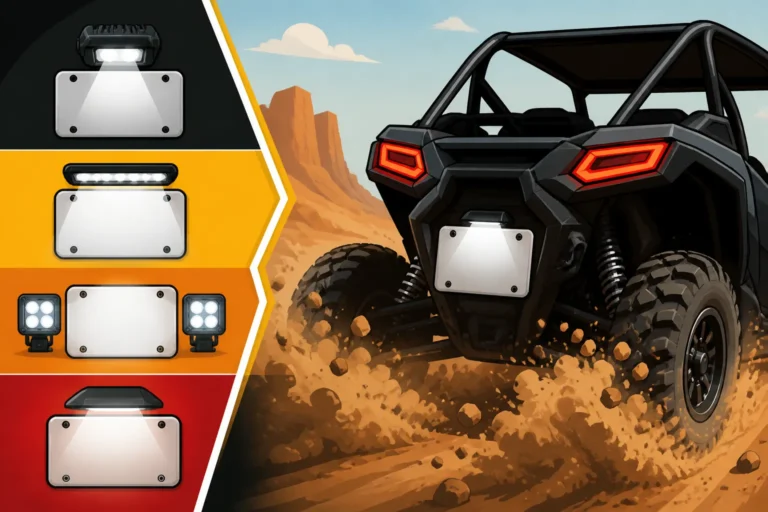
Another often-overlooked item is the license plate light. Utah requires that your rear license plate be illuminated by a white light, making it legible from a distance of 50 feet at night. This small light is easy to forget, but it's a mandatory part of the inspection checklist. Make sure your aftermarket tail light assembly or a separate small LED light takes care of this detail. For those deep dives into all the required gear, [Utah Street-Legal ATV Equipment Requirements] offers a comprehensive list.
Finally, while not strictly "lighting" in the same sense, reflective elements are often a good idea, particularly on the sides of your machine, to enhance visibility, especially if your aftermarket lighting doesn't cover every angle perfectly. These aren't usually a direct inspection point for passing your street-legal status, but they contribute to overall safety on public roads.
Common Aftermarket Lighting Snags That Fail Inspection
It's tempting to load up your side-by-side with every light known to man – light bars, rock lights, underglow – and while these are awesome for the trail, they can be a serious hurdle when trying to pass a street-legal inspection. Not all aftermarket lights are created equal, and some might even actively prevent you from getting that coveted street-legal status.
One of the biggest issues revolves around color. Headlights must be white or amber, and tail lights must be red. Turn signals must be amber. Any other color for these primary safety lights – blue, green, purple, flashing white (unless it's a dedicated emergency vehicle, which your personal OHV isn't) – will lead to an immediate failure. While you might love the aesthetic of blue accent lighting, if it interferes with or is mistaken for your primary street-legal lights, it's a no-go.
Brightness and beam pattern are also key. Your headlights need to be bright enough to illuminate the road ahead but must also have a proper beam pattern that doesn't blind oncoming traffic. Aftermarket light bars, while incredibly powerful for off-road use, are almost universally not legal for use as primary headlights on public roads because they lack the necessary beam cutoff and often exceed federal brightness limits. You'll need to have separate, DOT-compliant headlights and ensure your light bar has a separate switch that prevents accidental use on the road. Many riders simply cover their light bars when on public roads, just to be safe.
Installation Errors and Wiring Woes
Even if you have the right lights, a shoddy installation can still cause you to fail. Wires hanging loose, lights flickering, or switches that aren't clearly labeled can all raise red flags for an inspector. Inspectors are looking for a professional, secure setup that won't fail unexpectedly. If your turn signals only work sometimes, or your brake lights are intermittent, that's a problem.
For example, when installing a universal turn signal kit, ensure all connections are watertight and secure. Using proper wiring harnesses and connectors, and routing cables away from pinch points or heat sources, is crucial. If you're not confident in your electrical skills, it's often worth having a professional handle the installation, especially for critical safety features like lighting. Remember, the goal is not just to have the lights, but for them to function reliably every single time you need them.
Another common mistake is mixing and matching components from various manufacturers without ensuring full compatibility. While a SuperATV turn signal kit might be fantastic, if you're pairing it with a random set of cheap LED tail lights, you need to verify they all play nicely together and meet the visibility requirements. Don't assume; always check the specifications for each component you're adding.
Ensuring Aftermarket Lights Pass Utah's Standards
So, you've got your aftermarket lights, maybe even a comprehensive kit from a reputable brand. Now, how do you make absolutely sure they're going to pass muster with a Utah street-legal inspection? It all comes down to careful selection, correct installation, and thorough testing.
First, always look for lights that are explicitly labeled "DOT compliant" (Department of Transportation). While not every single component needs a DOT stamp, particularly for auxiliary lighting like turn signals, having DOT-compliant headlights and tail lights is a huge step in the right direction. These lights are designed to meet specific safety and performance standards for road use. If a light bar doesn't have a DOT stamp and is marketed solely for off-road, you can bet it won't pass as a street-legal headlight.
When you're selecting turn signals, ensure they are amber and clearly visible from the front and rear. For instance, [Turn Signals on a Street-Legal Utah UTV] goes into detail about what Utah expects. Companies like SuperATV often design their street-legal kits specifically with these requirements in mind, making them a good starting point. However, always double-check the latest Utah regulations against the product's specifications, as rules can sometimes evolve.
Self-Inspection Checklist for Your Lighting
Before you even think about heading to a certified inspection station, perform your own rigorous self-inspection. This will save you time, money, and frustration. Go through each light, one by one, and confirm its operation.
Here's a quick checklist to run through:
- Headlights: Do both lights illuminate? Are they white/amber? Is the low beam functional? How about the high beam? Do they have a reasonable beam pattern that doesn't blind you from reflections?
- Tail Lights: Do both illuminate red? Are they bright enough?
- Brake Lights: Do they light up immediately when you apply the brakes (both foot and hand brake, if applicable)? Are they noticeably brighter than the running tail lights?
- Turn Signals: Do all four (front left, front right, rear left, rear right) blink amber? Do they flash at a consistent rate? Are they clearly visible from their respective directions?
- License Plate Light: Does it shine white light onto the license plate, making it legible?
- Visibility: Stand 100-200 feet away from your OHV in both daylight and dusk. Can you clearly see all required lights? Are any lights obscured by mud flaps, tires, or cargo?
- Wiring: Are all wires secured, protected, and free from damage? Are switches clearly labeled and easily accessible?
It’s a good idea to have a friend help you with this, especially for checking brake lights and turn signal visibility from different angles. This simple step can help you catch small issues before they become big inspection headaches.
Preparing for Your Utah Street-Legal Inspection
You've done your homework, installed your aftermarket lights carefully, and run through your self-inspection. Now it's time to head to a certified inspection station. Knowing what to expect and having everything in order will make the process much smoother. Remember, the inspector's job is to ensure your machine meets safety standards for road use, so a professional and compliant setup makes their job easier and yours successful.
Make sure all other street-legal requirements, beyond just lighting, are also in place and functional. This includes your horn, mirrors (required on both sides!), windshield or eye protection, and a functioning speedometer. If one piece of the puzzle is missing, the whole inspection fails, even if your lights are perfect. For a full rundown of what they'll look at, checking out [What Fails a Utah Street-Legal Inspection] can be incredibly insightful.
It's also a good idea to visit a reputable shop that regularly performs OHV street-legal inspections. They'll be familiar with the nuances of the law and might even offer advice if they spot a minor issue. You can find these certified stations by looking up [Finding a Certified Utah Inspection Station]. Don't just show up to any mechanic; ensure they're authorized for OHV inspections.
What the Inspector Will Look For
When you bring your machine in, the inspector will go through a specific checklist provided by the state. For lighting, they will methodically test each component:
- Headlights: They'll check for proper illumination, color (white or amber), and often the aim of the beam. Make sure both high and low beams function.
- Tail Lights: Color (red) and brightness will be assessed, ensuring they are always on when the headlights are on.
- Brake Lights: They'll verify that both illuminate brighter red when the brake pedal/lever is pressed.
- Turn Signals: All four will be checked for amber color, proper function (blinking consistently), and visibility from front and rear.
- License Plate Light: They'll confirm it illuminates the plate clearly.
- Auxiliary Lighting: If you have extra off-road light bars, rock lights, or underglow, the inspector will ensure they are on separate switches and cannot be operated when on public roads, or at least do not interfere with the primary street-legal lighting. They may also look for any blue or red forward-facing lights that could mimic emergency vehicles.
Be prepared to demonstrate the function of all your lights. If you've opted for a robust aftermarket kit, like some of those offered by SuperATV, which bundle many of these components together, the process can often be smoother as the parts are generally designed to integrate well and meet standards. After passing, you'll get your inspection certificate, which is a key piece of paperwork for getting your street-legal registration and plates. The cost of this whole conversion, including the inspection, is detailed in [Cost to Make a UTV Street Legal in Utah].
| Light Type | Required Color | Function | Key Inspection Points | Common Aftermarket Pitfalls |
|---|---|---|---|---|
| Headlights | White/Amber | Illuminates road, visibility | Proper beam pattern (no blinding), high/low beam, DOT compliance. | Non-DOT light bars used as primary, wrong color, insufficient brightness or aim. |
| Tail Lights | Red | Rear visibility | Always on when headlights are on, visible from specified distance. | Not red, too dim, obscured by cargo, integrated with non-compliant brake lights. |
| Brake Lights | Red | Signals braking | Brighter than tail lights when activated, consistent function with brakes. | Flickering, not significantly brighter than tail lights, failure to activate. |
| Turn Signals | Amber | Signals turns | All four (front/rear, left/right) flash, consistent rate, clearly visible. | Wrong color, missing signals, inconsistent flashing, too dim, no [Turn Signals on a Street-Legal Utah UTV]. |
| License Plate Light | White | Illuminates plate | Clearly lights entire plate from 50 ft. at night. | Missing, too dim, wrong color, incorrect placement. |
| Auxiliary Lights | Any (off-road only) | Off-road illumination | Must be on separate switch, not active on public roads, no interference with street-legal lights. | Used on road, interfere with primary lights, appear as emergency vehicle lights. |
Remember, your diligence in choosing, installing, and testing your aftermarket lighting is what will ultimately lead to a successful street-legal inspection in Utah. Happy trails, and ride safe!
Disclaimer
This article is for general informational purposes only and does not constitute professional advice. Laws, prices and regulations vary by location and change over time. Consult a qualified professional for guidance on your specific situation.