Driving a UTV to Sand Hollow’s Gate
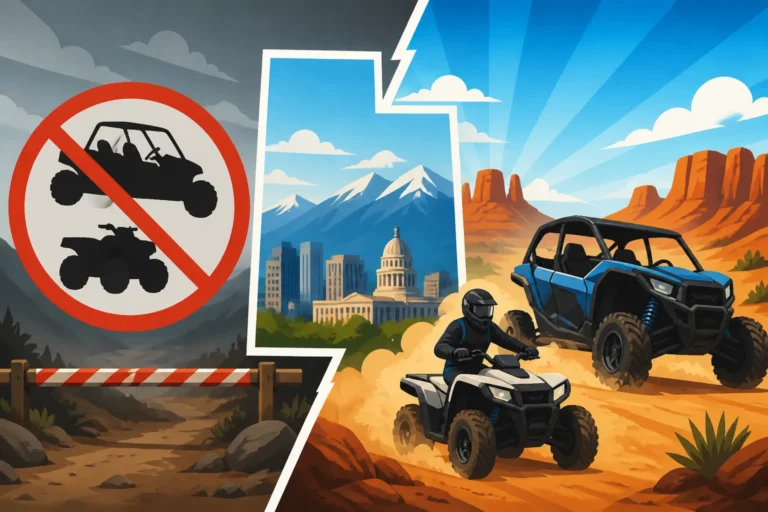
There’s nothing quite like the excitement of heading out for a day of ripping through the red sand dunes of Sand Hollow State Park. But if you’ve ever found yourself loading and unloading your prized UTV onto a trailer just for a short drive to the park’s entrance, you know the struggle is real. This guide is all about simplifying your life by explaining exactly how you can drive your street-legal UTV directly to Sand Hollow's gate, turning that annoying commute into part of the adventure itself.
The Basics of Getting to Sand Hollow's Gate by UTV
Imagine the freedom: no hitching up, no wrestling ramps, no extra fuel stops for the tow rig. Just hop on your UTV, turn the key, and go. For many, driving their UTV directly to the trailhead or park entrance is the ultimate convenience, transforming the journey itself into part of the off-road experience.
Why Driving to the Gate is a Game-Changer
Let's be honest, the whole process of trailering your UTV can be a bit of a buzzkill. You're itching to get on the trails, but first, there's the hooking up, the careful loading, the strapping down, and then the actual driving of a truck with a trailer, which isn't always the most relaxing experience. Parking with a trailer at busy trailheads can be a nightmare in itself, especially on a packed Saturday.
Being able to drive your UTV right to Sand Hollow's gate bypasses all that hassle. It saves wear and tear on your truck, conserves fuel, and perhaps most importantly, extends the joy of riding. Your adventure begins the moment you leave your driveway, not just when you finally unload at the staging area. This is particularly appealing for those staying in nearby towns like Hurricane or St. George, where the drive to the park entrance is a short, scenic cruise, allowing you to truly immerse yourself in the Utah landscape from the get-go.
Understanding Sand Hollow State Park Access
Sand Hollow State Park is a gem, offering incredible diversity from its stunning red rock formations to the vast sandy playground of Sand Mountain. The main entrance to the park is located off State Route 7 (Southern Parkway), just east of Hurricane, Utah. When you approach the park, you’ll encounter the main gate where park rangers collect day-use fees or check annual passes.
For UTV riders, this gate is your primary point of entry to the park’s designated OHV areas, including the famous Sand Mountain dunes. While there are a few residential developments around the park, and even some direct access points for residents, the vast majority of visitors will enter through the main gate. The beauty of a street-legal UTV is that you can simply drive up to the booth, pay your fee, and then continue directly into the park, often right to the staging areas closest to the dunes or the lake. It's a seamless transition from road to trail, no detours or additional parking required. Just remember to have your [What Utah Riders Must Carry on Public Land] like your registration and proof of payment ready for the ranger.
Street-Legal Requirements for On-Road Travel to Sand Hollow
Converting your off-highway vehicle into a street-legal machine in Utah isn't just a matter of convenience; it's a matter of safety and legality. The state has specific regulations designed to ensure that UTVs can safely share public roads with other vehicles. Skipping these steps could lead to fines or worse, an unsafe situation for you and others.
Key Equipment Utah Requires for Street Legality
To legally drive your UTV on public roads in Utah, including the short jaunt to Sand Hollow's gate, your machine needs to meet certain equipment standards. This isn't just about adding a blinker; it's about making your UTV as visible and controllable as any other vehicle on the road.
First and foremost, you'll need proper headlights and tail lights. These aren't just for seeing the trail at night; they're crucial for being seen by other drivers, especially in changing light conditions or if you find yourself on the road after sunset. Turn signals, both front and rear, are absolutely essential for indicating your intentions to other motorists. Imagine trying to make a left turn on a busy road without them – it's a recipe for confusion and potential collision. A functional horn is another must-have, allowing you to alert others to your presence when needed.
Mirrors are critical for situational awareness. Utah requires at least one mirror on the left side, but having both a left and right mirror, similar to what you’d find on a car, is a smart and safer practice. A windshield or other approved eye protection is also mandated. While a full windshield provides the most protection from debris and wind, some riders opt for goggles if their UTV doesn't have a windshield. Just be sure whatever you choose meets the legal definition of eye protection.
Don't forget the license plate light, ensuring your street-legal license plate is illuminated after dark. Your muffler system must also meet noise standards, so extremely loud aftermarket exhausts might need to be reconsidered. And finally, a speedometer is needed so you can adhere to posted speed limits. Many UTVs come equipped with some of these items, but aftermarket kits from companies like SuperATV are popular for filling in the gaps and ensuring full compliance. For a deep dive into what you need, check out [Utah Street-Legal ATV Equipment Requirements].
Licensing, Registration, and Insurance You'll Need
Beyond the physical modifications to your UTV, there's important paperwork to consider. Utah has a dual system for OHVs that are street legal, which can sometimes be a little confusing for riders trying to navigate it all.
First, you'll need a valid driver's license to operate any street-legal vehicle on public roads. This isn't just for cars; it applies to your UTV too. So, make sure your license is current and in your wallet. If you're wondering about age or other requirements, take a look at [Driver License Rules on Utah Roads].
Next comes registration. Your UTV will still need its standard off-highway vehicle (OHV) registration, which includes the decals you place on the machine. However, to make it street legal, you'll go through an additional process to get a street-legal plate and registration card. This effectively gives your UTV two forms of registration, allowing it to legally operate both on and off designated trails. The process of getting this dual registration is outlined in [Utah OHV Registration vs Street-Legal Registration].
Finally, insurance is non-negotiable. Just like any other vehicle on the road, your street-legal UTV needs to be insured with at least the minimum liability coverage required by Utah law. This protects you in case of an accident involving other vehicles or property. Many riders find that adding their street-legal UTV to their existing auto policy is the easiest way to handle this, but always confirm coverage specifics with your insurance provider. Don't assume your regular OHV insurance covers road use, as those policies often have different exclusions. For more on this, you can read [Insurance for a Street-Legal Machine in Utah].
Navigating the Roads Around Sand Hollow with Your UTV
Once your UTV is street-legal and properly insured, the world of road access opens up, including the scenic drive to Sand Hollow State Park. However, simply having the plate doesn't mean you can throw caution to the wind. Understanding local rules and practicing safe driving are paramount.
Permitted Routes and Speed Limits
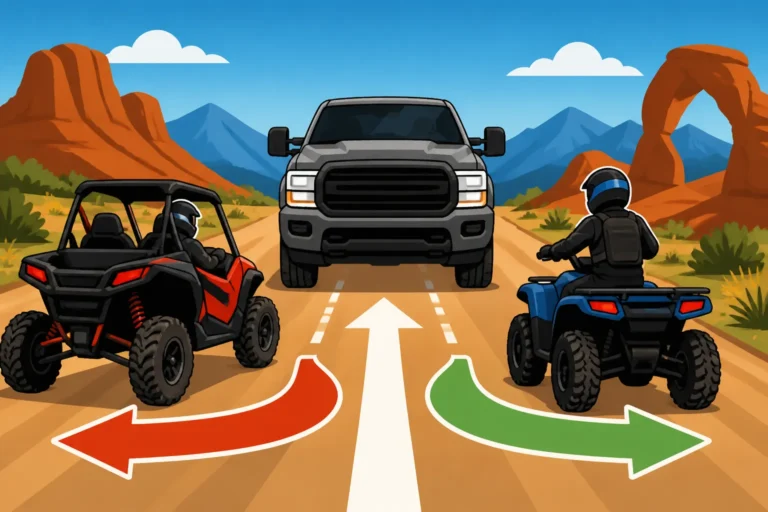
The roads leading directly to Sand Hollow State Park from towns like Hurricane and St. George are generally open to street-legal OHVs. This is fantastic news because it means you can usually drive from your lodging or a nearby gas station directly to the park gate. For example, if you're staying in Hurricane, you'll likely use roads like State Route 9, and then State Route 7 (Southern Parkway) to get to the park entrance.
However, it's crucial to be aware of the posted speed limits. While Utah law allows street-legal OHVs on roads with speed limits up to 50 mph, you must always adhere to the actual posted speed limit for that particular road. Many of the roads around Sand Hollow are rural highways with various speed limits. It’s not uncommon to see limits fluctuating between 35 mph, 45 mph, or even 55 mph on some stretches. Pay close attention to signage. Remember, even if your UTV can go faster, you must obey the limit. For a broader look at where you can ride, check out [Where Street-Legal ATVs Can Drive in Utah] and [Riding From Hurricane to Sand Mountain by Road].
Also, be mindful of specific city or county ordinances. While Utah state law provides a broad framework for street-legal OHV use, local municipalities can impose additional restrictions, such as prohibiting OHV travel on certain major arterial roads or within specific downtown areas. Always do a quick check for local rules in the area you plan to ride.
Best Practices for Street-Legal UTV Driving
Driving a UTV on public roads is a different beast than driving a car or even an off-road trail. You're typically smaller, lighter, and often less visible than a full-sized vehicle. This means defensive driving isn't just a good idea; it's essential for your safety.
Always assume other drivers might not see you. This isn't meant to scare you, but to encourage vigilance. Consider adding extra visibility features to your UTV, like bright LED light bars (which you'd turn off on public roads to avoid blinding others, but are great for trails and can make you more noticeable in daylight if used appropriately, or simply having a bright machine). Whip flags are usually for dunes, but having reflective tape or high-visibility colors can also help. Companies like SuperATV offer a range of accessories that can enhance both safety and visibility.
Keep ample following distance from the vehicle in front of you. UTVs often have different braking characteristics than cars, especially on pavement. Use your turn signals well in advance of a turn or lane change. Be deliberate with your movements and avoid sudden maneuvers.
When you're sharing the road, remember that you're an OHV first, and that means respecting the space and expectations of other motorists. Be courteous, stick to your lane, and pull over if you're holding up a long line of traffic, when safe to do so. Your goal is to get to Sand Hollow safely and without incident, so drive smart and be predictable.
Common Pitfalls and How to Avoid Them
Even with the best intentions, it's easy to overlook small details that can turn your exciting drive to Sand Hollow into a frustrating encounter with law enforcement or an unexpected expense. Being prepared for these common issues can save you a lot of headaches.
Overlooking Local Ordinances
Utah's state law is quite favorable for street-legal OHVs, but it's not a blanket free pass everywhere. Local cities and counties have the authority to create their own ordinances that can further restrict where and how street-legal UTVs can operate within their specific boundaries. For example, while you might be able to ride through Hurricane on designated roads to get to Sand Hollow, some cities might have specific prohibitions on parking UTVs on certain streets, or stricter noise limits than what the state mandates.
Always check the local regulations for the specific area you're driving through. A quick search on the city's official website or a call to their non-emergency police line can save you from an unexpected ticket. Nothing dampens the mood of a dune day like getting pulled over for something you didn't know was a rule. This also applies to things like noise. Even if your exhaust is technically legal, if it's excessively loud, it could draw unwanted attention or violate specific local noise ordinances.
Checking Your Machine Before You Roll
Before you even back out of the driveway, conduct a thorough pre-ride check, especially when you plan to hit public roads. This isn't just about trail safety; it's about road legality and ensuring every component that makes your UTV street-legal is in perfect working order.
Start with your lights: headlights, tail lights, brake lights, and turn signals. Are they all functioning brightly? Check your horn – does it give a clear, audible signal? Inspect your mirrors; are they secure and properly adjusted to give you a clear view behind you? If your UTV has a windshield, is it clean and free of cracks that could obstruct your view?
Tire pressure is critical. For road use, you'll generally want your tires aired up to the higher end of the manufacturer's recommended range to ensure stability and proper wear on pavement. Also, ensure all your gear, coolers, and recovery equipment are securely fastened. You don't want a stray cooler flying out the back on the highway!
Think about the components that SuperATV and similar companies provide for durability and functionality. Are your control arms, tie rods, and suspension components in good shape? Any loose steering or suspension can be amplified and become dangerous on the road. A quick walk-around and functional check can prevent minor issues from becoming major problems, ensuring your journey to Sand Hollow's gate is smooth and legal.
| Feature | Trailering OHV | Street-Legal UTV Driving |
|---|---|---|
| Convenience | Requires loading/unloading, separate vehicle | Drive directly from home/lodging |
| Cost | Truck fuel, trailer maintenance, wear on truck | UTV fuel, minimal additional wear |
| Travel Time | Often slower due to trailer, parking challenges | Generally faster, more direct |
| Prep Time | Significant setup (hitching, loading, strapping) | Minimal pre-ride checks |
| Flexibility | Limited to designated staging areas | Access to multiple points, easier stops |
| Parking | Often challenging with a truck/trailer | Easier, like parking a small car |
| Experience | Commute separate from riding | Journey becomes part of the adventure |
| Paperwork | OHV registration only | OHV + Street-legal registration, driver's license, specific insurance |
| Equipment | Standard OHV setup | Added street-legal components (lights, mirrors, horn, etc.) |
This table clearly shows the benefits of having a street-legal UTV for accessing places like Sand Hollow, highlighting the trade-offs in terms of convenience, cost, and the specific requirements you need to meet.
If you're considering the jump to street-legal, delving into resources like [Making a UTV Street Legal in Utah] and [Cost to Make a UTV Street Legal in Utah] can provide invaluable guidance to help you make an informed decision. Remember, the goal is always to have a safe and enjoyable experience, whether you're navigating the roads or conquering the dunes!
Disclaimer
This article is for general informational purposes only and does not constitute professional advice. Laws, prices and regulations vary by location and change over time. Consult a qualified professional for guidance on your specific situation.