Coral Pink Sand Dunes State Park for OHVs
A first visit to Coral Pink Sand Dunes can be confusing: the sand looks inviting in every direction, but not every area is open to OHVs, and soft dunes demand a different approach from a hard-packed trail. This guide explains how to plan a ride, choose suitable terrain, prepare your machine and gear, and avoid the common mistakes that can spoil a day.
What to expect at Coral Pink Sand Dunes
A distinctive dune landscape near Kanab
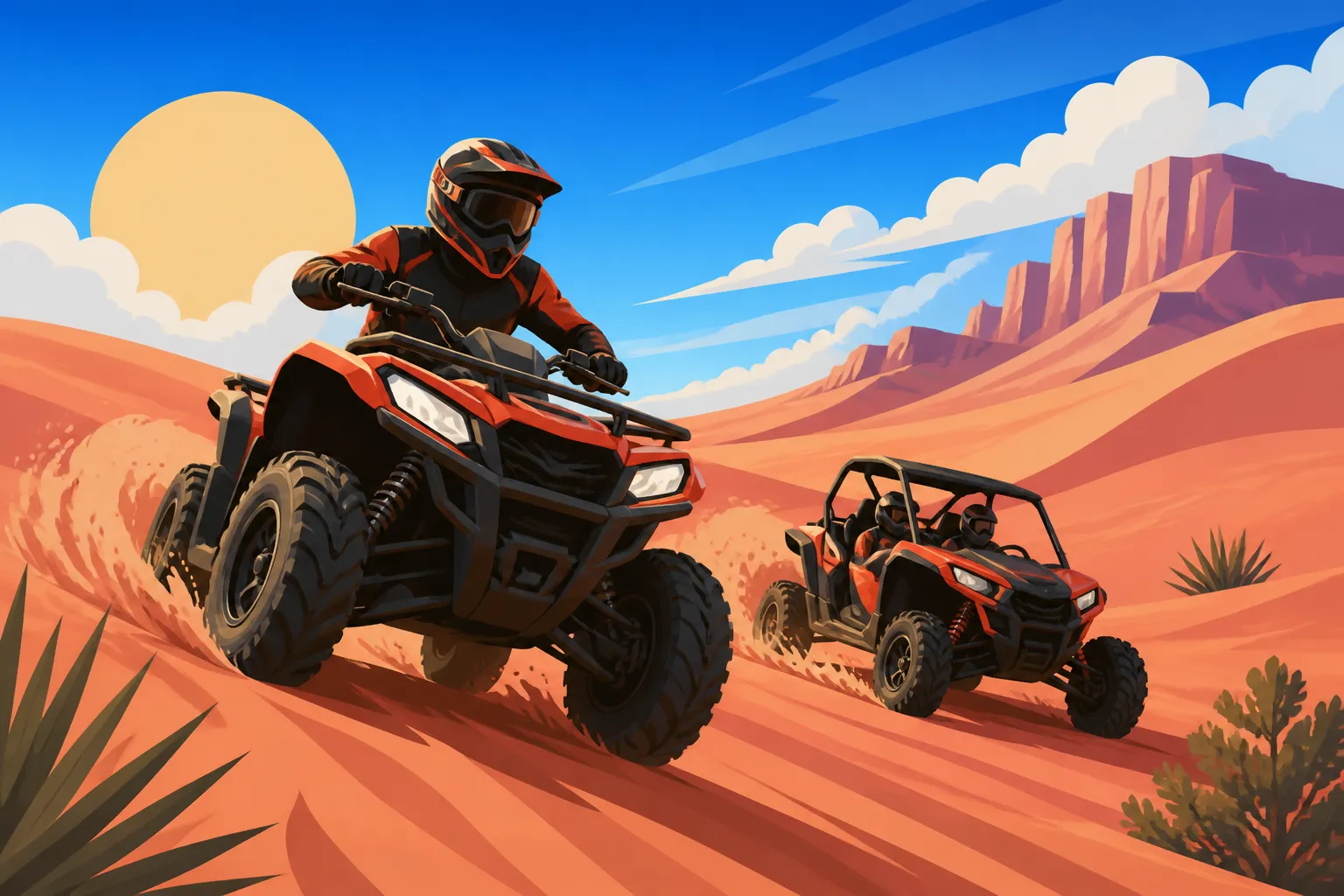
Coral Pink Sand Dunes State Park sits in southern Utah between Kanab and Mount Carmel Junction. The dunes get their warm color from the surrounding Navajo sandstone, which erodes into fine sand and is shaped by wind. The result is a landscape that feels very different from the slickrock, forest roads and rocky trails many Utah riders know.
The scenery is part of the appeal, but it also affects how you ride. Sand can shift under your tires, and a slope that looked manageable from the staging area may feel steeper or softer once you reach it. Unlike a marked dirt trail, dune lines change with weather and use. Expect to read the ground as you go, keep room between machines and adjust your pace rather than assuming the route will stay consistent.
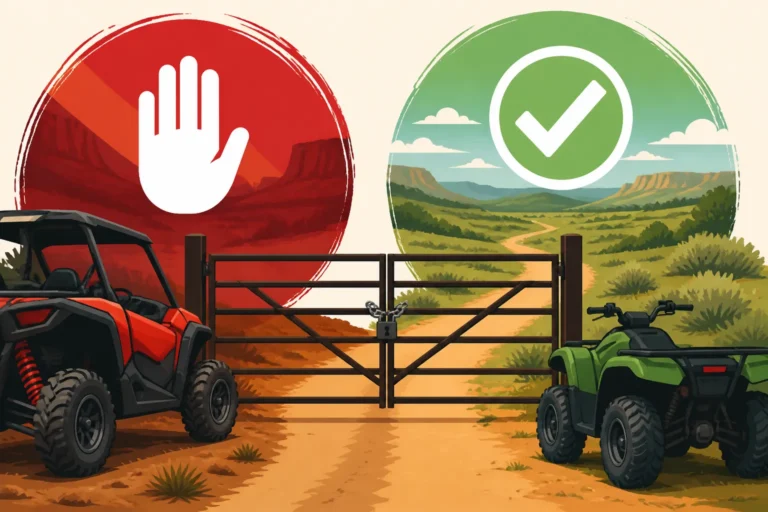
Coral Pink is also a state park, not an unregulated expanse of open desert. OHV use is limited to designated riding areas, and park boundaries, closed areas and posted signs matter. Before unloading, check the park’s current information and ask staff if you are unsure where riding is allowed. For an overview of access and riding boundaries, see [How Much of Coral Pink Is Open to Riding].
A different kind of ride from a trail loop
At many OHV destinations, riders follow a defined route with a clear start, finish and sequence of turns. Coral Pink is more open-ended. You may spend time exploring dune faces and bowls, practicing controlled climbs or following the group across open sand rather than completing a conventional trail loop. That freedom is fun, but it makes navigation and communication especially important.
The open terrain can create a false sense of visibility. A dune ridge may hide another rider, a vehicle or a sudden drop on the far side. Avoid cresting blind at speed, and don’t assume that a quiet-looking stretch is empty. Agree on a meeting point and a simple plan before separating, especially if riders in your group have different experience levels.
If you are comparing the dunes with other areas, the riding experience is closer to a dedicated sand destination than to a forest route or rocky canyon trail. Use [The Best ATV and UTV Trails in Utah] to explore other kinds of rides, and [Choosing Between Moab and Sand Hollow] if you are deciding which southern Utah base suits your group. Coral Pink is a good fit for riders who want a memorable sand day and are prepared for the extra attention sand riding requires.
Plan the visit before you tow
Confirm access, conditions and fees
Park access details can change with operating conditions, maintenance, weather or other notices. Before leaving Kanab or your campsite, check the state park’s official information for current access, hours, entry requirements and any temporary closures. Don’t rely on an old social post, a map screenshot or a friend’s memory as your only source. The same applies to riding boundaries: ask a ranger or park staff member if posted signs or maps leave you uncertain.
Budget for the possibility that the park entry fee and OHV requirements are separate considerations. The exact charges and accepted payment methods can vary, so check the current park information before your trip rather than building your plan around a number you saw elsewhere. The practical details are covered in [Day-Use Fees at Utah's Coral Pink Dunes] and [Coral Pink Dune Hours and Unloading Areas].
Conditions can affect the experience even when the park is open. Recent rain may change the firmness of the sand, while wind can make visibility uncomfortable and blow loose sand across exposed areas. Heat matters too: a clear, sunny day can become tiring quickly when you’re moving slowly, working the machine and spending time in an exposed landscape. Check local conditions, bring enough water for the group and be willing to shorten the ride if the day becomes unpleasant.
Make the approach and unloading routine simple
Coral Pink is a destination where getting organized before you reach the riding area can save a lot of frustration. Check your route from Kanab or your overnight stop, allow time for trailer handling, and identify where unloading is permitted. If you arrive with a long trailer, a large side-by-side or several machines, the space you need to maneuver is easy to underestimate. Arriving without a plan can leave you trying to turn around in a crowded or unsuitable spot.
Before unloading, confirm that your tow vehicle and trailer are parked where they are allowed and won’t block other visitors. Keep the staging area orderly: secure tie-downs and ramps, store loose gear, and keep people clear while machines are being unloaded. It is much easier to notice a missing helmet, a loose wheel strap or a low tire before the group heads onto the sand.
A quick machine check is worth doing even if everything worked perfectly on the drive down. Inspect tires, controls, brakes, lights and visible leaks, and make sure everyone knows how to stop and regroup. If you’re planning a broader Kanab trip, [Getting to Coral Pink From Kanab] can help with the access side of the plan. For a broader Utah day-ride checklist, see [What to Carry on a Utah Day Ride].
Prepare your machine and riding gear for sand
Set expectations for traction and control
Sand changes how a machine responds. Tires may dig in or slide, and a climb that seems straightforward from below can become difficult if the surface is loose or the approach is too slow. Start on terrain that suits the least experienced rider in your group. Practice smooth turns and steady throttle on easier ground before attempting steeper dune faces.
Avoid abrupt inputs when you can. Sudden acceleration, sharp steering or hard braking can make a machine lose momentum or carve an unstable line. If a climb does not feel right, don’t force it just because another rider made it look easy. Choose a safer route, turn around where it is appropriate, or stop and reassess. The best line depends on the machine, tires, conditions and rider skill—not simply on what looks impressive.
Pay attention to tire condition and follow the machine manufacturer’s guidance for use in sand. There is no single tire-pressure setting that makes every ATV or UTV behave correctly across all conditions. If you adjust pressure, understand the limits for your tires and machine, and have a reliable way to reinflate before returning to pavement or towing. Carrying a compact compressor and gauge can be useful, but they are not a substitute for knowing the correct operating guidance.
Gear for sun, dust and changing comfort
A helmet, eye protection and suitable riding clothing make a substantial difference in a sand environment. Fine particles can irritate eyes and skin, and a scarf or other face covering may help reduce dust discomfort. Choose goggles or eye protection that fit securely with your helmet, and bring a backup pair if someone in the group is likely to struggle with dust or wind.
Sun protection matters even when the air feels pleasant. Wear clothing that covers exposed skin, apply sunscreen before riding and bring enough water for everyone. A cooler in the tow vehicle can make breaks more comfortable, but don’t treat it as the only water supply if the group separates. Keep a bottle accessible on each machine and establish a habit of drinking during pauses rather than waiting until someone feels thirsty.
Bring basic recovery and repair items appropriate to your machine and the group’s experience. A tire repair kit, compressor, tool roll and communication plan can be more useful than a pile of gear nobody knows how to use. For longer or remote rides, consider a first-aid kit and a way to contact help where cell service is weak. Riders who use onX Offroad can save or review map information before leaving a coverage area, but should still carry a backup plan and know how to regroup without relying on a phone signal.
| Planning item | Why it matters at Coral Pink | What to do |
|---|---|---|
| Riding-area boundaries | Not every part of the park is open to OHVs | Check current park information and posted signs |
| Sand conditions | Softness and traction can vary across the dunes | Start on easier terrain and adjust your plan |
| Trailer setup | Unloading and maneuvering can take more space than expected | Confirm the permitted staging area before unloading |
| Water and sun protection | Sand riding can be exposed and tiring | Pack water for everyone and protect skin and eyes |
| Navigation and regrouping | Dunes can hide riders and landmarks | Agree on meeting points and carry a backup plan |
| Machine readiness | Sand places different demands on tires and controls | Inspect the machine and follow manufacturer guidance |
Ride thoughtfully and keep the group together
Choose lines with visibility and skill in mind
A dune’s crest can conceal what lies on the other side. Approach ridges cautiously, keep a safe distance from other machines and avoid stopping where another rider may come over the crest behind you. If visibility is limited, pause in a place where you can be seen and communicate with the group before continuing. A little patience helps prevent the sudden close call that can happen when riders appear on opposite sides of a blind slope.
Keep the group’s ability in mind when choosing a route. A confident rider may be comfortable exploring steeper terrain, but a newer rider may need a broader, gentler line. It’s better to choose a route everyone can ride safely than to split up without a clear plan. If you do divide into smaller groups, agree on a location and time to meet, make sure each group has a capable navigator, and don’t leave a rider alone because they are taking longer.
Good dune etiquette also means leaving space and avoiding unnecessary damage. Don’t crowd another machine’s line or cut across a rider who is climbing. Give people room to turn around safely, and follow park direction about areas that should be avoided or protected. For families with younger riders, choose terrain conservatively and review [Coral Pink for a Family With Small Quads] before deciding whether the day’s plan is a good match.
Know when to stop, turn back or change the plan
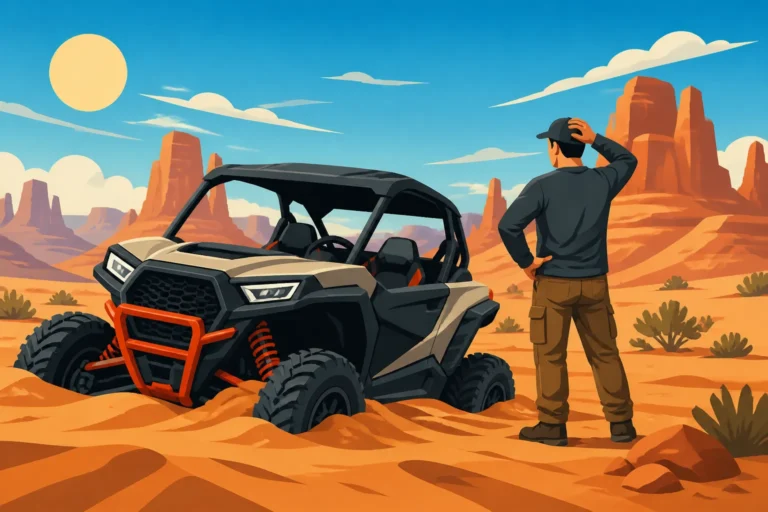
If a machine becomes stuck, avoid turning a small problem into a group emergency. Stop other riders at a safe distance, keep people clear of the recovery area and decide whether the stuck machine can be freed with equipment the group has brought. Don’t use a recovery technique unless the people involved understand the equipment and the manufacturer’s recommendations. If the situation feels unsafe, seek assistance rather than improvising under pressure.
Fatigue is another reason to stop. Riders who are hot, dehydrated or frustrated make poorer decisions, especially on terrain that requires steady judgment. Schedule breaks before everyone is exhausted, and watch for signs that someone needs shade, water or a quieter pace. A rider who says they are fine may still be struggling, so check in with each person rather than relying on the loudest or fastest member of the group.
Conditions or closures may also require a change of plans. A route that was open on an earlier visit may be posted differently now, and a storm can make driving conditions less predictable. Check [Trail Closures Utah Riders Should Check First] before setting out, and review [Riding Utah Trails After a Storm] if weather has affected the area. If your preferred route is unavailable, don’t try to bypass a closure; choose an authorized alternative or call the ride early.
Handle Utah requirements and make the trip easier
Check registration, permits and education requirements
Before riding, verify that your machine and each rider meet the applicable requirements. Utah registration and visitor permit rules can depend on where the machine is registered, who owns it, the kind of vehicle and the rider’s circumstances. Don’t assume that a registration or sticker from another state automatically covers every Utah requirement. Review [Utah's Non-Resident OHV Permit Explained] if you’re visiting from outside Utah, and confirm current rules through official state and park information before departure.
Rider education requirements are another item to check, particularly when children or teens are in the group. Requirements can vary by age and situation, so confirm what applies to each rider and carry any required proof. Keep documents accessible rather than buried under luggage in the tow vehicle. If an officer or ranger asks for them, a calm, organized response is easier than searching through a packed trailer.
Also distinguish between an OHV registration or permit and a state park entry fee. They serve different purposes, and having one does not necessarily satisfy the other. Check whether your machine’s status changes what is required, and don’t assume a street-legal plate automatically settles every OHV or park-access question. A little paperwork checking at home can prevent a disappointing conversation at the trailhead.
Use maps as a planning aid, not permission to ride anywhere
A map can help you understand the area, estimate distances and orient the group, but it does not override signs, closures or land-use rules. Use a current map alongside official park information and pay attention to the conditions on the ground. If a track appears to continue into a closed area or beyond a posted boundary, stop and verify rather than treating the line on your screen as authorization.
onX Offroad can be useful for preparing routes and keeping track of your position, particularly when phone coverage is unreliable. Download or save the information you expect to need before leaving reliable service, and learn how to use the app while you still have coverage. A phone can run low on battery, overheat or become difficult to read in bright sun, so carry a charging option and have a backup method for identifying your location and meeting point.
For a practical map primer, [Utah OHV Trail Maps and How to Read Them] explains how to think about routes and map information more broadly. Use maps to make better decisions, not to replace judgment. At Coral Pink, checking the current riding area, noticing posted restrictions and communicating with your group are just as important as knowing where your digital marker appears.
Build a flexible day rather than chasing a perfect itinerary
A relaxed schedule is often the best way to enjoy Coral Pink. Give yourself time to unload carefully, orient the group, ride easier terrain first and take breaks. If you are arriving from Kanab, avoid packing the day so tightly that a delay, a machine issue or a change in conditions turns into a rush. A flexible plan makes it easier to leave before the group is worn out.
Bring enough food, water and basic supplies to handle a longer-than-expected pause, but keep equipment secured so it cannot shift during the ride. Make sure each person knows where the tow vehicle is parked, what to do if the group gets separated and whom to contact if a machine has trouble. These small agreements feel unnecessary when everything is going smoothly; they become valuable the moment one rider takes a wrong line or needs help.
The goal is not to ride every dune or prove what a machine can do. A good day is one where the group returns together, respects the park and still has enough energy to enjoy the scenery. Choose lines that fit the riders, give other visitors room, follow park instructions and treat changing conditions as part of the experience rather than an obstacle to overcome.
Disclaimer
This article is for general informational purposes only and does not constitute professional advice. Laws, prices and regulations vary by location and change over time. Consult a qualified professional for guidance on your specific situation.