Climbing Sand Mountain at Little Sahara
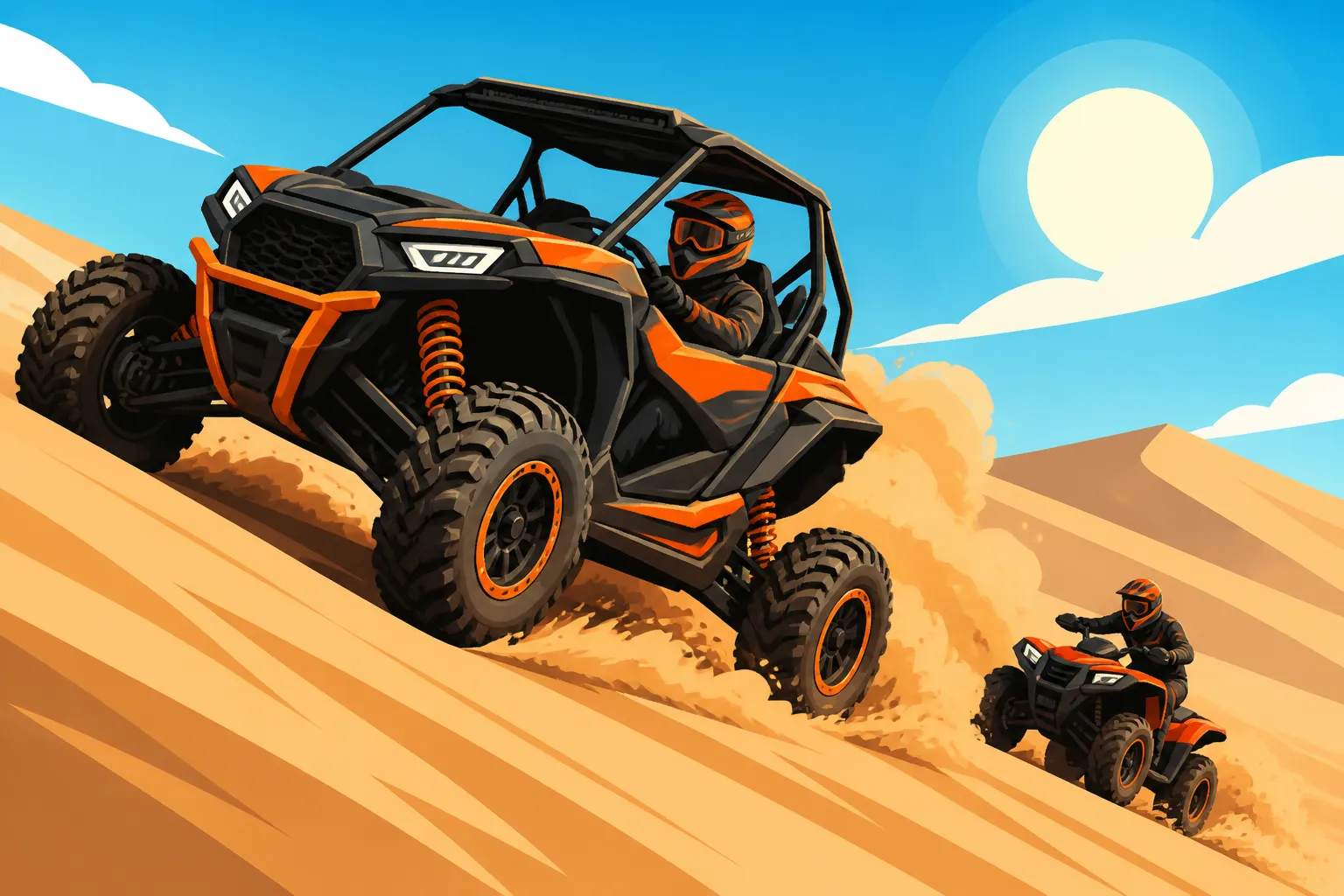
Climbing Sand Mountain at Little Sahara can look straightforward from the flats, but the slope, soft sand and changing traffic can make a familiar-looking line surprisingly challenging. This guide explains how to assess the climb, prepare your ATV or UTV, choose a safer moment to ride and decide when turning around is the smartest call.
Know the terrain before you climb
What makes Sand Mountain challenging
Little Sahara Recreation Area sits in Utah’s West Desert, near Delta. Its dunes include broad open areas as well as steeper faces, and Sand Mountain is a prominent landmark for riders. The climb is not a fixed track: wind and use shift the sand, so yesterday’s line may look different or behave differently on your next visit. That variability is part of the appeal, but it also means you should assess the actual slope in front of you rather than rely on someone else’s description.
A climb that appears smooth from a distance can hide a change in angle, a soft patch or a ridge that limits your view over the top. The summit can conceal riders descending on the other side, and the approach may be busy with machines gathering speed. Don’t choose a line solely because it looks clean from the staging area. Get a clear view of the route, consider the traffic and make sure the crest and landing area are not occupied.
Sand Mountain is a specific feature within Little Sahara, not the similarly named riding area near St. George. If you are comparing destinations, [Utah's Little Sahara and Its Sand Bowls] offers useful context about the dunes and how the area differs from other Utah riding spots. Knowing which place you’re planning for matters: terrain, access, services and site rules vary from one recreation area to another.
Read the slope and traffic before committing
Start by watching other riders, but treat what you see as information, not an invitation to follow. A machine may be climbing a different line, may have a different setup, or may be driven by someone with far more dune experience. Notice where riders enter and exit, whether they lose momentum and whether there is a safe place to wait. If visibility is poor or traffic is crossing the slope unpredictably, pause until you can see a clear opportunity.
Pay close attention to the crest. A rider approaching from the opposite side might be invisible until the last moment, and stopping near the top can leave you in a dangerous place. If you cannot see where the line finishes, don’t assume the space beyond the ridge is clear. Pick a route that gives you a reasonable view and an uncomplicated way to stop or turn away before you start.
The best decision may be to watch for a while, choose a gentler section or skip the climb. That’s not a failure. Sand can change quickly, and a cautious rider who turns around under control is in a much better position than one who continues because other people are watching. For a broader sense of what dune riding can ask of a newer rider, see [Are Little Sahara's Dunes Good for Beginners?].
Prepare your machine and your group
Check your ATV or UTV before the ride
A steep sand climb puts sustained demand on the machine. Before heading out, check the owner’s manual for guidance on riding in sand and confirm that your ATV or UTV is in sound working condition. Pay attention to the tires, throttle response, brakes, steering, cooling system, fuel level and any safety equipment fitted to your machine. A mechanical issue is difficult to manage on a slope, especially if you are far from the staging area.
Tire setup matters, but there is no single pressure that suits every machine, tire, load and sand condition. Use the manufacturer’s guidance and avoid copying a number from a rider whose setup is different from yours. If you make an adjustment for sand, understand how it affects handling and reinflate or readjust as appropriate before returning to firmer surfaces. A machine that feels manageable on soft dunes may respond differently on packed ground.
A utility quad or a heavier side-by-side may need a different approach from a light sport ATV. Weight, wheelbase, tires, cargo and power all influence how a vehicle behaves on a slope. If you ride a utility quad, [Riding Little Sahara With a Utility Quad] can help you think through the practical differences. Don’t overload your machine or carry loose cargo that could shift while climbing or descending.
Set clear expectations with your riding group
Before anyone heads toward the dune, agree on a simple plan: where the group will wait, how riders will take turns and what everyone should do if a machine stops or gets stuck. A group that spreads out across a slope can create confusion for approaching riders. Choose a meeting place away from active lines, and keep waiting riders out of the path of machines climbing or descending.
Newer riders should not feel pressured to attempt the same slope as the most experienced person in the group. If someone wants to try a less demanding area, let the group split in a planned way, with a clear place and time to reconnect. Riding together does not mean every person needs to ride every line. This is especially important with mixed machines, varied experience levels or children in the group.
Talk about signals before engine noise and distance make conversation difficult. Agree that a raised hand, a radio call or another familiar signal means “wait” or “stop,” and make sure the whole group knows it. If you have a spotter, position them somewhere visible and out of the likely travel path. They should never stand directly in front of or behind a moving vehicle on the climb.
Choose a safer line and a sensible moment
Start with the approach, not the throttle
Before climbing, inspect the run-up and make sure it gives you room to approach smoothly without crossing another rider’s path. Avoid starting from a congested area or accelerating into a line you have not checked. If you cannot see the slope clearly, or if another machine is still on it, wait. A few minutes of patience can prevent a collision or a rushed decision.
Choose a line that suits your machine and experience, not the steepest line you can spot. A direct route may look tempting, but a less demanding option can offer better visibility and more room to respond. Avoid sharp changes in direction once committed. In soft sand, abrupt steering or sudden changes in throttle can upset your control, and a side-hill route may expose you to a different set of risks.
A safe climb depends on conditions as well as skill. Sand moisture, wind, recent traffic and the number of riders nearby can all change how a slope feels. If the surface is unfamiliar, observe first and reassess after each run. There’s no reason to keep repeating a line if it becomes crowded or your confidence drops.
Keep visibility and spacing in mind
Dunes are not closed courses where every rider follows one predictable direction. People may climb, descend, turn or stop in places you cannot see from below. Keep a generous gap from the machine ahead, and don’t start a climb until the full line and the area beyond the crest appear clear. If another rider’s dust blocks your view, wait for it to settle rather than guessing what is ahead.
Avoid stopping in a place where other riders expect you to keep moving. If you lose momentum or decide to stop, focus on getting to a safe position without cutting across another rider’s line. Do not make a sudden turn toward a blind crest or into oncoming traffic. If you cannot move safely, signal to your group and wait for a clear opportunity to get help.
Riders sometimes feel rushed when a line is popular, especially on busy weekends. But crowding makes visibility and spacing more important, not less. Consider visiting outside peak periods if you want more room to observe and plan. [Little Sahara on a Holiday Weekend] is useful background for thinking about how a busier visit can affect the feel of a riding area.
| What you notice | What it may mean | A sensible response |
|---|---|---|
| You cannot see over the crest | Riders or obstacles may be hidden | Wait, inspect from a safer vantage point or choose another line |
| Several machines are approaching or crossing | The slope is congested | Stay clear of the run-up and wait for traffic to thin |
| Sand or dust blocks your view | You cannot reliably assess the route | Pause until visibility improves |
| Your machine feels unfamiliar or underpowered | The climb may exceed your current comfort or setup | Choose gentler terrain and check the machine |
| You feel pressured to go because others are watching | Your decision may be driven by the crowd | Step back and reassess without rushing |
Ride with control and know when to turn back
Use a measured, deliberate approach
A dune climb is not a place to experiment with an unfamiliar machine or technique. Before attempting the slope, be comfortable with basic control on easier terrain and understand how your ATV or UTV responds in sand. Keep your attention on the route and surrounding traffic. Avoid distractions, sudden maneuvers and last-second changes of plan.
There is no need to imitate a fast or aggressive run you have watched someone else make. A controlled pace that suits your ability is more useful than trying to maintain another rider’s speed. If you are unsure how your machine will respond, practice on open, less demanding sand first and consult its operating guidance. A passenger should also be prepared for the ride and seated according to the vehicle’s instructions.
If the vehicle begins to feel unstable, or you realize the slope is beyond your comfort level, don’t let embarrassment make the decision for you. Focus on staying clear of other riders and follow the machine’s operating guidance for stopping or changing direction safely. If an attempt does not go as expected, wait until the area is clear before anyone approaches to help.
Recognize the point where stopping is the right choice
Turn back before you commit if the route is crowded, visibility is poor or you cannot see a safe way to finish the climb. The same applies if your machine is behaving unexpectedly, you feel tired or your group is no longer together. Those are practical reasons to pause, not signs that you lack ability.
If conditions change during the ride, reassess. A line that seemed open may become busy, and wind or dust may make it harder to judge what is ahead. Riders can also get worn down by repeated attempts, heat or a long day outdoors. Take breaks and drink water before you feel exhausted; tiredness can make it harder to notice hazards and make calm decisions.
Have a lower-pressure alternative ready. You might ride less demanding dunes, explore open routes where permitted or take a break and watch the traffic. [Utah Dunes or Utah Mountains for a First Trip] can help you compare the kind of riding experience you want before committing to a destination or terrain style.
Plan the trip beyond the climb
Check access, rules and navigation
Before leaving home, confirm current access information and area rules for the route and facilities you plan to use. Check whether your machine, registration or permits meet the requirements for the ride, and make sure everyone in the group understands what documentation to carry. Entrance, camping and day-use details can affect where you stage and how long you plan to stay; [Little Sahara Entrance Fee and Camping Areas] covers those practical trip-planning questions.
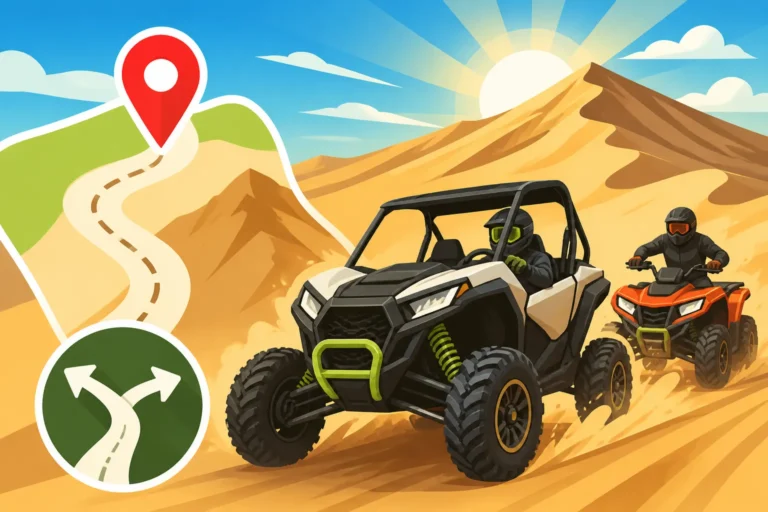
Navigation is helpful even when the dunes feel easy to recognize. A changing landscape, dust, distance and poor visibility can make it harder to retrace your route than expected. Download maps for offline use before you lose service, and agree on a meeting point that everyone can identify. onX Offroad can be useful for reviewing routes and saving navigation information ahead of time, but don’t treat any app as a substitute for posted signs, local rules or sound judgment.
Carry a map or another backup navigation option if your group is unfamiliar with the area. Before you ride, tell someone who is not on the trip where you are going and when you expect to check in. That simple habit can be helpful if plans change or a group is delayed. [Checking Utah Trail Conditions Before You Tow] is another good step when you are planning the drive and want to avoid arriving without a workable plan.
Pack for a day in the desert
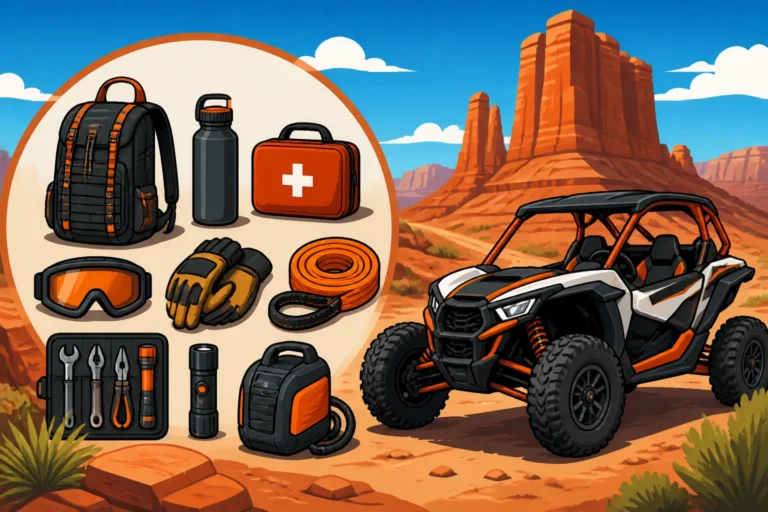
Bring enough drinking water for the group and plan for sun, wind, dust and temperature changes. Pack protective clothing, eye protection and any safety equipment required for your machine or the area. Keep a charged phone in a secure place, but don’t assume it will have service everywhere. A power bank and a basic first-aid kit can be sensible additions, especially for a longer visit.
Also bring the tools and recovery gear appropriate for your vehicle, and know how to use them before you need them. Don’t try a recovery while other machines are still moving nearby, and keep bystanders well away from a vehicle under tension. If your group does not have the experience or equipment to handle a stuck machine safely, seek appropriate help rather than improvising. [Recovery Gear for Utah Sand and Slickrock] and [What to Carry on a Utah Day Ride] offer useful follow-up checklists.
onX Offroad can help you review your planned route before the trip, while a saved offline map can be useful when service is unreliable. Still, pay attention to conditions on the ground and follow local signs and closures. You can use the app as one part of your preparation, then share a simple route and meeting plan with everyone in the group so nobody is relying on a single person’s phone.
Disclaimer
This article is for general informational purposes only and does not constitute professional advice. Laws, prices and regulations vary by location and change over time. Consult a qualified professional for guidance on your specific situation.