Paddle Tires at Sand Hollow and Little Sahara
Paddle tire mechanics and fitment guides help riders choose setups for ATVs and UTVs at Sand Hollow or Little Sahara.
The map is not the permission.
National forest and BLM routes, state OHV parks, and club trails crossing private land — with the closures and passes that decide whether today counts.

Paddle tire mechanics and fitment guides help riders choose setups for ATVs and UTVs at Sand Hollow or Little Sahara.

Two-wheel-drive machines at Sand Hollow can handle specific terrain if riders prepare properly, manage momentum, and know when to turn back.

Beginner lines at Utah Sand Mountain help new ATV and UTV riders choose manageable routes and avoid steep dunes.

Free public-land routes into the Sand Mountain OHV area help riders avoid Sand Hollow State Park entrance fees.

Sand Hollow rider crowds peak during weekends, holidays, and school breaks near Hurricane, Utah, bringing busy trails.

Sand Hollow whip flag rules and mounting methods explain how to check equipment and maintain rider visibility on dune terrain.
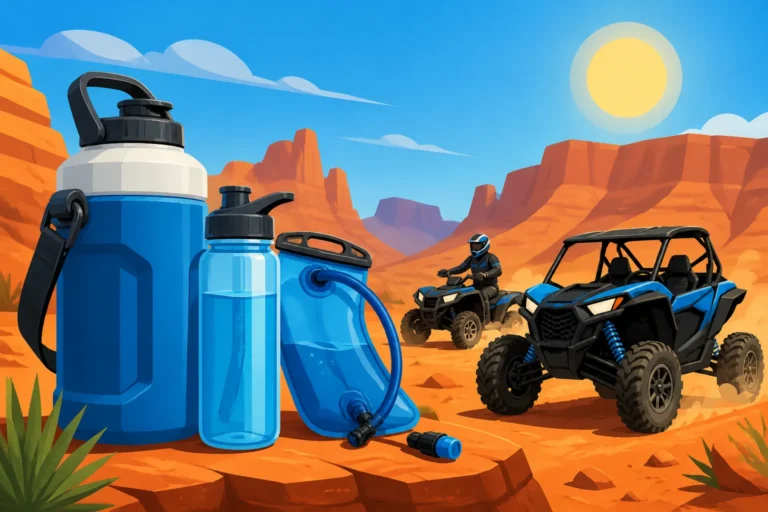
Water volume estimates for a summer Utah ride range from 0.5 to 1 liter per person per hour in warm conditions.

Utah day ride preparation requires packing extra water, offline maps, and tools tailored to remote desert trails and group needs.

Wide side-by-side vehicle dimensions, actual trail clearance, and route choices explain how to avoid narrow Moab rock passages.
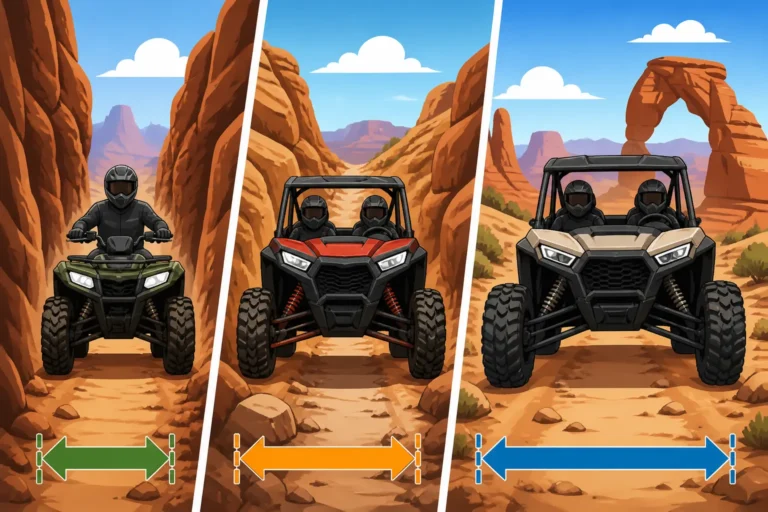
Choosing Moab ATV trails by machine width helps riders avoid tight squeezes and match vehicles to suitable routes.