Water to Pack for a Summer Utah Ride
A Utah summer ride can turn uncomfortable fast when the trail is hotter, longer, or more exposed than you expected. A small bottle in the cup holder may not be enough for a day around Moab, Sand Hollow, or the Paiute Trail. This guide explains how much water to plan for, how to carry it, and what to do when the route changes.
How much water to pack for a summer Utah ride
There isn’t one perfect amount for every rider. A shaded, easy morning loop near Fishlake is different from a long afternoon ride over exposed desert terrain. Your pace, workload, clothing, temperature, and personal needs all matter. Treat any estimate as a starting point, then build in a reserve rather than packing exactly what you expect to drink.
Estimate water by rider and ride time
For a short ride, it’s tempting to bring one bottle and assume you can refill later. That plan can fall apart if the loop takes longer than expected or the group stops to deal with a flat tire. For planning, many riders use roughly 0.5 to 1 liter per person per hour as a starting range in warm conditions, then increase their supply for intense heat, strenuous riding, or a route with little shade. It is not a personal medical prescription, and some riders may need more.
Think about the day in blocks. For a four-hour ride with three people, a starting estimate might be six to twelve liters for the group, plus a reserve. That can sound like a lot until you account for the drive, delays, unexpected navigation decisions, or a passenger who finishes their water earlier than planned. If the route is remote or very hot, plan conservatively.
| Ride conditions | Practical planning approach |
|---|---|
| Short, easy ride in cooler morning conditions | Bring enough for the full ride, plus a small reserve |
| Several hours in warm, exposed terrain | Estimate water per person and hour, then add extra |
| Long or strenuous ride in intense heat | Carry a substantial reserve and plan a route with realistic turnaround options |
| Uncertain route or remote area | Pack more than the expected need; do not count on finding water |
A group’s total supply should not hide individual shortages. If one person has most of the water in a large tank and another has only a small bottle, the group may technically have plenty while a rider is still running low. Divide water so everyone can access their own supply, and keep some emergency water separate from the everyday drinking stash.
For help building a broader packing plan, see [What to Carry on a Utah Day Ride]. Water is essential, but it needs to fit alongside navigation, basic repair items, sun protection, and other gear that can keep a minor delay from becoming a serious problem.
Add a reserve for delays and harder conditions
Your expected ride time is not always your actual ride time. A wrong turn, a slow rider, a mechanical issue, a trail closure, or a stop to help someone can add an hour or more. In areas such as the San Rafael Swell or the West Desert, a small delay may also mean spending more time in open sun than you planned.
Pack a reserve you do not intend to use during a normal ride. Keep it sealed or stored separately, and make clear to the group that it is for delays or emergencies—not a convenient extra bottle to finish before lunch. A reserve is only useful if it remains available when something goes wrong.
It also helps to choose a turnaround point before you set off. If the group has used more water than expected by that point, shorten the ride rather than relying on the reserve to get you through a longer route. A map app such as onX Offroad can help you check your planned route and nearby options before you leave, but map information does not replace carrying enough water for the trip you actually take.
Choose water containers that work on the trail
A good water plan is not only about volume. Water that is difficult to reach, leaks into your gear, or gets left behind at a staging area doesn’t help much. Think about where each container will sit, who needs access to it, and whether you can drink without stopping in an unsafe place.
Combine easy-to-reach bottles with bulk water
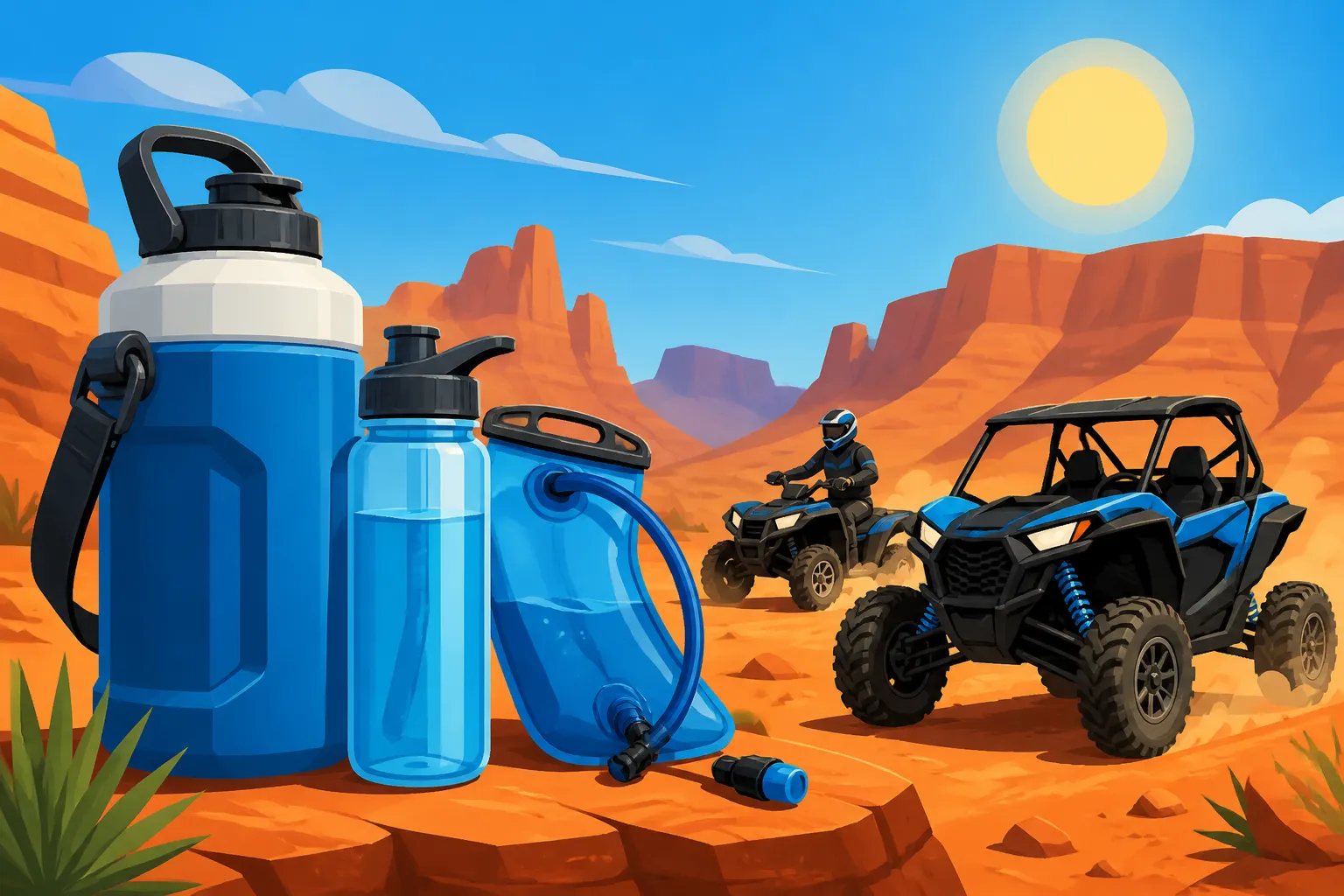
For many groups, a mix of smaller personal bottles and a larger supply works better than relying on one container. A bottle or hydration pack gives each rider quick access to drinking water. A larger jug or reservoir in the UTV provides backup and can be used to refill bottles during a break.
Secure larger containers so they cannot slide around or become a hazard over rough terrain. Check that lids close firmly and that the container is protected from damage. Before leaving home, fill it, set it on its side briefly, and check for leaks. A slow leak can soak spare clothing or gear without being obvious until you reach the trailhead.
On an ATV, space and mounting options may be limited. Use a container that is made to stay attached securely, and make sure it does not interfere with steering, controls, your view, or getting off the machine quickly. Avoid carrying a loose jug where it can shift during a climb or sudden stop.
Keep drinking water separate from utility water
Some riders carry extra water for rinsing dusty hands, cleaning equipment, or helping with a basic repair. That can be useful, but label it clearly and keep it separate from drinking water. In the moment, it is easy to forget which container has potable water—especially if the group has several identical jugs.
If you refill containers during a trip, use a source you know is safe to drink from. Do not assume that water found near a trail, campground, or livestock area is safe just because it looks clear. In remote terrain, your safest plan is usually to carry the drinking water you need from the start rather than counting on an unplanned refill.
Pack water where it stays accessible but protected from heat and impact. A bottle buried beneath tools and spare clothing is harder to use, and a container sitting in direct sun may become unpleasantly warm. Insulation can help keep water more comfortable, but it does not replace having enough of it.
Build a water plan around the route and weather
A summer ride in Utah can cross several types of terrain in one day. A shaded forest route near the Uinta Mountains has different demands from an open sandy area around Little Sahara or a rocky trail in the Moab region. Route length, elevation, exposure, and the ability to turn back should all influence what you pack.
Check the route before leaving the staging area
Look at the ride’s total distance, likely duration, elevation changes, and opportunities to shorten the loop. Do not judge water needs by mileage alone. A slow, technical route can take longer than a smooth road of the same distance, while repeated climbs and deep sand may make riders work harder than expected.
Before trailering out, check for relevant route information and conditions. [Checking Utah Trail Conditions Before You Tow] can help you think through the planning step, and [Utah OHV Trail Maps and How to Read Them] is useful if you are still getting comfortable interpreting routes. An app such as onX Offroad can help you keep track of your planned route, but download what you need before heading into a dead zone and carry a backup navigation option when appropriate.
Be especially cautious about assuming that a nearby town, gas station, or campground will be convenient for refilling. A route may look close to services on a map while the actual drive takes much longer, or the trail may not connect to the place you had in mind. If your ride is based near Marysvale, for example, do not assume every section of the Paiute Trail has an easy water stop. Plan to carry the supply needed for the full stretch between reliable access points.
Adjust for heat, shade, and riding effort
Start early when conditions allow, take breaks in shade, and avoid treating the hottest part of the day as the best time for a demanding ride. These choices reduce exposure, but they don’t make water optional. Even when you feel comfortable at the trailhead, sun, reflected heat, and wind can make a long ride more taxing.
A route with frequent stops can still be demanding. Riders may underestimate how much effort it takes to navigate loose sand, climb rocky grades, or help a vehicle through a difficult section. If the group includes children, inexperienced riders, or passengers who are not used to heat, plan at a pace that lets everyone drink and rest without pressure.
If weather changes, reconsider the route rather than sticking to the original plan just because it is written down. [Trail Closures Utah Riders Should Check First] is a useful reminder that access can change, while [Riding Utah Trails After a Storm] covers another planning factor that may affect how long a ride takes. If the trip shifts toward a longer or more strenuous route, the group’s water plan should shift too.
Use water safely during the ride
Having water on board is only part of the job. Riders need to be able to reach it, notice when the plan is not working, and make a sensible decision before anyone is in trouble. Build drinking breaks into the day instead of waiting until someone feels extremely thirsty or unwell.
Make drinking easy for the whole group
Agree on simple break points before starting: for example, drink at scheduled stops, at the turnaround point, and whenever the group pauses for navigation. These reminders can help riders who become absorbed in the trail and forget to drink. Keep stops in safe locations, away from blind corners and areas where other vehicles may pass.
Check in with passengers and newer riders rather than assuming everyone will speak up. A person may be reluctant to slow the group or may not realize how quickly their bottle is emptying. Ask each person to check their own supply at breaks, and confirm that the group still has its reserve.
Hydration packs can be convenient, especially for riders who want water within reach, but they should not be the only plan if they are difficult to refill or clean. Bottles make it easier to see how much water remains. Whatever setup you choose, try it on a shorter ride first so you know it stays secure and works with your helmet, seat belt, and riding position.
Know when to stop and get help
Heat-related illness can become serious. If someone becomes confused, unusually weak, dizzy, nauseated, or unsteady, stop riding and move them to a cooler place if you can do so safely. Do not ask them to push on to the next viewpoint or trail junction. If symptoms are severe, worsening, or include confusion or fainting, seek emergency help. Water alone is not a substitute for urgent care.
When someone is unwell, keep the rest of the group together and make a clear plan. Identify your location, use any available communication method, and contact emergency services if needed. Remote routes can have limited cell coverage; [Cell Service Along the Paiute Trail] explains why it is worth planning for communication gaps before a ride.
If you ride alone, the margin for error is smaller. Tell someone where you plan to go and when you expect to return. Carry extra water and a way to navigate if your phone loses signal or power. For more remote riding, [Getting Unstuck Alone in the Utah Desert] offers practical context for planning around problems that can extend a trip unexpectedly.
Make a simple water checklist before every ride
Use a repeatable check rather than trying to remember everything while loading the trailer:
- Estimate the ride duration and choose a starting amount for each person.
- Increase the amount for heat, exposed terrain, strenuous sections, or uncertainty.
- Add a separate reserve for delays and emergencies.
- Give each rider accessible drinking water and secure the group’s bulk supply.
- Check the route, weather, turnaround options, and communication plan.
- Confirm that everyone knows where the water is and when the group will stop.
- Reassess at breaks and turn back or shorten the route if the supply is running low.
A water plan should leave the group with choices. If the ride takes longer than expected, you want enough margin to pause, change direction, or handle a delay without making a risky decision. That extra capacity is particularly helpful on long desert routes and when riding with people whose experience or heat tolerance varies.
Disclaimer
This article is for general informational purposes only and does not constitute professional advice. Laws, prices and regulations vary by location and change over time. Consult a qualified professional for guidance on your specific situation.