Can a Learner Driver Drive a Street-Legal UTV?
It's incredibly exciting to finally get your side-by-side street legal here in Utah, ready to hit the pavement between trails or run into town for supplies. But then, as you gaze at that shiny license plate, a common question pops up, especially for families with younger, eager drivers: can a learner driver actually pilot that street-legal UTV on public roads? This guide will dive deep into Utah's specific laws and regulations, clearing up the confusion surrounding learner permits and street-legal off-highway vehicles, so you can make informed decisions and stay safe and legal on the road.
Understanding Utah's Driver License Requirements for OHVs on Roads
When you convert your ATV or UTV to be street-legal in Utah, you're essentially telling the state, "This machine is now capable of sharing the road with cars and trucks." And with that capability comes the responsibility of adhering to the same traffic laws and, crucially, the same driver licensing requirements as any other motor vehicle. This is often where the initial misunderstanding arises for many riders.
Driving a UTV on public roads isn't like driving it on a designated trail system, where specific OHV education certificates or age-based supervision rules apply. Once your UTV has a license plate and is traveling on a public highway, it falls squarely under the same rules as a car, motorcycle, or truck. This means the driver needs a valid Utah driver license for the class of vehicle they are operating. For most UTVs, a standard Class D operator license is sufficient, just like for a passenger car.
So, what does this mean for someone with just a learner permit? A learner permit is a foundational step toward obtaining a full driver license, allowing supervised practice. However, it comes with strict limitations that apply across all vehicle types, including your newly street-legal side-by-side. The key takeaway here is that once your OHV is street-legal, the "OHV rules" regarding age and license largely cede to the "motor vehicle rules." If you're pondering the requirements for an older family member, our guide on [Age to Drive a Street-Legal ATV in Utah] might also be helpful.
The Distinction Between Off-Road and On-Road Driving Privileges
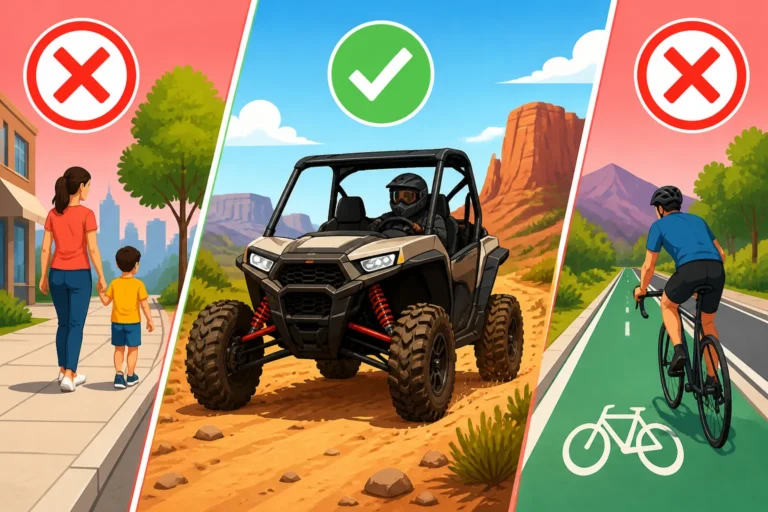
It's vital to differentiate between off-road and on-road driving privileges. For example, a young person (often 8 years or older with appropriate training and supervision) can operate an OHV on designated off-highway trails or private property in Utah. This is governed by specific OHV laws, which typically involve an OHV education certificate and direct adult supervision. These rules are designed for the unique environment of off-road recreation.
However, the moment that same UTV rolls onto a paved state highway or even a county road that is open to general traffic, the rules change fundamentally. Suddenly, it's no longer just an "OHV"; it's a "motor vehicle" subject to the Utah Traffic Code. This means a driver cannot simply transfer their off-road operating privileges to the pavement. They must meet the full requirements for operating a registered, licensed vehicle on public roads. This means a valid driver license, just as if they were driving a pickup truck. Don't forget that troopers checking your paperwork on the trail might not be checking for street-legal documents, but on the road, they certainly will be. It helps to know [What a Utah Trooper Checks at a Trailhead] when you're off the pavement.
This distinction is crucial for safety and legality. The skills, awareness, and legal responsibilities involved in navigating public roads with other vehicles, traffic signals, and speed limits are different from those required on a dirt trail. Utah's licensing system reflects this, ensuring drivers have demonstrated a minimum level of competence for road use before being granted full driving privileges.
Age and Supervision Rules for Learner Drivers in Utah
Now, let's get to the heart of the matter: can a learner driver operate a street-legal UTV on Utah's roads? The short answer is yes, under the same strict conditions that apply to a learner driver operating any other passenger vehicle. Utah's Graduated Driver Licensing (GDL) program sets out specific requirements for permit holders.
A learner permit is the first step in this process. Typically, a person can obtain a learner permit at age 15. This permit allows the individual to operate a motor vehicle (including a street-legal UTV) on public roads only when accompanied by a licensed driver. This supervising driver must be at least 21 years old, occupy the seat next to the learner driver, and hold a valid, full driver license. It's not just about having an adult present; it's about having a qualified, experienced driver ready to take control if necessary.
So, if your 15-year-old has a valid learner permit and you, as a licensed driver over 21, are sitting right there in the passenger seat, yes, they can drive the street-legal UTV on Utah roads. However, the permit also comes with other restrictions. For example, during the initial permit phase, there are often limitations on driving during specific nighttime hours or with non-family passengers. These restrictions apply equally to a street-legal UTV as they would to a car. You'll want to review the full details of [Driver License Rules on Utah Roads] to make sure you're completely compliant.
Specific Permit Restrictions and How They Apply
Utah's learner permit comes with a few key restrictions that every parent and young driver needs to understand, regardless of whether they're driving a car or a street-legal UTV. These are designed to provide a controlled learning environment and reduce risk for inexperienced drivers.
- Supervision Requirement: As mentioned, the absolute core rule is that a licensed driver, 21 years or older, must be in the front passenger seat whenever a learner permit holder is driving. There are no exceptions for street-legal UTVs; this isn't a "trail machine" exemption. If you're pulled over and your 15-year-old is driving without a qualified supervisor, it's a serious violation.
- Nighttime Driving Restrictions: Generally, learner permit holders (and eventually, provisional license holders) have restrictions on driving during certain late-night or early morning hours. These specific times can vary, so it's critical to check the current Utah Driver Handbook or the DMV website for the most up-to-date information. If the permit holder isn't allowed to drive a car at 11 PM, they certainly aren't allowed to drive a street-legal UTV at that time, either.
- Passenger Restrictions: While the learner permit primarily focuses on the supervisor, the subsequent provisional license phase often has restrictions on the number or type of non-family passengers the young driver can have. It's important to understand that these rules apply to a street-legal UTV just as they would a family sedan. Your street-legal UTV might have seating for four, but if the permit or provisional license says only family members are allowed, then those rules must be followed. Our article on [Passengers and Seat Belts on Utah Roads] covers important rules that apply to all drivers.
It's a common mistake to think that because it's an "off-highway vehicle," some of these rules might be relaxed. They are not. If your UTV has a license plate and you're driving it on a public road, it's subject to the same traffic laws and licensing provisions as any other vehicle. Always err on the side of caution and ensure you're fully compliant with Utah's Graduated Driver Licensing program.
What Your Street-Legal UTV Needs to Be Road-Ready
Beyond the driver's license, the UTV itself must be fully compliant with Utah's street-legal requirements. This isn't just a recommendation; it's a legal necessity that is often checked by law enforcement. A learner driver, or any driver for that matter, behind the wheel of a UTV that isn't properly equipped for the road could face tickets or worse.
The basic premise is that your UTV needs to mimic the safety equipment found on standard cars. This includes functional headlights (both high and low beam), taillights, brake lights, and turn signals (front and rear). A working horn is a must, as are mirrors (typically one on each side, or a rearview mirror and a driver's side mirror). You'll also need a windshield or suitable eye protection, and of course, a visible license plate properly illuminated at night.
Many riders opt for specific street-legal conversion kits to ensure all these components are installed correctly and meet regulatory standards. Brands like SuperATV offer comprehensive kits that include wiring harnesses, switches, and lights designed to integrate seamlessly with various UTV models. Investing in quality components from reputable sources helps ensure you pass inspection and remain safe on the road. For a deep dive into all the specifics, check out our guide on [Utah Street-Legal ATV Equipment Requirements].
Essential Equipment Beyond Lights and Mirrors
While lights and mirrors are often the first things people think of for street-legal conversion, Utah's requirements go a bit deeper, touching on safety features that are critical for any vehicle sharing public roads.
- Brakes: Your UTV needs fully functional brakes on all wheels, plus a parking brake that can hold the vehicle on an incline. This isn't usually an issue for modern UTVs, but it's a vital safety check.
- Tires: While specific tire types for off-road use are common, when on the road, your tires must be in good condition with adequate tread depth, free from major damage. [Tire Rules for Street-Legal Machines] can give you more detail.
- Muffler/Exhaust System: Utah has noise ordinances, and your UTV's exhaust system must be in good working order, preventing excessive noise. This is one area where aftermarket modifications for performance can sometimes lead to issues with street-legal compliance.
- Speedometer: A functioning speedometer is required so the driver can maintain legal speed limits. Many UTVs come with this, but older models or custom builds might need an aftermarket addition.
- Seatbelts: All occupants must have and use properly functioning seatbelts, similar to a regular car. This is often already present on UTVs but ensure they are in good repair.
- License Plate Light: The rear license plate must be illuminated during nighttime hours so it's clearly visible. This often comes as part of a turn signal kit or separate small LED light.
Ensuring every single one of these items is in place and working correctly isn't just about avoiding a ticket; it's about the safety of the learner driver, their supervisor, and everyone else on the road. A UTV that meets these requirements is a much safer vehicle to operate in a road environment. The investment in proper street-legal conversion, perhaps using components from trusted brands like SuperATV for durability and compliance, is an investment in peace of mind.
Important Considerations for Young Drivers and Road Safety
Allowing a learner driver to operate a street-legal UTV on public roads comes with unique responsibilities and safety considerations that go beyond just meeting the legal requirements. While a UTV can be street legal, it's not a car, and its dynamics on pavement are different.
For instance, UTVs often have a higher center of gravity than many cars, affecting handling, especially in turns or during sudden maneuvers. Their braking distances can also differ, and their open-air nature means occupants are more exposed. These factors require a heightened sense of awareness and careful driving, skills that a learner driver is still developing.
Parents and supervising adults must understand that while legal, putting a new driver in a UTV on a highway, especially one with higher speed limits, requires extra caution. Starting on quieter, slower roads and gradually progressing to more complex environments can be a smart approach. Consider going over [What a Utah Officer Looks for on a Street-Legal ATV] with your young driver, so they understand the expectations.
Practical Tips for Supervising a Learner Driver in a Street-Legal UTV
Supervising a learner driver is a big responsibility, and doing it in a street-legal UTV adds a few specific nuances. Here are some practical tips to make the experience safer and more educational:
- Start Simple: Don't immediately hit a busy highway. Begin driving practice on quiet neighborhood streets, empty parking lots (if permitted), or low-traffic county roads. This allows the learner to get a feel for the UTV's handling, braking, and acceleration on pavement without the pressure of heavy traffic.
- Reinforce Basic Skills: Focus on fundamental driving skills – smooth acceleration, gentle braking, proper signaling for turns, checking mirrors frequently, and maintaining appropriate following distances. Because UTVs often have a different feel than cars, these basics might require more practice.
- Discuss Unique Dynamics: Talk openly about how the UTV handles differently from a car. Explain its higher center of gravity, potential for body roll in turns, and how factors like wind can affect stability at speed. Emphasize that a UTV is not designed for high-speed highway cruising like a passenger car.
- Be a Patient Co-Pilot: The supervising driver needs to be actively engaged. Provide clear, calm instructions, anticipate potential hazards, and be ready to intervene if necessary. Use the opportunity to teach defensive driving techniques specific to UTVs on the road.
- Ensure Proper Gear: While helmets may not be legally required for adults over 18 in a street-legal UTV, they are highly recommended for all occupants, especially learner drivers. Eye protection is a must, and ensuring all occupants are securely buckled into their seatbelts is non-negotiable. Our guide on [Helmet and Age Rules on Utah Roads] has more details on this.
- Check Local Ordinances: Remember that even if a UTV is street-legal statewide, some cities or counties in Utah may have additional restrictions on OHV use within their specific boundaries. Always check local rules before driving in a new area.
- Review Emergency Procedures: Discuss what to do in case of a breakdown, flat tire, or minor fender bender. Knowing how to safely pull over, use hazard lights, and contact assistance is crucial for any driver, but especially for a learner.
By being thorough, patient, and emphasizing safety above all else, you can provide a valuable learning experience for your young driver in your street-legal UTV, preparing them for a lifetime of responsible driving, whether on or off the trail.
| Driver Type | Age Requirement | Supervision Needed? | Restrictions Apply? | Street-Legal UTV On-Road |
|---|---|---|---|---|
| Learner Permit Holder | 15 years old | YES (21+ licensed driver in passenger seat) | YES (Nighttime, Passengers) | Allowed under ALL permit restrictions |
| Provisional License Holder | 16-17 years old | NO (after permit phase) | YES (Nighttime, Passengers) | Allowed under ALL provisional restrictions |
| Full Class D License Holder | 18+ years old | NO | NO | Allowed |
This table simplifies the core licensing requirements for driving a street-legal UTV on Utah's public roads. Remember, the key is that a street-legal UTV follows the same driver licensing rules as any other motor vehicle. Always refer to the latest Utah Driver Handbook for precise details on permit and provisional license restrictions, as these can be updated. And don't forget to budget for [Street-Legal Conversion Costs in Utah] to ensure your machine is compliant before any driving happens.
Disclaimer
This article is for general informational purposes only and does not constitute professional advice. Laws, prices and regulations vary by location and change over time. Consult a qualified professional for guidance on your specific situation.