Which Utah Areas Suit a Utility Quad
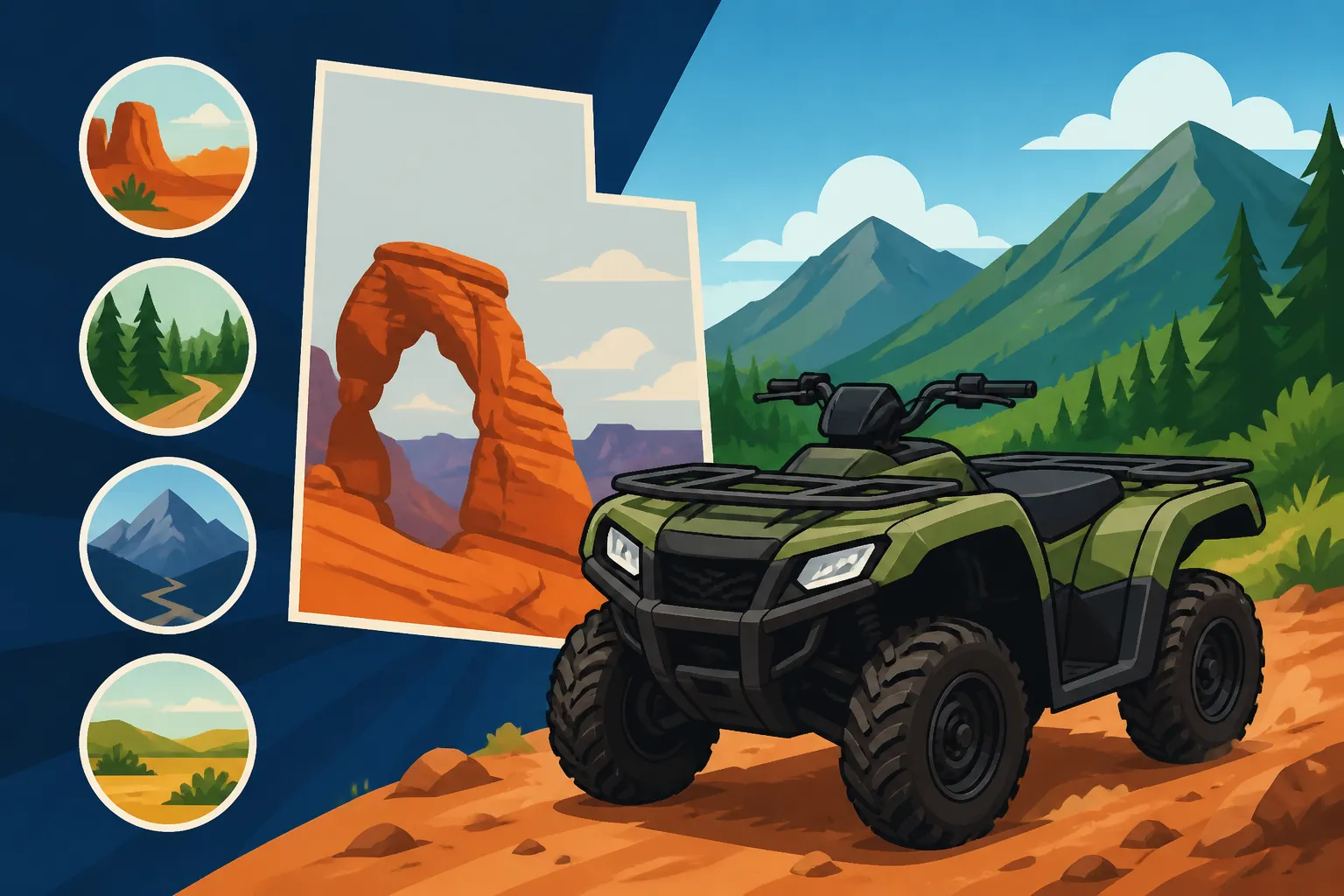
A utility quad can feel perfectly at home on a broad forest road and awkward on a narrow, steep trail—or bog down in sand that a lighter sport ATV crosses easily. Choosing the right Utah riding area means matching terrain, route width, elevation, and remoteness to your machine and experience. This guide explains where a utility quad is likely to be a comfortable fit and what to check before unloading.
What Makes an Area a Good Fit for a Utility Quad
Match the terrain to your quad’s strengths
Utility quads are built for practical work as well as recreation. Many have four-wheel drive, a stable stance, and racks for carrying gear. Those qualities can be useful on rocky routes, rolling dirt roads, and longer rides where you want to bring water, tools, or a small recovery kit. They can also make the machine heavier and less nimble than a sport quad, particularly when the trail gets tight or technical.
Think about the ride you want, not just the destination name. A broad route with a gradual climb may suit a utility quad well, while a narrow track with tight turns, ledges, or deep ruts may demand more careful line choices. Four-wheel drive can help with traction, but it does not make a steep or loose slope risk-free. A loaded rack can also change handling, especially when the load is heavy or uneven.
Before committing to a route, check whether it is open to your machine’s width and type. A popular trail system can include routes with very different surfaces and difficulty levels, and the easiest access road may not describe the whole ride. A paper map, a current official route map, or a planning tool such as onX Offroad can help you compare routes before you arrive. Confirm important route details with the land manager’s current information.
Consider comfort, range, and recovery
A utility quad may be comfortable on a long day ride, but comfort depends on the rider, suspension, tires, and surface. Long stretches of washboard can be tiring even when the road looks easy. Rocky ground can demand slow, attentive riding, while soft sand may require steady momentum and a different tire setup. Build in breaks rather than assuming the machine’s load capacity means you can ride all day without fatigue.
Range matters more in remote areas. Estimate fuel use conservatively, especially if the ride includes climbs, soft terrain, or frequent stops. Keep your cargo secure and balanced; bulky items on a rear rack can affect steering and stability. If you are carrying tools, make sure they are restrained so they cannot shift when the quad bounces over rocks.
Also plan for what happens if the machine gets stuck or develops a problem. A utility quad can be heavy to move by hand, and a remote route may have little or no cell service. Tell someone where you intend to ride and when you expect to return. For a practical day-ride packing plan, see What to Carry on a Utah Day Ride. For remote routes, a recovery plan is part of choosing a suitable area, not an optional extra.
Utah Areas That Often Suit Utility Quads
Paiute Trail and central Utah forest routes
The Paiute Trail system is worth considering if you want a long ride with a mix of forest roads, dirt routes, and access to communities such as Marysvale and Richfield. A utility quad can be a sensible match for many less-technical sections, especially when you want to carry supplies and explore at a steady pace. The network is extensive, however, and route conditions, elevation, and difficulty vary. Do not treat the system as one uniform trail.
Plan a route that fits the least experienced rider in your group and the capabilities of the machine. Forest elevation can affect both riders and vehicle performance, and conditions may change with weather or season. A route that looks straightforward on a screen may include rocky sections, steep grades, or exposed stretches. Use Utah’s Paiute Trail: Main Loop and Side Trails to understand the system’s scope, and check current route information before setting out.
Central Utah forest riding can also suit a utility quad when you choose routes that match its width and handling. The trade-off is that forest routes may include narrow sections, gates, seasonal closures, and changing surfaces. A map should help you plan, but it does not replace posted signs or current land-manager information. onX Offroad can be useful for organizing possible routes and keeping a map available for planning; check that your chosen route is open and appropriate before riding it.
For more area context, compare Fishlake Forest Routes in Central Utah and Manti-La Sal National Forest Rides. Both topics can help you think about the kind of landscape you want, but route-by-route decisions still matter. Choose a manageable loop, identify fuel and turnaround options, and avoid building a day around a single trail segment if you have not confirmed its condition.
San Rafael Swell and Five Mile Pass
The San Rafael Swell offers a rugged desert setting where a utility quad’s traction and practical carrying capacity may be useful. Routes can involve rock, sand, exposed terrain, and long distances between services. That combination rewards careful route selection. A heavier machine may handle a broad, rocky route well but feel cumbersome on a narrow, uneven section or in loose sand. Choose a route with a difficulty level you can manage without relying on the quad’s four-wheel drive to solve every obstacle.
Desert remoteness should shape your decision. Carry water for the whole group, take enough fuel for the planned distance with a reserve, and bring equipment suited to your machine. Check the map for route connections and access points before leaving. If you are new to the area, consider a shorter ride or a familiar route first rather than trying to cover a large loop in one day. San Rafael Swell: Utah’s Desert Maze is a useful starting point for understanding the area’s scale and character.
Five Mile Pass can be a practical option for riders looking for an OHV area within reach of Utah County. Its varied riding opportunities can make it attractive for a shorter outing, but “nearby” does not mean every route will suit every quad or rider. Look for a route with a surface and grade you are comfortable managing, and be prepared for changing conditions. For a focused overview, see Five Mile Pass in Utah County.
At either destination, check the route on a current map before the trip. onX Offroad may help you compare possible routes during planning, but posted signs and official land-management information should guide your decisions on the ground. The area name alone does not tell you whether a specific route is open, wide enough, or suitable for your machine.
Little Sahara and other sand areas
Sand can be enjoyable on a utility quad, but it presents a different challenge from rocky or forest routes. A heavier machine may need more careful throttle control and momentum, and deeply soft sand can demand more effort from both rider and vehicle. Tire choice, machine setup, rider experience, and the day’s sand conditions all affect how manageable the dunes feel. If you are new to sand, start cautiously and ride with someone who knows the area.
Little Sahara is a well-known destination for dunes, but it may not be the easiest first choice for every utility quad. The dune terrain can be physically demanding, and a loaded machine can behave differently from a lightly equipped one. Secure cargo carefully and avoid carrying unnecessary weight high on the racks. Before riding, learn the area’s posted rules, staging layout, and current access conditions. Utah’s Little Sahara and Its Sand Bowls offers additional background for planning.
A utility quad may be a better fit for firmer access roads or less demanding routes around a sand destination than for repeated dune climbing. If the main goal is dune riding, think honestly about tire setup, experience, and whether the machine is appropriate for the conditions. For an outing that mixes sand with easier routes, plan a clear turnaround point and do not follow a group onto terrain you would not choose on your own.
| Utah riding area | Why a utility quad may fit | Main planning concern |
|---|---|---|
| Paiute Trail and central Utah routes | Long rides and varied routes can suit a capable, well-prepared machine | Route difficulty, elevation, closures, and ride distance |
| San Rafael Swell | Four-wheel drive and cargo capacity can help on selected rugged routes | Remoteness, fuel, water, and route conditions |
| Five Mile Pass | A nearby option for choosing a shorter or more manageable outing | Surface and difficulty vary; check the specific route |
| Little Sahara | Can work for riders prepared for sand and the machine’s handling | Soft dunes, machine setup, and rider experience |
How to Choose a Route Before You Go
Check width, surface, and current access
Start with the specific route, not a broad destination label. Look for the route’s permitted vehicle width and make sure it accommodates your quad. Then consider the surface and grade: packed dirt, loose sand, rocks, mud, and steep climbs place different demands on a machine. If a map shows a route but does not clearly identify its current status or vehicle restrictions, verify the information before you ride.
Official Motor Vehicle Use Maps and land-manager notices are especially important on public land. Routes can close, change, or have restrictions that are not obvious from older descriptions. A navigation app can make route planning easier, but do not assume that every line shown is open or legal for your machine. For more guidance, see Reading a Motor Vehicle Use Map and Trail Closures Utah Riders Should Check First.
Use a planning tool such as onX Offroad to compare route options and think through distance, turns, and possible connections before you leave. Then cross-check key details against current official information. Download or save maps for offline use if you expect limited service, and make sure you know how to use them without relying on a live connection. A route-planning screen is helpful, but it cannot tell you exactly what the surface will feel like after recent weather.
Build a ride around the least experienced person
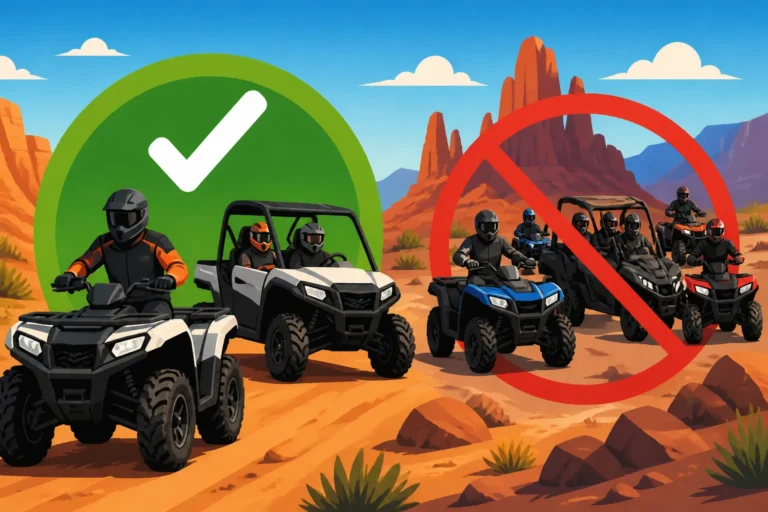
A group ride is only as comfortable as its most vulnerable rider or least capable machine. If someone is new to riding, choose a shorter route with simple navigation and an easy way to turn around. Avoid pressure to keep up with faster riders. Agree in advance that anyone can ask for a stop, a slower pace, or a change of plan.
A sensible first ride can be as simple as a short loop on a familiar surface. That gives you a chance to learn how the quad behaves with its cargo, how quickly the group tires, and whether the route feels as manageable as expected. If the trail becomes narrower, steeper, or rougher than anticipated, turning back is a responsible decision—not a failed ride.
Before departing, tell someone outside the group where you plan to go and when you expect to return. Establish a meeting point in case riders become separated, and confirm that everyone knows the route and carries essentials. A phone may not have coverage throughout a remote area, so do not make it the only way your group can navigate or communicate.
Prepare the Quad and Your Group for the Terrain
Check the machine and load
Give the quad a basic pre-ride inspection before towing it to the trailhead. Check tires, brakes, controls, lights, fuel, and any important fasteners. Make sure the cargo is secured and does not block the rider’s movement or interfere with steering. A heavy load can change how the quad handles on a climb, in a turn, or when descending a rough section.
Pack for the route rather than filling every rack. Water, food, a first-aid kit, basic tools, and a way to deal with a flat tire or minor mechanical issue are more useful than extra gear you do not need. Keep heavy items low and balanced where possible. If you are riding in an area with long distances between services, bring enough supplies for delays as well as the planned ride.
For a detailed planning list, use Utah Trailhead Parking That Fits a Trailer when sorting out logistics at the staging area, and consider the practical items in What to Carry on a Utah Day Ride. Also check whether your machine’s registration, permits, and required rider documents are in order for the trip. Requirements can differ based on residency, machine status, and where you plan to ride.
Ride within your limits and adapt
Keep a pace that leaves room to react to rocks, ruts, other riders, and changing visibility. In a group, leave space between machines so the rider behind is not forced into dust or a sudden stop. Use caution around blind corners and narrow sections, and follow posted rules and signs. If the route becomes more difficult than expected, pause to assess it before proceeding.
Utility quads can encourage riders to carry more and attempt more, but capability is not the same as suitability. Four-wheel drive may improve traction in some conditions, yet it cannot remove the risk of a rollover, a hidden obstacle, or getting stranded. Do not let a more experienced rider’s pace or a destination’s reputation dictate your choices. A comfortable route is one where you can ride attentively and still make safe decisions.
Leave the route as you found it. Stay on designated routes, respect closures and private land, and avoid widening trails by riding around obstacles. Those choices protect the area and help keep riding opportunities available. When selecting a Utah destination, the best match is not necessarily the most famous or challenging one; it is the place where your quad, your group, and the actual route conditions make sense together.
Disclaimer
This article is for general informational purposes only and does not constitute professional advice. Laws, prices and regulations vary by location and change over time. Consult a qualified professional for guidance on your specific situation.