Choosing Between Moab and Sand Hollow
Choosing between Moab and Sand Hollow can be surprisingly difficult: both offer dramatic red-rock scenery, memorable UTV routes, and plenty of reasons to spend a full day riding. The better choice depends on your machine, experience, trip length, and appetite for technical terrain. This guide compares the riding styles, logistics, and practical tradeoffs so you can choose a destination that fits your group.
How the riding feels in Moab and Sand Hollow
Moab is a route-planning destination
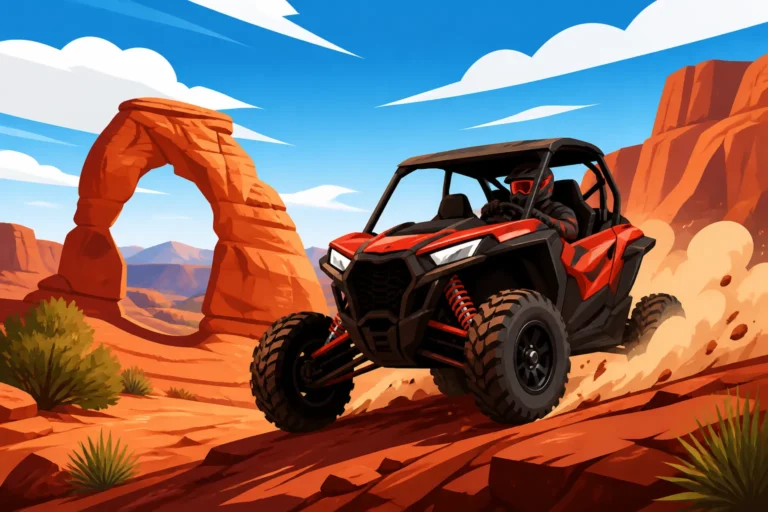
Moab riding is known for slickrock, ledges, rocky washes, and routes that weave through striking desert country. A ride may involve following a marked trail across broad rock slabs, negotiating uneven steps, or stopping to assess a steep section before proceeding. The terrain can be beautiful and demanding at the same time, so a route’s reputation alone does not tell you whether it suits your specific machine or group.
There is no single Moab riding experience. Sand Flats Recreation Area has popular routes such as Hell’s Revenge and Fins and Things, while other nearby routes offer different combinations of rock, sand, and rough desert travel. Even within one area, a route can include easier stretches followed by obstacles that feel much more serious. For a closer look at the best-known routes, see Riding Moab, Utah on a Side-by-Side.
Moab can be a strong choice if you enjoy choosing a route deliberately and making a day of the ride. You might ride a shorter trail, stop for views, and return to town, or plan a longer outing that needs more preparation. Before you commit, compare the route’s difficulty with your machine’s width, ground clearance, tires, and your group’s comfort level. What Trail Difficulty Ratings Leave Out is a useful reminder that a rating cannot capture every factor that makes a trail feel difficult.
Sand Hollow mixes dunes, sand, and rock
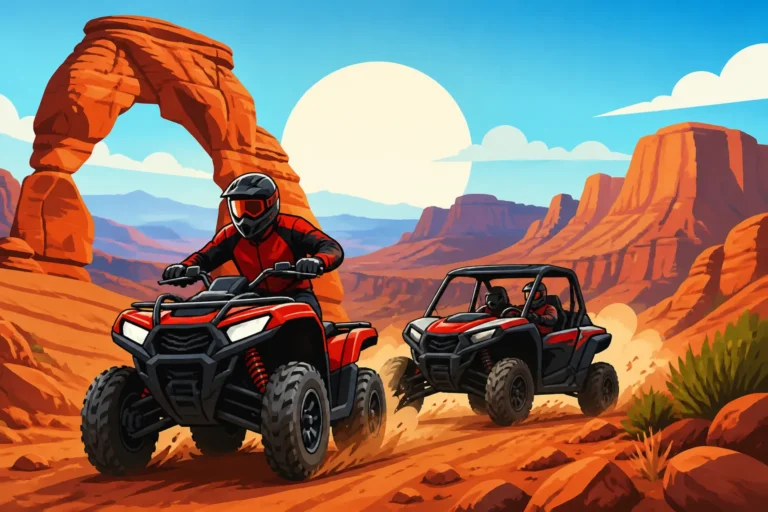
Sand Hollow, near Hurricane and St. George, offers a different kind of variety. Sand Mountain’s dunes are a major draw, while nearby riding also includes rocky terrain and routes with views toward the surrounding desert landscape. The sand changes the feel of the ride: climbing, descending, and turning on dunes calls for a different approach than picking a line across Moab slickrock.
For many riders, the appeal is that a day can feel playful and open-ended. You can explore dune terrain, take breaks, and adjust the pace to the group rather than treating the ride as one continuous technical route. That does not make the area automatically easy. Dunes can be tiring, visibility can be reduced by dust, and steep or unfamiliar slopes deserve caution. Beginners should keep their first outings conservative and avoid following other riders onto terrain they have not assessed themselves.
Sand Hollow also works well for riders who want a mix of terrain without making every section a technical challenge. But the right machine and setup still matter. Two-wheel drive, tire choice, passenger load, and rider experience can all affect how comfortable a machine feels in soft sand. See Sand Hollow and Sand Mountain: A Rider’s Guide for more about the riding area.
| What matters most | Moab | Sand Hollow |
|---|---|---|
| Signature terrain | Slickrock, ledges, rocky routes, and desert washes | Sand dunes, soft sand, and nearby rocky terrain |
| Typical riding feel | Route-focused, with obstacles that may require careful line choice | More open dune riding mixed with varied terrain |
| Best fit for | Riders who enjoy exploring named trails and assessing technical sections | Riders who want dunes and a more flexible mix of riding |
| Main planning concern | Matching route difficulty and width to the machine and group | Managing sand, dust, heat, and dune conditions |
| Ideal trip style | A destination trip built around trail selection and scenery | A ride day or longer trip with multiple terrain choices |
| Local base | Moab | Hurricane and St. George |
Choose by experience, machine, and group
Let your least experienced rider shape the plan
It is tempting to choose a destination based on the most experienced person in the group. In practice, the ride is often more enjoyable when the plan reflects the comfort level of the least experienced driver or passenger. A nervous rider who feels pressured to keep up can turn a scenic day into a stressful one, especially when the group reaches an obstacle or a dune slope they did not expect.
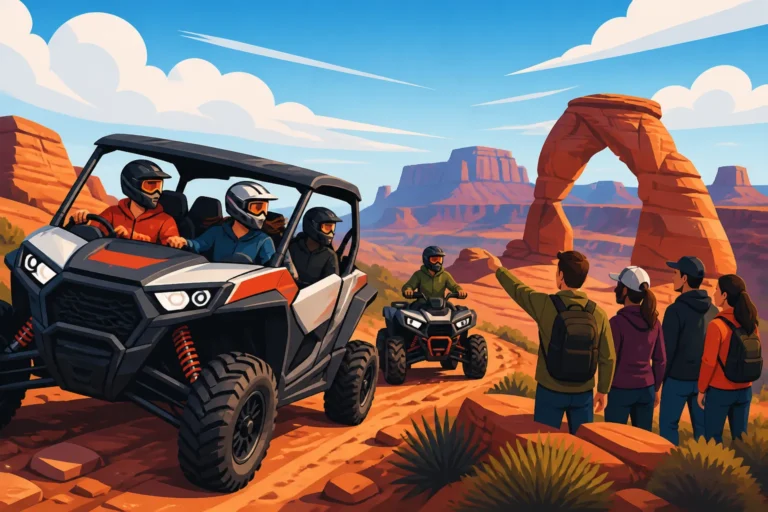
For a first off-road trip, think about what the new rider is actually comfortable doing. Have they driven on uneven terrain before? Are they comfortable judging a slope, stopping on loose ground, or navigating around other machines? If the answer is no, start with a conservative route or a guided outing rather than treating the first day as a test of courage.
Moab may suit a cautious group if you select a route carefully and are willing to turn around when conditions feel wrong. Sand Hollow may appeal to new riders because of its range of terrain, but dunes can be deceptively tiring and confusing when visibility is limited. In either place, a beginner should not feel obligated to follow a faster group into a challenging section. For help narrowing down a route by ability, Moab Trails That Fit a Half Day and Beginner Lines at Utah’s Sand Mountain offer useful starting points.
Check your machine before you pick a destination
A capable machine does not make every route a good match. Before deciding, check the machine’s width, clearance, tires, passenger capacity, and any restrictions for the specific routes you are considering. A wide side-by-side may be comfortable on open terrain but unsuitable for a narrow route. A machine that feels stable on rock may feel very different in soft sand.
If you are bringing a rental, ask the shop which routes are allowed and whether any areas are excluded by the rental agreement. Do not assume that a machine’s size or advertised capability means it can go everywhere. Rental rules can limit where you may ride, and recovery costs or damage rules can make an ambitious route an expensive mistake. If you are renting, Best Moab Trail for a Rented Side-by-Side and Renting in St. George and Riding Sand Mountain can help you frame the questions to ask.
For riders bringing their own machine, think about the tires and setup you already have rather than relying on a last-minute change. Sand riding may call for different tire considerations from slickrock, while rocky routes can put more emphasis on clearance and careful line selection. If you are not sure whether your machine is appropriate, ask a knowledgeable local shop or experienced rider about the exact route, not just the destination in general.
Plan around conditions, navigation, and safety
Weather and season change the experience
Moab and Sand Hollow both sit in desert country, where heat, sun exposure, and limited shade can affect the day as much as the trail itself. A route that feels manageable in comfortable weather can become exhausting when the group is hot, dusty, and short on water. Start early when conditions call for it, take breaks before people feel depleted, and carry more water than you think the group will need.
Moab’s elevation and the variety of routes around the region can make conditions differ from one ride to another. In cooler months, cold mornings and changing weather are worth considering; in warmer periods, midday heat can make a long route uncomfortable. Sand Hollow can also become demanding under hot conditions, especially when riders spend extended time in exposed dunes. Check the forecast for the riding area rather than relying only on what the weather feels like in town.
Wind, rain, and recent storms can also affect visibility, traction, and route conditions. Dust can make it hard to keep sight of other machines, while wet or disturbed surfaces may behave differently than expected. Before departure, check current trail and access information, and be willing to change plans if conditions are poor. Checking Utah Trail Conditions Before You Tow can help you build that check into your trip routine.
Make navigation part of the preparation
Do not rely on following the machine in front of you as your navigation plan. Groups can separate at junctions, dust can obscure landmarks, and a route that looks obvious on a screen can be less clear on the ground. Before leaving, identify your route, likely turnarounds, fuel needs, and a meeting point in case anyone gets separated.
An app such as onX Offroad can be helpful for reviewing routes and saving map information for offline use before you lose cellular service. Use it as a planning aid, not as a substitute for signs, land rules, or sound judgment. Download maps before leaving town, bring a charged phone or GPS device, and consider carrying a backup power source. A physical map can also be useful if a device fails or becomes difficult to use in dust and glare.
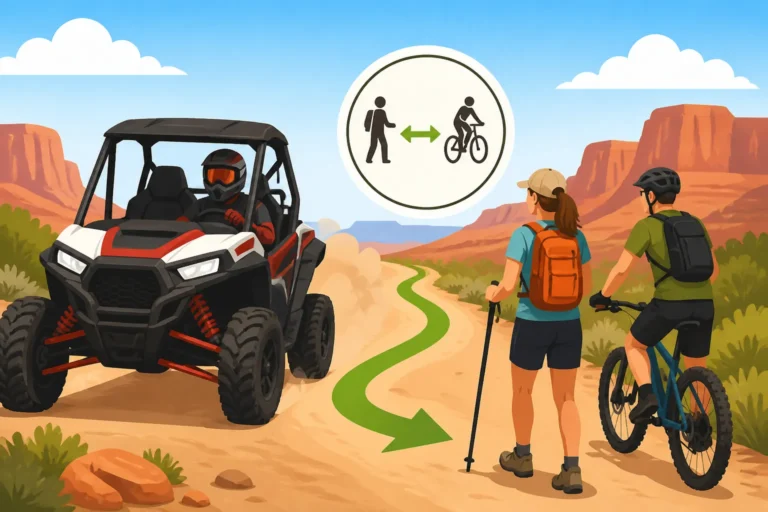
Local route rules and closures matter. A route shown in a digital map does not automatically mean it is open to every vehicle or currently passable. Read posted signs, respect gates, and avoid crossing private property without permission. Utah Trailhead Parking That Fits a Trailer and Reading a Motor Vehicle Use Map can help with the practical side of getting to the right staging area and understanding route information.
Pack for a day away from services
A satisfying ride depends on more than choosing a trail. Pack water, food, sun protection, basic first-aid supplies, and any recovery equipment appropriate for your group and machine. Bring clothing for changing conditions, eye protection for dust, and a way to communicate if you are riding beyond dependable cell coverage. Tell someone where you plan to ride and when you expect to return.
Fuel planning deserves particular attention. Do not assume that a nearby town or trailhead will have fuel where you need it, and do not plan a route around a machine’s best-case range. Leave with enough fuel for the route, detours, and a reasonable reserve. If the group includes several machines, agree on a turnaround point that accounts for the vehicle with the shortest range.
Know the basic rules for your machine and group before setting out. Registration, permits, youth requirements, and local access rules can depend on the rider, machine, and location. Visitors should review Utah’s Non-Resident OHV Permit Explained, and families riding with children may want to check The Utah OHV Education Certificate. Keep required documents accessible rather than buried under luggage.
Make the choice based on the trip you want
Choose Moab for route variety and technical scenery
Moab is a natural choice if your group wants a destination trip centered on named routes, dramatic slickrock, and the satisfaction of working through varied terrain. It can reward riders who enjoy planning, navigating, and choosing challenges that fit their ability. A well-matched route can make the ride memorable without requiring everyone to attempt the most difficult obstacle they see.
It may be the better fit when the group enjoys stopping to study a line, taking in the landscape, and treating the route itself as the main event. It is also a good option for a trip where riding is one part of a broader stay in town. The tradeoff is that route choice matters a great deal: picking a trail based on reputation instead of current ability and machine fit can make the day harder than expected.
Before settling on a route, check access and staging details, review width restrictions where relevant, and consider whether a shorter outing makes more sense than an ambitious full day. If you are traveling with a mix of experience levels, agree in advance that the group can pause, split into smaller groups where appropriate, or turn around rather than press on.
Choose Sand Hollow for dune time and a flexible ride day
Sand Hollow may be the better fit if the group is excited by dunes, wants a change from rocky trail riding, or prefers to combine open sand with other terrain. It can be especially appealing for riders who want the feeling of exploring a broad area rather than following one technical route from start to finish.
The main tradeoff is that sand has its own learning curve. Riders should keep a safe distance from other machines, avoid blind dune crests, and resist the urge to climb unfamiliar slopes simply because someone else has done so. A slower, more deliberate first outing often leaves the group with more energy and a better sense of what it wants to try next time.
Think about where you will stay, how you will reach the riding area, and whether you want to rent or bring a machine. Hurricane and St. George offer convenient bases for exploring the area, but the details of access, staging, and fees can vary by location. Review Sand Hollow’s Busiest Days for Riders before choosing a busy travel period, and confirm current rules for the specific riding area you plan to visit.
The easiest way to decide is to picture your group at the end of the day. If they would be talking about a rocky route, a careful line choice, and a dramatic overlook, Moab is likely the stronger match. If they would rather describe climbing dunes, exploring open sand, and shifting between terrain types, Sand Hollow may be the better fit. Either way, choose a route that leaves room for breaks, changing conditions, and a comfortable turnaround.
Disclaimer
This article is for general informational purposes only and does not constitute professional advice. Laws, prices and regulations vary by location and change over time. Consult a qualified professional for guidance on your specific situation.