Winter Riding Areas That Stay Open
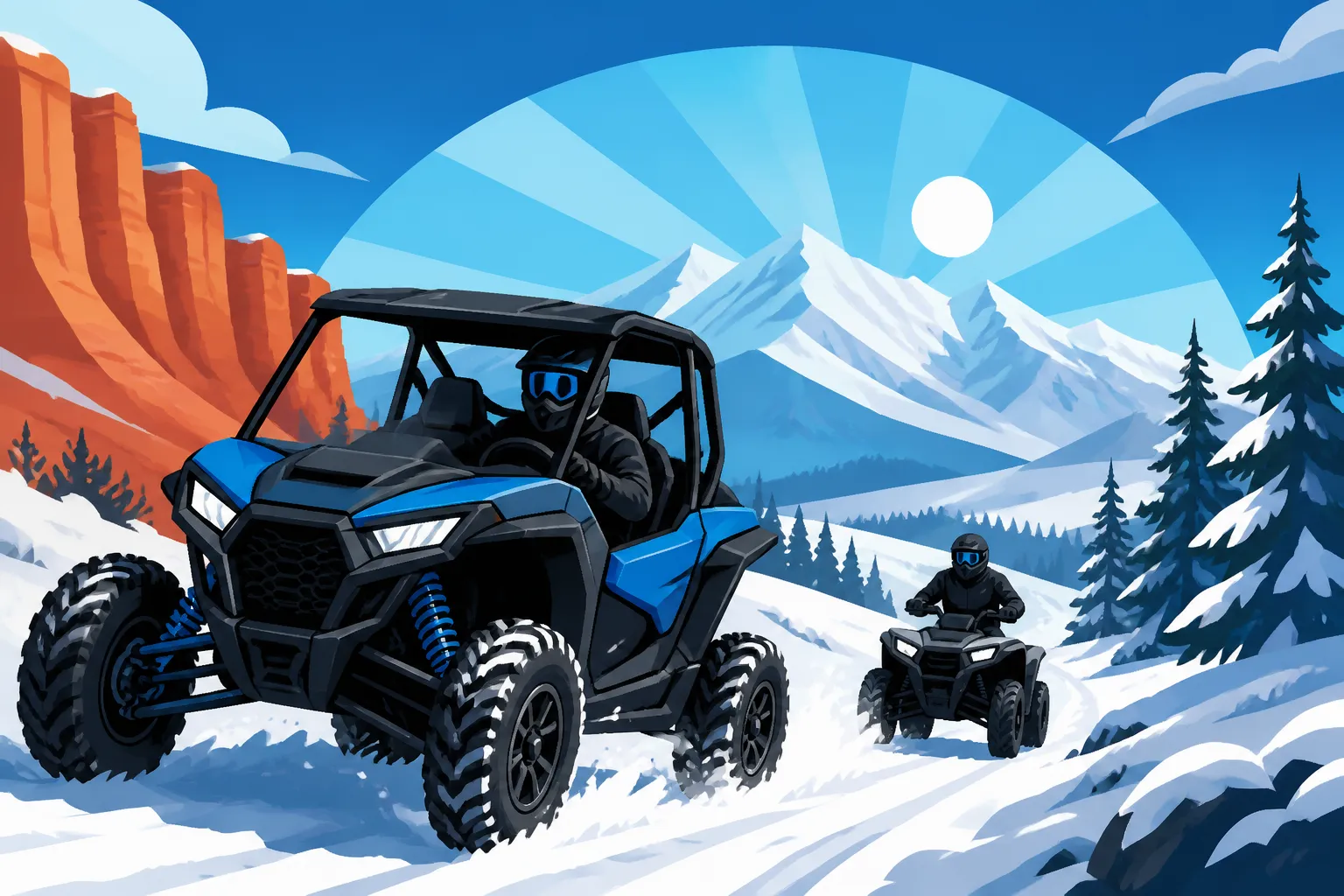
Winter riding in Utah can mean packed snow on a high-country road one weekend and dry sand in the desert the next. The tricky part is that an area may be open while a particular route is muddy, snowed in, or temporarily closed. This guide compares lower-elevation riding areas, explains what to check before towing, and helps you choose a realistic winter destination.
Where to ride in Utah during winter
For the best chance of finding rideable conditions, start with lower-elevation desert areas in southern Utah. Sand Hollow, Sand Mountain, and Coral Pink Sand Dunes are often more practical winter choices than mountain trails, but cold snaps, storms, local restrictions, and changing access conditions still matter.
| Riding area | Winter conditions to expect | Best fit | Before you go |
|---|---|---|---|
| Sand Hollow and Sand Mountain | Desert temperatures can be cold, with occasional rain or snow; sand conditions vary | Riders seeking dunes and varied terrain near St. George | Check park notices, access, fees, and the route to your staging area |
| Coral Pink Sand Dunes | Cold desert weather; wind and precipitation can change the feel of the dunes | Riders staying near Kanab who want a dedicated dune area | Confirm current riding access and any park alerts |
| Little Sahara | Exposed dunes and open desert can be cold, windy, or snowy | Riders prepared for a more exposed setting and changing conditions | Check road access, site conditions, and travel weather |
| Moab area | Lower routes may be accessible while higher routes are snowy, muddy, or closed | Riders who choose routes carefully and can adjust plans | Check land-manager notices and route-specific conditions |
| Three Peaks near Cedar City | Cold, possible snow, and freeze-thaw mud | Riders who can assess conditions and avoid soft or damaged routes | Check local conditions before towing |
| Five Mile Pass | Winter weather can leave roads icy or trails muddy | Nearby day rides when conditions are dry enough | Verify access and avoid riding when the ground is soft |
Use the table as a starting point, not a promise that every trail will be open or suitable on your chosen day. For location-specific planning, see Utah’s Sand Mountain and Its Red Sand, Coral Pink Sand Dunes State Park for OHVs, and Utah’s Little Sahara and Its Sand Bowls.
Sand Hollow and Sand Mountain
The Sand Hollow area near Hurricane and St. George is a strong place to consider when you want a southern Utah ride without heading into the higher elevations. The landscape includes sand and rocky terrain, so the day can feel very different depending on your route, recent weather, and experience. Nearby services can make trip logistics easier than at more isolated riding areas, but that does not remove the need to check conditions before you leave.
Sand Hollow State Park and the surrounding riding areas have different boundaries, access points, and rules. Don’t assume that one notice covers every route, or that reaching the park entrance means the trails you planned to ride are accessible. Check park information and land-manager updates for the specific place you intend to use. Sand Hollow State Park’s Tunnel to the Dunes can help you understand one of the area’s popular riding features.
Winter is also a good time to be conservative about daylight and temperature. A chilly morning can make an open-air ride feel much colder than the forecast suggests, especially when you’re moving at speed. Bring warm layers that won’t interfere with your helmet or controls, and plan a turnaround time so you aren’t navigating back to the trailer in fading light.
Coral Pink Sand Dunes and Little Sahara
Coral Pink Sand Dunes State Park, near Kanab, is a distinct destination rather than a general shortcut to any nearby route. Check the park’s current information before making the drive, especially if a storm is forecast or you are traveling from a distance. In winter, a clear day can still feel harsh when the wind picks up across an open dune landscape. Bring eye protection that keeps out blowing sand, and protect your phone and other gear from grit.
Little Sahara, west of Nephi, is another option to investigate, but it is more exposed than a casual glance at a map may suggest. A cold-weather trip can involve a long drive, open desert, and changing road conditions. Check access information and weather along the entire route, not only at the recreation area. A sunny forecast at your starting point does not necessarily mean the roads or riding conditions will be comfortable at the dunes.
For either destination, avoid treating a patch of snow or frozen ground as proof that the route will stay firm. Sun and daytime temperatures can soften the surface, while overnight freezing can create slick spots. If the ground is wet or easily damaged, take a different route or reschedule rather than leaving ruts that can deepen as conditions change.
How to choose a winter ride that is actually usable
“Open” can mean several things: a recreation area has not announced a full closure, a road reaches the trailhead, or a specific route is legally available. None of those guarantees that the route is dry, safe for your machine, or appropriate for your group. A little checking before departure can save you from towing for hours only to find that the ride you planned is a poor fit.
Separate area access from trail conditions
First, identify the exact recreation area and route you intend to use. Then check who manages it and look for any current closures or restrictions. Public land can include a mix of roads and trails with different rules, and winter conditions can affect one route while leaving another usable. Trail Closures Utah Riders Should Check First and Reading a Motor Vehicle Use Map are useful starting points for understanding what is open and where riding is allowed.
Next, check recent weather along the drive and at the riding area. Pay attention to overnight lows, recent rain or snow, and the temperature range expected during the day. Freeze-thaw cycles are especially important: a route that feels solid early can turn slick or muddy later, while a wet trail may be damaged by vehicles even when it appears passable.
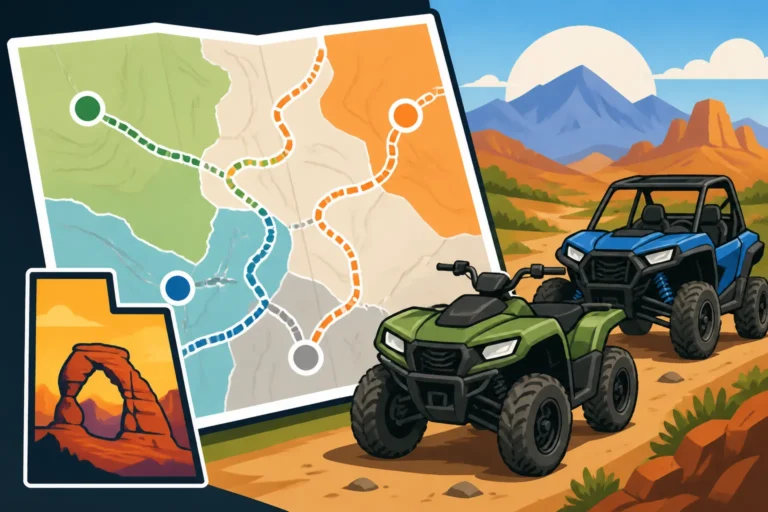
Mapping tools such as onX Offroad can help you study route options and avoid relying on a single plan. Use the map as a planning aid, then confirm closures and access with the responsible land manager. Offline maps are especially useful if service is limited, but a saved map cannot tell you whether a route became impassable after the last update or whether a temporary closure is in effect.
Match the destination to the day’s forecast
For a colder or stormier day, prioritize a destination with practical access, a shorter route option, and a clear way to turn around. A sprawling, remote ride may be appealing on a mild weekend but frustrating when wind chill, snow, or a slow-moving group reduces your daylight. Set a realistic route before you unload, and agree on a turnaround point with everyone in your group.
Think about the elevation along the route, not just the elevation of the staging area. A lower desert trailhead can lead toward higher terrain where snow or ice is more likely. If your map shows a route climbing toward a pass or plateau, check the conditions there separately. Don’t assume that a trail is suitable for your machine simply because other riders have used it in warmer weather.
If you use onX Offroad to compare alternatives, make a backup plan before leaving home. Choose a second area that is genuinely reachable under the forecast, rather than an appealing pin on the map with no confirmed access. A backup plan is most useful when it answers three questions: where you’ll unload, which route you’ll ride, and how you’ll verify that access remains open.
Winter safety and trip preparation
Winter changes more than the temperature. Cold can reduce comfort and dexterity, short days leave less room for delays, and a small mechanical issue can become more serious when a group is far from the trailer. A good winter plan accounts for the ride back, not just the first few miles.
Pack for cold, wind, and shorter daylight
Wear layers that let you adjust as the day warms up. A wind-blocking outer layer, warm gloves, and a face covering can make a major difference on an exposed machine. Keep spare gloves and dry layers in a protected bag; a wet or sandy pair may be uncomfortable to wear for the return ride. Choose clothing that does not snag on controls or interfere with your helmet and seat belt.
Carry enough water and food for a longer day than planned. Cold weather can make it easy to forget to drink, and a delay caused by a flat tire or a route change can stretch a short outing into a long one. Bring a charged phone, a way to navigate without dependable service, and basic recovery and repair gear suited to your machine and route. What to Carry on a Utah Day Ride offers a useful checklist to adapt for the season.
Before unloading, tell someone where you are going and when you expect to check in. Keep your group together, particularly where routes split or visibility is reduced by blowing sand or snow. If a rider is cold, tired, or uncomfortable, shorten the loop. There is no prize for finishing a planned route when conditions are making the ride less safe.
Avoid soft, icy, or damaged routes
Mud is not simply an inconvenience. Riding through wet ground can create deep ruts and damage a trail, and a route that appears frozen in the morning may soften as the day warms. If tires are leaving deep tracks, if your machine is struggling for traction, or if you are tempted to widen the route to get around a bad patch, stop and reassess. Turn back or choose a different area rather than making the damage worse.
Treat ice and compacted snow with caution, especially on slopes, shaded sections, and road approaches. A route that is manageable for one machine or experienced rider may be unsafe for another. If you cannot clearly assess traction or the route ahead, don’t commit to a steep descent or a narrow crossing simply because you have already driven partway in.
Let current information guide the decision, but trust what you see on the ground. onX Offroad can help you keep track of your position and planned route; it should not replace checking closures, reading signs, or turning around when conditions are poor. When planning an unfamiliar area, pair route research with Utah OHV Trail Maps and How to Read Them and Checking Utah Trail Conditions Before You Tow.
A practical checklist before you tow
Winter trips go more smoothly when you make the decision to ride before the trailer is loaded. Use this checklist the day before, then confirm the essentials again on the morning of your trip.
Check access, rules, and the drive
- Choose a specific area and identify the route or routes you expect to ride.
- Check the responsible land manager’s current notices for closures, restrictions, or access changes.
- Review weather for the highway drive, trailhead, and higher terrain along your planned route.
- Check the machine’s registration and any permit or education requirements that apply to you. Visitors should review Utah’s Non-Resident OHV Permit Explained before riding.
- Confirm that your trailer route and unloading location are practical for winter conditions.
- Save maps for offline use and share the plan with someone who is not joining the ride.
A tool like onX Offroad can make it easier to compare routes and keep a backup option available, but don’t let a route line on a screen overrule a gate, a closure notice, or unsafe ground conditions. If you are unsure whether a particular route is open, contact the relevant land manager before towing.
Make the go-or-no-go call
Use the morning forecast and conditions at the access point to make a final decision. If roads are icy, visibility is poor, or the trail is muddy enough to rut, choose another plan or postpone. The same goes for a group that lacks suitable cold-weather gear or a machine that is not ready for the conditions. A ride that starts late can also become a poor choice when sunset arrives before the group reaches the trailer.
For a simple decision, ask: Can we reach the staging area safely? Are the routes we plan to use confirmed open? Is the ground firm enough to ride without causing damage? Does everyone have adequate clothing, water, and navigation? If any answer is no or unclear, change the plan before unloading.
Winter riding in Utah is often most rewarding when you stay flexible. Lower-elevation destinations may offer a better chance of a comfortable ride, but the right choice depends on the weather, route conditions, access notices, and your group’s experience. Check before you tow, keep a realistic backup, and be willing to turn around when the ground or forecast says it’s time.
Disclaimer
This article is for general informational purposes only and does not constitute professional advice. Laws, prices and regulations vary by location and change over time. Consult a qualified professional for guidance on your specific situation.