Coral Pink Dune Hours and Unloading Areas
Coral Pink Sand Dunes can look inviting long before you’re ready to ride, but arriving at the wrong time or unloading in the wrong place can turn a dune day into a frustrating start. This guide explains how to plan around park hours, find the proper OHV staging area, prepare your machine, and avoid common mistakes before you head out from Kanab.
Check Coral Pink Dune Hours Before You Leave
Park hours and riding hours are not always the same
When people ask about Coral Pink dune hours, they may mean several different things: when the park entrance is open, when day-use visitors can enter, when the OHV area is available for riding, or when camping areas can be accessed. Those details can be affected by park operations, season, maintenance, weather, and temporary closures. Don’t assume that a park’s general opening hours automatically mean every riding area is open for the same span of time.
Before setting out, check the park’s current visitor information and any signs or notices posted at the entrance. If your plan depends on riding early or staying late, confirm that the riding area—not just the park entrance or campground—will be accessible during your intended visit. A quick check can save you from towing a machine to the dunes only to discover that your timing doesn’t work.
It also helps to think about daylight separately from posted hours. Dunes can be disorienting when shadows stretch across the landscape, and a route that felt easy in bright afternoon light can look very different near sunset. Give yourself time to return to the staging area, load safely, and leave before you’re rushing through fading light.
Plan around the season, not just the clock
A posted schedule is only one part of a good riding plan. Summer heat can make the middle of the day uncomfortable, especially for children, newer riders, and passengers who aren’t used to bouncing over sand. In cooler weather, short daylight windows may make an early start more important. Wind can also affect comfort and visibility by blowing sand across exposed areas.
For a family arriving from Kanab, for example, a late-morning start might seem convenient. But once you account for the drive, parking, unloading, gear checks, and a safety briefing, you may not be riding as early as expected. If the day is hot, consider planning your ride around the most comfortable part of the day rather than simply trying to squeeze in the longest possible session.
Leave a buffer at the end of your visit. Loading takes longer when straps are tangled, the trailer is parked at an awkward angle, or everyone is tired and dusty. A realistic schedule includes time to return to the staging area, check that nothing was left behind, and secure the machines before you drive away.
Where to Unload at Coral Pink Sand Dunes
Use the signed staging and parking areas
Unload only in the designated OHV staging or parking area identified by park signs and maps. These areas are meant to accommodate vehicles and trailers and provide a safer place to prepare machines before riding. Follow staff directions and posted instructions if they differ from what you expected.
Avoid unloading on the shoulder of the road, in an unmarked pullout, or directly on the dunes. A roadside spot may seem like a convenient shortcut, but it can create a hazard for other visitors and leave your truck or trailer in a place not intended for parking. Unloading on sensitive ground can also damage vegetation or disturb areas that are closed to vehicles.
Once you arrive, take a moment to look around before backing in or lowering a ramp. Check for pedestrians, other trailers, soft sand, and enough room to maneuver. If the staging area is busy, wait for a clear opening rather than trying to unload in a tight space while other visitors are moving around.
Confirm the boundary between staging and riding areas
A staging area is where you park, unload, and prepare. It is not necessarily an open route for riding around in circles or testing a machine. Follow the signed route from the staging area into the riding area, and keep to the designated OHV zone. Coral Pink has areas intended for riding and areas where vehicles are not allowed; signs and current park maps are the practical guide to those boundaries.
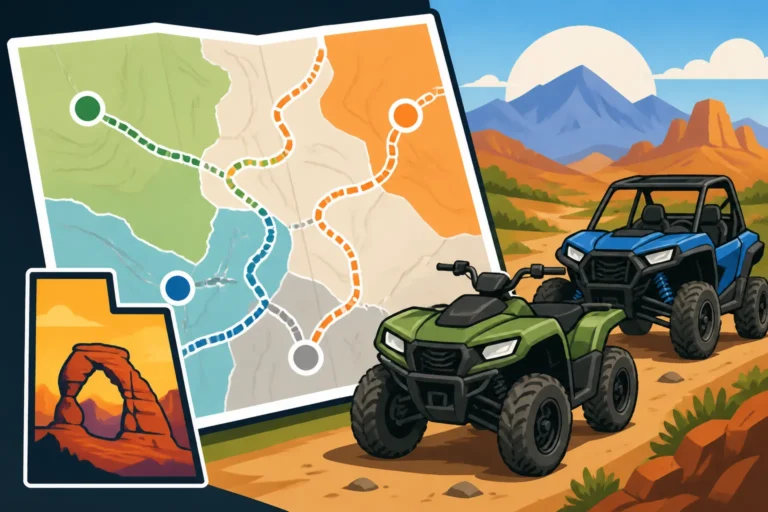
If you’re uncertain about a turn or boundary, stop somewhere safe and check the map instead of guessing. An offline map in onX Offroad can help you review your planned route when cell reception is limited, but don’t treat an app map as permission to cross a closure or ignore posted signs. Park rules and on-site directions take priority.
Before unloading, it’s also worth checking that your machine is ready to ride: tires are in suitable condition, fuel is adequate for your outing, and essential gear is accessible. If you’re riding with a group, agree on a meeting point near the staging area in case anyone gets separated. Simple planning is especially helpful when several machines are arriving on separate trailers.
| Visit detail | What to confirm before you go | Why it matters |
|---|---|---|
| Park access | Current entrance and visitor hours | Prevents arriving when access is unavailable |
| OHV access | Whether the riding area is open during your planned visit | Park access does not always mean every riding area is open |
| Unloading | The signed staging and parking location | Keeps loading out of traffic and away from closed areas |
| Riding boundaries | Current map, signs, and any closure notices | Helps you stay within areas open to OHVs |
| Visitor requirements | Registration, permits, education, and safety rules that apply to your group | Requirements can depend on the machine and rider |
| Return plan | Daylight, weather, and time needed to load | Helps prevent a rushed or unsafe finish |
Prepare Your Machine and Group Before Riding
Sort out permits, registration, and rider requirements
A smooth visit starts before you reach the dunes. Check that each machine has the registration or permit required for its use and that the paperwork is accessible. If you’re visiting from outside Utah, review Utah's Non-Resident OHV Permit Explained and Who Needs a Utah Non-Resident OHV Permit before traveling. Confirm whether your specific machine and situation are covered rather than assuming one permit or document applies to everyone in your group.
Rider education and age rules deserve the same attention. Utah’s requirements can depend on a rider’s age and circumstances, so review The Utah OHV Education Certificate and the applicable youth guidance before the trip. If a child is riding, check that the machine fits the child and that supervision and safety equipment are appropriate. A rider who is tired, nervous, or struggling to control a machine should not be pressured to keep up with faster riders.
Keep required items where you can reach them without unpacking the entire truck. It’s frustrating to arrive at the staging area and discover that the registration, permit, or safety gear is buried under camping equipment. A small document pouch and a pre-trip checklist can make the first half hour much calmer.
Build a practical ride plan
Choose a route and riding pace that fit the least experienced person in your group. Sand riding can feel unfamiliar even to someone who is comfortable on dirt roads. Give first-time riders time to learn how their machine responds, agree on a simple regrouping plan, and avoid splitting the group across different routes without a clear way to reconnect.
Before leaving the staging area, tell everyone where the group will stop and what to do if someone becomes separated. Agree that nobody rides off alone to “catch up” without checking in. Make sure passengers understand how to hold on, when to keep their hands and feet inside the vehicle, and how to communicate with the driver if they need a break.
Carry enough water for the conditions and keep it easy to reach. Sand, sun, and physical effort can make a short ride feel more demanding than expected. Sunglasses or goggles, a helmet that fits properly, sun protection, and clothing suited to the weather all help make the day more comfortable. For a broader planning checklist, see What to Carry on a Utah Day Ride.
Make the Visit Easier for Your Whole Group
Arrive with enough time to park and unload calmly
If you’re towing a trailer, build extra time into the drive. A tight arrival schedule can make every small delay feel bigger: a slower vehicle on the road, a missed turn, a busy parking area, or a trailer that needs to be repositioned. Arriving with a little breathing room gives you time to find the signed staging area, check current notices, and unload without rushing.
Before pulling into a space, consider how you’ll leave later. If possible, park so you can load and exit without backing through a crowd or trying to turn a long trailer in a cramped spot. Keep ramps and tie-downs organized, and don’t leave gear spread across an area where other visitors need to walk or drive.
If you’re making a larger trip around southern Utah, Coral Pink can be one part of a longer plan rather than the only activity of the day. Review Southern Utah ATV Trips Worth Planning to think through distances, stops, and how much riding you realistically want to fit in. If your group is comparing dune options, Coral Pink for a Family With Small Quads may also help you consider whether the destination suits the machines and riders you’re bringing.
Use maps and signs as a pair
Maps are useful for planning, but they can’t replace what you see on the ground. A digital map may help you keep track of your route, especially if you download information for offline use before leaving an area with reliable service. onX Offroad can be one planning tool for reviewing routes and orientation in advance; check that the information you’re using matches current park signs and restrictions.
At the park, read posted notices and follow marked boundaries. Closures can protect sensitive areas or respond to conditions that have changed since you planned the trip. If a route shown on a map appears blocked or a sign indicates that an area is closed, don’t ride through to see whether it “looks open.” Turn back and choose an allowed route.
For a more detailed approach to offline navigation, see Downloading Utah Trail Maps for Offline Use. It’s sensible to have a backup plan too: make sure someone in your group knows the route, keep your phone charged, and agree on a place to meet if riders become separated. Cell service should never be the only thing your group relies on to find its way back.
Leave time for a careful finish
The end of the ride is part of the plan, not an afterthought. Return to the staging area with enough time to load in good light and without pressure. Check the machines for obvious damage, look for loose gear, and make sure helmets, water bottles, tools, and personal items are back in the truck or trailer.
Before leaving, confirm that your trailer is properly connected and that tie-downs are secure. Sand and dust can make straps harder to handle, and tired riders are more likely to overlook a small detail. A quick walk-around is easier than discovering something has shifted after you’ve started driving.
Finally, check that the park’s access and riding arrangements still match your next visit. Hours, notices, and operating conditions can change, so don’t rely on an old plan or a friend’s recollection when organizing a future trip. For general destination information, Coral Pink Dune Hours and Unloading Areas is a useful starting point for planning the timing and staging details again.
Disclaimer
This article is for general informational purposes only and does not constitute professional advice. Laws, prices and regulations vary by location and change over time. Consult a qualified professional for guidance on your specific situation.