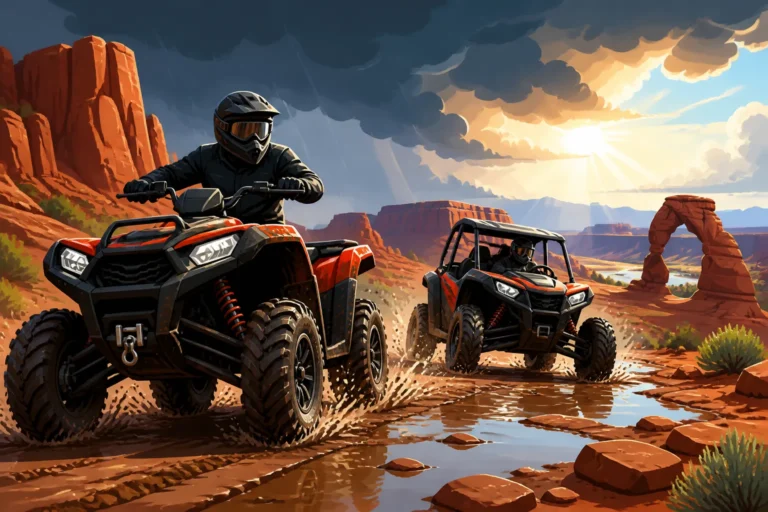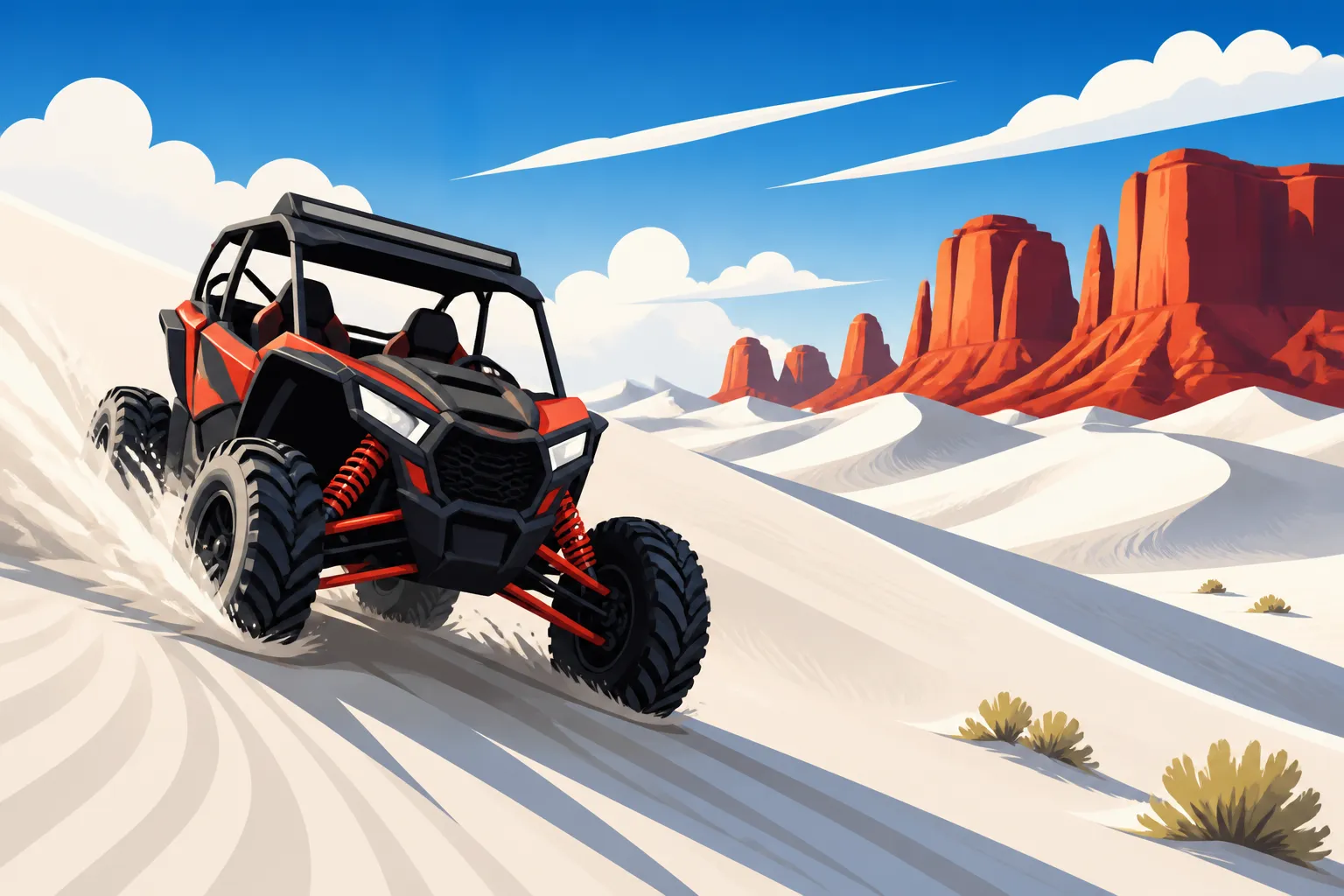
White Wash Sand Dunes North of Moab
White Wash Sand Dunes offer a different kind of ride from the slickrock routes and busy trail systems around Moab: open sand, rolling dunes, and a remote desert feel. The tricky part is arriving prepared. Access roads, route boundaries, sand conditions, and visitor requirements can affect your day, so this guide explains how to plan a safer, smoother outing.
What to expect at White Wash Sand Dunes
A sandy riding area with room to explore
White Wash Sand Dunes sit in the desert north of Moab, in the wider Green River area. The riding experience is shaped by soft sand and low, rolling dunes rather than the ledges and exposed slickrock that many people associate with Moab. That can make the area feel less intimidating at first, but sand brings its own challenges: traction changes quickly, visibility can be limited by dune crests, and a machine can bog down even when the terrain looks gentle.
The dunes are not a marked amusement-park course where every line is obvious. Riders need to pay attention to where they are going, what is coming over a crest, and whether the route they are following is open to motorized travel. Give other riders room, avoid charging blindly over the far side of a dune, and slow down where intersecting tracks or changing terrain make it hard to see.
White Wash can also feel more remote than a ride close to town. A short-looking day on the map may still involve a long drive to the staging area and limited access to services once you leave Green River or Moab. Before setting out, consider the ride as a whole: the road trip, unloading, riding time, fuel, water, and the return drive. For a wider look at different destinations, see [The Best ATV and UTV Trails in Utah].
Sand conditions change the ride
Sand is never quite the same from one outing to the next. Wind can soften or reshape tracks, and recent weather can affect how firm the surface feels. A route that seemed easy on a previous trip may require more throttle, careful steering, or recovery help after conditions change. In softer areas, momentum matters, but speed should never come at the cost of visibility or control.
The time of day matters, too. Bright sun can make dune contours harder to read, especially when you are looking into glare. Shadows can hide dips and changes in slope. If you are unfamiliar with the area, start with a conservative pace and take time to assess each section before committing. A rider who pauses to check a line often has a better day than one who assumes every smooth-looking slope is straightforward.
It helps to match the route to the least experienced person in your group, not the most confident driver. A capable rider may be comfortable climbing a steeper face, while a new rider or passenger may be unsettled by a sudden slide or a steep descent. Agree on a turnaround point before the group spreads out, and make sure everyone knows how to regroup if riders lose sight of one another.
Planning your route and getting there
Start with the approach, not just the dunes
White Wash is generally approached from the Green River area, north of Moab. The final approach may use unpaved roads, so do not assume that a standard car navigation route tells the whole story. Check a current map for the intended access route, confirm that the road is open, and make sure your tow vehicle and trailer are suitable for the conditions you expect. A road that is passable when dry may become rough, muddy, or difficult after weather.
Build extra time into the drive. Towing a trailer on unfamiliar desert roads is slower than driving a passenger car on pavement, and stopping to check directions or air down tires can add time. If you arrive late, you may be tempted to rush unloading and skip your usual safety checks. It is better to begin with enough daylight to orient yourself and complete the ride without hurrying back to the trailer.
Before leaving home, check the route and trail information through land-management sources and a mapping tool. onX Offroad can help riders view mapped roads and routes, but use it alongside current local information rather than treating any app as the final authority. Route lines and labels do not necessarily tell you whether a road is open today, whether a boundary has changed, or whether a particular track is appropriate for your machine. For a useful map-reading refresher, see [Utah OHV Trail Maps and How to Read Them] and [Reading a Motor Vehicle Use Map].
Plan for navigation gaps and changing access
Download the maps and route details you need before you lose reliable cell service. Save the destination, staging location, and a few key intersections for offline use, and carry a backup navigation option if your group is venturing beyond the immediate riding area. A phone can be useful, but it is not much help if the battery is low, the screen is unreadable in dust and sun, or the route has not been saved for offline access.
Check conditions again shortly before you tow. A recent storm, road work, a temporary closure, or a seasonal restriction can change your plan. Do not assume that a route you used last year remains open, or that a track visible on a map is an authorized motorized route. [Checking Utah Trail Conditions Before You Tow] is a good starting point for building this check into your trip routine.
Use a map app such as onX Offroad to compare your planned approach with your other navigation information, and mark your staging area before the trip. If the app shows a route that conflicts with posted signs or an official closure, follow the signs and the current land-management direction. Once you are on the ground, look for boundary markers and posted notices rather than relying only on a digital line. Respecting a closure is part of keeping access available for future riders.
Getting your machine and group ready
Prepare your ATV or UTV for sand
A machine that feels capable on a firm road may behave differently in loose sand. Check tires for damage, confirm that they are appropriate for your vehicle and intended use, and review the manufacturer’s guidance for tire pressure and operation. There is no single pressure that suits every machine, tire, load, and surface. Avoid copying a number from another rider without considering your own setup.
Before unloading, check the basics: fuel, oil and coolant where applicable, brakes, steering, throttle response, lights, and any equipment you rely on for communication or recovery. Secure loose cargo so it cannot shift on uneven ground. In a UTV, check seat belts and make sure every passenger knows how to use them. On an ATV, carry gear in a way that stays balanced and does not interfere with control.
Bring enough fuel for the intended ride, including a reasonable reserve. Sand can use more fuel than riders expect, particularly when a machine works hard in soft sections or the group repeatedly stops and restarts. If you are uncertain about range, plan a shorter loop rather than stretching a tank farther than you have tested. A mechanical issue far from the staging area is frustrating; running short on fuel can turn it into a recovery problem.
Set expectations before anyone drives off
A group ride works best when everyone understands the plan. Agree on the route or general riding area, the turnaround time, and what to do if someone gets separated. Choose a lead rider and a sweep rider, and establish a regrouping point before the group enters a section where visibility may be limited. If a rider has to stop, the rest of the group should know whether to wait, return to the last junction, or use another agreed procedure.
Be candid about experience. Someone who has only ridden hard-packed trails may not know how a machine responds in deep sand. A first-time passenger may be surprised by rocking, sliding, or sudden changes in direction. Start gently, explain that riders should leave space between machines, and give everyone permission to take an easier line or sit out a climb. There is no prize for pushing a new rider beyond their comfort level.
Before departure, check that each person has the right paperwork and understands the applicable rules. Utah requirements can depend on the machine, rider, and circumstances, and visitors should not assume that an out-of-state registration automatically answers every permit question. Review [Utah's Non-Resident OHV Permit Explained] and [The Utah OHV Education Certificate] before your trip. Requirements can differ from rules at home, so confirm what applies to each rider and machine rather than relying on what a friend remembers.
Riding safely on dunes and desert routes
Use visibility and spacing to your advantage
The crest of a dune can hide another rider, a descending slope, or a change in terrain. Do not cross a crest at speed when you cannot see the other side. Approach with control, pause where appropriate, and look for traffic or hazards before continuing. This is especially important when the area is busy or when several groups are riding different lines through the same dunes.
Leave enough distance to react if the rider ahead slows, turns, or becomes stuck. Dust can reduce visibility, and following too closely makes it harder to spot sudden changes in direction. If you are leading, avoid pulling away from the group without checking that the riders behind you are keeping up. If you are following, do not assume the leader can see you or knows you have stopped.
Use protective equipment suited to the ride. Helmets, eye protection, gloves, sturdy clothing, and appropriate footwear help address common risks from dust, sun, and minor impacts. Carry water within easy reach, and take breaks before anyone is exhausted or overheated. For a practical packing list that can be adapted to a desert outing, see [What to Carry on a Utah Day Ride].
Know what to do when a machine bogs down
Getting stuck is a normal possibility in sand, not a personal failure. If a machine begins to lose momentum, avoid frantic throttle that may dig the tires deeper or put unnecessary strain on the vehicle. Stop when it is safe, assess the surface, and get everyone clear of any potential tire or vehicle movement before attempting a recovery. Follow the machine manufacturer’s guidance and use recovery points and equipment designed for the task.
A recovery strap, shovel, gloves, and suitable attachment points can make a modest situation easier to manage. A strap should never be attached to a part of the machine that is not intended for recovery. Keep bystanders at a safe distance and avoid standing in line with a tensioned strap. If you are not confident in a recovery method, pause and choose the safest available option rather than improvising under pressure.
Riding alone increases the consequences of a stuck machine, a flat tire, or a navigation mistake. A companion can help with spotting, recovery, and communication, but only if the group has discussed what to do before trouble starts. If you do ride without a partner, share your plan and expected return time with someone who is not on the trip, and carry the gear and navigation tools appropriate for the area. [Getting Unstuck Alone in the Utah Desert] covers additional considerations for riders who may find themselves managing a problem without immediate help.
| Planning item | What to check | Why it matters |
|---|---|---|
| Access road | Current conditions, closures, and suitability for your tow vehicle | The final approach may be rough or affected by weather |
| Navigation | Offline maps, marked staging area, and backup option | Cell service and familiar landmarks may be limited |
| Machine | Fuel, tires, brakes, steering, and recovery points | Sand places extra demands on equipment and planning |
| Group plan | Lead and sweep riders, regroup points, and turnaround time | Dunes can block sightlines and separate a group |
| Rider requirements | Registration, permits, and education requirements | Rules may differ for residents, visitors, and machine types |
| Supplies | Water, first aid, tools, and protective gear | Services may not be close once you leave town |
Making a responsible day trip
Respect route boundaries and other users
A visible tire track is not proof that a route is open to motorized vehicles. Stay on routes designated for your machine and obey posted signs, barriers, and closures. Avoid creating new tracks around obstacles or through areas that appear undisturbed. A shortcut across open ground can cause damage, cross a restricted boundary, or put riders in conflict with other land users.
Give other riders and visitors space. Slow down near staging areas, people on foot, parked trailers, and any shared-use route. Keep noise under control, secure trash, and leave the area as you found it. If you encounter a gate or a boundary sign, do not treat it as an invitation to explore farther. Turn around and choose a known open route.
Conditions and access rules can vary across nearby public lands, so avoid assuming that one set of directions applies to every road around White Wash. Use current maps and on-the-ground signs together. If two sources disagree, take the more cautious option and seek current clarification before proceeding. That small pause is far easier than explaining an avoidable route violation or helping a group return from a dead end.
Make the trip fit your group
White Wash may suit riders who enjoy a sandy, open desert setting, but it is not automatically the right choice for every group. A beginner who prefers firm, clearly marked trails may feel more comfortable elsewhere. Someone seeking a technical slickrock challenge may want a different destination. For help comparing trip styles, read [Choosing Between Moab and Sand Hollow] and consider how far your group wants to drive, what surfaces they enjoy, and how much route-finding they are comfortable doing.
If you plan to camp, verify where camping is allowed and whether any restrictions or facilities apply before you arrive. Do not assume that a convenient pullout is an approved campsite, or that overnight use is permitted just because other vehicles have stopped there. Carry out waste and follow fire restrictions. [Dispersed Camping Rules Near Utah Trails] can help you think through the land-use questions before you pack for an overnight stay.
A practical White Wash day begins with modest expectations: reach the area with enough daylight, ride at a pace that suits the least experienced person, and keep the route flexible. If the sand is softer than expected, a machine is acting up, or someone in the group is tired, shorten the ride. The best outing is not necessarily the one that covers the most ground. It is the one where everyone returns safely, the machines make it back to the trailer, and the group still wants to ride together again.
Disclaimer
This article is for general informational purposes only and does not constitute professional advice. Laws, prices and regulations vary by location and change over time. Consult a qualified professional for guidance on your specific situation.