Insurance Claims After a Trailhead Collision
The adrenaline is pumping, the sun is shining, and you're just about to hit the incredible trails Utah has to offer. But then, bam! A sudden, unexpected collision at the trailhead – maybe it was a tight parking spot, a backing-up gone wrong, or someone just not paying attention. Your heart sinks, not just for the immediate damage, but because a million questions flood your mind: "What do I do now? Is this covered? Who's going to pay for this?" This guide is here to walk you through the often-confusing world of insurance claims after a trailhead collision, helping you understand your options and take the right steps to get your machine, and your peace of mind, back on track.
Understanding Trailhead Collisions and Their Unique Insurance Challenges
It’s easy to think of OHV accidents as happening out on the trail, deep in the desert, or up a steep mountain pass. But often, the chaos begins much closer to civilization: right there in the busy, sometimes cramped, trailhead parking lot or staging area. These "trailhead collisions" can feel especially frustrating because you haven't even had the chance to enjoy the ride yet.
What Defines a "Trailhead Collision"?
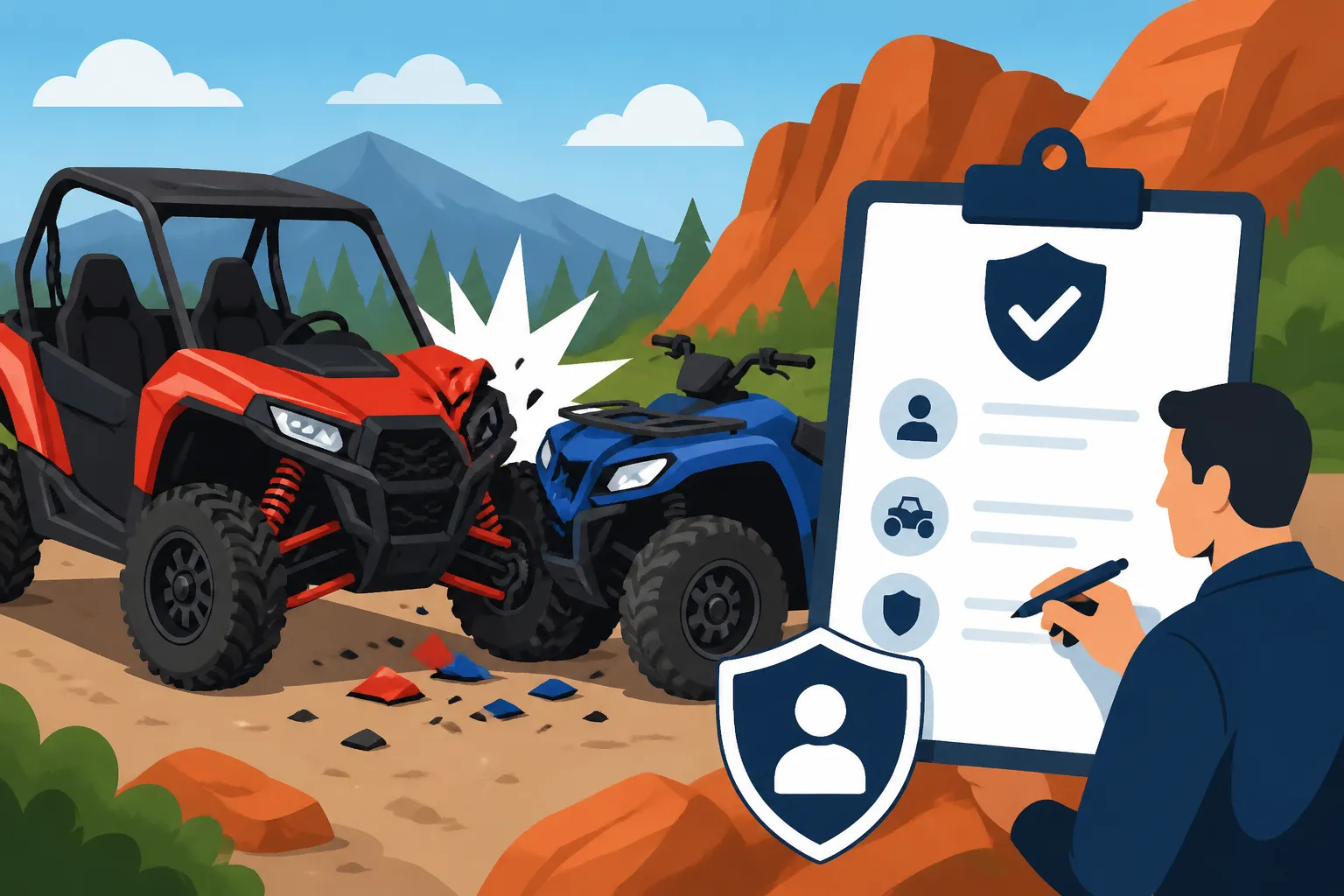
A trailhead collision isn't necessarily a high-speed crash on a paved highway. More often, it’s a fender-bender, a scraped side panel, or a bent bumper that happens in the less-than-orderly environment where riders unload, stage, and prepare their machines. Think of it:
- The Overzealous Reverser: You’re parked, getting your gear on, and another UTV or truck backs up a little too far, crunching into your parked quad. It happens more often than you’d think in crowded staging areas.
- The Unsecured Ramp: Someone else's ATV rolls off a trailer ramp because it wasn't properly secured, and it careens into your side-by-side that's already on the ground.
- The Parking Lot Scrape: You're maneuvering your rig through a tight parking lot, trying to find a spot, and you misjudge a turn, scraping another parked trailer or OHV.
- The Road Crossing Mishap: Sometimes, a trailhead requires you to cross a paved county road or even briefly drive on one to get to the true dirt. If an accident happens during this brief road-based transition, it can complicate things further.
These incidents, while often at lower speeds, can still result in significant damage to expensive machines and gear. The frustration is real, and the insurance implications can be a maze.
Why Trailheads Are Tricky for Insurance
The problem with trailhead collisions is they exist in a grey area. They're not quite "on-road" vehicular accidents, nor are they typically "off-road" trail incidents. This can create confusion for both you and your insurance company.
First, there's the question of jurisdiction. Is it considered a private parking lot, a public staging area, or a small section of public road? Different answers can mean different rules for reporting the incident and different insurance coverages potentially applying. If it's on private property, local law enforcement might not even issue a police report, which can make your claim process a little harder.
Second, the types of vehicles involved can vary widely. It might be your ATV against another ATV, or your UTV against a pickup truck, or even just a piece of falling gear hitting your machine. Each scenario brings its own set of potential insurance policies into play – OHV insurance, auto insurance, or even homeowner's insurance. Trying to figure out which policy should cover what can feel like a riddle.
Finally, while damage might be less severe than a high-speed crash, the cost of repairing fiberglass, custom suspension, or specialized accessories from a company like SuperATV can quickly add up. Understanding exactly what your policy covers before you're in this situation is paramount.
Deciphering Your Insurance Coverage for Off-Highway Vehicles
When a collision happens at a trailhead, the first panicked thought after checking for injuries is often, "Will my insurance even cover this?" The answer largely depends on the specific policies you have in place for your OHV, and sometimes, even other policies you hold. It's a critical area where knowing the details can save you a lot of grief and money.
Dedicated OHV Insurance Policies
The most direct and reliable coverage for your ATV or UTV comes from a dedicated Off-Highway Vehicle (OHV) insurance policy. Just like car insurance, these policies typically offer several types of coverage:
- Collision Coverage: This is the big one for trailhead incidents. It covers damage to your own OHV resulting from a collision with another vehicle or object, regardless of who was at fault. If someone backs into your shiny new Polaris RZR at the Sand Hollow staging area, this is what pays for the repairs to your machine.
- Comprehensive Coverage: This covers non-collision damage, such as theft, vandalism, fire, or damage from natural disasters. While not directly for a collision, if your OHV gets damaged in the parking lot by something falling on it (like a tree limb or someone's unsecured cooler flying off a truck), comprehensive coverage might kick in.
- Liability Coverage: This is crucial if you are at fault for the collision. It covers bodily injury and property damage you cause to others. So, if you accidentally back your Can-Am Defender into another rider's quad, your liability coverage would pay for the damage to their machine and any injuries they sustained. It's truly a must-have, especially with rising repair costs. Utah does have specific requirements for liability on street-legal machines, and it’s always wise to ensure you meet or exceed [Liability Limits Utah Requires on the Road] even for off-highway use, if possible.
- Uninsured/Underinsured Motorist Coverage: This is often an add-on but incredibly valuable. If the other party in a collision is at fault but doesn't have insurance, or doesn't have enough insurance, this coverage helps pay for your damages and medical expenses. Given that not all states require OHV insurance, this can be a lifesaver when dealing with out-of-state visitors or those who simply choose not to carry a policy.
It's vital to read your OHV policy carefully and understand your deductibles, coverage limits, and any exclusions. If you've invested in aftermarket parts, like a new lift kit or heavy-duty bumpers from SuperATV, make sure your policy covers the actual value of these modifications, as stock policies often only cover the factory components.
Auto and Homeowner's Insurance: Do They Help?
This is where things often get confusing and frustrating for riders who don't have dedicated OHV insurance. Many assume their existing policies will cover them.
-
Auto Insurance: In most cases, your standard auto insurance policy will not cover damage to your ATV or UTV, especially when it's being used off-road or even just staged at a trailhead. Auto policies are specifically designed for vehicles licensed and operated on public roads. While your tow vehicle and trailer might be covered by your auto policy for collision incidents, the OHV itself generally won't be, unless it's a specific endorsement or rider you've added (which is rare). However, if your truck tows your UTV and is involved in an accident, your auto policy might cover damage to the UTV if it was being towed at the time of the collision, but this is a nuance you'd need to confirm with your insurer. You should also be aware of [Accidents Between a Car and a UTV] which are often treated differently.
-
Homeowner's Insurance: Your homeowner's policy might offer extremely limited coverage for your OHV, typically only for theft while stored at home or possibly very basic liability if someone is injured by your OHV on your property. However, it almost certainly won't cover collision damage to the vehicle itself, especially if the incident occurs away from your home property, such as at a trailhead. Think of it this way: your homeowner's policy covers your shed; it doesn't cover your car if you crash it down the street, and the same principle generally applies to your OHV.
The bottom line here is that relying on auto or homeowner's insurance for trailhead collision coverage for your OHV is a risky gamble. If you want proper protection, a specific OHV policy is the way to go. Remember, Utah does have rules for [When Utah Requires Insurance on an OHV], even if it's primarily for street-legal use, the importance of comprehensive coverage for any machine is clear.
Your Action Plan: What To Do After a Trailhead Incident
A collision, no matter how minor, can be disorienting. But taking the right steps immediately after a trailhead incident is crucial for your safety and for successfully navigating any future insurance claims. Panicking is natural, but having a clear plan can make all the difference.
Immediate Steps at the Scene
First and foremost, your safety and the safety of others is paramount.
- Stop and Assess: Pull over immediately, if it's safe to do so. Check yourself and any passengers for injuries. Even if you feel fine, adrenaline can mask pain. Ask others involved if they are okay.
- Ensure Safety: If possible and safe, move vehicles out of the flow of traffic (if near a road) or to a less congested part of the staging area to prevent further accidents. Turn on your hazard lights.
- Call for Help (If Needed):
- Injuries: If anyone is injured, call 911 immediately for medical assistance.
- Significant Damage: If there's substantial damage to either vehicle, or if there's any dispute about fault, call the local law enforcement (sheriff's office, city police, or even a Utah State Park Ranger if on state park land). While they might not always respond to minor parking lot dings, a police report can be invaluable for your insurance claim, especially for documenting fault. It’s important to know the process for [Reporting a Crash on a Utah Road] as some trailhead areas might fall under road-related definitions.
- Document Everything: This is perhaps the most critical step for your insurance claim.
- Photos and Videos: Use your phone to take extensive photos and videos of everything. Get wide shots showing the scene, close-ups of all damage to both vehicles (even minor scratches), license plates, VINs, position of vehicles, and any relevant surroundings (tire marks, obstacles, road signs). Don't forget any parts from SuperATV or other aftermarket accessories that might be damaged.
- Witnesses: Ask if anyone saw what happened. Get their names and contact information.
- Location: Note the exact location. GPS coordinates from your phone can be very helpful for pinpointing the trailhead.
Here’s a quick checklist for immediate actions:
| Action | Description | Priority |
|---|---|---|
| Check for Injuries | Ensure everyone involved is safe and call 911 if medical help is needed. | High |
| Ensure Scene Safety | Move vehicles if safe, turn on hazards, prevent further accidents. | High |
| Call Law Enforcement | For injuries, significant damage, or disputes; get an incident report. | Medium |
| Exchange Information | Full contact, vehicle, and insurance details with all parties involved. | High |
| Document with Photos/Video | Capture damage, vehicle positions, license plates, VINs, scene context. | High |
| Gather Witness Info | Names and contact details for anyone who saw the incident. | Medium |
Gathering Information for Your Claim
Once the immediate dust settles, you need to systematically gather all necessary information. This will make your insurance claim process smoother.
- Other Party's Information: Get the full name, phone number, address, driver's license number, and insurance company name and policy number for the other driver. Get the vehicle make, model, year, and VIN (Vehicle Identification Number) of their OHV or vehicle.
- Your Own Machine Info: Have your OHV's VIN, make, model, year, and your insurance policy number handy. You should always carry [What Paperwork Utah Riders Must Carry] with you, whether physical or digital, as this includes your registration and proof of insurance. A photo of your registration might be enough for a quick check, but having the physical documents is best. If you're wondering [Is a Photo of Your Registration Enough?], for an insurance claim, the actual policy number is what matters most.
- Damage Details: Make a detailed list of all damage to your OHV and any other property involved. Be as specific as possible.
- Diagram: Draw a simple sketch of how the collision occurred, showing the position and direction of both vehicles.
- Notes: Write down everything you remember about the incident, including the time, date, weather conditions, and any statements made by the other party.
Notifying Your Insurance Provider
As soon as you can, and typically within 24-48 hours, notify your own insurance company about the collision. Don't wait.
- Be Timely: Most policies have specific timelines for reporting accidents. Delaying could jeopardize your claim.
- Be Honest and Detailed: Provide your insurer with all the information you've gathered. Explain exactly what happened, where it happened (clearly state it was a trailhead collision), and any other relevant details.
- Do Not Admit Fault: While you should be honest about the facts, avoid admitting fault or making speculative statements about how the accident happened. Let your insurance company investigate and determine fault.
This is the point where all your careful documentation comes into play. The more organized and thorough you are, the easier it will be for your insurance company to process your claim and get you closer to repairing your machine, including any custom parts from SuperATV. When a Utah Trooper checks your machine at a trailhead, they'll also look for proper registration and decals. If your machine is damaged beyond repair, you might need to deal with [Replacing a Damaged Utah OHV Decal] or even applying for [The Cost of a Duplicate OHV Decal in Utah] for new parts.
Navigating the Claims Process and Getting Back on the Trail
Reporting the accident is just the first step. The next phase involves working with insurance adjusters, getting estimates, and ultimately reaching a settlement. This can sometimes feel like another uphill battle, but knowing what to expect can ease the stress.
Working with Adjusters and Damage Assessment
Once you've filed your claim, your insurance company will assign an adjuster. This person's job is to investigate the incident, determine fault (if applicable), and assess the damages.
- Initial Contact: The adjuster will contact you to get your side of the story and discuss the details you've already provided. Be prepared to share your photos, videos, and notes.
- Damage Inspection: The adjuster will want to inspect your damaged OHV. This might involve you taking it to a specific shop for an estimate, or the adjuster might come to you. For complex damage, they might recommend a specialized OHV repair shop. Make sure that any custom or aftermarket parts you have, especially from a brand like SuperATV, are pointed out to the adjuster, as their value needs to be included in the assessment.
- Getting Estimates: You might be asked to get multiple repair estimates. It’s always a good idea to seek out reputable shops that specialize in OHVs, as they understand the unique repairs these machines require. Ensure all damage, even hidden issues, is included in the estimates.
It's common for adjusters to communicate with the other party's insurance company (if applicable) to hash out who is responsible for what. This back-and-forth is normal, but it can sometimes prolong the process.
Settlement Offers and Deductibles
After the damage is assessed, your insurance company will present a settlement offer.
- Understanding Your Deductible: Your deductible is the amount you're responsible for paying out-of-pocket before your insurance coverage kicks in. If your repairs cost $3,000 and your deductible is $500, your insurance will pay $2,500. If the other party is found 100% at fault, their insurance should cover your deductible, but you might have to pay it upfront and be reimbursed later.
- Reviewing the Offer: Carefully review the settlement offer. Does it cover the full cost of repairs, including all parts, labor, and any necessary replacements for specialized components or accessories? If you feel the offer is too low, don't hesitate to negotiate. Provide counter-estimates or additional documentation if you believe the damage assessment is incomplete.
- Total Loss vs. Repair: In some cases, the cost of repairs might exceed the actual cash value (ACV) of your OHV. If this happens, your insurance company might declare it a "total loss" and pay you the ACV of the machine, minus your deductible. This can be a tough pill to swallow, especially if you have an older machine that holds sentimental value or custom modifications that increase its functional value beyond its book value. Knowing [How Utah Values a UTV for Its Uniform Fee] can give you an idea of how the state might assess its value, which might align with an insurance adjuster's assessment.
Once you accept a settlement, the funds will be disbursed, and you can proceed with repairs. The ultimate goal is to get your OHV safely back on the trails, allowing you to enjoy the vast network of routes in Utah, perhaps after completing [The Utah OHV Education Certificate] to ensure you're riding safely and responsibly.
When the Other Party is at Fault (or Unknown)
Dealing with a collision where the other party is at fault, or worse, unknown, adds another layer of complexity.
- Other Party At Fault: If the other driver's insurance accepts fault, their liability coverage should pay for your damages (property damage and bodily injury) up to their policy limits. Your deductible won't apply here. However, sometimes their insurance company may dispute fault, or their policy limits may not be enough to cover all your damages. In such cases, your own OHV collision or uninsured/underinsured motorist coverage would become critical.
- Uninsured or Underinsured Party: This is where that uninsured/underinsured motorist coverage for OHVs truly shines. If the at-fault driver has no insurance or insufficient coverage, your policy can step in to cover your damages, minus your deductible. This is why it's such a valuable add-on.
- Hit and Run/Unknown Party: Unfortunately, sometimes a careless driver might leave the scene without providing information. This is where comprehensive coverage (for non-collision damage, like vandalism if they intentionally damaged it) or, more commonly, your uninsured motorist property damage (UMPD) coverage might apply. If you reported the incident to the police, their investigation might help identify the responsible party. Without identified fault, you’ll typically be relying on your own policy and paying your deductible.
Ultimately, dealing with a trailhead collision is never fun, but being prepared with the right insurance and knowing the steps to take can significantly reduce the headache and financial burden. Always be thorough, patient, and persistent in your dealings with insurance companies.
Disclaimer
This article is for general informational purposes only and does not constitute professional advice. Laws, prices and regulations vary by location and change over time. Consult a qualified professional for guidance on your specific situation.