Idaho Roads for a Utah Street-Legal Machine
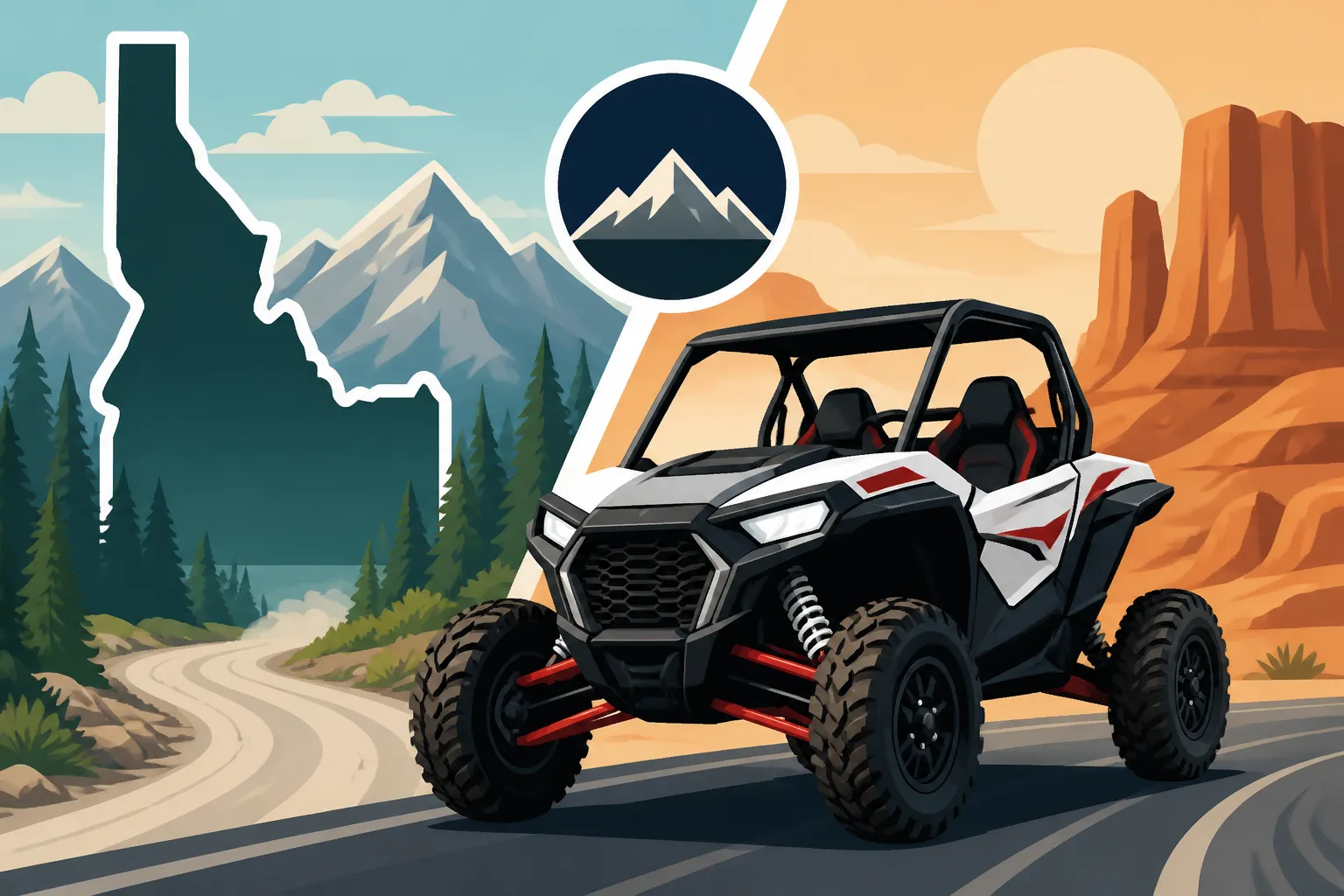
There's nothing quite like the freedom of hopping into your street-legal side-by-side or ATV, heading out your driveway, and riding directly to the trail. It's a game-changer for many of us here in Utah, opening up so many more riding opportunities. But if you're like me, you've probably looked at that beautiful northern border and wondered, "Can I take my Utah-plated UTV into Idaho and enjoy the same freedom on their roads?" It's a common question, and one that deserves a deep dive, because crossing state lines with your OHV isn't always as straightforward as crossing with your everyday car. This guide will walk you through what you need to know to potentially ride your Utah street-legal machine on Idaho's public roads, making sure your adventure stays legal and fun.
Understanding Reciprocity: Do Idaho Roads Welcome Your Utah Plate?
When you own a street-legal off-highway vehicle (OHV) in Utah, you've gone through the steps to make it compliant for road use here. You've got your license plate, your signals, your mirrors, and all the bells and whistles that allow you to travel from your home to the trailhead, or even cruise through a charming small town to grab a burger. It's a fantastic system that many of us cherish. But the moment you start thinking about venturing beyond Utah's borders, especially into a neighboring state like Idaho, a little voice of doubt might creep in. Will that Utah license plate mean the same thing there?
The General Rule for Out-of-State Plates
In most cases, states have what's called "reciprocity" when it comes to vehicle registrations. What this means, simply put, is that if your vehicle is legally registered and plated in your home state, other states will generally recognize that registration as valid for operating on their public roads. This is why you can drive your Utah-registered car or truck to California, Colorado, or even across the country without needing to re-register it in every single state you pass through. The general assumption is that if your vehicle meets the legal requirements of your home state, it's good to go for standard highway travel elsewhere. It's designed to make interstate travel practical and hassle-free for millions of drivers every day.
This principle is usually pretty solid for typical passenger vehicles. Your Utah license plate tells law enforcement in Idaho that your vehicle has met your home state's requirements for ownership, taxes, and proper identification. They can run that plate and verify its legitimacy through national databases. So, at a basic level, a valid Utah plate signifies a legally recognized vehicle. The spirit of this reciprocity is about respecting each state's authority to regulate its own residents' vehicles and minimizing bureaucratic hurdles for travelers. However, when we bring off-highway vehicles into the mix, things tend to get a bit more nuanced.
Where OHVs Differ from Passenger Cars
Here's where the waters can get a little murky, and it's a frustration many OHV owners share. While the general principle of reciprocity often applies to your Utah street-legal OHV regarding its registration validity on public roads, the devil is often in the details of how different states classify and regulate these machines. An OHV, even when made street legal, isn't always viewed through the same lens as a standard passenger car.
First, state definitions vary wildly. What Utah considers a street-legal OHV might be treated differently in Idaho. Some states have specific categories for "recreational off-highway vehicles" or "all-terrain vehicles" that, while they might allow for street-legal conversion, still carry additional regulations or limitations not typically applied to cars. This isn't usually about safety standards being wildly different—most states require similar basic equipment like headlights, tail lights, and brakes for road use. Instead, it often comes down to unique legislative decisions about road access, speed limits, or even the type of driver's license required for specific vehicle types.
Imagine you're driving your Utah-plated UTV through a small town in Idaho, feeling confident because you're street legal back home. An Idaho state trooper pulls you over. They see your Utah plate, which is great, but they might also be looking at the overall classification of your vehicle under Idaho law. Is it considered an ATV, a UTV, or something else entirely in their state statutes? Are there specific roads or speed limits that apply only to such vehicles, even if they're street legal? This is where research becomes your best friend. [What Paperwork Utah Riders Must Carry] in your home state gives you a baseline, but you'll need to extend that diligence to Idaho's specific regulations for OHVs on public roads. Always assume there could be a difference until you've confirmed otherwise.
Idaho's Specific Requirements for Out-of-State OHVs
Okay, so we've established that while your Utah street-legal plate might grant you some general road access in Idaho, you can't just assume it's a carbon copy of Utah's rules. Idaho, like every state, has its own unique framework for OHVs. Understanding these specifics is key to avoiding any unwelcome surprises, whether you're just passing through or planning to hit some of their fantastic trails.
The Idaho OHV Sticker: Do You Need It?
This is perhaps the most critical distinction for many Utah riders looking to explore Idaho. While your Utah street-legal plate might get you permission to drive on certain Idaho roads, it generally does not automatically grant you access to Idaho's extensive network of OHV trails. Just like many states, Idaho requires a separate OHV registration sticker for any machine operating on designated public OHV trails or areas within the state.
Think of it this bit like this: your Utah street-legal plate covers your machine's ability to drive on certain paved or gravel roads, subject to local Idaho laws, similar to how your car insurance covers road accidents but usually not off-road incidents without an add-on. But when you want to leave those roads and dip your tires onto an Idaho trail—whether it's managed by the Forest Service, BLM, or a state park—you'll need Idaho's specific non-resident OHV user sticker. This sticker serves a vital purpose: the fees collected from it go directly into funding trail maintenance, signage, and enforcement for Idaho's OHV trail system. It's how they keep those trails open and enjoyable for everyone.
Even if your machine is street-legal and you're just crossing a small section of trail to get from one road to another, or to access a specific riding area, you'll likely need that Idaho sticker. Ignoring this requirement can lead to fines and a ruined trip. It's a common oversight, but an easy one to fix by purchasing the sticker online or from an authorized vendor once you're in Idaho. This situation is similar in principle to how non-residents need to understand [The Utah Non-Resident OHV Permit Explained] if they are coming to ride our trails. Each state protects its trail resources, and these permits are how they do it.
Street-Legal Equipment: Does Your Utah Rig Measure Up in Idaho?
Even if Idaho acknowledges your Utah plate for road use, there's still the question of whether the physical equipment on your OHV meets Idaho's specific street-legal standards. While many core requirements are universal—headlights, tail lights, working brakes, a horn—there can be subtle but important differences. What might be perfectly acceptable in Utah could be a point of contention in Idaho.
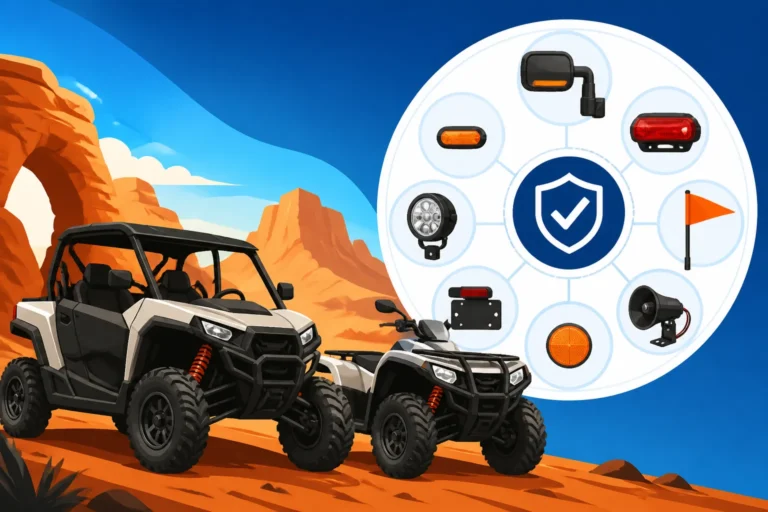
For example, Utah requires turn signals, mirrors, and often a windshield or eye protection. Idaho will have similar needs, but sometimes the specifics can vary. Does Idaho have a minimum height for headlights or a specific lumen output? Are there different rules for mud flaps or fender flares to keep road spray down? Some states are particular about tire types for road use, or exhaust noise levels. While you might have bought a comprehensive street-legal kit from a company like SuperATV for your Utah conversion, it's always wise to double-check Idaho's statutes for any peculiar requirements. You don't want to find yourself on the side of the road because your horn isn't loud enough or your mirrors aren't positioned exactly as Idaho law prescribes.
Think about it this way: your Utah setup is likely 95% of the way there. It's that remaining 5% of potential differences that could cause an issue. These often relate to safety equipment, noise regulations, or specific visibility items. Many aftermarket parts, including full conversion kits, are designed to meet a broad range of state requirements, and companies like SuperATV provide robust solutions for turn signals, mirrors, and lighting that usually exceed basic needs. But a quick review of Idaho's state-specific vehicle code for street-legal OHVs will be your ultimate guide. This also highlights the benefit of knowing [Utah Street-Legal ATV Equipment Requirements] inside and out, so you have a clear comparison point.
Here's a general comparison table of common street-legal equipment, but remember, always verify Idaho's current statutes for precise details:
| Equipment Type | Generally Required in Utah (Street-Legal) | Generally Required in Idaho (Street-Legal, Verify Local Law) | Important Considerations for Idaho Visitors |
|---|---|---|---|
| Headlights | Yes (High/Low Beam) | Yes (High/Low Beam) | Check for specific height/aiming rules. |
| Taillights/Brake Lights | Yes | Yes | Required to be visible from specific distances. |
| Turn Signals | Yes (Front & Rear) | Yes (Front & Rear) | Ensure brightness and visibility. |
| Mirrors | Yes (Left & Right) | Yes (Left & Right) | Field of view requirements. |
| Horn | Yes | Yes | Must be audible from minimum distance. |
| Windshield/Eye Protection | Yes (Windshield or Goggles) | Yes (Windshield or Goggles) | Check if a full windshield is ever mandatory. |
| DOT-Approved Tires | Yes | Yes | Tread depth rules; avoid paddle tires on roads. |
| Muffler/Exhaust | Yes (Quiet, Spark Arrestor) | Yes (Quiet, Spark Arrestor) | Noise limits are crucial; often enforced. |
| License Plate Mount/Light | Yes | Yes | Ensure plate is visible and illuminated at night. |
| Speedometer | Yes | Yes | Accurate and visible to the operator. |
| Brakes | Yes (Operable on all wheels) | Yes (Operable on all wheels) | Regular inspection recommended. |
Documents to Carry
Just like in Utah, when you're operating any vehicle on public roads in Idaho, you'll need to have certain documents readily accessible. For your street-legal Utah OHV, this typically includes:
- Your valid driver's license: Make sure it's current and the appropriate class for driving an OHV on public roads.
- Proof of Utah registration: This will be your physical registration card showing your machine is legally registered in Utah.
- Proof of insurance: Most states require liability insurance for any vehicle operating on public roads. Verify Idaho's minimum requirements, but your Utah policy should generally suffice if it meets the state's minimums.
- Idaho Non-Resident OHV Sticker (if riding trails): As discussed, if you plan to hit any designated trails, you absolutely need this in addition to your street-legal documents.
Always keep these documents in a waterproof bag or container. Digital copies on your phone can sometimes suffice for proof, but it's always safer to have the physical documents in case of no cell service or a dead battery. It’s also a good practice to have some form of identification on you beyond your driver's license. For a deeper look at what you should carry, our guide on [What Paperwork Utah Riders Must Carry] provides an excellent foundation, which you can then adapt for your Idaho adventure.
Navigating Idaho: Road Types and Restrictions for OHVs
So, your Utah street-legal machine has its Utah plate, you've got your Idaho OHV sticker for the trails, and you've double-checked that your equipment meets Idaho's general standards. Now for the fun part: knowing where you can actually ride. Idaho is known for its incredible outdoor access, but just like in Utah, not all roads are created equal for OHV use, even if you're street legal.
What Roads Are Open to Street-Legal OHVs in Idaho?
Idaho generally offers a lot of flexibility for street-legal OHVs, but there are always nuances. Typically, you can expect to ride on most county roads and designated Forest Service or Bureau of Land Management (BLM) roads that are open to other vehicles. These are often gravel, dirt, or lower-speed paved roads that connect communities or lead to trailheads. However, major state highways, particularly those with higher speed limits or high traffic volumes, are usually off-limits. Interstates and freeways are almost universally forbidden for OHVs, regardless of street-legal status, much like they are here in Utah for our street-legal quads.
The crucial detail to remember is that local jurisdictions—counties and individual cities—have the authority to create their own ordinances regarding OHV access on local roads. This means that while one county might welcome street-legal OHVs on all its non-highway roads, a neighboring county or a city within it might have stricter rules, designating specific routes or even banning them from certain areas entirely. For instance, you might be able to ride right into a small town for gas and food in one part of Idaho, while another municipality might only allow OHV crossing at designated points. This is very similar to how [City and County OHV Rules Across Utah] can vary significantly from Moab to Salt Lake County. Always keep an eye out for local signage, and if you're planning to spend time in a particular area, a quick search for their local OHV ordinances is a smart move.
Key Idaho Locations and Their Local Nuances
Idaho boasts some incredible riding destinations that draw visitors from all over, including many Utahns. Places like the St. Anthony Sand Dunes, the vast network of trails around Island Park and West Yellowstone, or the scenic routes in northern Idaho near Coeur d'Alene, are big draws. When planning a trip to these areas, it's wise to research local rules.
For example, around popular areas like St. Anthony Dunes, the local towns are often very accustomed to OHV traffic. You might find more permissive rules for riding into town for supplies or food, provided you adhere to speed limits and local ordinances. However, in more urbanized areas, or towns that aren't primarily OHV tourism hubs, the rules might be much stricter. Always be aware of speed limits, which are often reduced for OHVs even on roads where cars can go faster. This helps ensure safety for everyone sharing the road.
If you're using your street-legal UTV to get from your lodging to a trailhead, or to access fuel and food, you're usually on solid ground on designated roads. Think about it like you're riding from Marysvale onto the Paiute Trail here in Utah; it’s understood that you need to use the roads for that connection. But always remember to respect signage and local traffic. You wouldn't want to get a ticket for a preventable infraction, especially when you've already done the work to be legal. [Fuel Stops Along the Paiute Loop] are common, and similarly, you’ll find OHV-friendly stops in Idaho, but knowing the specific local rules for accessing them is crucial.
Essential Documents and Safety Gear for Idaho Riding
Beyond your vehicle's registration and equipment, what you personally carry and wear is just as important. Idaho, like Utah, has specific laws regarding safety gear and personal documentation when riding OHVs, especially on public roads and trails.
Always have your valid driver's license with you. This isn't just for driving your OHV on the road; it's also your primary form of identification if you encounter law enforcement or need assistance. In terms of your machine, your Utah registration card and proof of insurance are non-negotiable. If you're heading off-road at all, your Idaho non-resident OHV sticker (or proof of purchase) must also be with you. It’s always best practice to carry both physical copies and digital backups if possible.
Regarding safety gear, Idaho has helmet laws, particularly for riders under a certain age. While specific age cutoffs can vary, generally, if you're under 18, a helmet is required, whether you're on a public road or an OHV trail. For adults, while it might not always be legally mandated on public roads in Idaho (check specific statutes), wearing a helmet is always the safest choice, especially on an open-air OHV. I always recommend wearing one, regardless of age or location. Eye protection is also a must, whether through a helmet visor or separate goggles. Don't forget appropriate riding attire, including long pants, sturdy boots, and gloves, to protect yourself from dust, debris, and potential spills. Staying safe on Idaho's diverse terrain means being prepared for anything. For an overview of our state’s approach, check out [Helmet and Age Rules on Utah Roads], which provides a good comparative basis.
Disclaimer
This article is for general informational purposes only and does not constitute professional advice. Laws, prices and regulations vary by location and change over time. Consult a qualified professional for guidance on your specific situation.