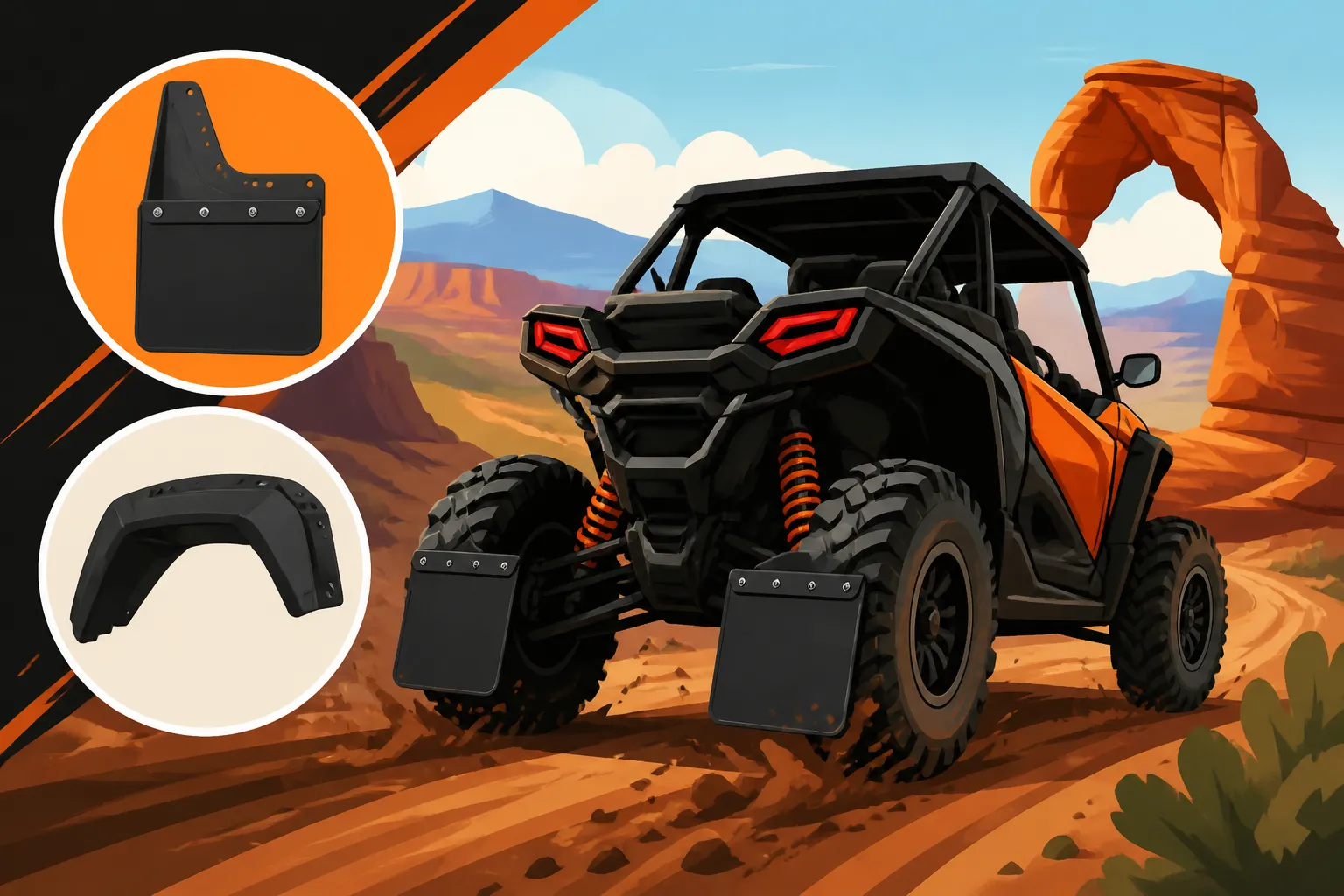
Mud Flaps and Fenders Utah Expects
It's incredibly frustrating to go through the whole process of making your ATV or UTV street legal in Utah, only to hit a snag at the inspection or, worse, get pulled over for something seemingly minor like tire coverage. Many riders are caught off guard, thinking their factory fenders are good enough, but Utah law has specific expectations for mud flaps and fenders when your machine hits the pavement. This guide will walk you through exactly what Utah expects from your OHV's tire coverage, why it matters, and how to ensure your rig is fully compliant for a smooth ride on public roads.
Why Utah Cares About Your Fenders and Mud Flaps: The Legal Side
You might be wondering why a few inches of plastic or rubber behind your tires matter so much. Well, Utah, like many states, has laws designed to protect other drivers, pedestrians, and the overall safety of the road. When your knobby off-road tires spin on pavement, especially at speed or in wet conditions, they can launch an incredible amount of debris, water, mud, or even small rocks. This isn't just a nuisance; it can be a serious hazard.
Think about it from the perspective of the driver behind you. If your UTV is kicking up a constant spray of water or mud, it significantly impairs their visibility, making an accident much more likely. Small rocks or gravel thrown by spinning tires can chip paint, crack windshields, or even injure someone. The law isn't there to make your life harder; it's there to minimize these risks and ensure that all vehicles sharing the road, including street-legal OHVs, operate safely and considerately. This protection of other road users is the primary driver behind the mud flap and fender requirements.
The Annoyance Factor and Safety Implications
Beyond the strictly legal aspect, there's the simple annoyance factor. Nobody wants their vehicle constantly peppered with debris from an inadequately covered tire. When you're making your machine street legal, you're transitioning from a trail environment, where kicking up dust and mud is part of the fun, to a road environment, where such actions are seen as reckless and can have consequences. Local law enforcement officers are keenly aware of these issues and will often look for proper tire coverage as part of their routine checks for street-legal OHVs. Failing to meet these basic requirements is a quick way to get pulled over and potentially cited, spoiling your day out on the roads. It's not just about avoiding a ticket; it's about being a responsible road user and contributing to a safer driving environment for everyone.
Avoiding Inspection Headaches
One of the biggest pain points for many riders attempting to make their OHV street legal is passing the required safety inspection. The inspection process is thorough, and one area where many machines fall short is tire coverage. Inspectors are looking for specific compliance, not just a "good enough" approach. They're trained to spot deficiencies that could lead to safety issues on the road. If your mud flaps or fenders aren't up to snuff, you'll be sent away to make corrections, which means more time, effort, and potentially more money before you can get that coveted street-legal designation. Understanding these requirements upfront can save you a significant amount of hassle and allow you to sail through your inspection with confidence. It's all part of the process of ensuring your machine meets the [Utah Street-Legal ATV Equipment Requirements].
What Exactly Utah Law Expects from Your Tire Coverage: The Nitty-Gritty Details
When it comes to mud flaps and fenders, Utah's vehicle code is pretty clear about the intent, even if the exact dimensions can sometimes feel a little vague. The core principle is that your tires must be covered to prevent them from throwing debris. This generally means the full width of your tire's tread must be covered by a fender, fender flare, or mud flap system. It’s not enough for the fender to cover the top of the tire; it also needs to extend down behind the tire to catch what's flung backward.
For most street-legal OHVs, especially those that have had wider aftermarket tires installed, the factory fenders simply aren't going to cut it. Those stock fenders were designed for a narrower tire profile and off-road use, not for the rigors and regulations of public roads. This is where riders often need to invest in aftermarket solutions to expand their tire coverage.
Fender Flares vs. Mud Flaps: Understanding the Difference
It's helpful to understand the distinction between fender flares and mud flaps, as both contribute to tire coverage:
- Fender Flares: These are extensions that attach to your existing fenders, pushing outwards to increase the overall width of the fender system. They're crucial for covering the side profile of wider tires, ensuring that the entire tread surface is protected from above and slightly to the sides. Many riders opt for robust fender flare kits, like those offered by SuperATV, because they seamlessly integrate with the machine's aesthetics while providing substantial coverage. They come in various widths, so you can choose a set that matches your tire width perfectly, preventing overspray from the top and sides of the tire.
- Mud Flaps: These are typically flexible flaps made of rubber or plastic that hang down behind the tire. Their primary purpose is to catch debris, water, and mud that the tire slings backward. While fender flares handle the width, mud flaps handle the rearward projection. For street-legal purposes, these often need to extend past the lowest point of the tire's tread, or at least be low enough to effectively contain spray. Some fender flare kits even come with integrated mud flap extensions to provide comprehensive coverage.
The key is that, between the two, you need to achieve complete coverage. An inspection will look at both the width (are the treads covered?) and the rearward projection (is the debris being contained?).
What an Inspector Looks For
When your OHV rolls into a certified inspection station for its street-legal check, the technician will meticulously examine your tire coverage. They're not just glancing at it; they're looking for evidence that your fenders and mud flaps effectively contain debris from the entire width of your tire tread. Here's a quick checklist of what they're typically assessing:
| Aspect | What the Inspector Checks | Common Failure Point |
|---|---|---|
| Tread Coverage (Width) | Does the fender/flare extend out far enough to cover the entire width of the tire tread? (Imagine looking down from above). | Aftermarket tires are wider than stock, but factory fenders are not. |
| Rearward Coverage | Does the fender/mud flap extend far enough down behind the tire to prevent debris from being slung backward? | Short factory fenders or mud flaps that don't reach low enough. |
| Structural Integrity | Are the fenders/mud flaps securely mounted and free from significant cracks, damage, or excessive flexibility? | Loose mounting hardware, broken flares, or flimsy material that bends easily at speed. |
| Clearance | Do the fenders/mud flaps provide adequate clearance for suspension travel and tire articulation without rubbing? | Flares that are too rigid or too close to the tire, causing rubbing during suspension movement. |
| Material | Is the material durable enough to withstand road conditions and effectively block debris without tearing or breaking apart easily? | Thin, brittle plastic that can easily snap or tear. |
This thorough check is part of [Utah's Street-Legal ATV Inspection, Step by Step], ensuring your machine is truly ready for the road. The goal is to leave no part of the tire's tread exposed that could fling material onto another vehicle. If you've upgraded to wider tires for better off-road performance, you almost certainly need to upgrade your fenders or add flares to comply with Utah's rules.
Choosing and Installing Fenders and Mud Flaps for Utah Roads
The market for OHV accessories is huge, and thankfully, there are plenty of options when it comes to tire coverage. The key is to choose components that not only look good on your machine but, more importantly, meet Utah's legal requirements for street-legal conversion. This often means looking beyond purely aesthetic upgrades and focusing on functional width and coverage.
When selecting your fenders and mud flaps, consider a few factors: your specific OHV model, the width of your tires (especially if they're aftermarket), your riding style, and your budget. There are universal mud flap kits that can be adapted to many machines, as well as custom-fit fender flare sets designed specifically for popular models like Polaris RZRs or Can-Am Mavericks.
Finding the Right Fit for Your Machine
For many popular UTV models, companies like SuperATV offer direct-fit fender flare kits that are designed to provide extra coverage specifically for wider tire setups. These kits often bolt directly into existing mounting points, making installation relatively straightforward for the DIY enthusiast. They are typically made from durable, flexible materials that can withstand impacts from trail riding while still providing the necessary coverage on the road.
If you have a less common machine or a highly customized build, you might need to get a bit more creative. Universal mud flap kits can be cut and shaped to fit, attaching to the existing fender lip or directly to the frame behind the tires. The main thing is to ensure that whatever solution you choose, it's robust enough to stay in place at highway speeds and provide that all-important full tire tread coverage. Don't cheap out on flimsy materials, as they'll just tear or break, putting you back at square one. Remember, a broken or missing mud flap will still fail an inspection or get you a ticket.
Installation Tips and Best Practices
Installing fender flares and mud flaps is usually a job most riders can tackle in their garage with basic tools. Here are a few tips to ensure a successful installation:
- Measure Twice, Cut Once: If you're using universal mud flaps, carefully measure the required length and width to ensure they adequately cover the tire tread and extend low enough. Use a template if necessary.
- Clean Mounting Surfaces: Before attaching anything, thoroughly clean the areas where the flares or flaps will mount. This ensures a strong, lasting bond if using adhesive, or prevents dirt from interfering with bolt-on connections.
- Secure Fasteners: Use strong, corrosion-resistant hardware for mounting. Loose fenders or mud flaps are not only ineffective but can also become a hazard if they detach at speed. Double-check all bolts and rivets.
- Check for Clearance: After installation, articulate your suspension fully and turn your wheels lock-to-lock. Ensure there's no rubbing between the tires and the new fenders or mud flaps. You don't want your new components interfering with your machine's operation or getting damaged on the first bump.
- Consider Aesthetics (But Prioritize Function): While function is paramount for street-legal compliance, you can still find options that complement your OHV's look. Many aftermarket fender flares are designed to integrate cleanly with the body lines of popular UTVs, making them look like a natural extension rather than an add-on.
Taking the time to properly select and install these components will not only help you pass your [Utah's Street-Legal ATV Inspection, Step by Step] but also enhance your riding experience by keeping your machine (and those around you) cleaner and safer.
Beyond Compliance: The Practical Benefits of Good Tire Coverage
While the primary motivation for adding proper mud flaps and fenders for street-legal use is compliance with Utah law, the benefits extend far beyond just avoiding a ticket or passing an inspection. Investing in good tire coverage actually makes your street-legal OHV more pleasant to drive and helps preserve its condition.
Think about riding on a gravel road or in wet conditions. Without adequate coverage, your machine, your passengers, and even yourself can get absolutely covered in mud, dust, and water. This isn't just uncomfortable; it makes cleaning a nightmare. With proper mud flaps and fenders, a significant amount of that spray is contained, keeping the cabin cleaner, your gear drier, and your visibility better.
Keeping Your Machine and Passengers Cleaner
Imagine cruising through one of Utah's beautiful trail towns, like Moab or Kanab, heading to the trailhead. If it's been raining, or if you've just come off a muddy section of trail before hitting the pavement, inadequate fenders mean you're going to be spraying mud and water all over your machine's body, its occupants, and anything you're towing. This isn't just unsightly; it means more frequent and intensive cleaning of your OHV. Good fender flares and mud flaps dramatically reduce this splatter, keeping the sides of your UTV, your mirrors, and even your rear window (if you have one) much cleaner. This directly translates to less time spent scrubbing and more time enjoying the ride. It's about protecting your investment from excessive grime and wear.
Protecting Your Paint and Components
The constant bombardment of small rocks, gravel, and abrasive dust thrown by your tires can take a toll on your OHV's paint, plastics, and even critical components. Over time, this "sandblasting" effect can dull finishes, scratch decals, and accelerate wear on suspension parts, lights, and wiring harnesses that are exposed to the spray. Quality mud flaps and fender flares act as a protective barrier, deflecting much of this damaging debris away from your machine. This helps maintain the aesthetic value of your OHV and can even extend the life of various components by shielding them from constant impact and abrasion. It's a small investment that can pay off in the long run by reducing wear and tear.
Enhancing Your Riding Experience
Ultimately, properly equipped mud flaps and fenders contribute to a more enjoyable and less stressful riding experience when you're on Utah's public roads. You're not constantly worried about splashing other vehicles, getting pulled over, or coating your own rig in grime. This peace of mind allows you to focus on the road, the scenery, and the adventure. It's a fundamental part of responsible street-legal OHV operation that ensures your machine is safe, respectful of other road users, and ready for whatever Utah's diverse terrain throws at you, from the dusty trails to the paved roads. It's a crucial part of what [What a Utah Officer Looks for on a Street-Legal ATV] when they encounter you on the road.
Disclaimer
This article is for general informational purposes only and does not constitute professional advice. Laws, prices and regulations vary by location and change over time. Consult a qualified professional for guidance on your specific situation.