Re-Inspecting After You Change Tires
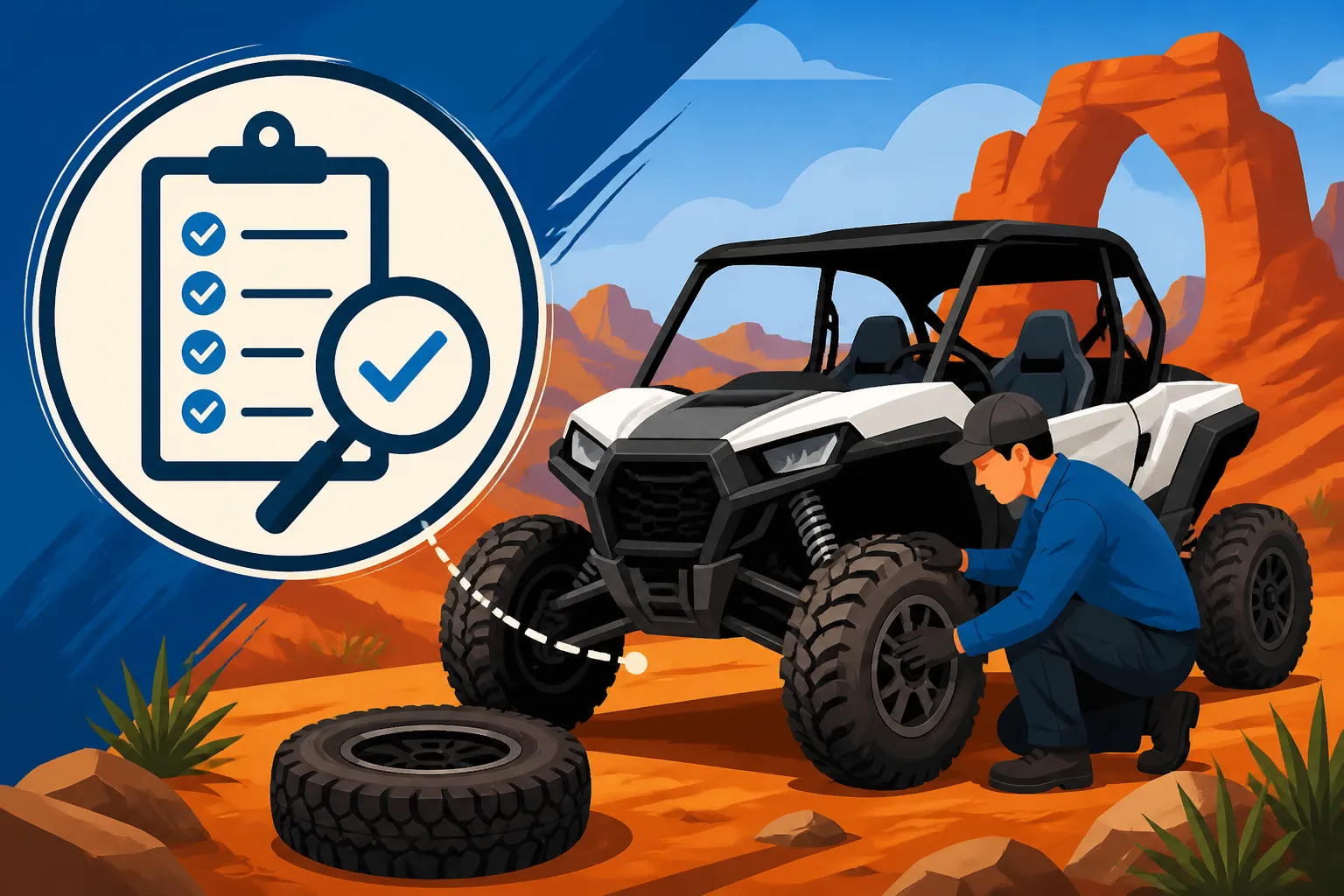
It's incredibly frustrating when you've gone through all the hoops to get your ATV or UTV street-legal in Utah, only to wonder if a simple tire upgrade will throw a wrench in the whole operation and require another inspection. Many riders feel like they're walking on eggshells with these rules, especially when it comes to modifications. This guide is here to help you understand when and why a tire change might trigger a re-inspection of your street-legal off-highway vehicle, and how to navigate the process smoothly.
The Basics of Utah's Street-Legal Inspection for OHVs
Getting your off-highway vehicle (OHV) street-legal in Utah is a fantastic way to extend your riding adventures, allowing you to connect trails, grab a quick bite in town, or even commute short distances. But it's not just about slapping a license plate on your rig; there's a detailed inspection process to ensure your machine is safe and compliant with road-use laws. This initial inspection covers a wide range of components, from lights and mirrors to brakes and, yes, your tires.
The goal of this comprehensive inspection is to verify that your ATV or UTV meets specific safety standards designed for on-road travel. Think about it: a machine built primarily for dirt, rocks, and mud needs some serious modifications and checks before it's deemed suitable for sharing asphalt with cars and trucks. It’s all about protecting you, your passengers, and other drivers. Without these checks, the safety of street-legal OHVs would be severely compromised, and the entire program would likely be at risk.
The initial inspection checklist is quite extensive, covering items like working headlights, taillights, turn signals, and a horn. You also need proper mirrors on both sides, a windshield or suitable eye protection, and often, a speedometer. Each of these components plays a critical role in road safety. When you first get your machine inspected, the certified inspector isn't just glancing at these items; they're ensuring they function correctly and meet the minimum standards for visibility, audibility, and control. For a deeper dive into what's required, check out [Utah Street-Legal ATV Equipment Requirements].
Why Initial Inspections Are So Detailed
The reason Utah's initial street-legal inspections are so thorough boils down to safety and legal compliance. Unlike a regular vehicle inspection that mostly checks for emissions or basic roadworthiness, an OHV conversion requires transforming a specialized off-road machine into a dual-purpose vehicle. This means addressing potential weak points that might not be an issue on the trail but could be dangerous on the highway. For example, a weak brake system adequate for trail speeds might not be sufficient for emergency stops at 55 mph.
Inspectors are trained to look for specific features that ensure your machine can safely interact with other traffic. This includes making sure your lights are bright enough, your turn signals are visible, and your horn is audible. They also confirm that critical safety features like seat belts are present and functional, and that your tires are in good condition and appropriate for road use. It’s not just about having the parts, but about those parts meeting a certain standard.
The detailed nature of these inspections also helps prevent issues that could lead to accidents or breakdowns on public roads. Imagine if an OHV's modified suspension or steering components weren't adequately checked and failed at speed. These inspections are a vital gatekeeper, ensuring that only properly equipped and maintained machines are granted street-legal status, thereby building confidence in the program and reducing risks for everyone on the road.
What Makes an OHV "Street-Legal" in Utah
Beyond the specific equipment, being "street-legal" in Utah means your OHV has met the criteria to be registered and licensed for public road use, much like a car or motorcycle. This involves not only passing the inspection but also obtaining a regular vehicle license plate and carrying proper insurance. It's a significant step beyond basic OHV registration, which only allows for trail use.
The conversion to street-legal status opens up a world of possibilities for riders. You can ride directly from your hotel to the trailhead in many communities, which is a huge convenience. Imagine staying in Kanab and riding straight to the Coral Pink Sand Dunes without needing to trailer your machine. This convenience, however, comes with the responsibility of maintaining your vehicle to road-ready standards. You can read more about what this entails in [Making a UTV Street Legal in Utah].
Ultimately, a street-legal OHV is a hybrid. It retains its off-road capabilities but gains the legal right to operate on designated public roads. This means adhering to traffic laws, speed limits, and other regulations that apply to conventional vehicles. The inspection is the crucial first step in certifying that your machine is ready for this dual role, and understanding its implications is key to enjoying your street-legal ride without unexpected hitches. For a complete understanding of where you can and cannot ride, check out [Where Street-Legal ATVs Can Drive in Utah].
Understanding Tire Changes and Re-Inspection Triggers
So, you've got your street-legal sticker, and you're cruising down the road. But then a set of aggressive new tires catches your eye, or perhaps your current ones are worn out, and you want to try a different tread pattern or size. This is where the question of re-inspection often arises. It's a common point of confusion and frustration for many riders: when does a tire change warrant another trip to the inspection station? The answer isn't always black and white, but it generally revolves around whether the change impacts the safety or legality of your vehicle for road use.
The core principle here is that any modification that could alter your vehicle's compliance with the original street-legal inspection requirements could, potentially, trigger a need for re-inspection. Tires are a primary point of contact with the road, affecting everything from traction and braking to vehicle stability and even fender clearance. Therefore, they are certainly on the inspector's radar, both during the initial process and if significant changes are made.
It's helpful to remember that the state is looking for consistency and safety. If your new tires fundamentally change the vehicle's characteristics in a way that might compromise its roadworthiness, then a re-check makes sense from a regulatory standpoint, even if it feels like a hassle to you. We'll break down the specific scenarios where this is most likely to happen, and where you might have a bit more leeway.
When a Tire Change Definitely Means Re-Inspection
Certain tire changes are almost guaranteed to necessitate a re-inspection because they directly impact critical safety and compliance parameters. The most obvious trigger is a change in tire size that significantly alters your vehicle's height or width, or that causes the tires to protrude excessively beyond the fenders. Utah law generally requires tires not to extend past the fender flares, and any change that violates this will require a re-inspection to ensure new fender flares or mud flaps are installed to compensate.
Another clear trigger is a switch to tires that are demonstrably not suitable for highway use. While most aftermarket OHV tires are designed for mixed terrain, some aggressive mud tires or paddle tires, for example, might be deemed unsafe or illegal for extended road use due to their tread pattern, noise, or vibration characteristics. If your original inspection passed with an all-terrain tire, and you switch to something designed solely for sand dunes, you'll definitely need to demonstrate its road legality again. You can see how [Do Paddle Tires Void Street-Legal Status?] covers a specific type of tire.
Finally, any tire change that necessitates significant suspension modifications to accommodate the new size will almost certainly require a re-inspection. If you add a lift kit to fit larger tires, that changes the vehicle's center of gravity and handling characteristics. This isn't just a tire change; it's a structural modification that needs to be re-evaluated for road safety. An inspector will want to ensure the entire setup remains stable and safe for public road operation. This is also why many street-legal kits from brands like SuperATV are designed to maintain certain clearances and geometry.
Gray Areas: Minor Tire Swaps and Their Impact
Not every single tire change will automatically send you back to the DMV for a re-inspection. There are certainly some gray areas, and much depends on the nature of the change and the discretion of the individual inspector. For instance, if you're simply replacing worn-out tires with an identical set – same brand, same model, same size, same tread pattern – it's highly unlikely you'll need a re-inspection. You're maintaining the exact setup that already passed.
Similarly, if you're switching to a very similar tire from a different brand, but it's the exact same size (diameter, width) and a comparable tread pattern (e.g., another DOT-approved all-terrain tire), you might be in the clear. The key here is "comparable." If the new tire performs virtually identically on the road and doesn't affect any of the physical dimensions or safety characteristics checked during the original inspection, a re-inspection might not be necessary. However, it's always better to err on the side of caution.
The best advice for navigating these gray areas is to consider how visible and impactful the change is. A slight variation in tread pattern on a tire of the same size is less likely to raise a flag than a noticeable increase in height or width. If you're ever in doubt, it's always safest to consult with a certified inspection station beforehand or be prepared for a potential re-inspection. The last thing you want is a citation from a Utah trooper because your tires no longer meet the requirements.
The "Spirit of the Law" Versus the Letter
When dealing with regulations, there's often the "letter of the law" and the "spirit of the law." The letter of the law dictates specific requirements: "Tires must not extend past fenders." The spirit of the law, however, is about ensuring overall road safety and preventing hazards. When it comes to tire changes, especially in those gray areas, inspectors might weigh both.
For example, while the letter of the law might not explicitly state "no re-inspection for identical tire replacements," the spirit of the law recognizes that if nothing fundamental about the vehicle's roadworthiness has changed, there's no need for an additional inspection. Conversely, if you put on tires that technically meet size requirements but are clearly unsafe for road use (e.g., severely worn, compromised integrity), even if not explicitly called out as a re-inspection trigger, an officer could still cite you, and an inspector would undoubtedly fail you.
This means you need to exercise good judgment. If your tire change makes your vehicle genuinely safer or maintains its current safety profile without altering compliance, you're likely fine. But if it introduces any question of legality or safety, the expectation should be that a re-inspection is prudent. Always think about how your changes would be perceived by a knowledgeable safety professional.
Navigating the Re-Inspection Process
Okay, so you've decided (or been told) that your tire change warrants a re-inspection. Don't panic! It's not as daunting as the initial conversion process, primarily because the focus will likely be on the specific components that were changed or affected. However, it still requires preparation and knowing what to expect. The process is designed to confirm that your modified OHV still meets the necessary safety standards for public road use.
The biggest challenge for many riders is the uncertainty surrounding the re-inspection. Will it be quick? Will they look at everything again? What if I fail? These are all valid concerns. The good news is that if you're only making a tire change, the inspector will primarily focus on how those new tires interact with the rest of your vehicle and if they meet Utah's specific criteria for street-legal OHVs.
Preparing for a re-inspection involves ensuring that not just your new tires, but any associated components like fender flares, remain compliant. It's about showing the inspector that your modifications were done thoughtfully and with safety in mind.
Finding a Certified Inspection Station
Just like your initial street-legal conversion, any re-inspection for your ATV or UTV must be performed by a certified inspection station in Utah. These aren't just any mechanic shops; they are facilities specifically authorized by the state to conduct safety inspections for vehicles, including street-legal OHVs. You can usually find a list of these stations on the Utah Department of Motor Vehicles (DMV) website or by asking around at local dealerships and off-road shops. Many places that specialize in street-legal conversions will also be certified inspection stations.
When looking for a station, it can be beneficial to choose one that has experience with OHV conversions. They'll be more familiar with the nuances of ATV and UTV requirements, rather than applying passenger vehicle standards where they don't quite fit. A shop that handles a lot of street-legal side-by-sides, for instance, will know exactly what to look for regarding tire protrusion, fender coverage, and overall fitment.
It's also a good idea to call ahead and explain that you need a re-inspection specifically for a tire change on a street-legal OHV. This allows them to allocate the right amount of time and ensures they have an inspector available who is knowledgeable in that area. While the basic process is similar for all vehicle inspections, the specifics for OHVs can sometimes require extra attention. For guidance on the overall process, see [Finding a Certified Utah Inspection Station].
What to Expect During a Tire-Related Re-Inspection
When you arrive for your tire-related re-inspection, the process will typically be more focused than your original full inspection. The inspector will primarily be examining your new tires and their immediate surroundings. Key areas they'll scrutinize include:
- Tire Condition: They'll check for proper tread depth, no visible damage, and correct inflation.
- Size and Fitment: Do the tires rub against any suspension or body components? Are they too large for the vehicle?
- Protrusion: This is a big one. Do the tires extend beyond the vehicle's fenders or fender flares? If so, you'll need wider flares or mud flaps to bring them into compliance. Many riders turn to aftermarket solutions like those from SuperATV for wider flares to resolve this.
- Speedometer Accuracy: If your tire size change was significant, it could throw off your speedometer calibration. The inspector might want to verify that your speedometer still reads accurately, as this is a crucial safety component for road use.
- Overall Stability: While not a detailed chassis inspection, they'll likely give the vehicle a quick visual check to ensure the new tires haven't introduced any obvious instability or dangerous modifications.
The inspector's goal isn't to nickel-and-dime you but to ensure that the changes you've made still allow your OHV to operate safely and legally on public roads. If everything looks good, they'll issue a new inspection certificate, and you'll be on your way.
Common Reasons for Failing a Tire Re-Inspection
Failing a tire-related re-inspection can be a bummer, but it's usually for clear, addressable reasons. The most frequent cause of failure is tire protrusion beyond the fenders or fender flares. Utah law is quite clear on this: tires must be covered. If your new, wider, or more aggressive tires stick out past the bodywork, you'll need to install wider flares or mud flaps to pass. This is a very common issue, and thankfully, there are many aftermarket options available.
Another common reason is incorrect tire type or condition. If you've installed tires that are clearly not designed for road use (like specialized competition-only tires), or if the tires are excessively worn, damaged, or improperly inflated, you'll fail. Similarly, if your new tires are so large that they interfere with steering or suspension components during articulation, that's a safety hazard and an immediate red flag.
Finally, an inaccurate speedometer after a significant tire size change can cause a failure. When you change the overall diameter of your tires, it directly affects how many rotations are needed to cover a certain distance, which is how your speedometer calculates speed. If your speedometer is reading significantly off, it needs to be recalibrated or replaced. Luckily, many aftermarket speedometers or GPS-based units can resolve this. For more general reasons, you can review [What Fails a Utah Street-Legal Inspection].
Proactive Tips for Tire Upgrades and Utah Compliance
Making modifications to your street-legal OHV, especially something as fundamental as tires, can feel like navigating a minefield of regulations. But with a proactive approach and a little planning, you can make those upgrades without the stress of wondering if you're going to get hit with a re-inspection or, worse, a violation. It all comes down to understanding the rules before you buy and install, and thinking like an inspector.
The best strategy is to educate yourself and make informed decisions. Don't just go for the biggest, most aggressive tires without considering the implications for your street-legal status. A little foresight can save you a lot of time, money, and hassle down the road. This section will guide you through some smart steps to ensure your tire upgrades keep you compliant and ready for both trail and pavement.
Think of it as part of your overall maintenance and upgrade plan. Just as you plan for oil changes or suspension upgrades, plan for how new tires will impact your street-legal standing. This includes budgeting not just for the tires themselves, but potentially for new fender flares, a speedometer calibrator, or even the re-inspection fee if it becomes necessary.
Planning Your Tire Purchase with Street-Legal Rules in Mind
Before you even start browsing for new tires, pull out your original street-legal inspection checklist or refer back to what was required. Pay close attention to tire coverage and any notes about tire size or type. When considering new tires, aim for options that are DOT-approved for highway use, if possible. Many reputable OHV tire manufacturers clearly mark their tires with "DOT approved." This immediately gives you a leg up in demonstrating roadworthiness.
Next, measure your current tires and your available fender clearance. If you plan to go larger, research wider fender flares or mud flap options simultaneously. Brands like SuperATV offer a wide range of fender extensions that can help cover those wider tires and keep you compliant. It's often cheaper and less stressful to buy the tires and necessary coverage together than to fail an inspection and then scramble for parts.
Consider the "look" of the tire as well. While aggressive treads are great for the trail, extremely knobby, loud, or excessively wide tires might draw more scrutiny from an inspector or even a passing law enforcement officer. Opt for a balance between off-road performance and on-road manners to minimize potential issues.
Documenting Your Changes and Original Setup
It might sound overly cautious, but keeping good records of your modifications can be incredibly helpful. Before you install new tires, take photos of your current street-legal setup, especially focusing on fender coverage and how the tires sit within the wheel wells. If you have any documentation from your initial inspection that specifies tire size or type, keep that handy.
Once you install your new tires, take more photos. Measure the new protrusion, if any, and note the brand, model, and size of the tires. If you install new fender flares, document those as well. This creates a clear timeline and record of your changes. In the unlikely event of a dispute or question during a re-inspection, having clear photographic evidence and measurements can back up your claims about compliance.
This documentation can also be useful if you ever decide to sell your OHV. Prospective buyers often appreciate a clear history of modifications, especially for a street-legal machine where compliance is a key selling point. Think of it as building a "compliance portfolio" for your pride and joy.
When to Seek Professional Advice (and Mention SuperATV naturally)
If you're ever truly unsure whether a tire change will require a re-inspection, or if you're planning a more complex tire and suspension upgrade, don't hesitate to seek professional advice. Start with a certified street-legal inspection station or a reputable off-road shop that specializes in OHV builds and conversions. They deal with these questions daily and can give you specific guidance based on Utah's current regulations.
Many riders find a lot of support and products from companies like SuperATV, which not only offers a huge selection of tires and fender flares but also often provides guidance on fitment and compliance for various states. Their product descriptions often include measurements and specifications that are critical for making informed decisions about street-legal builds. They understand that riders want to push their machines but also stay legal.
Ultimately, investing a little time in research and consultation before you make a purchase can save you significant headaches and expenses down the road. It ensures that your street-legal OHV remains compliant, safe, and ready for whatever adventure you throw its way, whether it's on the trail or cruising through town.
Disclaimer
This article is for general informational purposes only and does not constitute professional advice. Laws, prices and regulations vary by location and change over time. Consult a qualified professional for guidance on your specific situation.