How Long a Street-Legal Inspection Takes
One of the biggest anxieties about making your ATV or UTV street legal here in Utah is often the unknown, especially when it comes to the inspection process. You’re probably picturing endless waiting, bureaucratic hurdles, and maybe even failing on some obscure technicality, chewing up your valuable riding time. This guide is here to cut through that uncertainty, giving you a realistic understanding of how long a street-legal inspection truly takes and how you can make it as smooth and quick as possible.
Understanding the Street-Legal Inspection Process in Utah
Before we dive into the clock, it’s crucial to understand what this inspection actually entails. It’s not just a quick glance over your machine; it’s a systematic check to ensure your ATV or UTV meets all the specific safety and equipment requirements mandated by Utah law for road use. Many riders mistakenly think it’s just about having a license plate, but there's a lot more to it.
The state of Utah wants to ensure that when your off-highway vehicle (OHV) hits the asphalt, it's as safe as any other vehicle sharing the road. This means equipping it with the right lights, signals, mirrors, and other features that allow it to communicate with other drivers and be seen clearly. The inspection is the gatekeeper for that safety. It’s handled by certified inspection stations, which are often automotive repair shops that have gone through specific training and licensing to conduct these specialized checks. Unlike traditional vehicle emissions or safety inspections you might get for your car, the OHV street-legal inspection is solely focused on the equipment required for roadworthiness. You'll find that the inspector will go down a checklist to confirm every item is present and functioning correctly, from your headlights to your horn, making sure everything aligns with state regulations. This critical step ensures that when you eventually get your [Street-Legal Plates on a Trailer for Your Quad], your entire setup is fully compliant.
What the Inspector Looks For
During the inspection, the certified technician will be looking for a very specific set of items to ensure compliance. It’s essentially a detailed checklist designed to mirror Utah's equipment laws for street-legal OHVs. They’ll start with the obvious, like your [Headlights and Tail Lamps Utah Requires], ensuring they are bright, properly aimed, and functioning on both high and low beams. Then they'll move to the all-important [Turn Signals on a Street-Legal Utah UTV], checking both front and rear, and making sure the flasher works at a consistent rate.
Visibility from the driver's seat is key, so they’ll meticulously check for [Mirrors Utah Requires on Both Sides] – typically one on the left and one on the right, providing a clear view of the rear. A [Windshield or Eye Protection in Utah] is also on the list; if you don't have a full windshield, make sure you have goggles or a full-face helmet ready to demonstrate compliance. Don't forget the small but mighty details like a working [Horns, Mufflers and Utah Noise Limits] to alert others, and an adequately quiet muffler that meets noise standards. A [Speedometers and Night Riding in Utah] is crucial for maintaining legal road speeds, especially after dark. They’ll also check your brake lights, ensuring they activate correctly when you apply the brakes. Lastly, the [License Plate Lights and Mounting in Utah] must be in order, illuminating your license plate after sunset, and the plate itself needs to be mounted securely in the specified location. Any missing or non-functional item on this list will result in a failed inspection, requiring you to make repairs or additions before you can pass. It’s why many riders opt for a comprehensive street-legal kit from a company like SuperATV, which bundles many of these necessary components together.
Factors Influencing Inspection Duration
You're probably wondering, "So, how long does the actual inspection take?" The short answer is: it varies. The process itself isn't hours long, but several elements can stretch out your overall time commitment. Think of it less like a pit stop and more like a carefully executed procedure where every step counts.
Your Machine's Readiness and Condition
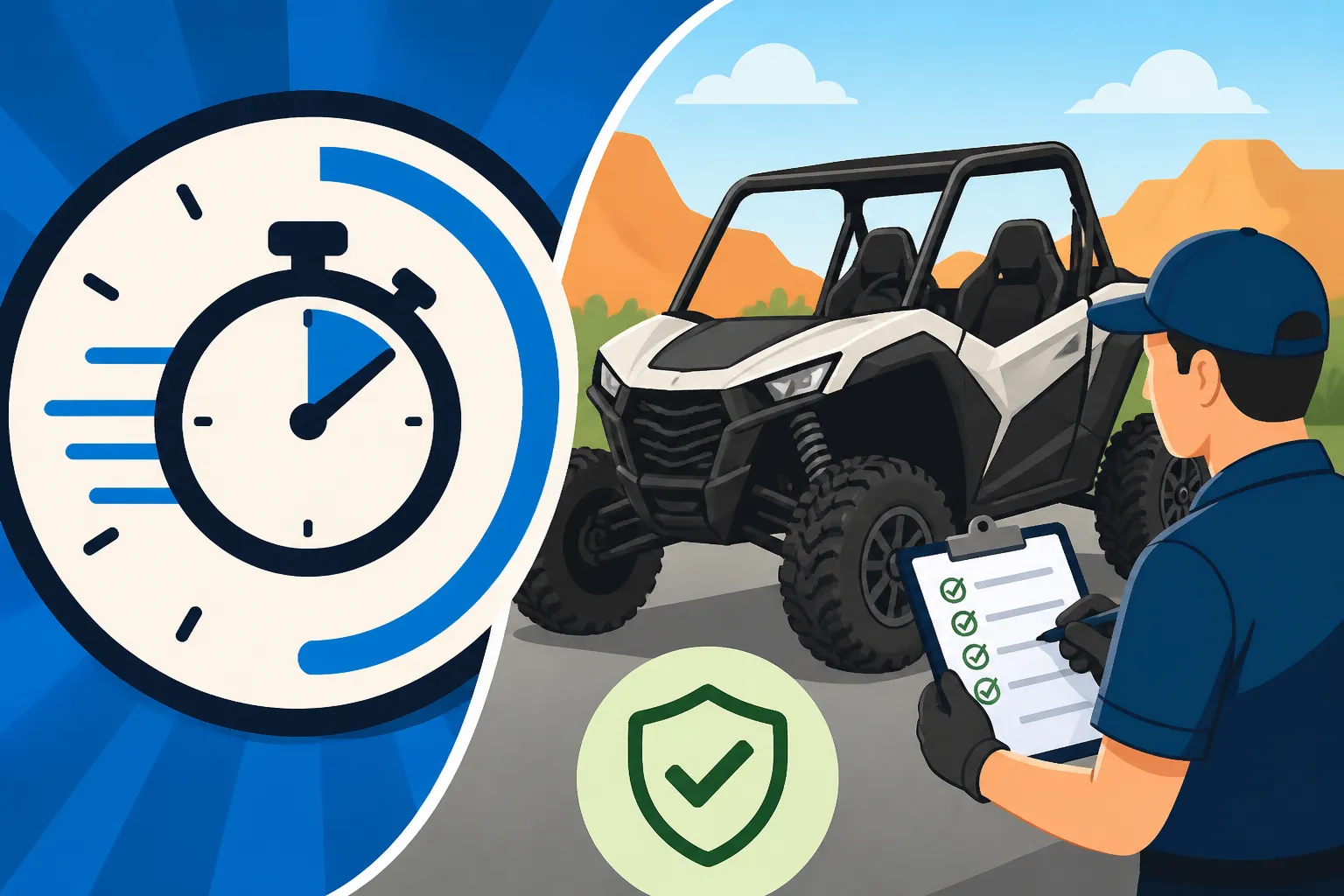
This is by far the biggest factor in how quickly your inspection goes. If your machine rolls in with every single requirement met, all lights blazing, mirrors firmly attached, and everything in perfect working order, the actual hands-on inspection time can be remarkably swift – sometimes as little as 15 to 30 minutes. The inspector simply goes through their checklist, verifies functionality, stamps the paper, and you’re off.
However, if your UTV or ATV shows up needing a turn signal bulb, a mirror re-tightened, or a horn that only sometimes works, that quick check can turn into a headache. The inspector might note the deficiency, but they aren't going to fix it for you on the spot. You'll be asked to correct the issue and then return for a re-inspection. This means packing up your machine, driving home, finding the parts (maybe you need a specific [Street-Legal Kits That Suit Utah's Rules] to get everything in order), making the repair, and then hauling it back to the inspection station. This back-and-forth can easily add hours, if not days, to your timeline, completely derailing your plan for a single, quick visit. It’s a classic example of "an ounce of prevention is worth a pound of cure."
Inspection Station Workload and Scheduling
Just like any other service business, certified inspection stations have busy times and slower periods. Rolling up on a Saturday morning without an appointment, especially during peak riding season, is a surefire way to extend your wait time significantly. You might find yourself behind several other OHVs, cars, or trucks waiting for their own inspections or repairs. Even if your machine is perfectly prepared, if there are three other vehicles ahead of you, you'll still be waiting.
Conversely, scheduling an appointment during a quieter weekday afternoon or first thing in the morning can mean you're in and out much faster. Some smaller shops might only have one certified inspector, so if that person is tied up, your wait increases. Larger dealerships might have multiple bays and inspectors, potentially offering a faster turnaround. It's always a good idea to call ahead, confirm they do OHV street-legal inspections, and ask about their busiest times or if you can schedule a specific slot. Don't assume every repair shop is certified for OHVs; make sure to confirm before you tow your machine all the way there. Finding a [Finding a Certified Utah Inspection Station] can be as simple as a quick search or a call to your local OHV dealer.
Inspector's Thoroughness and Experience
While all certified inspectors follow the same state guidelines, human factors can play a role. A seasoned inspector who has done hundreds of OHV inspections might move through the checklist with swift efficiency, knowing exactly where to look and what to test. Their experience allows them to quickly identify compliant equipment and stamp their approval.
On the other hand, a newer inspector or one who doesn't regularly deal with OHVs might take a more meticulous, step-by-step approach. They might double-check measurements, consult their manual more frequently, or spend extra time ensuring all lights illuminate exactly as required. This isn't a bad thing – thoroughness is good for safety – but it can add a few extra minutes to the process. There's also the rare chance of an inspector being overly strict on a minor detail, perhaps misinterpreting a rule, which could lead to a debate or a temporary hold-up. While uncommon, it's something to be aware of. Ultimately, most inspectors are professional and aim to get you through efficiently, provided your machine is ready.
Streamlining Your Street-Legal Inspection
Nobody wants to spend more time than necessary jumping through bureaucratic hoops, especially when the trails are calling. With a bit of foresight and preparation, you can significantly cut down the time it takes to get your street-legal inspection done in Utah. Think of it as doing your homework before the big test – it pays off in spades.
Pre-Inspection Checklist: Do It Yourself First
The absolute best way to ensure a fast inspection is to perform a thorough pre-check yourself before you even load your machine onto the trailer. Go through Utah's [Utah Street-Legal ATV Equipment Requirements] with a fine-tooth comb. Don't just glance; actively test every component.
Here’s a checklist you can use:
- Headlights: Both high and low beams working, properly aimed.
- Tail Lights/Brake Lights: Both tail lights illuminate, and brake lights brighten when the pedal/lever is pressed.
- Turn Signals: All four (front and rear) flash consistently. Make sure they are amber or red to the rear, and amber to the front.
- Mirrors: Securely mounted, one on each side, providing clear rear visibility. Adjust them before you go.
- Horn: Loud enough to be heard. Give it a honk!
- Speedometer: Working and visible.
- License Plate Light: Illuminates the plate at night.
- Windshield/Eye Protection: If no full windshield, have your goggles or full-face helmet ready.
- Muffler: Secure and not excessively loud. A spark arrestor is usually also a good idea for trail riding.
- Tires: Good condition, no exposed cords, adequate tread depth. [Tire Rules for Street-Legal Machines] can be surprisingly detailed.
- Brakes: Functioning front and rear.
- Wipers/Defroster: If equipped with a full cab and windshield.
- Seatbelts: If equipped for passengers, ensure they latch and are in good condition.
If you find anything amiss, fix it before you go. This might mean ordering a new turn signal kit from SuperATV, replacing a bulb, or tightening a loose mirror. Doing it at home on your schedule is far less stressful than finding out at the inspection station. This preparation is key to avoiding issues that lead to [What Fails a Utah Street-Legal Inspection].
Schedule an Appointment and Avoid Peak Times
This sounds simple, but it’s often overlooked. Calling ahead to schedule your inspection appointment is perhaps the single most effective way to minimize your wait time at the inspection station. When you call, clearly state that you need a street-legal OHV inspection. This ensures they schedule you with a certified technician and allocate appropriate time.
Try to schedule your appointment during non-peak hours. Mid-week, mid-morning, or mid-afternoon are often ideal. Avoid lunch hours, early mornings (when many folks drop off vehicles), and certainly steer clear of Friday afternoons and Saturdays, which are typically the busiest times for any automotive service center. By showing up at your appointed time, with your machine ready to go, you significantly increase your chances of being in and out quickly, often within 20-45 minutes for the physical inspection itself. Don't forget that if you're trying to combine this with other DMV tasks, knowing [One Trip to the DMV Instead of Three] can save you even more time.
Bring All Necessary Documentation
While the inspection itself is focused on the machine, having all your paperwork in order can prevent any administrative delays. While you don't typically register at the inspection station, having your title, registration information, and proof of ownership can be helpful if any questions arise about the machine itself. This is particularly important if you've recently bought the machine and are making it street legal as part of the initial registration process.
Even if not strictly required for the inspection portion, knowing what documents you’ll eventually need for the DMV, such as [Documents to Bring to the Utah DMV for an ATV], can put your mind at ease and prevent a separate trip. Sometimes, having your VIN readily accessible and clearly visible can also speed things up, as the inspector needs to record it accurately on the inspection form. The more organized you are, the less opportunity there is for a minor administrative hiccup to extend your visit.
What Happens After the Inspection?
So, you’ve passed! The inspector hands you the coveted inspection certificate, a piece of paper that feels like a golden ticket. But what comes next? Getting the inspection done is a huge step, but it’s not the absolute final destination on your journey to hitting Utah’s roads legally.
Getting Your License Plate and Registration
With your inspection certificate in hand, your next stop is the Utah Division of Motor Vehicles (DMV) or a certified agent. This is where you’ll actually apply for your street-legal registration and receive your license plate. You’ll need to present your passed inspection certificate, along with your proof of ownership (like the title), and proof of insurance, which is mandatory for street-legal OHVs. There will be fees involved, covering the registration itself and potentially other county or state fees. The actual time this takes at the DMV can vary widely depending on location and time of day. Some DMV offices are quick, while others can have significant wait times. You might want to explore if [Can You Register an ATV Online in Utah?] is an option, although initial street-legal registration usually requires an in-person visit. Remember that you'll also likely receive your regular OHV decal, so you'll have two sets of official markers on your machine.
Dealing With a Failed Inspection
It happens. Maybe you missed a tiny detail, or perhaps a component wasn't quite up to snuff. If your machine fails the inspection, don't panic. The inspector will provide you with a detailed report outlining exactly [What Fails a Utah Street-Legal Inspection]. This isn't a dead end; it's a to-do list.
You'll need to address each item on that list. This might mean a trip to the parts store, ordering something specific (again, companies like SuperATV can be a great resource for compliant parts), or performing a repair. Once you've made the necessary corrections, you'll need to return to the inspection station for a re-inspection. Often, if you return within a specified timeframe (e.g., 15-30 days), only the failed items will be re-checked, potentially making the re-inspection quicker and sometimes even free of charge. However, always confirm the re-inspection policy and any associated fees with your chosen station when you initially visit. Being prepared for this possibility can save you a lot of frustration.
Inspection Schedule for Street-Legal Machines
Once your OHV is officially street legal in Utah, you might wonder how often you'll need to go through this inspection process again. The good news is, it's not an annual event like emissions checks for cars in some areas. For street-legal OHVs in Utah, once you pass that initial inspection, it's generally good for the life of the vehicle, as long as it remains street legal and no major structural or equipment changes are made that would alter its compliance.
However, there are a couple of scenarios where you might find yourself back at an inspection station:
- Selling Your Machine: While not explicitly mandated for every private sale, a buyer might request a current street-legal inspection as part of their due diligence, especially if they are concerned about the machine's current compliance. Providing a recent, passed inspection can add value and peace of mind to the sale.
- Major Modifications or Accidents: If your OHV is involved in a significant accident that requires extensive repairs or if you make substantial modifications to its street-legal components (e.g., changing the entire lighting system, adding a lift kit that might affect visibility), you could be required to undergo a new inspection to confirm it still meets the street-legal criteria. While the state doesn't have a regular re-inspection schedule for OHVs, ensuring your modified machine still adheres to requirements like [Lift Kits and Utah Street-Legal Rules] is your responsibility.
- Moving from Another State: If you move to Utah with an OHV that was street-legal elsewhere, you'll likely need to go through the Utah street-legal inspection process as part of [Moving to Utah With an ATV You Already Own] to ensure it complies with our state's specific requirements.
- Law Enforcement Discretion: In rare cases, if a law enforcement officer has reasonable cause to believe your street-legal OHV no longer meets the equipment requirements (perhaps a broken mirror, non-functioning light, or excessively loud exhaust), they could potentially require you to get a new inspection.
For regular [Renewing a Street-Legal ATV Registration], you typically won't need another physical inspection as long as your machine remains street legal and compliant. It's more about ensuring your registration and insurance are current. Keep your eyes peeled for any updates from the state, as regulations can sometimes change, but for now, that initial inspection is usually a one-time hurdle.
| Scenario | Estimated Inspection Time (at station) | Factors Influencing Time |
|---|---|---|
| Fully Prepared & Scheduled | 15-30 minutes | Machine in perfect compliance, appointment made, minimal wait. |
| Fully Prepared, Walk-in | 30-90 minutes (plus wait time) | Machine in perfect compliance, but may be behind other vehicles or waiting for an available inspector. |
| Minor Deficiency Found | 15-30 minutes (initial) + 30-60 mins (return) | Initial check identifies a simple fix (e.g., bulb). Time includes returning to the station for re-inspection after correction. |
| Major Deficiency Found | 15-30 minutes (initial) + hours/days (return) | Significant issues found (e.g., no turn signals, major wiring). Time includes sourcing parts, repair, and subsequent re-inspection. |
Disclaimer
This article is for general informational purposes only and does not constitute professional advice. Laws, prices and regulations vary by location and change over time. Consult a qualified professional for guidance on your specific situation.