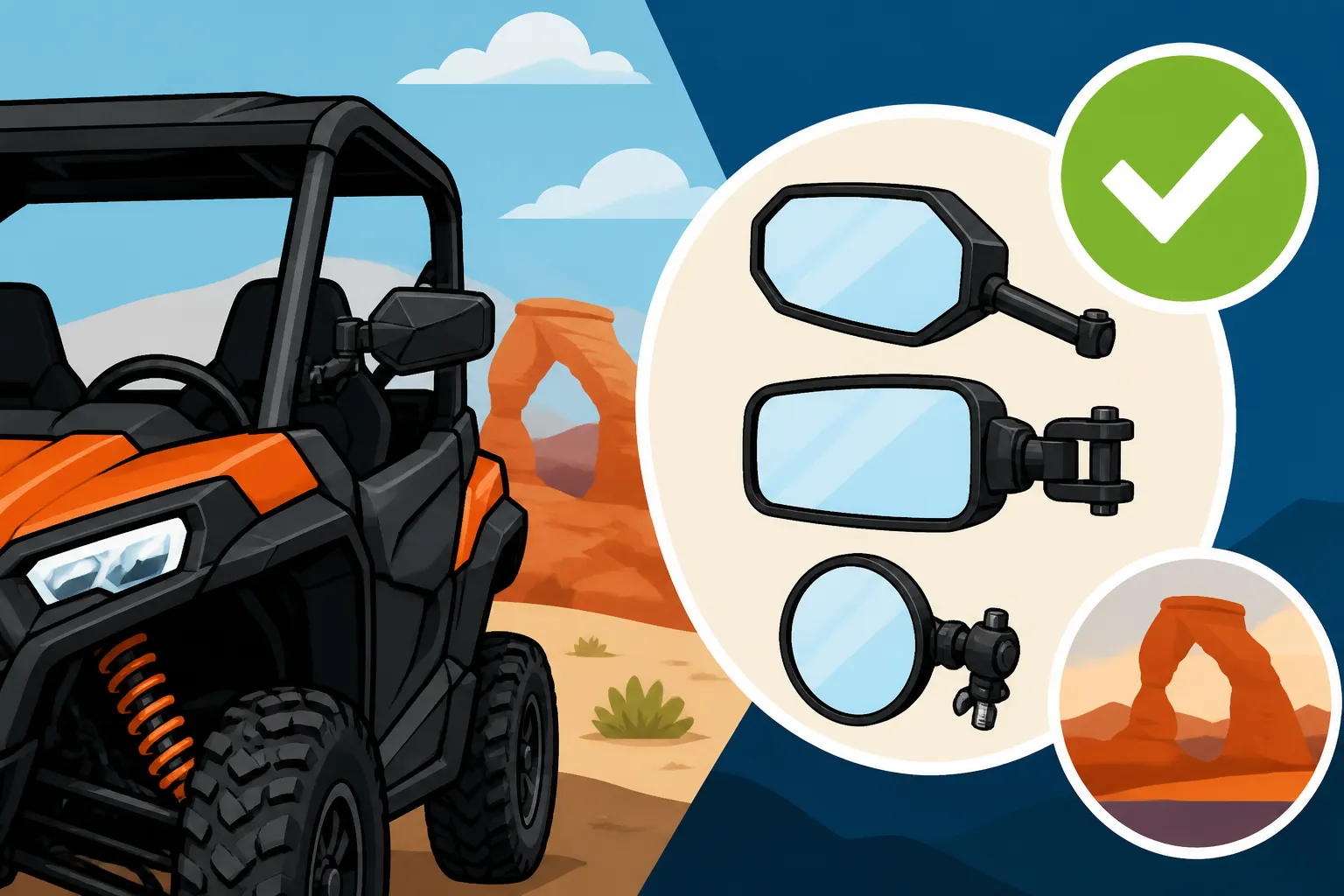
Choosing Mirrors That Pass Utah Inspection
There's nothing quite like the excitement of getting your ATV or UTV ready to hit Utah's incredible trails – whether that's the red rock of Moab or the high mountain passes of the Paiute Trail. But if you're aiming to make your machine street-legal so you can legally connect those trails or even just run to the store, the mirror requirements can feel like a frustratingly specific hurdle. This guide is here to walk you through exactly what Utah's street-legal inspection looks for when it comes to mirrors, helping you choose the right ones and avoid common mistakes that send riders back to the shop for a re-inspection.
The Critical Role of Mirrors on Utah's Street-Legal Trails
When you're out on the trails, mirrors might feel like an afterthought, something primarily for checking on your buddies or seeing who’s kicking up dust behind you. But when you transition your off-highway vehicle (OHV) to street-legal status in Utah, those mirrors suddenly become a crucial safety component, transforming your recreational machine into something that shares the road with cars, trucks, and even semi-trucks. The state isn't trying to be difficult; they're simply ensuring that your UTV or ATV can operate safely and predictably in a mixed traffic environment.
Why Utah Requires Specific Mirror Setups
Utah's regulations for street-legal OHVs are designed to harmonize them with standard vehicle safety practices. Think about it: when you drive your car, you rely heavily on your rearview and side mirrors to check blind spots, change lanes, and understand the traffic around you. An ATV or UTV, especially a side-by-side, can be surprisingly large and cumbersome, and its off-road design often means factory mirrors (if it even has them) might not cut it for highway visibility.
The primary reason for specific mirror requirements is safety. Without adequate mirrors, you simply can't see what's happening behind or to the side of you, making simple maneuvers like turning, changing lanes, or even just pulling over incredibly dangerous. Utah's goal is to prevent accidents by ensuring all vehicles on public roads meet a minimum standard for driver visibility. It’s about more than just seeing; it’s about anticipating, reacting, and being a responsible part of the traffic flow. This is a core part of the overall safety inspection for street-legal machines, and it's not something you can just gloss over.
The Frustration of Failing Inspection Over a Small Detail
Many riders have experienced the gut-punch of getting their machine all set up, thinking they’ve covered every base, only to have it fail inspection on something that seems minor, like a mirror. It's truly a frustrating experience. You've spent time and money on turn signals, horns, and a windshield, and then the inspector points to your side mirror and says, "Nope, not good enough." This isn't just a minor inconvenience; it means another trip to the inspection station, potentially more money spent, and delays in getting your street-legal plates and hitting those open roads.
The issue often stems from a lack of clarity or understanding of what "adequate" actually means in the context of state law. A mirror that feels perfectly fine for trail riding might be deemed insufficient for street use due to its size, mounting, or field of view. Some riders try to save a few bucks with cheap, flimsy options, only to find they flex, vibrate excessively, or simply don't provide the necessary visibility. The key is to understand the specific requirements upfront to avoid this all-too-common pitfall. The good news is that with a little knowledge, you can sail through the mirror check on your first try.
Understanding Utah's Specific Mirror Requirements
When it comes to mirrors for your street-legal ATV or UTV in Utah, the requirements are pretty straightforward, but the devil is in the details. It's not just about having a mirror; it's about having the right kind of mirrors, installed correctly, and providing adequate visibility. You'll want to review the full [Utah Street-Legal ATV Equipment Requirements] to get the complete picture, but let's focus specifically on those reflective surfaces.
The "Both Sides" Rule: Left and Right Covered
One of the most fundamental requirements, and one that often trips up riders converting an off-road-focused machine, is the need for mirrors on both sides of the vehicle. This means you need a mirror on the left (driver's) side and a mirror on the right (passenger's) side. This isn't optional; it's explicitly stated in Utah law. Why both? Because just like in a car, these mirrors provide critical peripheral vision, allowing you to see traffic approaching from either side without turning your head excessively or relying solely on a center rearview mirror.
For an ATV, this typically means handlebar-mounted mirrors. For UTVs, you'll be looking at either door-mounted or cage-mounted side mirrors. The goal is to provide a clear, unobstructed view of the road behind and to the side of your vehicle. Don't assume a single center mirror is enough; it simply isn't for Utah's street-legal status. Many riders miss this point, thinking their existing rearview mirror will suffice, but the state specifically calls for [Mirrors Utah Requires on Both Sides].
What "Securely Mounted" Really Means
Beyond just having two side mirrors, they need to be "securely mounted." This isn't just a suggestion; it's a critical safety and functional requirement. A securely mounted mirror:
- Doesn't vibrate excessively: If your mirror is shaking so much that the image is a blur, it's not providing useful information. This is a common problem with cheaper, flimsy mirrors or inadequate mounting hardware on UTVs and ATVs, especially with the inherent vibration of an off-road engine.
- Stays in position: Once adjusted, the mirror should hold its position. If it sags, rotates, or gets blown out of alignment by wind or bumps, it's not securely mounted. You don't want to be constantly readjusting your mirrors while driving.
- Won't fall off: This might sound obvious, but some clamp-on mirrors, if not properly installed or if they're of poor quality, can work themselves loose and even detach. This is not only a safety hazard for you but also a projectile risk for other drivers.
Inspectors will often give mirrors a gentle wiggle or tap to check their stability. If they wobble like a bobblehead or seem like they could easily be knocked off, you'll likely fail. Focus on robust mounting solutions, whether that's heavy-duty clamps for your roll cage or solid handlebar mounts for your quad. Reputable brands like SuperATV offer robust clamp designs that are built to withstand off-road abuse while staying put on the road.
Field of View: Seeing What's Behind You
The purpose of a mirror is to provide a clear and adequate "field of view." This means you should be able to see a reasonable expanse of the road and traffic behind you, not just a tiny sliver. While Utah law doesn't specify an exact minimum surface area for the mirror itself, common sense and inspector discretion come into play. A mirror the size of a postage stamp simply won't cut it.
Think about what you need to see to merge safely onto a highway, or even just to know if a car is approaching quickly from behind on a county road. You should be able to easily discern the presence and relative speed of vehicles. Larger mirrors generally offer a better field of view, but they also need to be positioned correctly. If your mirrors are blocked by your shoulders, roll cage bars, or accessories, they won't provide the necessary visibility, regardless of their size. It’s all about the driver’s perspective and what you can see when seated in the normal driving position.
Types of Mirrors That Work for Utah Inspections
Choosing the right mirrors can feel like a daunting task given the sheer variety on the market. However, by focusing on quality, secure mounting, and adequate visibility, you can narrow down your options significantly. You're looking for something durable enough for the trails but compliant enough for the road.
Side Mirrors: Your Primary View
Side mirrors are non-negotiable for street-legal status in Utah. For UTVs, these typically mount to the roll cage or the doors. Look for mirrors with robust housings, shatter-resistant glass, and strong, adjustable clamps. Many riders prefer breakaway mirrors, which are designed to fold in or snap away if they hit an obstacle on the trail, preventing damage. This is a great feature for dual-sport machines, as it offers the best of both worlds.
When selecting side mirrors, consider the size of the reflective surface. Larger is generally better for road use, offering a wider field of vision. Brands like SuperATV offer a range of side mirrors specifically designed for UTVs, with heavy-duty clamps that securely attach to various roll cage diameters. These are often tested to reduce vibration, which is a huge plus for street legality. For ATVs, handlebar-mounted mirrors are the standard. Ensure they are positioned to give you a clear view past your shoulders and aren't easily bumped out of alignment. Some ATV mirrors come with flexible stalks to absorb impacts, which can be useful on trails, but ensure the mounting point itself is solid.
Rearview/Center Mirrors: An Often Overlooked Aid
While side mirrors are mandatory, a good center rearview mirror significantly enhances your overall visibility and is highly recommended, even if not explicitly mandated in addition to the two side mirrors. Think of it as your primary "check-up" mirror for what's directly behind you, allowing you to easily see trailers, passengers, or vehicles following you. It's especially useful for UTVs, giving a much broader picture than just two side mirrors alone.
For UTVs, these mirrors typically mount to the top of the roll cage, often clamping directly to the crossbar. Look for wide-angle or panoramic mirrors that offer an expansive view. Again, secure mounting is key here. A center mirror that bounces around at every bump will quickly become useless and annoying. Many aftermarket brands offer robust rearview mirrors with sturdy clamps that resist vibration, making them a worthwhile investment for both safety and convenience. While not technically required if you have two compliant side mirrors, it significantly improves your confidence and safety on the road.
Breakaway and Clamp-On Options for Off-Roaders
For anyone using their OHV for both serious trail riding and street-legal excursions, breakaway mirrors are a game-changer. These mirrors are designed with a hinge or a ball joint that allows them to pivot or fold in if they strike a tree branch or rock, rather than snapping off or breaking. This protects your investment and prevents you from being without a critical safety component when you hit the pavement.
Clamp-on options are also incredibly popular, particularly for UTVs, as they allow for easy installation on the roll cage without drilling. When choosing clamp-on mirrors, pay close attention to the quality of the clamp itself. Cheap plastic clamps can crack, loosen, or fail under vibration or impact. High-quality clamps, often made from aluminum or heavy-duty composites, will ensure your mirrors stay securely in place, passing the inspector's scrutiny. Many performance-oriented mirrors, including those from brands like SuperATV, integrate these features, offering durable construction and secure mounting that stands up to both trail and road conditions.
Here’s a quick comparison of mirror types for your street-legal machine:
| Mirror Type | Best For | Pros | Cons |
|---|---|---|---|
| Handlebar Mirrors | ATVs, some dirt bikes | Direct view for rider, often simple install | Can be obstructed by rider's body, prone to vibration on some ATVs |
| Side Mirrors (Cage Mount) | UTVs (most common) | Excellent peripheral vision, widely available, durable options | Can be bulky, susceptible to trail damage if not breakaway |
| Side Mirrors (Door Mount) | UTVs (if doors equipped) | Integrated look, less likely to hit trail obstacles | Limited to machines with doors, can be more complex to install |
| Center Rearview Mirror | UTVs (highly recommended) | Wide panoramic view directly behind the vehicle | Does not replace side mirrors, can sometimes obscure forward view slightly |
| Breakaway Mirrors | Any dual-sport OHV | Folds in on impact, prevents damage, maintains compliance | Often more expensive, can be slightly less rigid than fixed mirrors |
Common Mirror Mistakes to Avoid and Installation Tips
Getting your mirrors right is one of the easier parts of the street-legal conversion process, but it's also a common area for simple errors that can lead to a failed inspection. A little foresight and proper installation can save you a lot of headache. Remember, the goal is to drive off confidently after your inspection, not be sent back to the drawing board. Understanding what [What Fails a Utah Street-Legal Inspection] can save you a lot of grief.
Avoiding DIY Fails and Cheap Substitutes
It's tempting to cut corners, especially when you're looking at all the [Street-Legal Conversion Costs in Utah]. However, mirrors are not the place to skimp. Here are some common mistakes to avoid:
- Flimsy Material: Cheap plastic mirrors or mounts that flex and vibrate excessively won't pass. The image needs to be clear and stable. If the mirror itself feels like it could shatter from a small stone flicking up, it's probably not robust enough.
- Inadequate Size: Mirrors that are too small don't provide the necessary field of view. There's no minimum square inch requirement in Utah law, but an inspector will use common sense to determine if the mirror is practical for road use.
- Poor Mounting: Using zip ties, electrical tape, or other makeshift mounting solutions is a guaranteed fail. Mirrors must be securely fastened with appropriate hardware designed for the task. This includes making sure clamps are tightened properly and aren't prone to rotation.
- Obstructed View: Mounting mirrors where they are partially blocked by the roll cage, your helmet, or other accessories means you're not getting the full benefit, and an inspector will notice. Ensure the mirror's reflective surface is entirely visible from your normal driving position.
Invest in quality mirrors from reputable brands. This is one of those [Parts You Still Need After Buying a Kit] that's often overlooked. Spending a little more upfront on durable, well-designed mirrors will save you time, frustration, and potentially additional costs from re-inspection fees down the road.
Proper Placement and Adjustments for Inspection Day
Even with the best mirrors, incorrect placement or adjustment can lead to a failed inspection. Before you head to the [Finding a Certified Utah Inspection Station], take the time to sit in your normal driving position and adjust your mirrors carefully.
- Side Mirrors: Adjust your side mirrors so that you can see the very edge of your vehicle in the innermost part of the mirror, and the rest of the mirror shows the lane beside you and behind. This helps minimize blind spots. Make sure they are high enough to clear your shoulders and wide enough to see past any passengers or cargo.
- Rearview Mirror (if used): If you have a center rearview mirror, adjust it to give you the widest possible view directly behind your vehicle. Ideally, you should be able to see the full rear window or the entire trail/road behind you, depending on your machine's configuration.
- Stability Check: Give each mirror a firm push and pull. Does it stay in place? Does it wobble excessively? If so, tighten the mounts or consider a more stable mirror solution. The inspector will do this, so beat them to it.
Remember, the inspector needs to see that you, the driver, have clear visibility. So, adjust them as if you were about to hit a busy highway, not just a quiet trail. This meticulous approach will make all the difference in passing your inspection smoothly. It's an important step in preparing for [What a Utah Officer Looks for on a Street-Legal ATV] out on the road.
Maintaining Your Mirrors for Long-Term Compliance
Passing the inspection is one thing, but maintaining your mirrors for long-term compliance and safety is another. Your street-legal status isn't a one-and-done deal; you need to keep your machine road-worthy.
- Regular Checks: Before every street-legal ride, quickly check your mirrors. Are they still securely mounted? Are they clean? Are they adjusted correctly? Vibrations from off-road riding can slowly loosen clamps, and branches can knock mirrors out of alignment.
- Cleanliness: Dust, mud, and water spots can severely degrade mirror visibility. Carry a small rag and some glass cleaner (or even just water) to keep your mirrors spotless, especially after trail riding. What good is a mirror if you can't see through the grime?
- Damage Assessment: If a mirror gets cracked, chipped, or its mounting becomes compromised due to trail impact, replace or repair it promptly. A damaged mirror that obscures your view or is about to fall off is not only illegal but dangerous. Don't wait for your next annual inspection to address these issues.
By taking these steps, you'll ensure your mirrors remain fully compliant with Utah law, keeping you and other road users safe. And that means more time enjoying those amazing roads and trails and less time worrying about legalities or re-inspections. Being properly equipped, down to the smallest detail like your mirrors, allows you to confidently ride from your motel to the trailhead, or even [Riding Through Town to the Trailhead in Utah] to access further adventure.
Disclaimer
This article is for general informational purposes only and does not constitute professional advice. Laws, prices and regulations vary by location and change over time. Consult a qualified professional for guidance on your specific situation.