What a Utah Officer Looks for on a Street-Legal ATV
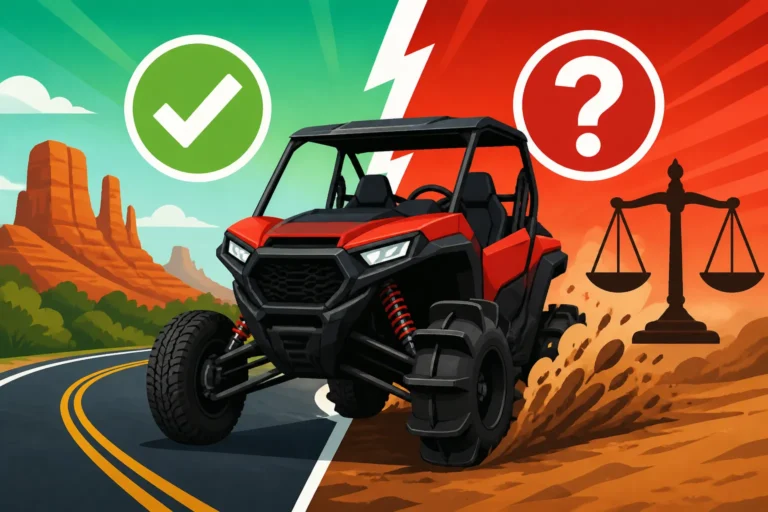
It's an amazing feeling to hit the open road on your street-legal ATV or UTV, cruising through a small Utah town on your way to the trails, or just running to the store for some ice. But that freedom comes with a different kind of responsibility, and a fair bit of anxiety for many riders. Nobody wants to be the one pulled over, suddenly unsure if their pride and joy truly meets all the requirements. This guide is here to take the guesswork out of it, detailing exactly what a Utah law enforcement officer is trained to look for when they spot your side-by-side or quad on public roads.
The Basics: Registration and Rider Essentials
When you're out there, whether on a remote county road or Main Street in a trail town like Moab, an officer's first glance often goes to the most basic legal requirements. Think of these as your "table stakes" for street legality – without them, everything else is just details. It’s not about catching you out, but ensuring everyone on the road is operating safely and legally. The last thing any of us wants is to have a fantastic ride cut short by a simple administrative oversight.
Proof of Registration and Decals
First and foremost, an officer is checking to make sure your machine is properly registered and that those little stickers are where they belong. We've all seen machines that are missing decals or have them flapping in the wind, and while it might seem minor, it's a quick visual cue for an officer to take a closer look.
Utah requires all OHVs operating on public land or roads to be registered. This isn't just about paying a fee; it's how the state keeps track of machines and, frankly, how it funds the very trails we all love to ride. When you get your registration, you'll receive a registration card and a decal. The registration card is what you need to carry with you – think of it as your OHV's ID. An officer will ask to see this, just like they would for a car. Having it tucked away in a secure, waterproof spot in your glove box or saddlebag makes for a smooth stop. As for the decal, it needs to be clearly displayed on the left side of your machine, typically towards the rear. For an ATV, that often means on the fender. For a UTV, it’s usually on the rear quarter panel, or sometimes on the frame near the rear wheel well, but always on the left. Make sure it's visible, not covered in mud, and securely affixed. [Utah OHV Decals and Where They Go] is a great resource if you're ever unsure about placement.
Sometimes, after a particularly muddy ride or years of sun exposure, those decals can start to fade or peel. It’s tempting to just let it go, but a faded or missing decal is an open invitation for an officer to initiate a stop. Taking a few minutes to check its condition before you head out, and getting a replacement if needed, can save you a whole lot of hassle. An officer's job is to ensure compliance, and a clear, current decal is the easiest way to show you're on the up-and-up right from the start.
Driver's License and Insurance
Just like driving a car, operating a street-legal OHV on Utah roads means you need to be a licensed driver. This isn't just a courtesy; it's a legal requirement that speaks to your competence behind the wheel. An officer will absolutely ask for your driver's license, so make sure it's valid and readily accessible. If you're a younger rider, or have a passenger who is, remember that specific age and license requirements apply. Generally, if you're driving on a public road, you need a valid driver's license. [Driver License Rules on Utah Roads] goes into more detail about who can operate these machines on public roadways.
Beyond your license, proof of insurance is also critical. While OHV insurance isn't always mandatory for trail riding in Utah, it absolutely is when you make your machine street legal and take it onto public roads. Just like a car, your street-legal UTV or ATV needs to carry liability insurance. This protects you and others in the event of an accident. An officer will expect to see proof of this insurance, usually an insurance card. Keep it with your registration card, perhaps laminated or in a waterproof pouch, to protect it from the elements. There's nothing more frustrating than having all your ducks in a row for street legality, only to realize you forgot the one piece of paper proving you're insured. Many riders add their street-legal UTVs to their existing auto policy, which can be convenient, but always double-check with your provider to ensure full coverage for road use.
Non-Resident Permits (if applicable)
For our friends visiting Utah from out of state, there's another crucial piece of paper an officer will be looking for: the non-resident OHV permit. Utah used to have reciprocity with other states, but that changed. Now, if your OHV is registered out of state and you plan to ride it on Utah's public lands or designated OHV routes – which includes riding on roads to access trails – you need to purchase a non-resident permit.
An officer, especially in popular OHV destinations like Moab, Sand Hollow, or along the Paiute Trail, is well aware of this requirement. They'll often check for this permit in addition to your out-of-state registration. It's a small fee to pay for the incredible access Utah offers, and it contributes directly to trail maintenance and other OHV programs. Make sure to purchase it online before your trip and have it printed out or digitally accessible. [The Utah Non-Resident OHV Permit Explained] covers everything you need to know about getting one. Getting pulled over for not having this permit can lead to a fine, which is definitely not how you want to start or end your riding vacation. It's an easy one to overlook if you're not a regular visitor, but it's essential for legal riding in our beautiful state.
Equipment Check: What Makes Your OHV Street Legal?
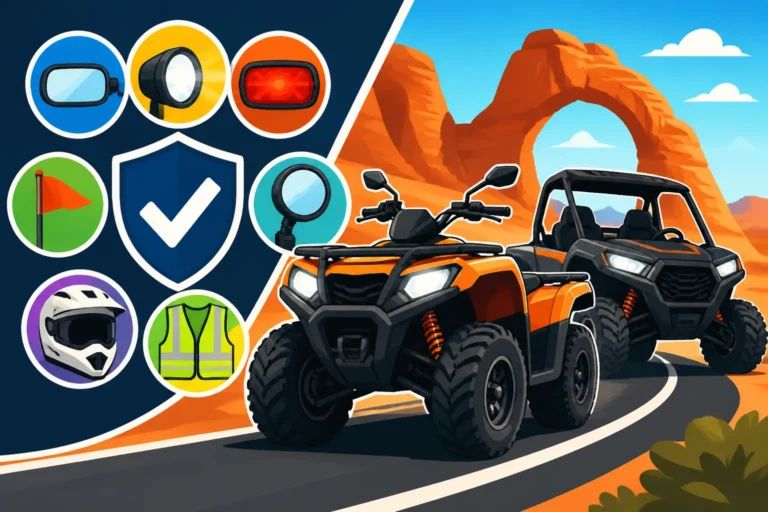
Once an officer confirms your paperwork is in order, their attention will quickly shift to the machine itself. This is where the rubber meets the road, literally, for your street-legal conversion. Utah has specific requirements for what equipment your OHV must have to be considered road-worthy, and these aren't just suggestions – they're laws designed for safety and visibility. Getting this right is about protecting yourself and ensuring you blend in with regular traffic, rather than sticking out for the wrong reasons.
Lighting and Reflectors
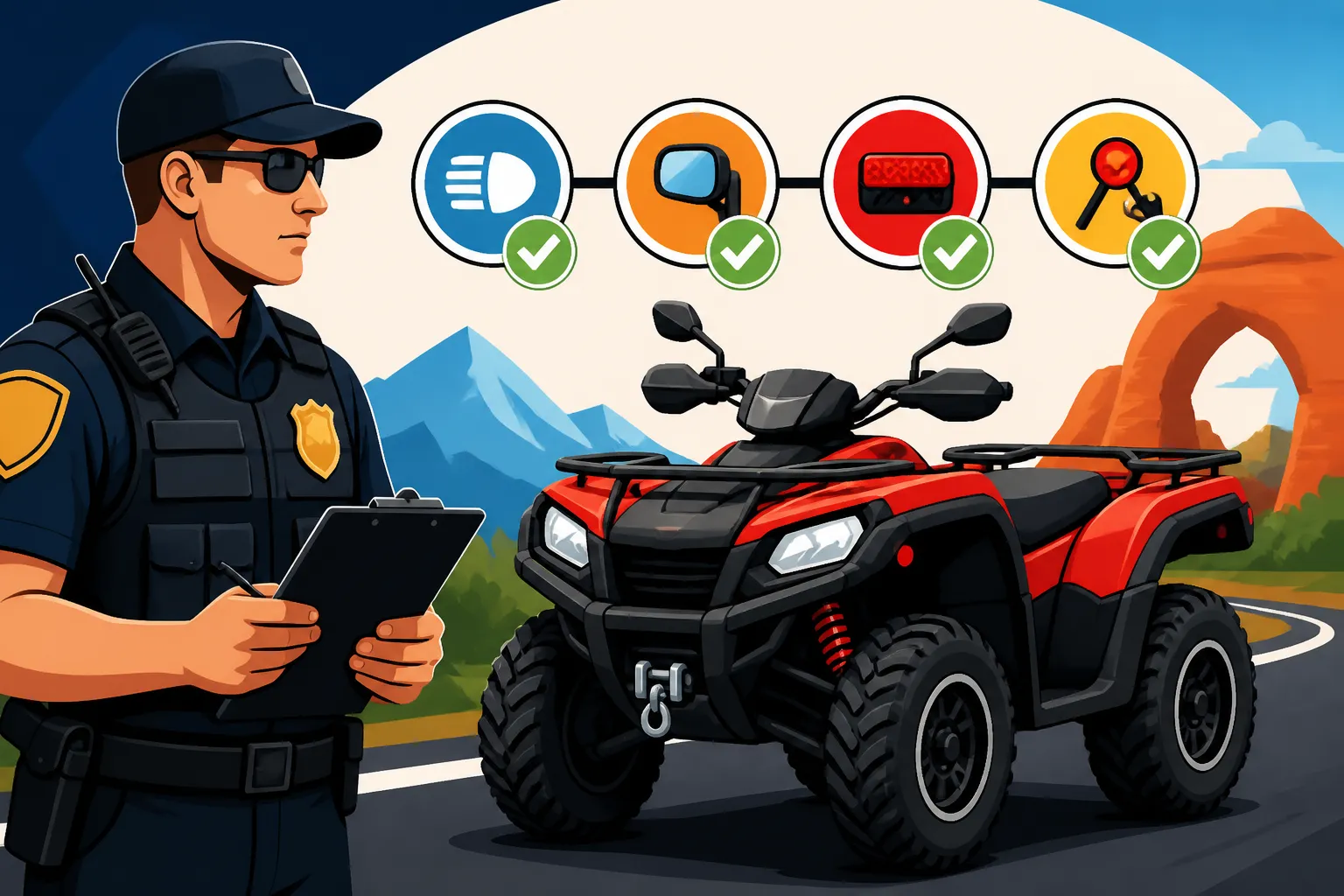
Visibility is paramount on public roads, and your OHV's lighting system is the first line of defense. An officer will be checking for a comprehensive and functional setup.
- Headlights: You need at least one, but most modern ATVs and UTVs come with two. They must be white or amber and illuminate the road effectively. An officer will likely check that they work on both high and low beam settings, if equipped.
- Tail Lights: Just like a car, you need at least one red tail light visible from the rear. This must be illuminated whenever your headlights are on.
- Brake Lights: These are crucial for signaling your intentions. You must have at least one red brake light on the rear that illuminates when you apply the brakes. Make sure it's bright and clearly visible, even in daylight.
- Turn Signals: This is a big one for street legality. You must have amber turn signals on both the front and rear of your machine. These need to flash distinctly and be visible from the front and rear respectively. Many street-legal kits, like those from SuperATV, include robust turn signal systems specifically designed to meet these requirements.
- License Plate Light: A small but important detail. Your rear license plate needs to be illuminated by a white light at night, making it visible from 50 feet away. This often comes integrated with aftermarket plate brackets.
An officer isn't just looking for the presence of these lights; they're looking for their functionality. A burnt-out bulb or a turn signal that isn't flashing can be grounds for a citation. Before every road-going trip, do a quick walk-around and test all your lights. It's a simple habit that can save you a lot of grief. [Headlights and Tail Lamps Utah Requires] provides a deeper dive into these specifics.
Mirrors, Horn, and Windshield/Eye Protection
These are the "seeing and being heard" components of your street-legal setup, all designed for situational awareness and safety.
- Mirrors: You need at least one rear-view mirror. Many riders opt for two, one on each side, for better visibility. These mirrors must be securely mounted and provide a clear view of the road behind you for at least 200 feet. A wobbly, cracked, or missing mirror is a definite red flag.
- Horn: A working horn is essential for signaling other drivers and pedestrians. It needs to be audible from 200 feet away, not just a little "meep." Most street-legal kits will include a horn, or you can add a universal one. An officer will likely give it a quick test to ensure it functions.
- Windshield or Eye Protection: Utah law states that if your OHV doesn't have a windshield, the operator and any passengers must wear eye protection. This could be goggles, a full-face helmet with a visor, or even safety glasses. Many street-legal UTVs opt for a full or half windshield for comfort and protection, but if you're running without one, make sure everyone in your party has appropriate eye protection. [Windshield or Eye Protection in Utah] outlines this rule further. This isn't just about avoiding a ticket; it's about keeping dust, bugs, and debris out of your eyes, which is crucial for safe operation.
Brakes, Tires, and Mufflers
These components are about the mechanical integrity and environmental impact of your street-legal machine. They are critical for both safety and maintaining good relations with the communities you ride through.
- Brakes: Your OHV must have fully functional brakes, both front and rear, capable of stopping the machine safely. This includes a parking brake that can hold the vehicle stationary on a grade. An officer might observe your braking performance or even do a quick visual check of brake lines and pads if they have concerns. Properly maintained brakes are non-negotiable for road safety. [Utah Brake Rules Beyond the Parking Brake] emphasizes the importance of this.
- Tires: The tires on your street-legal OHV need to be in good condition with adequate tread depth. While knobby off-road tires are perfectly fine, they shouldn't be excessively worn or damaged. More importantly, paddle tires are generally NOT allowed on public roads. These specialized tires are designed for sand and can be extremely dangerous on pavement, offering very little grip. If you're running paddle tires, you'll need to swap them out for road use.
- Mufflers and Noise Limits: This is an area that generates a lot of community complaints. Your OHV must be equipped with an adequate muffler to prevent excessive noise. It also needs a spark arrestor if it's operating on public lands. While a spark arrestor is primarily for fire prevention on trails, an officer might check for general noise compliance on roads. Utah, particularly in towns like Moab, has noise ordinances specifically targeting OHVs. If your exhaust is excessively loud, even if it's aftermarket, you could face a citation. Many street-legal riders opt for quieter exhaust systems or ensure their existing one meets legal sound limits to avoid drawing unwanted attention. [Moab's Noise Ordinance and What It Measures] provides context for local rules.
License Plate Mounting
This might seem like a small detail, but it's one of the first things an officer will look for from behind your machine. Your standard vehicle license plate, issued by the DMV for street-legal OHVs, needs to be securely mounted on the rear of your machine. It must be clearly visible, unobstructed by anything like spare tires, coolers, or flags.
The plate should be mounted horizontally, not vertically, and ideally in a location where it's not easily damaged by off-road excursions. Many street-legal kits, including those from SuperATV, offer specialized license plate brackets that include the required illumination. [License Plate Lights and Mounting in Utah] gives specific details on how this should be done. Having a neatly mounted, illuminated plate shows attention to detail and adherence to the rules, which goes a long way in an officer's eyes. A plate zip-tied in place, covered in mud, or bent beyond recognition is a quick way to get noticed for the wrong reasons.
Rider Conduct and Compliance: Beyond the Machine
Beyond the nuts and bolts of your machine, an officer is also observing how you operate it. Remember, once you're on a public road, you're expected to follow the same traffic laws as any other vehicle. This isn't just about avoiding a ticket; it's about ensuring safety for everyone on the road, including yourself, your passengers, and other drivers. The freedom of riding trails doesn't extend to disregard for road rules.
Speed Limits and Traffic Laws
This is probably the most common reason street-legal OHV riders get pulled over. Just because your UTV can go 70 mph doesn't mean it should on a 35 mph city street. Officers are keenly aware that many OHVs are capable of speeds far exceeding local limits, and they'll be watching for speeding. [What Utah's 50 mph Limit Means for Riders] is a crucial read here, as many specific OHV-friendly roads have unique speed restrictions.
Beyond speed, all other traffic laws apply. This means stopping at stop signs and red lights, using turn signals (which is why having them installed and working is so vital!), yielding the right of way, and following lane discipline. Weaving through traffic, cutting people off, or driving erratically will absolutely draw an officer's attention. Think of your OHV as a small car when you're on the road. The goal is to blend in, not stand out with aggressive or careless driving. In towns particularly, officers are often responding to citizen complaints about OHV traffic, so courteous and lawful driving is in everyone's best interest.
Helmet and Passenger Rules
Safety for all occupants is a significant concern for law enforcement, and specific rules apply to helmets and passengers.
- Helmets: In Utah, all OHV operators and passengers under 18 years old are required to wear a helmet, even on public roads. This rule applies regardless of whether the machine is street-legal or not. For riders 18 and older, a helmet is not mandatory on public roads if the machine is street-legal and has a windshield. However, if there's no windshield, eye protection is required for all ages, as discussed earlier. An officer will be looking to ensure that any minors are properly helmeted. [Utah Helmet Rules for Riders Under 18] provides more details. It's always a good idea, regardless of the law, to wear a helmet for your own safety; accidents can happen anywhere.
- Passengers and Seat Belts: Your OHV should only carry the number of passengers it was designed for, and everyone must be in a proper seating position. Crucially, all occupants in a street-legal UTV must wear seat belts if the vehicle is equipped with them. For ATVs, passengers are typically only allowed if the machine is specifically designed for more than one rider. An officer will check for overloaded machines or unbelted passengers, as these are significant safety violations. [Utah Seat Belt Rules for UTV Passengers] highlights these requirements. Children also have specific rules; generally, if a child cannot place their feet on the floorboards or grab handles, they may be too small for the machine.
Open Container and Cell Phone Use
These are two areas where OHV operators can easily fall afoul of general traffic laws.
- Open Container Laws: Utah has strict open container laws that apply to all motor vehicles, including street-legal OHVs, when operating on public roads. This means no open alcoholic beverage containers in the passenger compartment. This isn't just about drinking while driving; it's about the presence of an open container. While enjoying a cold beverage at the end of a long trail ride is a great way to relax, make sure any alcoholic beverages are sealed and stowed away properly before you get on a public road. A violation here can lead to a DUI charge, which is a very serious offense. [DUI Rules on an ATV in Utah] is essential reading for this topic.
- Cell Phone Use: Distracted driving laws also apply to OHVs on public roads. Using a handheld cell phone for texting or talking is generally prohibited. If you need to use your phone, pull over to a safe spot. While it might be tempting to snap a quick photo or check a map, doing so while moving on a public road can lead to a citation and, more importantly, can be dangerous. Hands-free devices are usually acceptable, but it's always best to keep your full attention on the road.
Common Pitfalls and How to Avoid Them
Even with the best intentions, it's easy to overlook a detail or make a mistake that brings you to an officer's attention. Understanding these common pitfalls can help you prevent them and ensure your street-legal OHV experience remains hassle-free.
Expired Registrations and Missing Decals
This is arguably the easiest and most frequently cited infraction for OHV riders. Life gets busy, and sometimes those renewal notices get lost in the shuffle. An officer will immediately notice an expired registration decal or a missing decal altogether. It’s a simple visual cue that your machine might not be legally road-worthy.
- How to avoid it: Mark your calendar for your registration renewal date. Utah often sends out renewal notices, but don't rely solely on them. Many DMV services now allow you to sign up for email or text reminders. When you receive your new decal, apply it immediately and correctly in the designated spot on the left side of your machine. Before every major ride, especially if it involves road travel, do a quick check of your decal to ensure it's still there and current. If your decal is damaged or lost, look into [Replacing a Damaged Utah OHV Decal] as soon as possible. It's a minor administrative task that saves you the headache of a roadside stop and potential fine.
Non-Compliant Equipment
The aftermarket world for OHVs is vast and exciting, offering all sorts of upgrades. However, not all aftermarket parts are street-legal, and some might even contradict Utah's requirements. This is where an officer's eye for detail comes into play.
- Lighting issues: Installing "cool" accent lights or light bars that aren't street-legal or using colored lights (like blue or red) that are reserved for emergency vehicles can quickly get you pulled over. All required lights must be white or amber for forward illumination, and red for rear tail/brake lights. Similarly, excessively bright off-road light bars should not be used on public roads.
- Muffler modifications: While a louder exhaust might sound aggressive on the trails, it can lead to noise violations on public roads, especially in cities with strict ordinances. If you've modified your muffler, ensure it still meets Utah's noise limits.
- Whip flags: These are excellent for visibility in dune areas like Sand Hollow or Little Sahara, but they are generally not required, nor always appropriate, for road use. An officer might not ticket you for having one, but it's another thing that can make your OHV stand out from typical road traffic.
- How to avoid it: When purchasing aftermarket parts for a street-legal conversion, always verify that they meet Utah's specific requirements. Many reputable companies, like SuperATV, offer complete street-legal kits designed to be compliant, taking much of the guesswork out of it. If you're unsure about a specific part, consult the Utah OHV guide or local DMV regulations. It’s far better to be proactive than to find out your cool new modification isn't road-legal during a traffic stop. [Street-Legal Kits That Suit Utah's Rules] can help guide your choices.
Aggressive Driving and Noise Violations
This isn't about the machine itself, but how it's operated. Street-legal OHVs, by their nature, often look and sound different from regular cars. This can sometimes lead to heightened scrutiny from both the public and law enforcement.
- Aggressive driving: Weaving through traffic, excessive acceleration or braking, peeling out, or general reckless behavior are sure ways to attract a patrol officer. Even if your equipment is perfect, unsafe driving will get you pulled over every time. Remember that OHVs can have different handling characteristics than cars, especially at higher speeds or during quick maneuvers. Drive defensively and predictably.
- Noise complaints: As mentioned earlier, noise is a big issue. Even if your muffler is technically legal, if you're revving your engine excessively or causing a disturbance, you could still be stopped. Many towns, particularly those that are popular OHV destinations, are sensitive to noise pollution and actively enforce ordinances.
- How to avoid it: Simple: drive respectfully. Treat your street-legal OHV like any other vehicle on the road. Be mindful of your speed, use your signals, and avoid drawing unnecessary attention to yourself. When passing through residential areas or small towns, keep your engine rpms low and your speed down. Being a good ambassador for the OHV community goes a long way in ensuring continued access to roads and trails.
Navigating a Traffic Stop with a Street-Legal OHV
No one enjoys seeing those flashing lights in their rearview mirror, especially when you're out having fun. But if it happens, knowing how to respond calmly and correctly can make the difference between a quick check and a prolonged, stressful encounter. Remember, an officer is primarily looking for compliance and safety.
What to Do When Pulled Over
Your first actions when an officer initiates a traffic stop are crucial. They set the tone for the entire interaction.
- Signal and Stop Safely: As soon as you see flashing lights or hear a siren directed at you, signal your intent to pull over and move to the right side of the road safely. Find a well-lit area if possible, and come to a complete stop. If you're on a trail leading directly to a road, try to get fully onto the paved surface if it's safe to do so.
- Turn Off Engine and Stay Seated: Once stopped, turn off your OHV's engine. If it's a UTV, keep your hands visible, preferably on the steering wheel. If it's an ATV, keep your hands on the handlebars. Do not attempt to get off your machine unless instructed to do so by the officer. This reduces any perception of threat and shows cooperation.
- Keep Your Hands Visible: This is standard advice for any traffic stop. Avoid sudden movements or reaching into pockets or compartments without first telling the officer what you're doing. A simple "Officer, my registration is in the glove box, may I reach for it?" is polite and helpful.
- Remain Calm and Respectful: An officer is just doing their job. A calm and cooperative attitude can de-escalate any tension. While it's natural to feel a little frustrated or nervous, remaining polite will serve you best.
Presenting Documents
Having your documents organized and easily accessible will make this part of the stop much smoother.
- Have Documents Ready: As the officer approaches, they will typically ask for your driver's license, vehicle registration, and proof of insurance. If you also need a non-resident permit, have that ready too. It's incredibly helpful if you keep these documents together, perhaps in a waterproof pouch in a glove box or a secure zippered pocket on your person. Fumbling around for several minutes while the officer waits is never ideal.
- Digital vs. Physical: While many states now accept digital proof of insurance, it's always safest to carry physical copies of all your documents when riding an OHV, especially on trails where cell service can be spotty. If you rely on a digital copy, ensure your phone is charged and accessible. [Carrying Digital Proof of Registration on the Trail] discusses the nuances of this.
- Only Provide What's Asked For: Hand over the requested documents without additional commentary unless asked. Avoid offering explanations or excuses immediately; save that for when the officer asks questions.
Understanding Potential Violations
During the stop, an officer will explain why they pulled you over. This could be anything from a burnt-out tail light to a perceived speeding infraction or a missing decal.
- Listen Carefully: Pay close attention to what the officer says about the reason for the stop and any potential violations. This is your opportunity to understand their concerns.
- Answer Questions Honestly: If asked questions, answer them truthfully and concisely. If you don't know an answer, simply say so.
- Inspection of Your Machine: The officer might perform a visual inspection of your OHV to check for compliance with street-legal equipment requirements. This is why it's so important to have everything in order before you hit the road. They'll look at your lights, mirrors, horn, plate mounting, and overall condition. They might ask you to demonstrate your turn signals or tap your brakes.
- Receiving a Warning or Citation: Depending on the infraction, an officer may issue a verbal warning, a written warning, or a citation (ticket). If you receive a citation, you'll be given instructions on how to address it, whether by paying a fine, fixing the issue and showing proof, or appearing in court. Remember, a citation is not an admission of guilt, but it does require a response.
Knowing what an officer is looking for on your street-legal ATV or UTV in Utah can turn a potentially stressful situation into a quick, uneventful encounter. By ensuring your paperwork is in order, your machine is properly equipped, and you're driving respectfully, you can enjoy the freedom of Utah's roads and trails with peace of mind.
Disclaimer
This article is for general informational purposes only and does not constitute professional advice. Laws, prices and regulations vary by location and change over time. Consult a qualified professional for guidance on your specific situation.