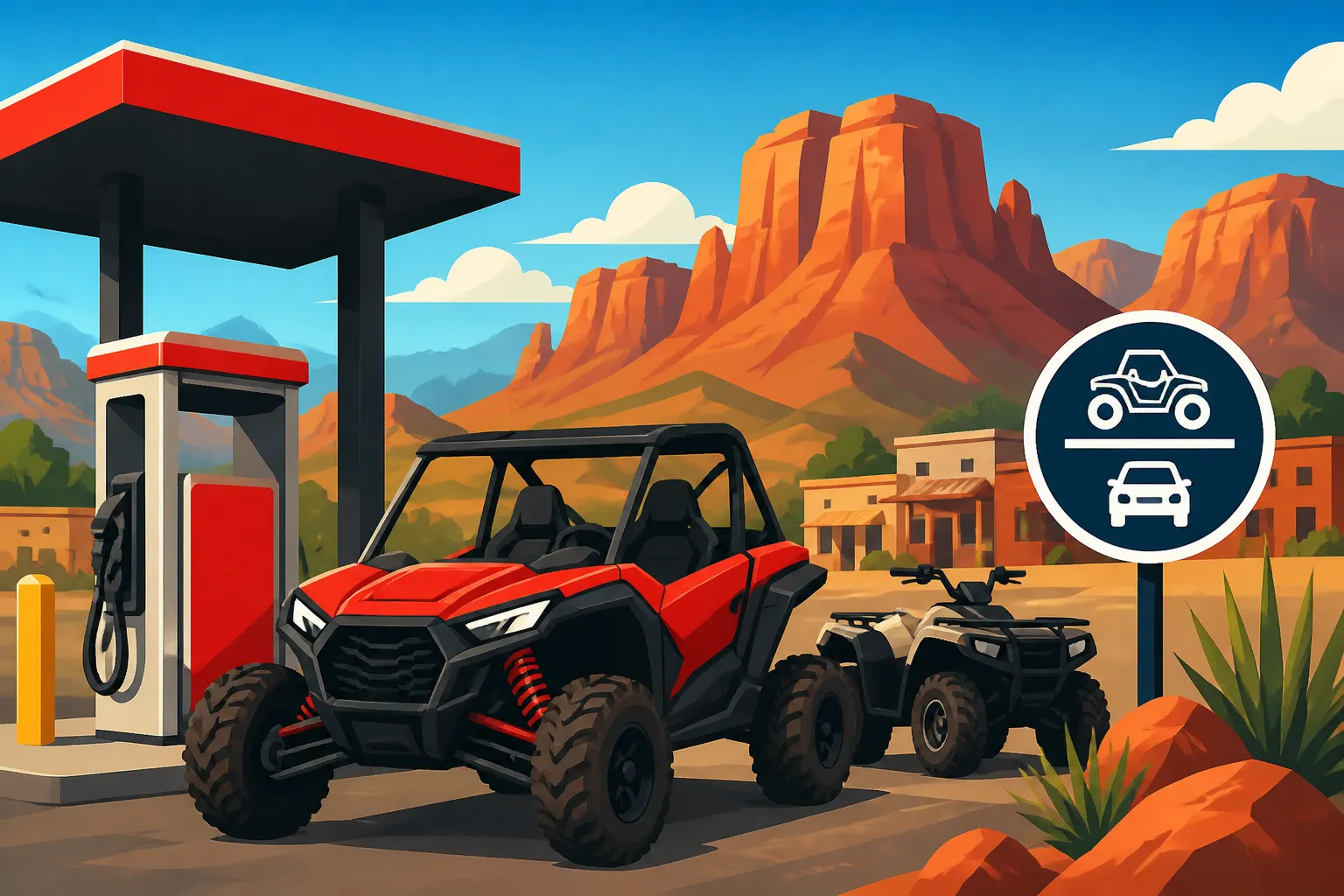
Fuel Stops and Parking in Utah Trail Towns
One of the biggest anxieties for any off-highway vehicle (OHV) enthusiast exploring the vast and rugged beauty of Utah is the dreaded "fuel light" flashing on when you're miles from the nearest town. It's not just about finding gas; it's also about where to safely and legally park your machine, especially if you're street-legal and want to cruise into town for a bite or supplies. This guide is all about equipping you with the know-how to confidently navigate fuel stops and parking in Utah's incredible trail towns, ensuring your adventures are powered and worry-free.
The Critical Importance of Fuel Planning for Utah OHV Adventures
Hitting the trails unprepared for fuel can quickly turn an epic day into a stressful ordeal. Utah's landscapes are vast and sometimes desolate, meaning that while trail towns exist, they aren't always conveniently located every 20 miles. Running out of gas is not just an inconvenience; it can be a safety issue, leaving you stranded in remote areas. Thoughtful fuel planning is as crucial as checking your tire pressure or packing enough water.
Understanding Your Machine's Range and Fuel Needs
Every OHV is different, and understanding your machine's unique fuel consumption characteristics is the first step in smart planning. A lightweight sport quad ripping across dunes will burn fuel differently than a heavily loaded utility UTV climbing steep mountain passes. Factors like engine size, payload, terrain, and even your driving style all play a significant role. If you've added aftermarket accessories, such as a heavy-duty SuperATV lift kit or larger, more aggressive tires, these can impact your fuel economy due to increased drag and rolling resistance.
It's wise to perform a few "range tests" on known routes or by simply observing your fuel gauge closely over several rides. Pay attention to how quickly that needle drops when you're tackling challenging terrain versus cruising on flatter sections. Many modern UTVs have digital fuel gauges and even range estimates, but these can be overly optimistic in real-world, off-road conditions. For example, if you're planning a multi-day trip on the extensive Paiute Trail, knowing you can reliably get 80 miles on a full tank, but the next fuel stop is 70 miles away, gives you a comfortable margin. However, if that 70 miles is all uphill or through deep sand, your actual range might plummet, putting you at risk. Always calculate your range conservatively, subtracting a safety buffer.
When and How to Carry Extra Fuel Safely
For those longer hauls between towns, or when you know you'll be exploring remote areas like sections of the [San Rafael Swell: Utah's Desert Maze] where gas stations are few and far between, carrying extra fuel is a necessity. This isn't just about throwing a red gas can in the bed of your UTV. Safety is paramount when transporting volatile liquids. Always use approved, purpose-built fuel containers like RotopaX or similar products designed for OHV use. These are typically robust, leak-proof, and designed to be securely mounted to your machine, preventing spills and reducing fire hazards.
When choosing extra fuel containers, consider their capacity versus the space on your machine. A 2-gallon container might be enough for a quick top-off, while a larger 4-gallon option could give you significant peace of mind on longer trips. Make sure the container is vented properly to avoid pressure buildup, especially with altitude changes, and always secure it tightly to a rack or mounting system. Never carry fuel inside the passenger compartment of your UTV. It's also a good practice to fill these secondary containers away from your machine, wiping up any spills immediately. Remember, carrying extra fuel isn't just for emergencies; it allows you to explore further, take detours, and simply worry less about making it to the next pump, enhancing the overall enjoyment of your ride. Don't forget to pack other essentials as well; you can get some ideas from [What to Carry on a Utah Day Ride].
Finding Fuel: Navigating Utah's Iconic Trail Towns
Utah's trail towns are unique, each with its own character and services. Knowing what to expect when it comes to fueling up in these popular destinations can save you time and frustration, especially during peak riding seasons when lines can be long.
Moab: Fueling Up in the Slickrock Capital
Moab is arguably Utah's most famous OHV destination, a true mecca for off-road enthusiasts. As such, it's generally well-equipped with gas stations. You'll find several major brand stations (Shell, Chevron, Exxon, etc.) primarily located along Main Street (Highway 191) as you drive through town. These stations typically have competitive prices and are accustomed to serving trucks, trailers, and OHVs.
However, during peak seasons – think Spring Break, Easter Jeep Safari, or the fall riding months – these stations can get incredibly busy. Long lines for pumps are common, and navigating a truck and trailer through crowded lots can be a challenge. If you're staying in Moab, it's often wise to top off your tank and any extra fuel containers the evening before a big ride, or early in the morning before the crowds descend. Some stations on the south end of town, closer to staging areas like Sand Flats Recreation Area, can be particularly convenient. After a dusty ride on Hell's Revenge, you’ll definitely be ready to clean up and fill up. You can learn more about riding here in [Riding Moab, Utah on a Side-by-Side].
Southern Utah Hubs: St. George, Hurricane, Kanab, and Marysvale
Southern Utah offers a diverse range of riding experiences, from the red sands of Sand Hollow to the epic vistas near Kanab. Each of these towns serves as a vital hub for fuel and supplies:
- St. George and Hurricane: These are larger cities that serve as gateways to areas like Sand Hollow State Park and Sand Mountain. You'll find an abundance of modern gas stations, including many truck stops and convenience stores, especially along I-15 and the main thoroughfares. Fuel here is typically easy to access, prices are competitive, and most stations can accommodate even large rigs. If you're planning on [Riding From Hurricane to Sand Mountain by Road], you'll have no trouble finding fuel right on your way.
- Kanab: Situated near Coral Pink Sand Dunes State Park and Hog Canyon, Kanab is a bustling tourist town that acts as a base for many southern Utah adventures. It has several gas stations along Highway 89, providing reliable fuel access. Like Moab, it can get busy during peak tourist seasons, but generally, you'll find less congestion than in Moab. Make sure to fill up before heading out towards [Getting From Kanab to Coral Pink], as options dwindle quickly once you leave town.
- Marysvale: As a central hub for the Paiute ATV Trail, Marysvale is a smaller, incredibly OHV-friendly town. It has a few gas stations, typically smaller operations, but they are absolutely essential fuel stops. The key here is that Marysvale, along with towns like Richfield and Beaver (also on the Paiute Trail), are strategically located. You must plan to fuel up in these towns because the next available gas station could be 50 miles or more down the trail, depending on your route on the vast Paiute. Always verify their operating hours, especially if you're riding late. Many small-town stations might close earlier than those in larger cities.
Fuel Accessibility in Smaller, More Remote Communities
Beyond the major hubs, Utah is dotted with numerous small towns and communities, especially along less-traveled routes or deeper within national forests. These places often have just one or two gas stations, which are lifelines for riders. The golden rule here is simple: "Don't pass a gas station." If you see a pump and you're below half a tank, fill up. Even if it seems a bit early, you never know when the next opportunity will arise.
These smaller stations might have limited operating hours, especially on weekends or during the off-season. Some might even be closed for lunch or have only one pump. It’s not uncommon to find a tiny general store in a place like Torrey or Loa with a single, older pump out front. While they may not have all the bells and whistles of a big city station, they provide crucial access. For example, if you're doing an extended loop on the Paiute Trail, knowing the options for [Fuel Stops Along the Paiute Loop] is vital. Always carry some cash, as smaller stations occasionally have issues with card readers or might be cash-only for certain services. Embrace the charm of these spots – they're often where you'll find the friendliest locals and some great snacks.
Parking Your OHV in Utah Trail Towns
Finding a place to park your OHV, and especially your truck and trailer, is often as big a challenge as finding fuel, particularly in popular and compact trail towns. Knowing the lay of the land and local regulations will help you avoid tickets and frustration.
Designated OHV Parking and Staging Areas
Many of Utah's premier riding areas and trail towns have recognized the need for specific OHV parking. These are your best bet for hassle-free parking, especially if you're not street-legal or prefer to unload directly at a trailhead.
- State Parks and Recreation Areas: Places like Sand Hollow State Park and Sand Flats Recreation Area (near Moab) have dedicated large parking lots, often designed to accommodate trucks with trailers. These usually require a day-use fee or a Utah State Parks Pass, but the convenience and security are often worth it.
- Town-Specific OHV Lots: Some trail-friendly towns, particularly those along the Paiute Trail like Marysvale and Richfield, have established specific lots for OHVs, sometimes right in the middle of town. These are often well-marked and offer easy access to local businesses. These are ideal for taking a break, grabbing a meal, or stocking up on supplies.
- Peripheral Staging Areas: In larger towns or popular spots, you might find designated staging areas just outside the main commercial zone. These allow you to unload your machine from your trailer and then drive (if street-legal) or ride directly to the trails or into town. Always check local maps and signage for these areas. For example, knowing [Trailhead Parking That Fits a Trailer] can save you a lot of headache. Pulling a large toy hauler with your SuperATV Polaris RZR, finding adequate space is key.
Street Parking Rules and Considerations
If your OHV is street-legal in Utah, the temptation to cruise right into the heart of a trail town and park like a car is strong. While this is often permissible, you must be aware of local street parking rules.
- Standard Parking Regulations: All standard vehicle parking rules apply to street-legal OHVs. This includes respecting "no parking" zones, fire hydrants, crosswalks, and residential parking restrictions.
- Time Limits: Many main streets in busy towns will have time limits (e.g., "2-hour parking"). These are enforced, and you can get a ticket if you overstay your welcome.
- Metered Parking: While less common for OHVs, some busier commercial districts, especially in larger cities like St. George or Salt Lake City's outskirts, might have metered parking. Always check signage carefully.
- Angle vs. Parallel Parking: Most OHVs are short enough to angle park in standard parallel spots, but always ensure you're not impeding traffic or blocking another vehicle.
- Residential Areas: Be mindful of parking in residential areas. While it might seem convenient, residents can quickly become frustrated by groups of OHVs parked outside their homes, especially if they block driveways or create congestion. Stick to commercial areas or designated OHV parking when possible. If you want to grab lunch in downtown Kanab, be sure you know where you can safely leave your side-by-side without getting a ticket. Learn more about [Parking a UTV on a Moab Street].
Trailer Parking: The Bigger Challenge
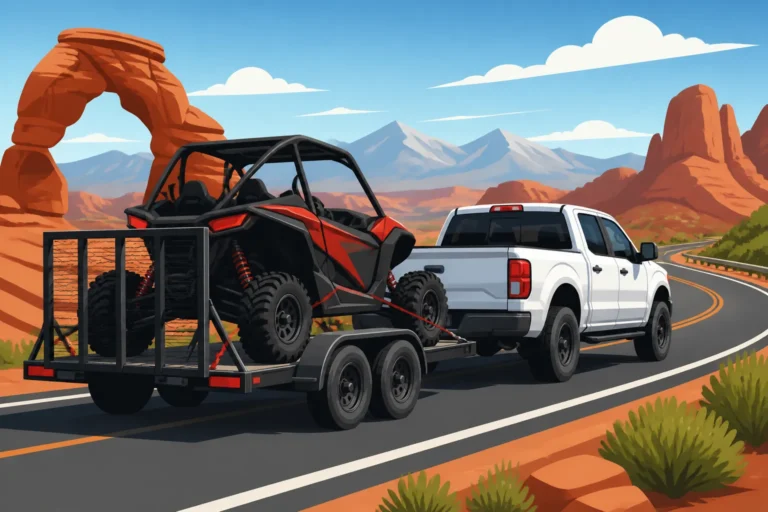
For riders who trailer their machines, parking the truck and trailer combination is often the biggest logistical hurdle. Many smaller towns or popular areas simply weren't designed for large rigs.
- Peripheral Lots: In towns like Moab, finding central trailer parking can be nearly impossible during busy times. You'll often need to look for larger, more peripheral lots, sometimes associated with hotels, campgrounds, or just empty dirt lots on the edge of town. Always confirm if trailer parking is allowed and if there are any fees.
- Hotel/Motel Parking: If you're staying overnight, ask your accommodation if they offer dedicated trailer parking. Many OHV-friendly hotels in towns like Marysvale or Richfield cater to riders and have ample space.
- Staging Areas as Base Camps: Sometimes, the best strategy is to park your truck and trailer at a designated trailhead staging area (like those at Sand Hollow) and then ride your street-legal machine into town. This avoids the hassle of maneuvering a large rig through tight streets.
- Private Business Lots: Some gas stations, restaurants, or hardware stores on the outskirts of towns might have large enough lots to accommodate trailers. It's always courteous to ask permission if you plan to leave your rig there for an extended period, and consider buying something from the business as a thank you. Arriving in Moab on a Saturday morning with your trailer, the main street will likely be packed, so knowing your options for parking before you arrive is essential.
| Town | Primary Trail Access | Fuel Availability (General) | Parking for OHVs (Street-Legal) | Trailer Parking (Ease/Challenge) | Notes |
|---|---|---|---|---|---|
| Moab | Slickrock, Sand Flats, Hell's Revenge | Good | Limited street, some paid lots | Challenging | Very busy, especially with trailers. Use peripheral lots. |
| Marysvale | Paiute Trail (Main Hub) | Moderate | Good, designated OHV lots | Easy | OHV-friendly, excellent for trailer parking. |
| Hurricane | Sand Hollow State Park, Sand Mountain | Excellent | Ample street & commercial lots | Easy | Gateway town, good infrastructure for large rigs. |
| Kanab | Coral Pink Sand Dunes, Hog Canyon | Good | Moderate street, some commercial lots | Moderate | Tourist town, can be busy, but generally manageable. |
| Richfield | Paiute Trail, Fishlake NF | Good | Good, typically less crowded street and general lots | Easy | Central hub, less congested than southern towns. |
| Loa/Torrey | Fishlake NF, Capitol Reef NP | Limited | Easy street parking | Moderate | Smaller towns, essential fuel/food stops. Limited services. |
Navigating Utah Trail Towns with a Street-Legal OHV
Having a street-legal OHV in Utah is a game-changer, allowing you to seamlessly connect trails, run errands, and explore towns. However, it's crucial to remember that you're now sharing the road with cars, trucks, and pedestrians, and all traffic laws apply.
Understanding City-Specific Traffic Laws and Speed Limits
While your street-legal OHV is technically a street-legal vehicle, it still has certain characteristics that differentiate it from a car, and local municipalities can add specific rules.
- All Traffic Laws Apply: This is the golden rule. Speed limits, stop signs, traffic lights, yielding to pedestrians, proper lane usage, and signaling turns are all mandatory. Just because you're on an OHV doesn't mean you can disregard them. Many riders get tickets for minor infractions that they wouldn't commit in their car.
- City-Specific Speed Limits: Pay very close attention to posted speed limits. While state highways might allow up to 50 mph for street-legal OHVs, many towns, like Moab, implement lower limits within their city limits, such as 15 mph on main streets. These are strictly enforced for safety and noise reasons. Always assume the lowest posted speed limit applies to you if you're unsure. You can get more details on [Moab's Speed Limit for OHVs on City Streets] and generally about [City and County OHV Rules Across Utah].
- Lane Positioning: Drive defensively and predictably. Your OHV might be smaller and less visible than a car. Maintain a safe distance from other vehicles and use your turn signals clearly.
- Passing: Only pass when it's safe and legal, just as you would in a car. Don't weave in and out of traffic or pass on shoulders.
Noise Ordinances and Respecting the Locals
One of the most common complaints from residents in trail towns is excessive OHV noise. While the roar of a powerful engine is part of the off-road experience, it's not always welcome in quiet neighborhoods or late at night.
- Mind Your Muffler: Ensure your exhaust system complies with Utah's noise regulations. Many aftermarket exhausts, even those from reputable companies like SuperATV, are designed for performance and might exceed legal limits if not specifically marked for street use. A loud exhaust can quickly draw negative attention from law enforcement and residents alike.
- Quiet Hours: Be extra mindful during early morning and late evening hours. Avoid revving your engine unnecessarily or doing "fly-bys" that create excessive noise. Cruising through a quiet neighborhood in Marysvale, you definitely don't want to wake up residents with a loud exhaust.
- Local Ordinances: Some towns, like Moab, have specific noise ordinances that measure decibel levels and carry fines for violations. Understand these rules before you ride. You can read up on [Moab's Noise Ordinance and What It Measures]. The future of OHV access in these towns depends heavily on respectful behavior from riders.
- Starting Up: If you're staying at a hotel or campground within town limits, try to start your machine and let it warm up quietly, especially before 8 AM. Push your machine to the edge of the lot if possible before firing it up.
Pedestrian Safety and Interacting with Other Vehicles
As an OHV driver on public roads, you have a heightened responsibility for safety, especially concerning pedestrians and other road users.
- Visibility: OHVs are generally smaller and sit lower or higher than typical passenger vehicles, which can make them less visible to drivers of cars and trucks. Drive defensively, assume others might not see you, and use your headlights and tail lights (even during the day) for maximum visibility.
- Pedestrian Zones: Be extremely cautious in areas with heavy pedestrian traffic, such as downtown shopping districts or near parks. Slow down, be prepared to stop, and always yield to pedestrians in crosswalks.
- Passing Pedestrians/Cyclists: When passing pedestrians or cyclists, give them a wide berth. Remember, your OHV might kick up dust or gravel, which can be unpleasant for those on foot or bicycle.
- Interactions: Maintain a polite and calm demeanor. If there's a misunderstanding with another driver or pedestrian, a friendly wave or nod can de-escalate tension much more effectively than an aggressive gesture. You can learn more about [Riding Through Town to the Trailhead in Utah] to understand how to integrate seamlessly. Navigating a busy intersection in St. George during peak shopping hours requires patience and awareness.
Etiquette and Responsible Riding in Utah's Trail Towns
Being a responsible OHV rider extends beyond simply following the rules; it's about being a good ambassador for the entire OHV community. Our collective actions directly impact public perception and future access to these incredible riding areas.
Supporting Local Businesses (and Why It Matters)
Utah's trail towns thrive on the tourism generated by OHV enthusiasts. By consciously supporting local businesses, you contribute directly to the economic well-being of these communities, which in turn fosters positive relationships and continued OHV access.
- Spend Locally: Fill your tank at local gas stations, grab your meals at local diners and restaurants, and pick up groceries and supplies from local stores. Instead of bringing everything from home, consider buying some items in town. This means the money stays in the community.
- Buy Souvenirs: Pick up a t-shirt, a magnet, or some local crafts. These small purchases add up and show your appreciation for the town's OHV-friendly stance.
- Be a Good Customer: Be polite, patient, and appreciative when interacting with local business owners and staff. Remember, they often work long hours to cater to visitors. A positive interaction goes a long way. Grabbing a burger at a local diner after a long ride, and genuinely thanking them for their OHV-friendly attitude, makes a difference.
Managing Dust and Trash
Off-road riding inherently generates dust and, unfortunately, some riders leave behind trash. However, being mindful of these two aspects dramatically improves the experience for everyone and prevents negative impacts on the environment and local communities.
- Dust Control: When driving through town, especially on unpaved roads or parking lots, drive slowly to minimize dust. Excessive dust can be a major nuisance to residents and businesses, coating cars, homes, and merchandise. Being considerate about dust, like what is discussed in [Dust Complaints on County Roads], goes a long way.
- Pack It In, Pack It Out: This mantra is not just for the backcountry; it applies equally to trail towns. Never litter. Use designated trash receptacles for all your waste, including things like empty water bottles, snack wrappers, and fuel container caps. If you can't find a trash can, take your trash with you until you can dispose of it properly at your camp or home. Leaving no trace, even when just passing through a small town, is paramount.
- Secure Your Load: Ensure all items in your OHV or on your trailer are securely fastened to prevent them from falling out and becoming litter on the roads.
Being a Good Ambassador for the OHV Community
Ultimately, every time you interact with a trail town, you are representing the entire OHV community. Your actions, positive or negative, contribute to the perception of riders.
- Courtesy and Respect: Treat locals, other visitors, and fellow riders with courtesy and respect. A simple wave, a friendly smile, and polite communication can create a positive impression.
- Follow the Rules: Adhere to all posted rules and regulations, whether they're traffic laws, parking restrictions, or specific trail rules. Ignoring them not only puts you at risk but also fuels arguments for restricting OHV access.
- Educate, Don't Confront: If you see another rider doing something inappropriate, consider politely educating them rather than confronting them aggressively. A friendly reminder about a local rule or etiquette point is often more effective.
- Pride in Your Machine: Keep your machine well-maintained and looking good. A clean, well-running OHV, perhaps with SuperATV accessories that enhance safety or utility like sturdy bumpers or lighting, presents a positive image, showing pride in your passion and respect for the areas you visit. A positive interaction with a local resident who sees you responsibly enjoying the area can make a lasting positive impression.
Disclaimer
This article is for general informational purposes only and does not constitute professional advice. Laws, prices and regulations vary by location and change over time. Consult a qualified professional for guidance on your specific situation.