Moab’s Noise Ordinance and What It Measures
Ah, Moab. Just the name conjures up images of endless red rock trails, challenging obstacles, and unforgettable adventures. It's a bucket-list destination for so many of us who love getting out on our ATVs and UTVs. But let's be real, riding in Moab also comes with its own set of concerns, and one of the biggest headaches I hear about from riders is the city's noise ordinance. Nobody wants to drive all that way, pay for lodging, and then get hit with a fine for their machine being too loud. This guide is all about breaking down what Moab's noise ordinance means for us riders, how it's actually measured, and what you can do to make sure your rig is trail-ready and city-friendly.
Understanding Moab's Noise Ordinance: Balancing Adventure with Community Life
It's no secret that Moab has become a global hot spot for off-roading. With that popularity comes a lot of traffic, both on and off the trails. While we riders absolutely love the roar of an engine, it's easy to forget that not everyone shares our passion for decibels. The noise ordinance in Moab isn't there to ruin our fun; it's a way for the city to manage the impact of increased tourism and recreational activity on the residents who call Moab home year-round. They're trying to find a balance, and part of that balance involves setting clear expectations for how loud our machines can be within city limits.
The "Why" Behind the Rules: More Than Just Noise Complaints
Think about it from a local's perspective. Imagine living in a quiet neighborhood, enjoying your backyard, and then suddenly hearing a constant parade of roaring engines. Over time, that kind of noise pollution can really wear on people. It affects their quality of life, their ability to enjoy their homes, and even how they perceive the off-road community as a whole. The ordinance stems from genuine complaints from residents who feel their peace is being disrupted. It's also about maintaining the overall atmosphere of Moab as a welcoming, enjoyable place, not just for visitors, but for those who live and work there every day.
These rules are a direct response to the growth of OHV tourism, especially the street-legal segment that brings our machines onto city streets. When ATVs and UTVs started becoming more prevalent on Main Street, it quickly became clear that something needed to be done to address the volume. It's not just about passing through; it's about the cumulative effect of hundreds, sometimes thousands, of machines circulating through town, especially during peak season. So, while it might feel like an inconvenience to us, it's actually a measure to help preserve the long-term viability of Moab as an OHV destination by fostering a better relationship between riders and residents.
Where the Ordinance Applies: City Limits and Specific Roads
It's super important to know that Moab's noise ordinance primarily applies within the city limits. This isn't something that's generally enforced out on the remote trails of the Bureau of Land Management (BLM) land or in the national forests, where the concerns are different and often focused on resource protection or specific wildlife corridors. But the moment you roll off the dirt and onto a paved city street, you're under the jurisdiction of Moab's municipal code. This means places like Main Street, the roads around your motel, and any paved access routes to trailheads are all fair game for enforcement.
Many riders, especially those new to street-legal riding, might not realize how quickly city rules can apply. You might think you're "just passing through" to get to a gas station or a restaurant, but you're still on city roads. This is why understanding [Riding Through Town to the Trailhead in Utah] is so crucial. The ordinance is really focused on those high-traffic areas where noise impact is greatest. Some specific areas might even have more stringent guidelines or particular enforcement efforts, especially if they are residential zones adjacent to popular routes. So, keep your ears, and your engines, tuned down when you're within Moab's urban footprint.
Decibel Limits and Enforcement: What Moab's Measuring
When it comes to noise, Moab, like many communities, uses a decibel (dB) limit to define what's acceptable. Now, I can't give you the exact decibel number that applies right this moment, because those kinds of specifics can change. Laws and ordinances are dynamic, and what was true last year might have been adjusted. What I can tell you is that the city aims for a level of quiet that significantly reduces the nuisance factor for residents. This generally means targeting machines that are noticeably louder than a typical passenger vehicle. The enforcement isn't usually arbitrary; it's based on specific measurement protocols.
How Sound is Measured: The Science Behind the Stop
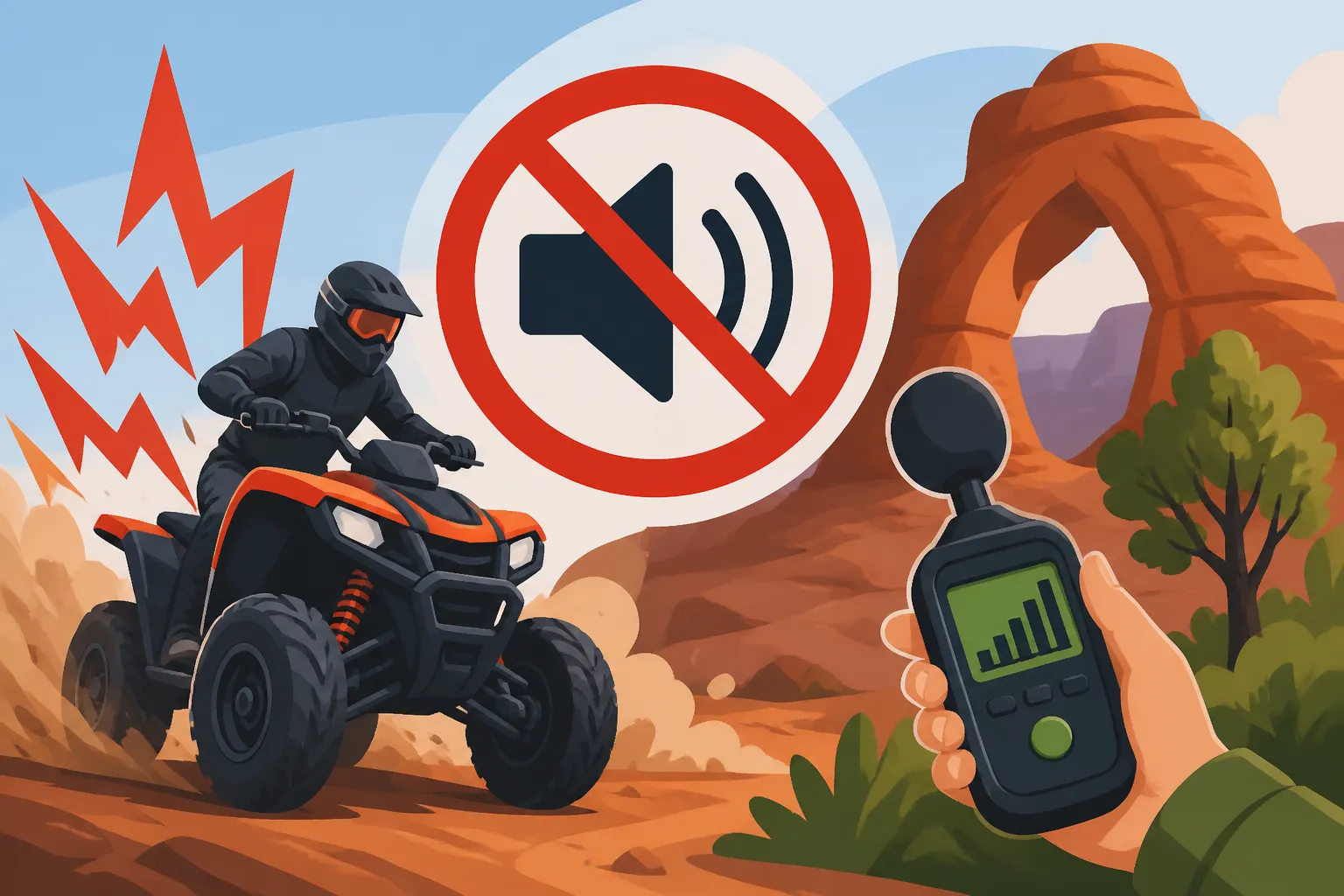
Police officers in Moab who are tasked with enforcing the noise ordinance often use specialized sound meters, also known as decibel meters. These aren't just random apps on a smartphone; they're calibrated devices designed to provide accurate readings. The measurement process typically involves specific parameters to ensure fairness and consistency. An officer might stand a certain distance away from your machine – often around 20 or 50 feet – and measure the sound level while your engine is running at a specific RPM (revolutions per minute). They're not just listening for a general "loudness"; they're looking for a quantitative reading.
This method helps standardize enforcement, so it's not just about an officer's subjective opinion. They might ask you to idle your machine or even rev it slightly to get a reading, depending on the specific enforcement rules they're following. It’s important to remember that things like background noise from traffic, wind, or even other OHVs can influence a reading, so officers are trained to conduct measurements in conditions that are as controlled as possible. Understanding [How Moab Measures OHV Noise] is key to appreciating why certain stops are made and how enforcement is carried out.
What an Officer Looks For: More Than Just the Meter
Beyond the scientific measurement, officers are also trained to recognize visual cues and common indicators of an overly loud OHV. A blaring exhaust note, especially one that crackles or pops excessively, is a dead giveaway. They'll also be looking at your machine for obvious modifications. If you've got a cut-open muffler, a straight pipe, or an aftermarket exhaust that simply isn't designed for street-legal quietness, it's going to attract attention.
Officers are generally looking for compliance with overall street-legal requirements too, so if your machine is excessively loud, it might prompt a closer look at other elements like your turn signals, mirrors, or even your license plate mounting. For example, if you're rocking a performance exhaust that looks like it belongs on a race track, it's highly likely to draw a second glance long before a decibel meter ever comes out. They know what stock machines sound like and what modified machines sound like, and they're looking for anything that clearly deviates from the norm. This is where getting informed about [What a Utah Officer Looks for on a Street-Legal ATV] can be really helpful.
Common Causes of Loud OHVs: Why Your Machine Might Be Raising Alarms
So, why are some OHVs so much louder than others? It often boils down to a combination of design, modification, and maintenance. Many ATVs and UTVs are designed first and foremost for off-road performance, where noise isn't as much of a concern. When these machines are then converted for street legality, their inherent loudness can become an issue, especially in urban areas like Moab.
Aftermarket Exhaust Systems: Performance vs. Quietness
The most common culprit for excessive noise is almost always the exhaust system. Many riders upgrade their stock exhaust for aftermarket versions that promise increased horsepower, better torque, and a more aggressive sound. While these "performance" exhausts can be fantastic for ripping through the dunes or climbing steep trails, they are often significantly louder than factory mufflers. They're designed to allow engine gases to escape more freely, which inherently creates more sound.
The problem arises when these performance exhausts are brought into a street-legal environment. What sounds "cool" or "powerful" on the trail can quickly become "obnoxious" or "illegal" on city streets. Many aftermarket systems simply don't have the baffling or sound-deadening materials that stock systems do, or that are required by noise ordinances. Riders need to be incredibly mindful of the balance between performance gains and noise output, especially if they plan to ride in noise-sensitive areas.
Baffling and Spark Arrestors: Their Role in Noise Reduction
Factory exhaust systems come equipped with internal baffles—a series of plates or chambers designed to route and diffuse exhaust gases, which in turn reduces sound. Many aftermarket performance exhausts either have minimal baffling or eliminate it entirely for maximum flow. A spark arrestor, which is legally required for off-road use on public lands to prevent wildfires, also plays a minor role in noise reduction by creating a small amount of back pressure. However, its primary function is safety.
If your spark arrestor is removed or modified, it can contribute to a louder exhaust note, in addition to being illegal on public lands. Riders sometimes remove baffles or spark arrestors in search of more power or a different sound, unknowingly making their machine non-compliant with noise regulations. It's crucial to ensure these components are intact and properly maintained if you want to keep your machine's noise level down. If you're looking at aftermarket options, always check if they're "trail legal" or "street legal" which often implies a certain decibel rating and proper spark arrestor.
Engine Type and Condition: More Than Just the Muffler
While the exhaust system is usually the main factor, the engine itself can also contribute to overall noise. Older machines, especially those with two-stroke engines, tend to be inherently louder than modern four-stroke engines, even with a stock exhaust. Two-strokes have a distinct, often higher-pitched whine and a more percussive exhaust note. Additionally, an engine that isn't running optimally – perhaps due to worn components, an improper tune, or loose engine mounts – can create excessive mechanical noise, vibrations, and rattling that add to the overall sound signature.
Regular maintenance is key. A well-tuned engine, with all its parts securely fastened and running smoothly, will generally be quieter than one that's neglected. This means checking things like valve clearances, exhaust manifold gaskets, and even ensuring your skid plates aren't rattling loose. Sometimes, riders focus solely on the exhaust, forgetting that other aspects of their machine’s condition can contribute to the noise problem.
Ways to Quiet Your Machine: Enjoying Moab Without the Fine
The good news is that if your machine is a little on the loud side, you're not doomed to get a ticket in Moab. There are several effective strategies you can employ to bring your OHV's decibel levels down to a more acceptable range, allowing you to enjoy the city and trails responsibly.
Choosing a Quieter Exhaust: Stock, Aftermarket, and Inserts
The most impactful change you can make is to your exhaust system. If your current aftermarket exhaust is clearly too loud, consider swapping it out for a stock muffler. Factory exhausts are designed to meet specific noise regulations and are usually the quietest option. If you're unwilling to go full stock, many aftermarket companies, like SuperATV, offer "quiet core" inserts or specially designed mufflers that reduce noise while still providing some performance benefits. These are often a great compromise, allowing you to customize your machine without becoming a nuisance.
When researching exhaust options, look for systems that explicitly state they are "trail legal" or meet specific sound ratings. Some performance exhaust manufacturers even provide decibel ratings for their products, so you can make an informed choice. It might be an investment, but avoiding a fine and being able to ride comfortably in noise-sensitive areas is well worth it. You might also find that simply replacing worn-out packing in your existing muffler can make a significant difference.
Adding Sound Dampening: Beyond the Exhaust
While the exhaust is primary, you can also reduce overall machine noise through various sound-dampening techniques. Installing sound-deadening mats or sprays in strategic areas of your UTV, such as under the seats, in the firewall, or on floorboards, can help absorb engine and drivetrain noise before it reaches your ears, and by extension, the outside world. These materials are designed to reduce vibrations and muffle sounds, making the cabin quieter for you and potentially reducing the perception of noise from outside.
Think about areas where engine noise and vibrations resonate. Some riders even add material to their plastics or inner fenders. While this won't change your exhaust note, it can reduce the overall "racket" of your machine, which contributes to the perception of loudness. Companies that specialize in automotive sound deadening often have products that are suitable for OHV applications.
Regular Maintenance: A Quieter, More Efficient Ride
Never underestimate the power of good maintenance. A well-maintained engine runs more efficiently and typically generates less noise. This includes:
- Tightening Loose Components: Rattling skid plates, exhaust heat shields, or body panels can add a surprising amount of noise. Do a thorough check for any loose bolts or worn grommets.
- Exhaust Gaskets and Springs: Leaks in your exhaust system, especially at manifold connections or where pipes join, can create a loud, popping sound. Replace old or cracked gaskets and check your exhaust springs if applicable.
- Engine Tuning: An engine running rich or lean can misfire or have excessive backfiring, both of which are loud. Ensure your fuel system and ignition are properly tuned.
- Lubrication: Well-lubricated moving parts are quieter. Check bearings, joints, and suspension components for proper greasing.
Taking the time to address these maintenance items can often quiet down a noisy machine more than you'd expect, and it has the added benefit of improving performance and reliability. It's a win-win for both your machine and your peace of mind in Moab.
Navigating Moab Safely and Legally: Your Guide to a Smooth Ride
Once you've got your machine's noise levels in check, the next step is understanding how to behave as a responsible rider within Moab's city limits. It's not just about the decibels; it's about your driving habits and your awareness of your surroundings.
Respecting Designated Routes: Stay on Street-Legal Roads
Moab has done a fantastic job of integrating OHV access into its road network, allowing us to get from our lodging to the trailheads via designated routes. However, not all city streets are open to OHVs. It's crucial to stick to the roads where street-legal machines are permitted. Venturing onto a restricted street, even for a short distance, can not only lead to a ticket but can also further strain the relationship between the OHV community and residents. Always consult [Moab's Speed Limit for OHVs on City Streets] and local maps to ensure you're on a legal route.
Remember, the privilege of riding street-legal comes with the responsibility of following the rules of the road. This means obeying all traffic laws, including speed limits, stop signs, and traffic signals. You're sharing the road with cars, trucks, bicycles, and pedestrians, so defensive driving and courtesy are paramount. The more seamlessly we blend into the traffic flow, the less we stand out as a "problem."
Driving Habits: Lower RPMs and Avoiding Aggressive Acceleration
Even with a quieter exhaust, how you drive your machine makes a huge difference in its perceived loudness. Aggressive acceleration, especially from a dead stop or when passing, will invariably rev your engine higher and produce more noise. Think about it: a stock UTV driven aggressively can still be louder than a mildly modified one driven gently. When you're in town, keep your RPMs low, accelerate smoothly, and use your engine braking rather than downshifting aggressively.
Imagine you're driving a regular car through a residential neighborhood. You wouldn't floor it, right? Apply the same logic to your OHV. Coast when you can, maintain a steady speed, and be mindful of residential areas where people are most sensitive to noise. Your goal should be to be as unobtrusive as possible while you're within city limits. This respectful approach goes a long way in showing that OHV riders are considerate community members.
Dealing with a Stop: What to Expect if Pulled Over
If you do get pulled over in Moab for a noise violation or any other reason, it's essential to handle the situation calmly and respectfully. Pull over safely, turn off your engine if requested, and keep your hands visible. An officer will likely explain why they stopped you and may ask for your registration, driver's license, and proof of insurance. Having your paperwork in order, as discussed in [What Paperwork Utah Riders Must Carry], will make the process smoother.
If the stop is for a noise violation, the officer might conduct a decibel test on the spot. Cooperate with their instructions, even if you disagree with the assessment. Arguing or being confrontational will not help your situation. You'll have an opportunity to present your case later if you receive a citation. Remember, officers are just doing their job, enforcing local ordinances designed to keep the peace. A polite and cooperative attitude, even when facing a potential fine, will always serve you better.
Here's a quick comparison of loud vs. quiet OHV characteristics:
| Characteristic | Loud/Non-Compliant OHV | Quiet/Compliant OHV |
|---|---|---|
| Exhaust System | Aftermarket performance, straight pipe, no baffles | Stock, quiet-core aftermarket, proper baffling |
| Spark Arrestor | Removed or modified | Intact and properly maintained |
| Engine Noise | Excessive rattling, misfires, poor tune | Smooth running, well-tuned, no excessive vibration |
| Driving Style | Aggressive acceleration, high RPMs, heavy throttle | Smooth, low RPMs, gentle acceleration, coasting |
| Sound Dampening | Minimal or none | Added mats, sprays, tight body panels |
| Officer Reaction | Draws immediate attention, likely stop and test | Blends into traffic, less likely to be noticed |
| Potential Outcome | [Fines for a Loud UTV in Moab], citation | Smooth passage through town, positive community view |
Beyond the Ordinance: Being a Good Trail Citizen
While complying with the letter of the law is crucial, being a truly good trail citizen in Moab, and anywhere else for that matter, goes beyond just the noise ordinance. It's about fostering a positive image for the entire OHV community.
Community Relations: The Importance of Perception
Our actions on the trails and in town significantly shape how the general public and local residents perceive off-road enthusiasts. Every time a rider acts irresponsibly—whether it's by being too loud, tearing up unauthorized land, or speeding through town—it creates a negative impression that affects all of us. Conversely, every time we ride respectfully, adhere to rules, and show courtesy, we build goodwill. This goodwill is incredibly important for ensuring continued access to the amazing trails and roads we cherish.
Think of it as protecting our playground. If we want Moab to remain open and welcoming to OHVs, we need to show that we can be responsible visitors. This means being mindful of your speed, avoiding unnecessary revving, and respecting private property, even if you're just driving past. It’s about being an ambassador for the sport, demonstrating that we care about the environment and the communities we visit.
Planning for a Quiet Ride: Picking Trails and Timing
When planning your Moab adventure, consider the noise factor even before you arrive. If you know your machine is on the louder side, perhaps plan your route through town during less busy times of day, or aim to stay at lodging that's a bit further from the main residential areas. Explore [Quiet Exhaust Options for Utah Trips] well in advance. Some riders even plan their departure to the trails earlier in the morning or later in the evening to avoid peak pedestrian and local traffic in town.
You might also consider which trails you plan to ride. While the noise ordinance is a city rule, choosing trails that are farther removed from residential zones or staging areas can reduce overall impact. Ultimately, a little proactive planning and conscious effort can make a world of difference, not just for avoiding fines, but for ensuring that future generations of riders can continue to enjoy the unparalleled beauty of Moab.
Disclaimer
This article is for general informational purposes only and does not constitute professional advice. Laws, prices and regulations vary by location and change over time. Consult a qualified professional for guidance on your specific situation.