Buying in Nevada to Avoid Utah Sales Tax
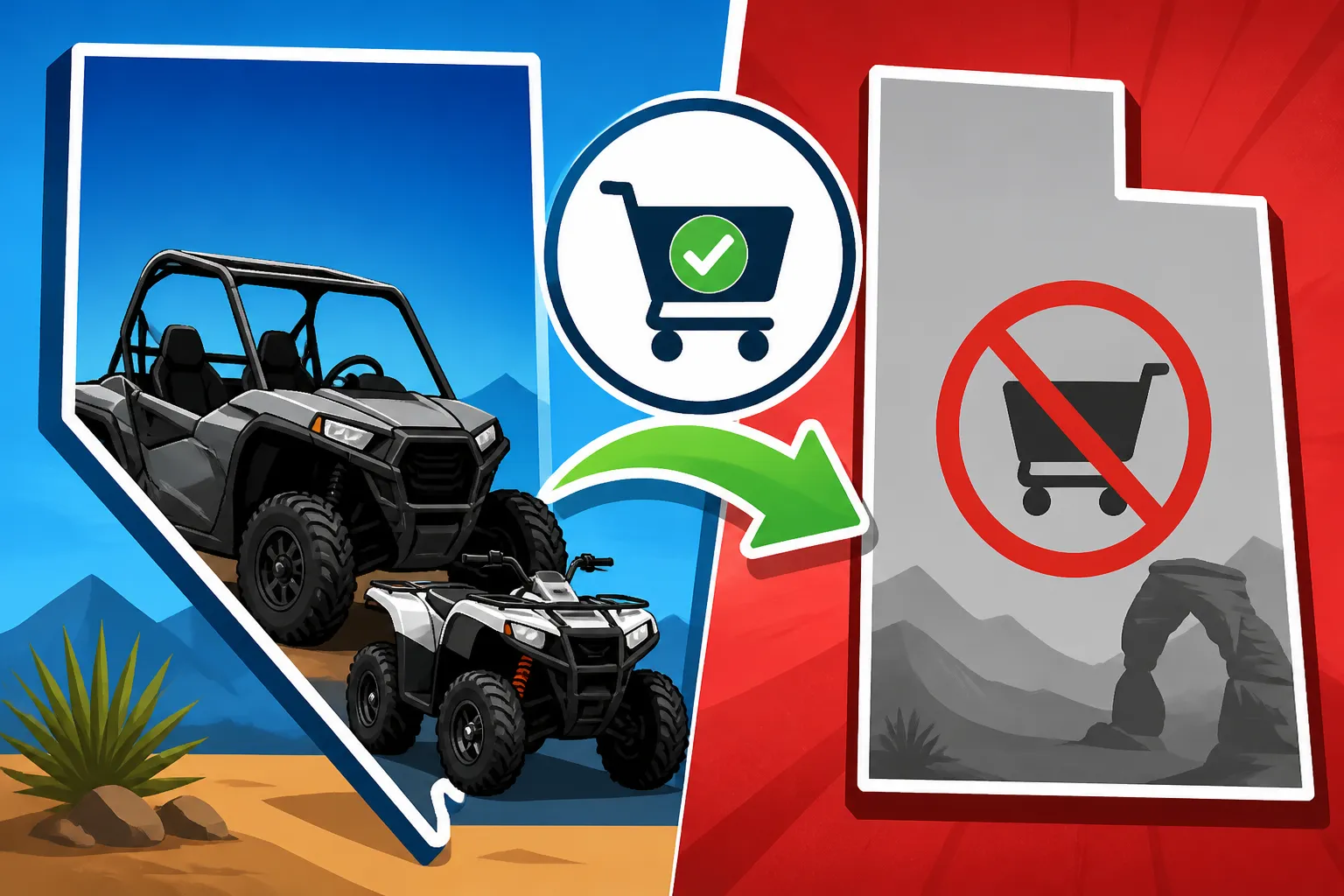
It's a common thought that crosses many riders' minds: "If I buy my ATV or UTV out of state, say in Nevada where the sales tax might be different or even seem avoidable, can I bypass Utah's sales tax when I bring it home?" It sounds like a clever workaround, doesn't it? The idea of saving a chunk of change on a big purchase is always appealing. But here in Utah, the laws around registering off-highway vehicles (OHVs) are pretty clear, and unfortunately, trying to skirt the sales tax by purchasing across state lines usually doesn't pan out the way you might hope. This guide is here to unravel the reality of buying an OHV in Nevada and bringing it back to Utah, explaining exactly what you can expect at the DMV and why that sales tax often catches up with you.
The Illusion of Avoiding Utah Sales Tax by Buying Out of State
Let's be real – nobody wants to pay more taxes than they have to. When you're looking at a shiny new (or new-to-you) side-by-side or quad, the sales tax can add hundreds, if not thousands, to the final price. It's completely understandable why someone would look at neighboring states with potentially lower sales tax rates, or even different registration systems, and wonder if there's a loophole. Nevada, with its proximity and often different tax structures, is a frequent candidate for this line of thinking.
How Utah's Sales Tax Rules Work for Vehicles
The core issue here is something called "use tax." While many people are familiar with sales tax, which is levied at the point of purchase, use tax is essentially the same thing but collected when you use or register an item in a state where you didn't pay the equivalent sales tax. Think of it this way: Utah wants its fair share for any vehicle that's going to be used on its trails and roads, regardless of where it was originally purchased.
So, when you buy an ATV or UTV in Nevada, you might pay Nevada's sales tax, or if it's a private sale, you might not pay any sales tax at all at the moment of exchange. This is where the illusion begins. You drive your new machine home, feeling good about your purchase, perhaps even thinking you've saved a significant sum. However, the moment you bring that machine to the Utah Division of Motor Vehicles (DMV) to get it properly registered and titled, Utah's use tax comes into play. The DMV isn't just checking to see if you own the machine; they're also ensuring that all applicable taxes have been paid to the state of Utah. If Nevada's sales tax was less than Utah's, or if no sales tax was collected at all, Utah will collect the difference or the full amount of its use tax. There's no escaping it if you intend to legally ride your machine in the Beehive State.
The Moment of Truth: Registering Your OHV in Utah
This is where the rubber meets the road, or rather, where your paperwork meets the DMV counter. When you present your out-of-state bill of sale and title (if applicable) for a machine purchased in Nevada, the Utah DMV representative will meticulously review your documentation. Their primary goal, beyond verifying ownership, is to ensure that Utah's sales or use tax has been applied.
They'll look at the purchase price listed on your bill of sale. If you paid sales tax in Nevada, and you have proof of that payment (often noted on the bill of sale or a separate receipt from the dealer), they'll compare that amount to what Utah would have charged. If Nevada's rate was lower, you'll be required to pay the difference. If it was a private party sale in Nevada and no sales tax was collected there, Utah will then calculate and collect the entire use tax based on the purchase price you declared, or an assessed value if the price seems unusually low or is missing. It's a mandatory step in the registration process, and your machine won't get its Utah registration or title until this is settled. Many riders have walked into the DMV, excited to finalize their new machine's paperwork, only to be surprised by an unexpected tax bill. It's an important reminder that simply buying elsewhere doesn't change Utah's financial requirements for its residents. For more details on this, you might find [Buying an ATV Out of State and Registering It in Utah] helpful.
What the Utah DMV Looks For When You Register an Out-of-State Purchase
The Utah DMV has a specific checklist they go through when you're trying to register an OHV that was purchased outside the state. Their process is designed to prevent fraud, ensure proper ownership transfer, and, yes, collect those all-important taxes and fees. Understanding what they're looking for can help you be better prepared and avoid frustrating delays.
Key Documents and Information Needed
When you visit the DMV, whether it's one of the offices listed in [Which Utah DMV Offices Handle OHV Paperwork] or another, you'll need to come armed with several crucial pieces of documentation. The most critical among these, especially for sales tax purposes, is a comprehensive bill of sale. This document needs to clearly state the seller's name and address, your name and address, the vehicle identification number (VIN) of the OHV, the date of sale, and, perhaps most importantly for the tax calculation, the agreed-upon purchase price. Without a clear purchase price, the DMV may need to assess the value of the machine themselves, which might not always align with what you actually paid. For a private sale, a detailed bill of sale is paramount. Sometimes, sellers from other states might not provide a very robust one, or you might create one yourself. In such cases, online legal document services like LawDepot can be incredibly useful for generating a professional, legally compliant bill of sale that includes all the necessary fields, helping ensure a smoother transaction at the DMV. This document is the cornerstone for demonstrating both ownership transfer and the declared value for tax purposes. You'll also need the original title, if the machine was titled in Nevada. [How Utah Handles a Title From Another State] can offer specific guidance on transferring titles from other jurisdictions. And, of course, a VIN inspection is typically required to verify the machine's identity, especially for out-of-state vehicles.
Calculating the Sales/Use Tax
The DMV's job is to ensure Utah receives the correct sales or use tax. If your bill of sale clearly shows the purchase price and any sales tax paid in Nevada, they'll use that information. However, if the bill of sale is missing, incomplete, or if the declared purchase price appears unusually low (which can happen if a seller tries to "help you out" by writing a lower amount), the DMV has procedures to assess the vehicle's fair market value. They might use industry guides, online valuation tools, or their own internal databases to determine a reasonable value for a machine of that make, model, year, and condition.
This assessed value is then used to calculate the Utah sales tax rate. It's a fixed percentage of the vehicle's value. If the DMV has to assess a value that is higher than what you actually paid, you might end up paying more tax than you anticipated, simply because your documentation wasn't clear. This is why having a strong, detailed bill of sale, perhaps one created with assistance from a service like LawDepot, is so vital. It provides clear, undeniable proof of the transaction terms and the actual price paid, leaving less room for interpretation or re-evaluation by the DMV. Be prepared to pay the difference if you paid less tax in Nevada than Utah requires, or the full amount if no sales tax was collected at all during the purchase.
Navigating the Paperwork: Tips for Out-of-State Buyers
So, the dream of completely avoiding Utah sales tax by buying in Nevada might be busted, but that doesn't mean you can't make the process of registering your out-of-state OHV as smooth as possible. Good preparation and solid paperwork are your best friends here.
Ensuring a Solid Bill of Sale
A well-crafted bill of sale is your shield and sword when dealing with the DMV, especially for a private party sale. When you're buying from an individual in Nevada, they might not be as rigorous with paperwork as a dealership. It's crucial that the bill of sale isn't just a handwritten note on a napkin. It needs to be professional and complete. Here’s what it absolutely must contain:
- Seller Information: Full legal name, address, and contact details.
- Buyer Information: Your full legal name, address, and contact details.
- Vehicle Information: Make, model, year, and the full Vehicle Identification Number (VIN). Double-check this against the machine itself to ensure accuracy.
- Purchase Price: Clearly state the agreed-upon price in numerical and written form. This is critical for tax calculation.
- Date of Sale: The exact date the transaction occurred.
- Signatures: Both the seller's and your signature.
A detailed bill of sale clarifies the terms of the sale and helps prevent any disputes later on. If the seller doesn't have a standardized form, don't hesitate to use a reputable online template. Services like LawDepot offer user-friendly templates for bills of sale that cover all the legal essentials and can be customized quickly. Having a high-quality document like this from the outset can save you headaches and potential delays at the Utah DMV. It helps the DMV easily verify the transaction details and calculate your use tax without needing to guess or initiate further scrutiny. For more guidance on this, see [Bill of Sale Requirements for a Utah ATV Sale].
Dealing with Titles and Registrations from Other States
Titles and registration processes vary significantly from state to state. Nevada's system might be different from Utah's, and understanding these nuances is important. For example, some older machines, or those below a certain engine size, might not be titled in Nevada but would still need to be registered in Utah.
When you purchase an OHV in Nevada, verify with the seller if the machine has a title. If it does, ensure you receive the original, properly signed-over title at the time of sale. The seller's signature must be precisely placed according to the title's instructions. If the machine was never titled in Nevada, you'll need to follow Utah's procedure for [Registering a UTV in Utah Without a Title] or older machines that may not have come with a title. Always run the VIN to check for any outstanding liens or theft records before you finalize the purchase; this can be an absolute lifesaver. When you get to the Utah DMV, they will process the out-of-state title to issue a new Utah title and registration. Having all your ducks in a row with the title, or clear documentation if no title was issued, will significantly expedite your registration process here in Utah. Remember, the DMV agents have seen it all, and clear, complete paperwork is what they appreciate most.
Understanding the Cost of Ownership Beyond Sales Tax
While the focus of buying out of state is often on avoiding sales tax, it's crucial to understand that Utah has other mandatory costs associated with OHV ownership. These fees are unavoidable, regardless of where you bought your machine, and they contribute to maintaining the incredible trail system we enjoy.
Utah's Uniform Fee and Other Charges
Beyond sales or use tax, Utah assesses a "uniform fee" on OHVs. This fee is calculated based on the age and value of your machine, similar to how property taxes are assessed on other vehicles. So, a newer, more expensive UTV will typically incur a higher uniform fee than an older, less valuable ATV. This fee is paid annually or biannually along with your registration. It's not a "tax" in the traditional sales tax sense, but it is a mandatory charge for ownership.
You'll also pay an annual or biennial registration fee, which helps fund the Utah State Parks OHV program, including trail maintenance, signage, and enforcement. When you add up the uniform fee and the registration fee, plus any potential county fees that might apply in your specific area, the total can be a noticeable amount on top of the initial purchase price and sales/use tax. This is all part of getting your [Utah OHV Registration Fees, Start to Finish] handled. These are costs that every Utah OHV owner pays, irrespective of where their machine was acquired.
| Fee Type | Calculation Basis | When Paid | Notes |
|---|---|---|---|
| Sales/Use Tax | Purchase Price or Assessed Value | At Initial Utah Registration | Collected if not paid in full at purchase location. |
| Uniform Fee | Age and Fair Market Value of OHV | Annually/Biennially | Replaces traditional property tax on OHVs. |
| Registration | Flat Fee (Varies by Machine Type and Duration) | Annually/Biennially | Supports OHV programs, trail maintenance. |
| VIN Inspection | Flat Fee (If required) | At Initial Registration | Typically required for out-of-state or untitled machines. |
The Total Picture: Don't Forget Licensing, Insurance, and Gear
When you're budgeting for a new OHV, it’s easy to get caught up in the big-ticket items like the purchase price and taxes. However, responsible ownership involves several other costs that are important to factor in. For example, [When Utah Requires Insurance on an OHV] – while not always mandatory for purely off-highway use, it's highly recommended for protecting your investment and yourself. If you plan to make your OHV street-legal, insurance becomes a requirement.
Then there's the cost of safety education. While not a direct fee from the state for adults, youth riders need an OHV education certificate. For all riders, knowing the rules of the trail and operating your machine safely is invaluable. And let's not forget the gear! Helmets, goggles, gloves, proper riding attire – these are essential for your safety and comfort on the trail, and they represent a significant investment.
The bottom line is that while buying an OHV in Nevada might seem like a way to save on Utah sales tax, the reality is that Utah's use tax provisions ensure the state collects its due when you register the machine. Focusing too much on trying to avoid one cost can distract from the overall financial picture of owning and operating an OHV responsibly in Utah. A comprehensive approach to budgeting, including all fees, taxes, and safety gear, will give you a much clearer and more realistic understanding of what your new adventure truly costs. So, go ahead and find that perfect machine, but come prepared for the paperwork and all the necessary fees when you bring it home to enjoy Utah's incredible backcountry.
Disclaimer
This article is for general informational purposes only and does not constitute professional advice. Laws, prices and regulations vary by location and change over time. Consult a qualified professional for guidance on your specific situation.