Registration for a Machine Kept at a Cabin
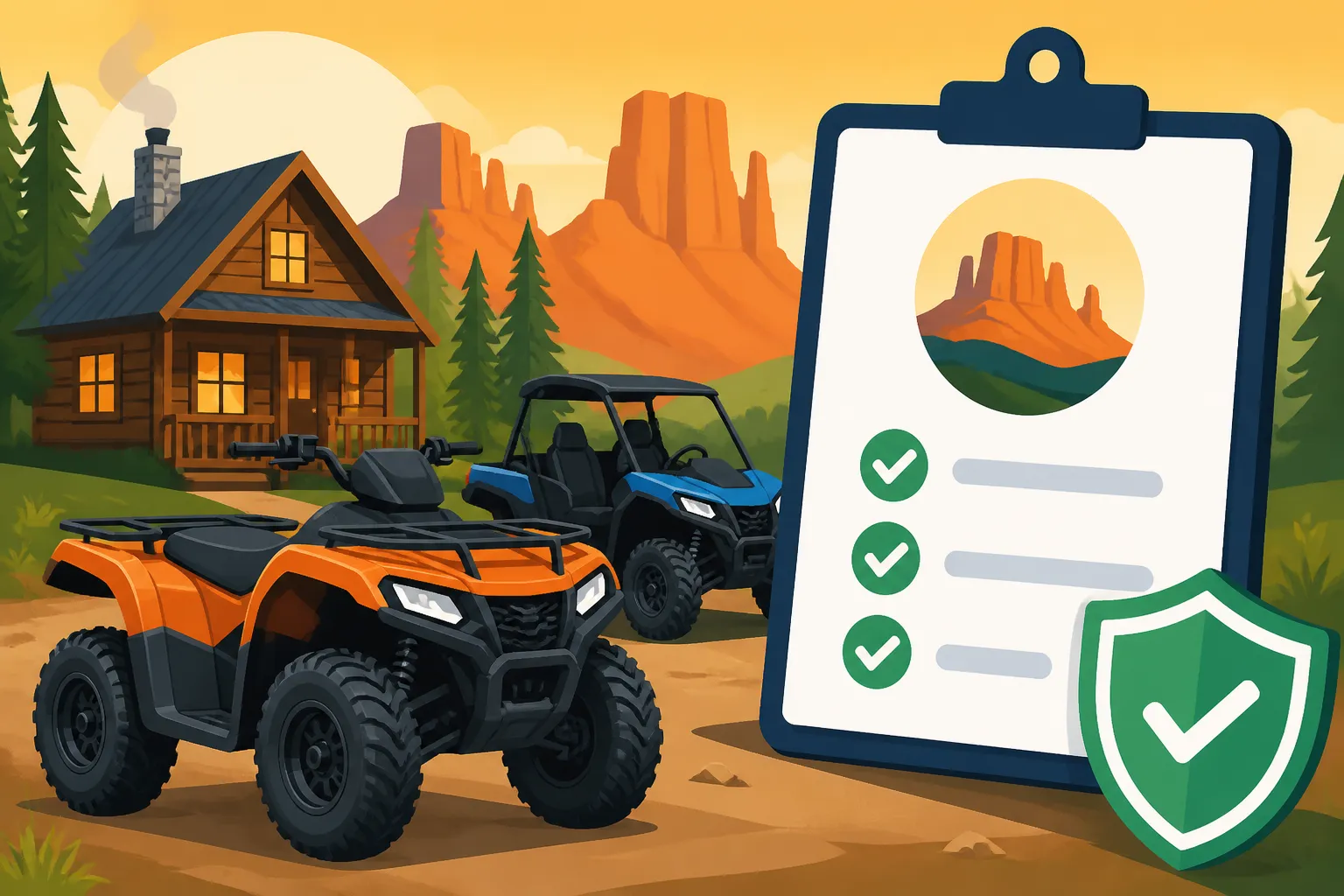
It's a common scenario for many of us who love Utah's outdoors: you've got that perfect little cabin tucked away in the mountains or near your favorite riding trails, and of course, an ATV or UTV that lives there. But when it comes to registration, things can get a little fuzzy. You're probably wondering if having your machine at a cabin changes anything, especially if that cabin isn't your primary residence. This guide will clarify all those nagging questions about registering your off-highway vehicle (OHV) when its home base is your beloved Utah cabin.
Navigating Utah Residency and Your Cabin OHV
One of the biggest questions that comes up when your OHV calls a Utah cabin home is about residency. You might live out of state for most of the year, but your heart, and your side-by-side, are firmly planted in Utah. This can definitely make you scratch your head about whether you're considered a resident for registration purposes, or if you need to jump through other hoops.
Defining "Residency" for Utah OHV Registration
Utah's Department of Motor Vehicles (DMV) defines residency primarily based on where you habitually live, where you vote, and where your driver's license is issued. If your primary home, the one where you receive most of your mail, pay your primary utility bills, and hold your driver's license, is in Utah, then you're a Utah resident, plain and simple. Even if your OHV is kept at a cabin in a different county, the process is largely the same as if it were parked in your garage in Salt Lake City or St. George. You'll register it as a Utah resident.
However, the waters get a bit murkier if your primary residence is outside of Utah, but you own a cabin here where you keep your OHV. In this case, you're generally considered a non-resident, even though you own property in the state. This means your machine will need to follow the rules for non-residents, which typically involve obtaining a Utah non-resident OHV permit, in addition to maintaining its registration in your home state, if required. It's crucial to understand this distinction because failing to meet the non-resident permit requirement can lead to fines and headaches on the trail. For a full breakdown, check out [The Utah OHV Education Certificate] and [Utah's Non-Resident OHV Permit Explained].
Snowbirds and Seasonal Residents
Many folks enjoy Utah's beauty seasonally, whether it's escaping the winter cold down south or spending summers in the cool mountain air. If you're a "snowbird" who lives in Utah for several months out of the year at your cabin, but your primary legal residence (where you vote, have your driver's license, and pay primary taxes) remains in another state, you're still considered a non-resident for OHV registration purposes. You'll need that non-resident permit to legally ride on Utah's public lands.
The state doesn't differentiate between someone who visits for a week and someone who lives at their cabin for six months if their legal domicile is elsewhere. This can feel unfair, especially if you spend a significant amount of time here, but it's how the rules are structured. The intent is to capture revenue from all users of the trail system. So, even if your cabin is your second home, if it's not your primary legal address, plan on getting that non-resident permit for your OHV. You can learn more about this specific situation in [Snowbirds and Utah OHV Registration].
The Nitty-Gritty: Registering Your Cabin OHV
Once you've sorted out your residency status, the actual process of getting your OHV registered in Utah, or securing a non-resident permit, isn't overly complicated. It’s mostly about having the right documents and knowing where to go, whether your machine lives full-time at the cabin or you just bring it up for weekends.
Required Documentation for Utah Residents
If you're a Utah resident and your OHV is kept at your cabin, the registration process is the same as for any other resident-owned machine. You'll need to gather a few key documents before heading to the Utah DMV or completing the process online. These typically include the original title for the ATV or UTV, proof of ownership (like a bill of sale, especially if you just purchased it), and proof of identification. If you bought it from a private seller, ensure you have a proper bill of sale. Sometimes, if you're like me, you might misplace a document or two, but it's best to have everything in order before you start. For instance, LawDepot offers various legal document templates, including customizable bills of sale, which can be helpful if you need to draft one up quickly for a private sale. This can ensure all the necessary information is included to prevent issues down the line.
Make sure the title is properly signed over to you if you bought it used. A common mistake that can delay registration is an incorrectly filled out title. You'll also need to pay the applicable fees, which include the registration fee, a uniform fee based on the machine's age, and potentially county fees. It can feel like a lot of steps, but once it's done, you're good for a year or two, depending on your renewal choice. A comprehensive list of what to bring can be found in [Documents to Bring to the Utah DMV for an ATV].
Non-Resident Permit Requirements
For those who are non-residents but keep their OHV at a Utah cabin, or bring it to the cabin from out of state, the process involves obtaining a non-resident OHV permit. This permit allows you to legally operate your out-of-state registered OHV on Utah's public lands. The good news is that these permits are relatively easy to get and can often be purchased online through the Utah State Parks website or from various vendors around popular riding areas. You'll need to provide information about your machine and pay a fee.
It's important to remember that this permit does not replace your home state's registration requirements. If your home state requires your OHV to be registered, you must maintain that registration as well. The Utah non-resident permit is specifically for riding on Utah public lands. Make sure to have a copy of your permit with you whenever you ride, either a physical copy or a digital one on your phone, as rangers do check. For more details on the permit, see [Cost of a Utah Non-Resident OHV Permit].
| Residency Status | Primary Residence | OHV Location | Utah Registration | Utah Non-Resident Permit | Additional Notes |
|---|---|---|---|---|---|
| Utah Resident | Utah | Utah Cabin | Required | Not Required | Standard Utah OHV registration process. |
| Non-Resident (Seasonal) | Out of State | Utah Cabin | Not Required | Required | Must maintain home state registration if applicable. |
| Non-Resident (Visitor) | Out of State | Utah Cabin (temp) | Not Required | Required | Must maintain home state registration if applicable. |
Special Considerations for Cabin-Kept Machines
Keeping an OHV at a cabin, especially one that isn't your main residence, can bring up unique logistical questions. From where your mail goes to how long your registration lasts, these details are important to iron out so you can enjoy your time on the trails without worrying about paperwork.
Mailing Addresses and Renewal Notices
One common snag for cabin owners is the mailing address for registration. If your cabin is in a remote area, you might not receive mail there regularly. For Utah residents, you'll want to ensure your primary mailing address on file with the DMV is where you actually receive mail, even if that's your city home and not the cabin address where the OHV is stored. This is crucial for receiving your annual or biennial renewal notices. Missing a renewal notice can lead to late fees or unknowingly riding with an expired registration. Imagine getting a fine because the renewal notice got lost in the shuffle at a rarely-visited cabin!
For non-residents with a permit, this isn't as much of a concern since your home state handles your primary registration mail. However, if you've signed up for email notifications from Utah State Parks regarding your non-resident permit, make sure that email address is current and checked regularly. No one wants to deal with the hassle of [Late Renewal on a Utah OHV Registration] or [Penalties for Riding Unregistered in Utah].
Long-Term Storage and Usage Patterns
Many cabin OHVs see seasonal use; they might be put away for the winter and only brought out during warmer months. This doesn't change the registration requirement. If your machine is stored at your Utah cabin and you intend to ride it on public lands at any point during the year, it needs to be registered or permitted for the entire period. There isn't a "part-time" registration option. Even if it sits for months, the moment you take it out on a public trail, it must be current.
Some riders think that because their machine mostly stays on private property around their cabin, they don't need to register it. While machines used exclusively on private land generally don't require public land registration, the reality is that most cabin owners eventually venture onto adjacent public trails or roads. If you're going to cross any public access, even just to get to a different section of private land, your OHV needs proper registration. It's better to be safe than sorry and ensure your machine is always street legal, or at least trail-legal. For more on this, check out [Private-Land-Only Machines and Utah Registration] and [Registering a UTV You Only Use on Your Own Land].
Why Proper Registration Matters, Even at the Cabin
It might seem like a small detail, tucked away at your cabin, but properly registering or permitting your OHV is far more important than just avoiding a ticket. It's about ensuring access to the incredible riding opportunities Utah offers and contributing to the upkeep of the trails we all love.
Trail Access and Compliance
Utah boasts some of the most spectacular OHV trails in the country, from the red rocks of Moab and Sand Hollow to the high mountain passes of the Paiute Trail. These trails are maintained through registration fees and permits. When you register your machine, you're directly contributing to the funding that keeps these trails open, safe, and enjoyable for everyone. Riding an unregistered or unpermitted OHV isn't just a violation; it's short-changing the system that provides your riding experience.
Rangers and local law enforcement actively patrol popular riding areas, and checking for current registration or non-resident permits is a standard part of their duties. Imagine pulling your machine off the trailer at the trailhead, excited for a day of riding near your cabin, only to be turned away or fined because your paperwork isn't in order. It's a huge frustration, and entirely avoidable. Ensuring your registration is current means you can confidently hit the trails. Need to know [What a Utah Trooper Checks at a Trailhead]?
Avoiding Fines and Impoundment
The financial penalties for riding an unregistered or unpermitted OHV in Utah can be significant. Fines vary, but they're typically much more expensive than the annual registration or permit fee. Beyond the fine, there's always the risk of your machine being impounded, which adds further costs in towing and storage fees, not to mention the massive inconvenience. If your machine is impounded while you're at your cabin, you'll have to figure out how to retrieve it from potentially a long distance away.
Think about it this way: the relatively small cost of registration is a form of insurance against much larger, more frustrating expenses. It keeps you legal, keeps you riding, and keeps your OHV safe from impoundment. Don't let a simple oversight turn your cabin getaway into a regulatory nightmare. For more specifics on what can happen, read [Impound Risk for Unregistered Machines in Utah].
Disclaimer
This article is for general informational purposes only and does not constitute professional advice. Laws, prices and regulations vary by location and change over time. Consult a qualified professional for guidance on your specific situation.