Registering a 50cc Quad for an Eight-Year-Old
So, you've got a excited eight-year-old, perhaps a birthday or holiday just passed, and now there's a shiny 50cc quad sitting in the garage or driveway. Your little rider is chomping at the bit to hit the trails, and you, as the parent, are probably wondering, "Okay, what's next? How do I even get this thing legally registered in Utah?" It can feel like a maze of paperwork, especially when the machine is for a minor, but don't worry. This guide is here to walk you through every step of registering that 50cc quad so your eight-year-old can safely and legally enjoy the incredible Utah outdoors.
Who Can Actually Register the Quad for a Child in Utah?
This is where a lot of parents get a little tripped up, and it's totally understandable. When you buy a bicycle or a toy, you just give it to your kid. But an off-highway vehicle (OHV), even a small 50cc quad, is a different beast entirely when it comes to legal ownership and registration in Utah.
The Legal Owner vs. The Rider
Here's the critical distinction: while your eight-year-old will be the one riding that 50cc quad, they cannot legally be the registered owner of the machine in Utah. The state requires the registered owner to be an adult, typically a parent or legal guardian. This isn't meant to be a hurdle; it's a legal safeguard, ensuring that there's an adult responsible for the machine's compliance with state laws, maintenance, and safe operation.
Think about it this way: if a vehicle, any vehicle, causes an issue, the state needs to know who is legally accountable. An eight-year-old, no matter how responsible they are, simply doesn't have the legal standing to assume that responsibility. So, when you're filling out forms, signing titles, and making payments, all of it will be done under your name as the adult. This puts the responsibility where it needs to be and clarifies any potential legal questions down the road.
If you're buying the quad from a private seller, you'll want to ensure that the bill of sale and title (if one exists) are transferred directly into your name, the parent or guardian. Don't try to include your child's name as the buyer or recipient on these legal documents, as it will just create headaches at the DMV when they can't process the transfer. You're the legal owner, and your child is the primary operator under your supervision.
Documents in the Adult's Name
To reiterate, every single piece of official paperwork for that 50cc quad needs to reflect the adult's information. This includes the vehicle title, the bill of sale, and, of course, the actual registration card. When you visit the Utah Division of Motor Vehicles (DMV), they'll be looking for your name, your address, and your identification. They won't be asking for your eight-year-old's ID, because they aren't the legal party in the transaction.
It’s a common mistake for well-meaning parents to try and list their child's name somewhere on the documents, thinking they're establishing ownership for the child. However, this often leads to delays and rejection of paperwork at the DMV. It's much smoother if you simply present yourself as the sole owner on all official forms. If you're concerned about proving the machine is for your child, that's a different matter, usually involving personal understanding within your family, not legal documentation. The important thing is that the state recognizes you as the responsible party.
This also extends to situations like buying from a dealer. When you finalize the purchase, the dealer will prepare the paperwork, and they will, or should, automatically put the adult's name on the title and other registration documents. Make sure to double-check this before you leave the dealership, just to avoid any future corrections. Ensuring everything is in your name from the start will save you a lot of time and potential frustration at the DMV.
Essential Paperwork for a Youth ATV Registration
Alright, let's talk brass tacks: what paper do you actually need to bring to the DMV? This is often the most daunting part, but once you know what's required, you can gather everything up and make that visit as smooth as possible. For any OHV, even a smaller 50cc quad, the principles of registration are largely the same.
The Bill of Sale and Its Specifics
A solid bill of sale is your first line of defense in proving ownership, especially if you're buying the 50cc quad privately. Even for a small machine, the state wants to see a clear transfer of ownership. A good bill of sale should include specific details like the full names and addresses of both the buyer (that's you!) and the seller, the date of sale, the purchase price, and a detailed description of the quad. This description should include the make, model, year, and, critically, the Vehicle Identification Number (VIN).
Why is the VIN so important? It's the unique identifier for that specific machine, just like a Social Security number for a person. Without it, the DMV can't accurately identify what you're trying to register. If you’re unsure what needs to be included, you can find helpful resources online, even customizable templates from services like LawDepot, that ensure you cover all the necessary bases. This can be especially useful if you're buying from someone who isn't familiar with official paperwork. For more specific guidance, check out [Utah Bill of Sale: What It Must Say].
What if you're buying from a friend or family member and they don't have a formal bill of sale? You'll still need one, or at least a notarized statement of sale from them. Some people wonder, [Do You Need a Notarized Bill of Sale in Utah?] and while it's not always strictly required for every private sale, it certainly adds a layer of official legitimacy that can smooth things over at the DMV. If you don't have a title for the machine, a well-executed bill of sale becomes even more important. In situations where there's no title from the seller, Utah does have specific requirements, so it's worth looking into [No Title From the Seller: What Utah Requires] to understand your options.
Title Requirements for Smaller Quads
This is another common area of confusion. Does a small 50cc quad even have a title? The answer is usually yes, especially for newer machines. In Utah, generally, OHVs manufactured in 1988 or later are required to have a title. So, if your eight-year-old's quad is relatively new, or even from the 90s, it almost certainly came with a manufacturer's certificate of origin (MCO) that then converts to a state title. You can dive deeper into this with [Utah's Title Rule for 1988 and Newer Machines]. If you have an older machine, perhaps a vintage three-wheeler from before 1988, the rules might be a bit different, as outlined in [Registering a 1987 ATV in Utah].
If you've bought the quad privately and the seller provided a title, you need to ensure it's properly signed over to you. A mistake here can void the transfer and send you back to the seller, so understanding [Signing Over a Utah OHV Title Correctly] is crucial. The signature needs to be legible, in the correct spot, and match the name on the title. If the title is missing or was never issued, that presents a different challenge. You'll likely need to go through a process to [Replacing a Lost ATV Title in Utah] or apply for an original title, which might involve additional forms and potentially a VIN inspection.
It's absolutely worth doing your homework on the title situation before you finalize the purchase, especially with a private seller. Asking for photos of the title, checking the VIN, and even doing a quick search for theft records (if possible) can save you a world of hurt. The cleaner the title, the easier your registration process will be.
Proof of Residency and Identification
Finally, when you, the adult, head to the DMV to register your eight-year-old's quad, you'll need to prove who you are and that you're a Utah resident. This usually means bringing your valid Utah driver's license or state-issued identification card. The DMV uses this to confirm your identity and ensure that the address on your registration matches your legal residence.
If you're a new resident to Utah, there might be a few extra steps, but generally, a valid ID is sufficient. Make sure your ID isn't expired, as that can cause immediate problems. You might also want to bring a secondary form of identification or proof of address if your ID is very new or if you've recently moved, just in case. Things like a utility bill or a lease agreement can sometimes be helpful, though typically your driver's license will suffice. Having all your ducks in a row for your own identification makes the process smoother, allowing the DMV to focus on the machine's paperwork.
Remember, the goal is to make a single, efficient trip to the DMV. Having all your personal identification along with the quad's ownership documents will help ensure you leave with that coveted registration sticker and card in hand.
Navigating the Utah DMV Registration Process
Okay, you've got your paperwork in order – title, bill of sale, and your ID. Now it's time for the actual registration process. While it might sound intimidating, Utah has made efforts to streamline this for OHV owners.
Where and How to Register
For the most part, registering an OHV in Utah, including your child's 50cc quad, means a trip to a local DMV office. While many states are moving towards fully online processes, for first-time registrations and title transfers, an in-person visit is often the most straightforward way to get everything squared away. This allows a DMV clerk to review all your original documents, verify signatures, and ensure everything is correct. You can find out [Which Utah DMV Offices Handle OHV Paperwork] by checking the official DMV website. Not all DMV locations handle OHV registrations, so it’s wise to confirm before you drive all the way there.
When you go, make sure to bring all the original documents we just talked about: the signed-over title (or MCO), the bill of sale, and your personal identification. It’s also a good idea to bring copies, just in case, but they will want to see the originals. For a comprehensive list, consult [Documents to Bring to the Utah DMV for an ATV]. The clerks will process your paperwork, collect the necessary fees, and issue your registration card and the all-important OHV decal.
Can you register online? For renewals, absolutely! Many riders find it super convenient to handle [Renewing Your Utah OHV Registration] online. But for a first-time registration and title transfer, especially when you're dealing with transferring ownership, the in-person visit is usually the way to go. Don't try to short-circuit the system; a little time spent at the DMV upfront will save you potential headaches down the trail.
Understanding Fees and the Uniform Fee
This is where the rubber meets the road, or rather, where your wallet meets the counter. Registering any OHV in Utah involves a few different fees. You'll have the standard registration fee, which contributes to trail maintenance and OHV programs, and then there's the "Uniform Fee" – this is where the value of your 50cc quad comes into play. You might be thinking, "It's just a little quad, how much can it be?" But even smaller machines are assessed.
The Uniform Fee is essentially a property tax on the vehicle, calculated based on its value and age. Even though your eight-year-old's quad is small, the DMV will assign it a value, and that value determines the Uniform Fee. For new machines, this is typically based on the manufacturer's suggested retail price (MSRP). For used machines, the DMV usually uses a standard valuation guide. So, while it's a small machine, it still contributes to the overall pool. You can learn more about this specific fee in [The Age-Based Uniform Fee on Utah OHVs].
Beyond the Uniform Fee, there's the standard OHV registration fee. This money is vital for maintaining the fantastic trail systems we have in Utah, funding safety programs, and supporting search and rescue efforts. So, while it feels like a cost, it's an investment in the riding experience for everyone, including your little one. For a full rundown of what to expect, refer to [Utah OHV Registration Fees, Start to Finish] and [Utah OHV Registration Cost for One Machine]. Be prepared for these costs, as they are non-negotiable parts of getting your quad legally on the trail.
Here’s a simplified breakdown of the types of fees you might encounter, though specific amounts can vary:
| Fee Type | Description |
|---|---|
| Registration Fee | Annual fee supporting OHV programs, trails, and education. |
| Uniform Fee | Annual property tax based on the quad's valuation and age. |
| Local Option Tax | Additional fee imposed by some counties. |
| Title Fee | One-time fee for issuing a new title. |
| Plate/Decal Fee | Small fee for the actual registration decal. |
| Transaction/Service Fee | May apply for online renewals or third-party service providers. |
Getting Your Decal and What Comes Next
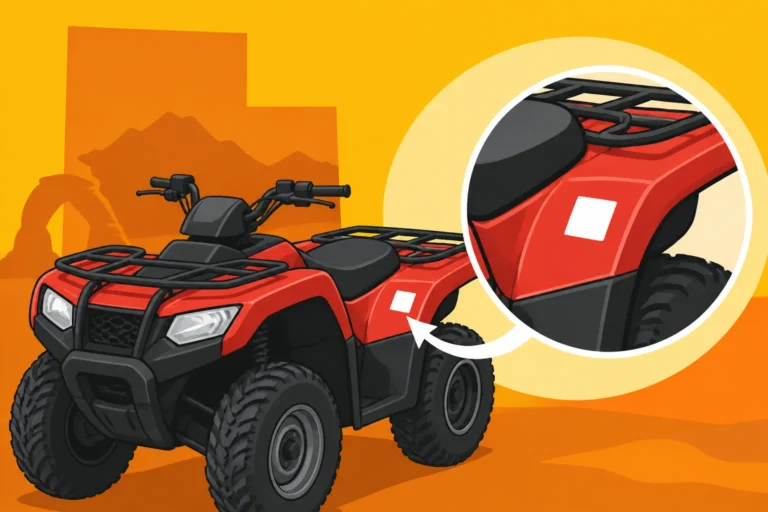
Once all the paperwork is processed and fees are paid, the DMV will issue you a registration card and a new OHV decal. This decal is your proof that the 50cc quad is legally registered to you in Utah. It's crucial that you affix this decal to the machine in the correct location. For ATVs, the decal typically goes on the left rear fender, visible and unobstructed. While small machines might have limited space, ensure it's placed where it can be easily seen by law enforcement or trail rangers. Details on where to put it can be found in [Utah OHV Decals and Where They Go]. Even for small machines, the placement instructions are generally the same as for larger ATVs or side-by-sides.
The registration card, on the other hand, is something you, or rather, the responsible adult supervising the rider, must carry whenever the quad is being operated on public lands. While your eight-year-old won't be carrying it, it needs to be accessible with the supervising adult. It’s part of [What Paperwork Utah Riders Must Carry] to prove the machine is legal. A physical copy is always best, but some riders opt to carry a photo of it on their phone (though cell service can be spotty on trails, so a physical copy is recommended).
Having that decal properly displayed and the registration card handy means you've completed the legal steps for the machine itself. But remember, the registration is just one part of the equation when it comes to having an eight-year-old on a quad. Now, let's look at the rules for the rider.
Beyond Registration: Riding Rules for an 8-Year-Old in Utah
Getting the 50cc quad registered is a huge step, and you should pat yourself on the back for navigating that paperwork! But the journey isn't over. While the machine is legal, you still need to make sure your eight-year-old rider is also compliant with Utah's OHV laws. This is all about safety and responsible riding.
Youth Education Requirements
This is arguably the most important aspect for your eight-year-old. In Utah, any OHV operator under the age of 16 is required to complete an approved OHV education course and carry a safety certificate while riding. Yes, even for a 50cc quad and an eight-year-old! This isn't just a suggestion; it's a legal requirement designed to instill safe riding habits from a young age.
The course covers everything from basic riding techniques and safety gear to understanding trail etiquette and specific Utah laws. It’s designed to be engaging and educational, not just a hurdle. You, as the parent, can learn more about [How Utah Youth Riders Earn an OHV Certificate] and what the [Age Limits in Utah OHV Education Law] entail. It's a fantastic way for both you and your child to get on the same page about safety. Many parents find doing the course together is a valuable bonding experience and helps them understand the risks and responsibilities.
Beyond the certificate, Utah law also mandates specific supervision rules for young riders. An eight-year-old on a 50cc quad must be supervised by a parent or legal guardian who is at least 18 years old and capable of safely operating an OHV. This adult must also possess an OHV education certificate. It's not enough to just be at the trailhead; you need to be actively supervising. For more detailed information, consult [Supervision Rules for Young Utah Riders]. This ensures that there's always an experienced eye watching over the younger riders, ready to offer guidance or assistance.
Age and Machine-Specific Riding Restrictions
While a 50cc quad is generally suitable for an eight-year-old, Utah law also has guidelines on the appropriate size and type of machine for different age groups. These rules are in place to ensure that riders are on machines they can safely control. A 50cc quad is typically designed for younger, smaller riders, but it’s still important to verify that the specific machine is a good fit for your child’s size, strength, and maturity.
The state emphasizes matching the machine to the rider's ability. For example, a child of a certain age may be legally allowed to ride a specific ATV size, but if they are small for their age, or lack the coordination, it might be better to start smaller or wait. Always ensure your child wears appropriate safety gear, including a DOT-compliant helmet, goggles, long pants, long-sleeved shirt, gloves, and over-the-ankle boots. This is critical for their protection, regardless of the machine's size.
It's also worth noting that these rules primarily apply to public lands. If your eight-year-old is riding on private property, the state's registration and education requirements may not apply, but safety should always be the top priority. However, if you plan to hit any of Utah's incredible public trails, which is usually the goal, then complying with these regulations is essential. Enjoying the trails safely and responsibly is what it's all about, and that starts with proper registration and proper rider education.
Disclaimer
This article is for general informational purposes only and does not constitute professional advice. Laws, prices and regulations vary by location and change over time. Consult a qualified professional for guidance on your specific situation.