Buying a Used ATV in Utah: The Paperwork
There's nothing quite like the thrill of finding that perfect used ATV or UTV – maybe it's the right model, the right price, or it just feels like the right fit for your next adventure out on the Paiute Trail or across the dunes of Sand Hollow. But let's be honest, the excitement can quickly turn to anxiety when you start thinking about the mountain of paperwork that comes with it. This comprehensive guide is here to walk you through every piece of documentation you'll need when buying a used off-highway vehicle (OHV) in Utah, ensuring your purchase is smooth, legal, and stress-free.
Why Paperwork Matters When Buying Used in Utah
When you're shelling out your hard-earned cash for a used ATV or UTV, the last thing you want is to discover later that you've bought someone else's problem. Whether it's a stolen machine, one with a hidden lien, or simply a transaction that doesn't hold up at the Utah DMV, insufficient paperwork can quickly turn a dream purchase into a financial nightmare. Understanding the critical role of each document isn't just about bureaucracy; it's about safeguarding your investment and your peace of mind.
Protecting Your Investment (Avoiding Fraud)
Imagine pulling up to a trailhead, gleaming new-to-you side-by-side ready for action, only to be told by a ranger that your machine is reported stolen. Or perhaps months down the line, a collection agency comes knocking, demanding payment for a loan secured against your ATV, a loan you knew nothing about. These aren't just hypothetical horror stories; they're very real risks when you don't dot your i's and cross your t's on the paperwork. Proper documentation, especially a clean title and a well-executed bill of sale, acts as your shield against fraud, giving you legal proof of ownership and a clear history of the machine.
It's not just about outright theft or hidden debts, either. Sometimes, the "fraud" can be more subtle, like a seller misrepresenting the year or model of the machine. Without a title that clearly states the vehicle's identifying information, you might end up paying more than the machine is worth or finding out it doesn't meet the registration requirements you expected. The title is your primary source of truth for the vehicle's identity, ensuring you know exactly what you're buying.
Beyond the initial purchase, having complete and accurate paperwork protects your investment for the long haul. Should you ever decide to sell the OHV yourself, or if you need to file an insurance claim after an accident, the trail of documentation you kept from your purchase will be invaluable. It validates your ownership, establishes the machine's history, and proves its value, making any future transactions or claims much smoother.
What Happens Without Proper Paperwork
Trying to register an ATV or UTV in Utah without the correct paperwork is like trying to ride without fuel – you're just not going to get anywhere. The Utah Division of Motor Vehicles (DMV) is very particular about the documents required to transfer ownership and issue new registration. If you show up missing a title, or with a bill of sale that's incomplete, you'll be turned away, forced to track down the seller and correct the issues, which can be incredibly frustrating and time-consuming, especially if the seller is no longer cooperative.
Furthermore, riding an unregistered OHV on public lands in Utah can lead to significant penalties. Troopers and rangers regularly check for current registration decals at trailheads and on the trails themselves. If your machine isn't properly registered because you couldn't complete the paperwork, you could face fines, or in some cases, even have your machine impounded. It's a quick way to turn an exhilarating ride into a very expensive and inconvenient day.
Beyond the legal ramifications, a lack of proper paperwork can severely limit your options. You might find it difficult to get insurance for a machine you can't prove clear ownership of, leaving you exposed financially if something goes wrong. Should you need to finance the purchase, lenders will absolutely require a clean title in your name. Even basic things like ordering replacement parts or selling accessories can become complicated if you can't definitively show you own the machine.
Utah's "Buyer Beware" Landscape
Utah, like many states, operates largely on a "buyer beware" (or caveat emptor) principle when it comes to private party sales. This means that as the buyer, the responsibility falls squarely on your shoulders to investigate the machine and ensure all paperwork is in order before you hand over any money. The state won't step in to mediate disputes over incomplete documentation or undisclosed issues after the sale is finalized between private individuals. This makes your due diligence paramount.
This "buyer beware" environment highlights why being thorough is so important. When you're dealing with a private seller, you don't have the consumer protections that come with purchasing from a licensed dealer. There's no warranty, no return policy, and often, little recourse if you discover problems after the fact. Therefore, every piece of paperwork you obtain and verify becomes a critical layer of protection for you.
Ultimately, navigating the used OHV market in Utah successfully means being an informed and proactive buyer. Don't be shy about asking questions, requesting additional documentation, or taking the time to verify everything before committing to the purchase. The few extra hours you spend on paperwork and verification up front can save you countless headaches and potential financial losses down the road. It's truly an investment in your future enjoyment of the trails.
The Absolute Must-Have Document: The Utah Title
When you're buying a used ATV or UTV in Utah, the single most important piece of paper you need to secure from the seller is the vehicle's Certificate of Title. Think of the title as the OHV's birth certificate and deed rolled into one. It proves who legally owns the machine and provides its essential identifying details. Without a clean, properly signed title, you simply cannot transfer ownership into your name or register the machine with the state. This is where most people get tripped up, and it’s critical to get this right.
Understanding Utah's Title Requirements (1988 and Newer)
Utah has a specific rule regarding titles for off-highway vehicles that often catches buyers off guard. For any ATV or UTV manufactured in 1988 or later, the state absolutely requires a Certificate of Title to process an ownership transfer. This means if you're looking at a machine from the mid-90s, the 2000s, or anything more recent, a physical title must be presented at the DMV. This isn't just a suggestion; it's a hard and fast rule. You can learn more about [Utah's Title Rule for 1988 and Newer Machines] to understand the specifics.
The title will contain vital information about the OHV, including the Vehicle Identification Number (VIN), the make, model, year, and the name of the current legal owner. When you’re inspecting the title, make sure the VIN on the document perfectly matches the VIN stamped on the physical machine itself. Any discrepancy here is a major red flag and should prompt you to walk away from the deal or demand a thorough explanation and resolution from the seller before proceeding. This matching process is a fundamental step in ensuring the title is legitimate and belongs to the machine you intend to buy.
Furthermore, ensure the title is free of any liens. A lienholder (often a bank or credit union) will be listed on the title if the seller still owes money on the machine. If a lien is present, the seller must provide a lien release from the financial institution, proving the debt has been satisfied. Without this lien release, the lienholder technically still has a claim to the OHV, and you could unknowingly take on their debt. Always demand to see a clear title or an accompanying lien release. This is a crucial step to avoid inheriting someone else's financial burden.
When a Title Might Be Missing (And What to Do)
It's not uncommon for sellers of older used ATVs or UTVs to claim they don't have the title. They might say they bought it without one, or that it was lost years ago, or that their particular machine "doesn't need a title." While it's true that machines older than 1988 might not have been titled in Utah, for anything 1988 or newer, this is a problem. Don't let a seller convince you otherwise. If a title is genuinely missing for a 1988 or newer machine, the seller is responsible for obtaining a duplicate title before the sale. As the buyer, you should not be put in the position of trying to get a duplicate title for a machine you don't yet legally own.
If a seller insists they never received a title for a newer machine, or that they lost it, politely explain that you require a clean, signed title to complete the purchase. The process for a seller to get a [Replacing a Lost ATV Title in Utah] typically involves applying to the Utah DMV. This can take some time, so be prepared for a delay in the sale. If the seller is unwilling or unable to get a duplicate title, it's often a sign that something isn't right, and it might be best to reconsider the purchase. A legitimate seller will understand your need for proper documentation and be willing to do the legwork.
In very specific cases, Utah allows for registration of an OHV without a title, but these situations are rare and typically involve very old machines or unique circumstances where previous titles were never issued. For example, [Registering a UTV in Utah Without a Title] is a complex process usually reserved for machines that predate titling laws or those with historical gaps in documentation. Relying on these exceptions for a typical used ATV or UTV purchase is risky and often leads to dead ends at the DMV. Always push for the title.
Verifying the Title's Authenticity
Receiving a title from the seller is one thing; ensuring it's authentic and valid is another. Before you sign anything or exchange money, carefully inspect the title for any signs of alteration. Look for erasures, white-out, or any handwriting that looks suspicious or doesn't match the rest of the document. A genuine Utah title will have specific security features, and if anything looks off, trust your gut feeling.
Cross-referencing information on the title with other documents is also smart. Compare the seller's name on the title to their driver's license. If the names don't match, or if the seller claims they are selling it for a friend or family member, proceed with extreme caution. The person signing over the title must be the legal owner listed on the title itself, or have a legally binding power of attorney to act on their behalf. Anything less can invalidate the transfer of ownership. You can find more details about [Transferring an ATV Title Between Family Members in Utah] which is slightly different than a regular sale.
Finally, it's always a good idea to perform a VIN check using the number on the title. This can often reveal if the title itself has been stolen or if there are any outstanding issues with the vehicle that aren't apparent on the physical document. While Utah's DMV doesn't provide a public online database for title checks, a VIN check through a reputable third-party service can often flag potential issues. This extra step, though it might cost a small fee, is well worth it for the peace of mind it provides before you finalize your purchase. For a deeper dive, check out [Running a VIN on a Used UTV Before You Pay].
Crafting a Bulletproof Bill of Sale
While the title is your ultimate proof of ownership, a comprehensive Bill of Sale is equally critical, especially when buying a used ATV or UTV from a private party in Utah. Think of it as your detailed receipt and contract for the transaction. It documents the terms of the sale, protects both buyer and seller, and serves as vital evidence if any disputes arise later. Without a clear and complete bill of sale, you might find yourself in a tricky spot trying to prove the details of your purchase, even with a signed title.
Essential Information for a Utah Bill of Sale
A strong bill of sale for a Utah OHV needs to include specific pieces of information to be truly effective. First and foremost, it must clearly identify both the buyer and the seller. This means full legal names, current addresses, and contact information for both parties. You should also include a clear date of sale. This isn't just for record-keeping; it establishes when ownership officially transferred, which can be important for things like sales tax calculations or liability if something happens to the machine shortly after purchase.
Next, the bill of sale needs to meticulously describe the ATV or UTV being sold. This includes the make, model, year, and crucially, the Vehicle Identification Number (VIN). Just like with the title, ensure the VIN on the bill of sale matches the VIN on the machine and the title perfectly. You should also state the purchase price in both numerical and written form to avoid any ambiguity. If any accessories are included in the sale (like a plow, winch, or extra set of tires), it's wise to list them specifically to prevent future disagreements about what was part of the deal.
Finally, the bill of sale should include a statement that the vehicle is being sold "as-is," which is standard for private party used sales in Utah. This means the buyer accepts the machine in its current condition with all faults, known or unknown, and that the seller provides no warranties or guarantees. Both the buyer and seller should sign and date at least two copies of the bill of sale – one for each party to keep. For more detail on what to include, refer to [Bill of Sale Requirements for a Utah ATV Sale].
The Importance of a Notarized Bill of Sale (and When It's Optional)
In Utah, while a notarized bill of sale isn't always legally required for private party OHV sales, it is highly recommended and can add an invaluable layer of protection for both parties. The act of notarization means that a neutral third party (the notary public) has verified the identities of the buyer and seller and witnessed their signatures on the document. This significantly reduces the likelihood of either party later claiming their signature was forged or that they weren't present for the transaction.
There are specific situations where a notarized bill of sale becomes particularly important. If you are registering a machine that might have a slightly confusing ownership history, or if you're buying an OHV without a title under specific limited circumstances (which, as mentioned, is rare for newer machines), the DMV might look more favorably on a notarized document as stronger proof of sale. It adds a level of credibility that a simple signature might not.
However, for most straightforward sales where a clean title is exchanged, a notarized bill of sale, while beneficial, isn't mandatory by law. The Utah DMV generally accepts an unnotarized bill of sale if it's complete and accompanies a properly signed-over title. Nevertheless, for peace of mind and an extra layer of legal security, seeking out a notary is a small extra step that can pay dividends. Many banks, credit unions, and even shipping stores offer notary services for a small fee. Consider checking out [Do You Need a Notarized Bill of Sale in Utah?] for more in-depth information.
Using Templates for Your Protection
Trying to draft a bill of sale from scratch can be daunting, and it's easy to miss crucial details. This is why using a reputable template is such a smart move when buying a used ATV or UTV. A well-designed template ensures all the necessary legal and identifying information is included, guiding you through the process step-by-step. It helps prevent accidental omissions that could complicate your ownership transfer at the DMV or weaken your position if a dispute arises.
There are many sources for bill of sale templates online. Websites like LawDepot offer customizable bill of sale forms that are designed to be legally sound and comprehensive. Using a service like this can save you time and provide confidence that you're using a professional document. You can typically find templates specifically for vehicle sales, which can be adapted for OHVs, ensuring it covers all the standard requirements for a private party transaction.
When you use a template, make sure you fill in every applicable field accurately and completely. Don't leave blanks, even if they seem minor. If a section isn't relevant, you can often write "N/A" (not applicable) to show it was considered. Having a pre-formatted template also makes the process quicker for both you and the seller, ensuring you can complete the paperwork efficiently and focus on the exciting part – getting your new-to-you OHV out on the trails!
The Crucial VIN Check: Your Due Diligence
Before you finalize the purchase of any used ATV or UTV in Utah, performing a thorough Vehicle Identification Number (VIN) check is absolutely non-negotiable. This isn't just a suggestion; it's a critical step in your due diligence to protect yourself from buying a stolen machine or one with a hidden history. The VIN is essentially the OHV's unique fingerprint, and checking it can reveal a wealth of information that the seller might not disclose – or might not even know themselves.
Locating the VIN on an ATV/UTV
First things first: you need to physically locate the VIN on the machine itself. Do not rely solely on the VIN provided in an advertisement or even on the title presented by the seller. You must verify that the VIN on the machine matches the VIN on the title and any bill of sale you create. For most ATVs and UTVs, the VIN is typically stamped into the frame in a visible location.
Common places to find the VIN include:
- On the front of the frame: Often near the steering column or handlebars.
- On a frame rail: Sometimes on the left side, beneath the engine or near the footpeg.
- Under the seat: For some models, it might be on a cross member of the frame.
- On the chassis: Especially for side-by-sides, it could be on a plate near the driver or passenger door.
Take your time to find it, clean off any dirt or grime, and visually inspect it. Make sure the numbers and letters are clearly stamped and haven't been altered, ground off, or re-stamped. Any signs of tampering are immediate red flags and should prompt you to walk away from the deal. It’s also wise to take a clear photo of the VIN on the machine with your phone, especially if you're going to run a check remotely.
Running a VIN Check for Theft and Liens
Once you have the VIN from the actual machine, it's time to run a check. This is where you uncover potential issues like theft, flood damage, salvage history, or most critically, outstanding liens. There are several services available that can provide a comprehensive vehicle history report for OHVs. While the Utah DMV doesn't offer a direct public-facing VIN lookup for liens, private services can often access this data through national databases.
Websites and services specializing in vehicle history reports for power sports vehicles are invaluable here. For a small fee, these services can often tell you if the OHV has been reported stolen, if it has been involved in major accidents, or if there are any active liens against the title. This is particularly important because an active lien means a bank or financial institution still has a claim to the machine. If you buy a vehicle with an active lien, that lien could transfer with the sale, making you responsible for the previous owner's debt.
Even if the seller provides a lien release, running your own VIN check confirms that there are no other undisclosed liens. It's a proactive step to ensure you're not getting into a situation where you inherit someone else's financial burden. This due diligence is arguably one of the most important things you can do to protect your purchase. For a deeper dive, consider [Checking a Used Utah ATV for Theft Records].
What to Do If the VIN is Missing or Altered
Discovering a missing or altered VIN is a serious problem and an almost universal reason to immediately walk away from the sale. A legitimate seller with nothing to hide will have a clear, unaltered VIN on their machine. If the VIN plate is missing, looks like it's been tampered with, or the numbers are unreadable, it could indicate that the machine is stolen, or that its identity is being intentionally obscured.
In some rare instances, a very old machine might have had its VIN degrade over time, or some homemade or custom-built machines might have unique VIN issues. However, for most modern ATVs and UTVs, a clear VIN is standard. If you encounter a missing or altered VIN, politely but firmly tell the seller you cannot proceed with the purchase. Trying to navigate the DMV with an incomplete or suspicious VIN can lead to investigations, impoundment, and a host of legal headaches that are simply not worth the hassle.
If you strongly suspect the machine is stolen due to a suspicious VIN, it's prudent to contact local law enforcement. Provide them with any details you have about the machine and the seller, but do so from a safe distance. Your personal safety and legal protection are paramount. Remember, if a deal seems too good to be true, especially when vital identification markers are compromised, it almost certainly is.
Sales Tax and Fees: Preparing for the DMV
Once you've found your perfect used ATV or UTV and secured all the necessary paperwork, you might think you're ready to hit the trails. Not so fast! Before you can legally ride, you'll need to pay attention to the financial obligations that come with registering your new-to-you machine in Utah. This includes sales tax and various registration fees, which can sometimes be a bit of a surprise if you haven't budgeted for them. Understanding these costs upfront will help you avoid sticker shock at the DMV.
Understanding Utah ATV Sales Tax on Private Sales
One common misconception among private party buyers is that sales tax doesn't apply to used items. In Utah, this is generally not the case for vehicles, including ATVs and UTVs. When you purchase an OHV from a private individual, you are still typically responsible for paying Utah sales tax on the purchase price. This sales tax is collected by the Utah Division of Motor Vehicles (DMV) at the time you register the machine in your name.
The sales tax rate is a percentage of the purchase price you paid for the OHV. It's crucial to declare the actual sale price on your bill of sale. Don't be tempted to write a lower amount to save a few dollars on tax; this is considered tax fraud and can lead to penalties. The DMV has methods to assess the fair market value of an OHV, and if your declared price seems unusually low, they might question it and base the sales tax on their own valuation, which could be higher than what you actually paid. For more specifics, check out [Utah ATV Sales Tax and Uniform Fees].
Be sure to factor this sales tax into your overall budget for the used OHV. If you're buying a machine for several thousand dollars, the sales tax can add a significant amount to your initial outlay. It's a necessary step to legally transfer ownership and get your registration, so plan for it accordingly rather than being caught off guard at the counter.
The Uniform Fee and How It's Calculated
Beyond sales tax, Utah also assesses a "uniform fee" on off-highway vehicles, which is collected annually along with your registration renewal. This fee is in lieu of personal property tax and is calculated based on the OHV's age and value. The uniform fee isn't a flat rate; it changes depending on how old your machine is, typically decreasing as the machine ages.
The DMV uses a standardized valuation schedule to determine the uniform fee. They consider the year, make, and model to assign a value, and then apply a fixed percentage based on the age of the vehicle. For example, a brand-new UTV will have a higher uniform fee than a 10-year-old ATV. This can create situations where two seemingly identical machines might have different fees if one is slightly newer or if the valuation method picks up on subtle differences. You can learn more about [The Age-Based Uniform Fee on Utah OHVs] to understand how this is calculated.
Like sales tax, the uniform fee is something you'll need to budget for, not just at the time of initial registration, but every year when you renew. It's important to ask the seller for the model year to help you estimate this cost. While you can't pay this fee until you officially register, knowing the general range helps in your financial planning for your new machine.
Additional Fees You Might Encounter
While sales tax and the uniform fee are the primary costs, there are a few other smaller fees you might encounter when registering your used OHV at the Utah DMV. These include:
- Registration Fee: This is the core fee for the state to process and issue your OHV registration. It's a standard charge that helps fund the state's OHV program, including trail maintenance and enforcement. The amount typically covers a full two-year registration cycle, which is standard for OHVs in Utah.
- Plate/Decal Fees: There might be a small fee for the physical registration decals that you'll affix to your ATV or UTV. These decals prove your machine is currently registered and are checked by law enforcement. You'll receive a new set once your registration is complete.
- County Fees: Some counties in Utah may levy small additional fees that are collected by the state on their behalf during the registration process. These vary by location and are usually minimal, but it’s another potential cost to be aware of.
- Transaction Fees: If you opt to register online (after the initial in-person registration), there might be a small online transaction fee. However, for a first-time registration, you'll need to visit a DMV office in person.
It’s always a good idea to check the current fee schedule on the Utah DMV website or call ahead to your local office before you go. This way, you can arrive prepared with the correct forms of payment and avoid any surprises. Having all your paperwork and payment ready ensures a smooth and efficient visit, getting you one step closer to riding your new-to-you OHV.
Transferring Ownership at the Utah DMV
You’ve found the right machine, negotiated a fair price, secured the title, drafted a solid bill of sale, and performed your VIN check. Now comes the moment of truth: heading to the Utah Division of Motor Vehicles (DMV) to officially transfer ownership into your name and register your OHV. While it might sound intimidating, knowing exactly what to expect and what to bring can make the process much smoother. This is the final, official step before you can legally hit the trails.
Documents You'll Need to Bring
Preparation is key for a successful DMV visit. To transfer ownership and register your used ATV or UTV in Utah, you'll need to gather a specific set of documents. Missing even one can mean being sent home to retrieve it, costing you valuable time and another trip.
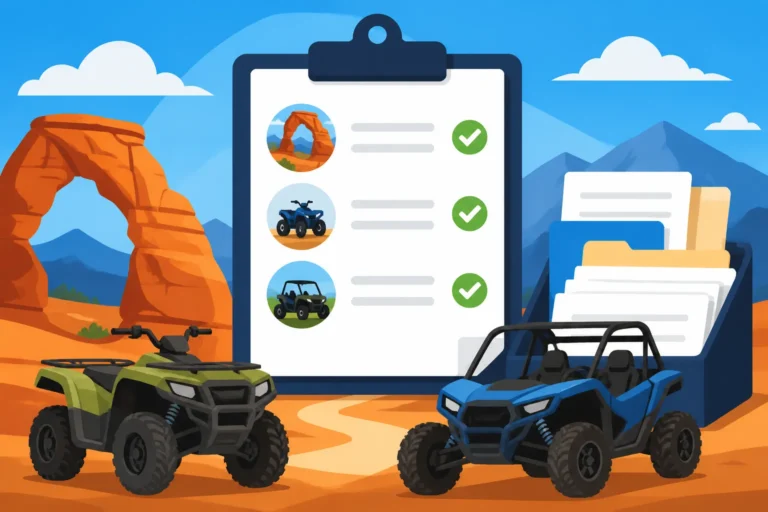
Here’s your essential checklist:
- The Original Certificate of Title: This is paramount. Ensure it's signed over by the seller in the designated spot (usually on the back) and that their signature is legible and matches their ID. If there was a lien, make sure you have the official lien release document from the financial institution.
- A Completed Bill of Sale: Your detailed, signed, and dated bill of sale (preferably notarized for extra security) is crucial. It supports the title transfer and verifies the purchase price for sales tax calculations. If you used a template from LawDepot or a similar service, make sure all fields are filled.
- Proof of Identification: You’ll need a valid, government-issued photo ID, such as a Utah driver's license or state ID card. If you're a new resident, you might need additional proof of residency.
- Proof of Residency (if applicable): If you're a new resident or need to update your address, bring documents like a utility bill, lease agreement, or bank statement.
- Payment for Fees and Taxes: Be prepared to pay sales tax, registration fees, and the uniform fee. Many DMV offices accept credit/debit cards, but it's always wise to have cash or a check as a backup.
- VIN Inspection: In some cases, especially if the title is from out-of-state or there are questions about the VIN, the DMV might require a physical VIN inspection. You may want to check with your specific DMV office beforehand, or you can get a VIN inspection done at certain licensed facilities. This is sometimes needed if there is no previous Utah record.
Bringing extra copies of your documents (especially the bill of sale) can also be helpful, just in case. For a comprehensive list, you might refer to [Documents to Bring to the Utah DMV for an ATV].
The Step-by-Step Registration Process
Once you arrive at the DMV with all your documents in hand, the process generally follows these steps:
- Check-in and Wait: Take a number or check in at the front desk. Prepare for a wait, especially during peak hours. You can use this time to double-check your paperwork.
- Submit Documents: When your number is called, present all your gathered documents to the clerk. They will review the title to ensure it's properly signed over, verify the VIN, and check the bill of sale. They'll also verify your identification.
- Sales Tax Assessment: The clerk will calculate the sales tax owed based on your bill of sale or the OHV's assessed value. You will pay this at the counter.
- Uniform Fee and Registration Fee Calculation: The uniform fee (based on the OHV's age and value) and the standard registration fee will be added to your total.
- Payment: You'll pay all applicable fees and taxes. Make sure you get a receipt for your payment.
- Issuance of New Registration and Decals: If everything is in order, the clerk will process the title transfer into your name and issue you a new registration card. You will also receive a set of new registration decals that need to be affixed to your ATV or UTV. The clerk might also print out a temporary operating permit for you to use if the permanent card takes a few days to mail out, although usually, you receive everything on the spot.
The entire process, assuming no complications, usually takes less than an hour once you're called to the counter. Remember to be patient and polite; the DMV staff are there to help you navigate the process.
Getting Your New Decals and Registration Card
Once you've completed the transaction at the DMV, you'll walk out with your new registration card and those important decals. The registration card is your official proof of current registration and ownership. It’s vital to keep this card with you when you ride, or at least a digital photo of it, as Utah law requires you to carry proof of registration. You can read more about [What Paperwork Utah Riders Must Carry] on the trails.
The decals are equally important. These stickers visually confirm that your OHV is registered for the current period. Utah has specific rules about where these decals should be placed on your ATV or UTV. For ATVs, they usually go on the front and back fenders. For UTVs, they are typically affixed to a visible location on the rear and a front portion of the vehicle, often near the headlights or on the dash. Incorrect placement can still lead to questions from law enforcement.
Make sure to apply the decals correctly, typically to a clean, flat surface. The colors of the decals change every two years, coinciding with the registration cycle, so it’s easy for rangers to spot if your registration is current. With your new registration card in hand and decals affixed, you are now fully legal to enjoy Utah's incredible network of OHV trails with your newly acquired machine!
Common Pitfalls and How to Avoid Them
Buying a used ATV or UTV in Utah can be a fantastic way to get into the sport or upgrade your ride, but it's also ripe for potential problems if you're not careful. Many buyers, eager to hit the trails, overlook crucial details in the paperwork, leading to headaches, financial loss, or even legal trouble down the road. Being aware of these common pitfalls and knowing how to navigate them is just as important as inspecting the machine itself.
Dealing with Out-of-State Titles
One of the more common complications arises when you purchase a used OHV from a seller who brought it into Utah from another state, or if you yourself are buying an OHV from a dealer or private party across state lines. While it's certainly possible to [Buying an ATV Out of State and Registering It in Utah], it often adds a layer of complexity. Each state has its own titling and registration laws, and what's perfectly normal in Arizona or Nevada might require extra steps in Utah.
When dealing with an out-of-state title, first and foremost, verify that the originating state requires titles for ATVs/UTVs of that age. Some states have different rules, and an older machine might genuinely not have a title from its home state. However, for most newer machines, a title will exist. Ensure the out-of-state title is properly signed off by the seller according to their state's regulations, as well as meeting Utah's expectations for a clean transfer. You'll likely need a VIN inspection for any out-of-state titled machine to verify its identity before Utah will issue a new title and registration.
Sales tax can also be a point of confusion. If you bought the OHV out of state from a licensed dealer and paid sales tax there, Utah might give you credit for that tax, potentially reducing or eliminating the sales tax you owe in Utah. However, if you bought it from a private party out of state and didn't pay sales tax at the time of purchase, you will almost certainly owe Utah sales tax when you register it here. Always be clear on the sales tax rules for out-of-state purchases.
Avoiding Title Washing Scams
Title washing is a nefarious practice where someone attempts to conceal a vehicle's negative history, such as a "salvage" or "flood" designation, by illicitly re-titling it in a different state with more lenient laws. The goal is to obtain a clean title that doesn't show the previous damage, thereby making the machine appear more valuable than it is. While less common with OHVs than cars, it still happens and can leave you with a dangerous or severely devalued machine.
The best defense against title washing is a thorough VIN check. Reputable vehicle history report services can often pull up records from multiple states and flag if a title history seems inconsistent or if a "brand" (like salvage, rebuilt, or flood) has been removed. If a seller is aggressively pushing a sale, seems reluctant to provide the title for review, or the price seems incredibly low for the condition, these could be indicators of a title washing scam.
Always scrutinize the physical title for any signs of tampering. Look for unusual fonts, misspellings, or anything that suggests it's not an official document. If you have any doubts about the legitimacy of a title, especially one that claims to be clean despite obvious damage to the machine, it's safer to walk away. It's simply not worth the risk of buying a machine that could be unsafe, uninsurable, or legally problematic.
What to Do If the Seller Isn't the Owner of Record
This is a major red flag that should make you pause any transaction immediately. The person selling you the ATV or UTV must be the legal owner listed on the title. If the seller tells you they're selling it for a friend, a relative, or if they have a title that's signed by a previous owner but not by the person you're dealing with (a practice sometimes called "open titling" or "title jumping"), do not proceed.
In an "open title" scenario, the seller is trying to avoid paying their own sales tax and transfer fees by having the original owner's signature on the title, intending for you to fill in your name directly. This might seem convenient, but it complicates the legal chain of ownership and can cause significant problems at the DMV, as they won't have a clear record of how the current seller acquired the machine. The DMV will likely reject the title transfer and demand that the person listed on the title officially sign it over to the current seller first, then to you.
If the seller claims to be representing the owner, they must provide a legally binding power of attorney document that explicitly grants them the authority to sell the OHV on the owner's behalf. Without this, the sale is not legally valid, and you could end up with a machine you can't register and no legal recourse. Always insist that the person you are buying from is the legal owner on the title, and that they properly sign it over to you. If the situation is unclear, it's best to seek an alternative purchase. [No Title From the Seller: What Utah Requires] delves deeper into these tricky situations.
After the Sale: What Paperwork to Keep and Why
Congratulations! You’ve successfully navigated the paperwork labyrinth, purchased your used ATV or UTV, and registered it in your name at the Utah DMV. You’ve got your new decals affixed, and you’re ready for adventure. But the paperwork journey isn't quite over. There are still a few crucial steps to take after the sale to ensure you remain protected, prepared for future events, and always in compliance with Utah law. Think of this as your ongoing administrative care for your new machine.
Your Records for Future Sale or Insurance
Once you have your new title in your name and your current registration card, make sure to keep all your transaction paperwork in a safe place. This includes your copy of the bill of sale, the original title you received (even if it's now superseded by a new one in your name), and any receipts from the DMV for sales tax and fees. These documents form a comprehensive paper trail that proves how and when you acquired the OHV and what you paid for it.
Why is this so important? Firstly, for future sales. When it's your turn to sell the ATV or UTV, having all these records makes you a credible and trustworthy seller. You can easily show the machine's history, prove you were the legal owner, and streamline the process for your buyer. Having everything organized will make the transaction smoother for them and faster for you.
Secondly, for insurance purposes. Should your ATV or UTV ever be stolen, damaged, or involved in an accident, your insurance company will require proof of ownership and often proof of purchase price. Your bill of sale and title documents are indispensable for filing a claim and ensuring you receive a fair payout. Without these records, proving your ownership or the machine's value can become a long and frustrating battle with your insurance provider. You can find more information about [Insuring a Utah UTV That Never Leaves the Trail].
Updating Your Address and Contact Info
Life happens, and sometimes you move. If you change your residential address after registering your ATV or UTV, it's crucial to update your information with the Utah DMV promptly. Not updating your address could mean you miss important notices, such as registration renewal reminders, which are often sent via mail. Missing a renewal notice could lead to an expired registration, and riding with an expired registration can lead to fines.
Updating your contact information, especially your mailing address, is usually a straightforward process. You can often do it online through the Utah DMV's portal or by visiting a local office. Make it a habit to update all your vehicle registrations whenever you move, not just for your OHV. This simple step ensures you stay informed and compliant with state regulations, helping you avoid unnecessary penalties or complications. You can learn more about [Updating Your Address on Utah OHV Records].
It's also a good idea to update your contact information with your insurance provider. If your ATV or UTV is covered by a separate OHV policy or even an extension of your home insurance, your insurer needs to have your current address on file for correspondence and claims processing. Keeping all your personal information consistent across all relevant entities minimizes potential hiccups down the road.
When to Renew Your Registration
Your Utah OHV registration isn't a one-time deal; it needs to be renewed periodically. Utah OHV registrations are typically valid for two years. As the expiration date approaches, the DMV should send you a renewal notice to your registered address. This notice will detail the fees owed and provide instructions on how to renew. This is where having your address updated becomes so important – you don't want to miss that notice!
Even if you don't receive a renewal notice, it's your responsibility to keep your registration current. You can typically renew your OHV registration online, by mail, or in person at a DMV office. Renewing online is often the most convenient method. Be aware that riding with an expired registration can result in fines and other penalties. Law enforcement checks for current decals, and an expired sticker will definitely catch their eye.
Mark your calendar for your registration expiration date, perhaps setting a reminder on your phone a month or two in advance. This proactive approach ensures you renew on time and can continue enjoying Utah's incredible trails without any legal worries. Don't let the excitement of riding overshadow the responsibility of staying legally compliant. For more on this, check out [Renewing Your Utah OHV Registration].
Disclaimer
This article is for general informational purposes only and does not constitute professional advice. Laws, prices and regulations vary by location and change over time. Consult a qualified professional for guidance on your specific situation.