Utah Rules for Ranch Machines That Cross a Road
You're out there, working your land, checking fences, moving irrigation pipes, or herding livestock, and your trusty ATV or UTV is your workhorse. It's indispensable. But then you hit that short stretch of public road between your fields, or you need to cross the county lane to get to another part of your property, and a nagging question pops into your head: do I need to register this machine just for that? Many Utah ranchers and farmers grapple with this exact scenario, unsure of where the law draws the line between essential agricultural use and recreational riding that requires registration. This guide is here to untangle those rules, clarify when your ranch machine needs to be street-legal, and help you navigate the nuances of Utah's Off-Highway Vehicle (OHV) laws so you can focus on your work without worrying about fines.
Understanding the Agricultural Exemption in Utah
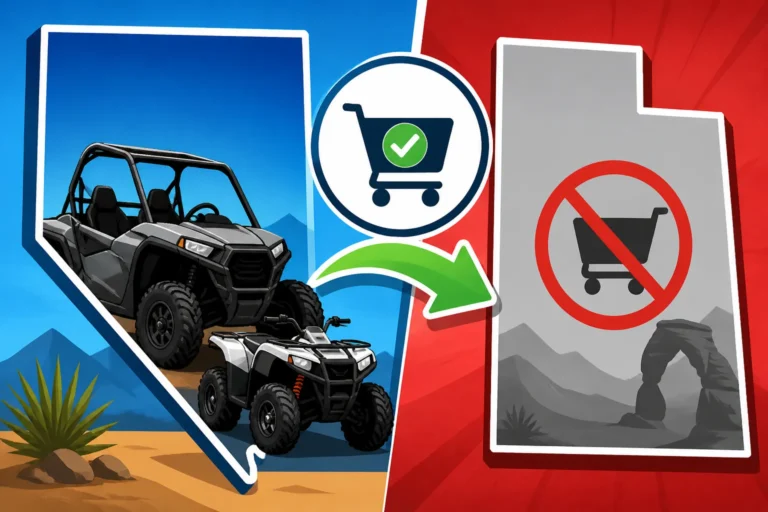
Utah's OHV laws recognize the vital role ATVs and UTVs play in agriculture. They’ve built in an exemption specifically for machines used for farming and ranching. This is a huge relief for many, as it means not every single utility quad or side-by-side used on the farm needs to go through the full registration process. However, this exemption isn't a blanket pass for all uses, and understanding its boundaries is crucial. It’s designed to allow you to get essential work done without unnecessary red tape, but it comes with very specific conditions.
What Qualifies as a "Ranch Machine"?
When we talk about a "ranch machine" in the context of this exemption, we're really talking about its primary purpose. This isn't just about the type of vehicle, like an ATV or a UTV, but how it's being used. If your machine is actively, primarily, and routinely employed for agricultural operations – think checking crops, mending fences, moving feed, plowing snow on private access roads, or tending to livestock – it likely falls under the "ranch machine" umbrella.
For example, imagine a cattle rancher in Beaver County who uses their older utility quad daily to check on cattle pastures spread across several parcels. They might need to cross a short section of a county road to get from one pasture to the next. Because the quad's use is directly tied to their ranching operation, it fits the spirit of the exemption. On the other hand, if you're a hobby farmer with a small plot and you primarily use your side-by-side to cruise around your property for fun, and only occasionally to haul a bag of fertilizer, it might not strictly qualify. The key is that the machine must be part of the agricultural operation, not just on agricultural land.
The Specifics of Road Crossing: What's Allowed?
This is where many ranchers get tripped up, and it’s critical to get it right. The agricultural exemption allows for incidental crossing of public roads. What does "incidental crossing" mean? It generally means moving directly across a public road, or traveling a very short distance on a public road, solely to get from one part of your agricultural property to another adjacent part. Think of it as crossing a street to get to the mailbox on the other side, but for your farm equipment.
For instance, if your property is bisected by a county road, and you need to move your UTV from the north field to the south field, driving directly across the road is usually fine under the exemption. However, if your fields are a mile apart and you decide to drive your unregistered quad down the county road to get between them, that's almost certainly not covered. The exemption is not for using public roads as a travel lane, even if your destination is another part of your ranch. It's strictly for direct, unavoidable crossings. You are expected to get off the public road as quickly and safely as possible. Always ensure your machine is equipped with basic safety features like headlights and taillights, especially when crossing, and exercise extreme caution.
When Your "Ranch Machine" Needs Registration
While the agricultural exemption is incredibly helpful, it has limits. The moment your "ranch machine" ventures beyond its purely agricultural duties and onto public lands or roads for recreational or non-agricultural purposes, even just once, you typically cross a line where registration becomes necessary. This isn't meant to be a punishment; it's about ensuring all machines using public infrastructure and trails are properly identified and contribute to their maintenance through registration fees. The transition from exempt to registered can be subtle, and it's easy to make an honest mistake, so paying attention to your machine's use is vital.
Moving Beyond Agricultural Use: The Registration Trigger
The moment your ranch machine starts doing double duty as a recreational vehicle, it triggers the need for registration. Let's say you've finished the harvest, and you decide to take your UTV, which you normally use to pull a trailer of hay, out for a weekend ride on the Paiute Trail with your family. Even though it's the same machine you use for work, that recreational trip means it needs to be registered. The same applies if you're driving it into the nearest town, not for an agricultural errand, but to grab lunch or run a personal errand.
Another common scenario involves hunting or fishing. Many ranchers are also avid outdoorsmen, and it's tempting to use that reliable ranch UTV to access a remote hunting spot on public land. However, once you're on a public trail or road for hunting, fishing, or any other recreational pursuit, the machine is no longer operating under the agricultural exemption. This is where many people get caught. The intent of your trip determines the registration requirement. If you're wondering [Which Machines Utah Registers as Off-Highway Vehicles], this distinction between agricultural and recreational use is often the key.
The Simple Steps to Register an OHV for Mixed Use
If you realize your "ranch machine" is going to see any non-agricultural use on public roads or trails, getting it registered is a straightforward process that will save you headaches down the road. The general steps are:
- Gather Your Documents: You'll typically need proof of ownership (like a title or a bill of sale, especially if buying privately), proof of identity, and possibly a VIN inspection if it's new to Utah or hasn't been registered before. If you need help drafting a reliable bill of sale, services like LawDepot can provide customizable templates.
- Visit the DMV or Online Portal: Utah provides options for registration. You can visit one of the various [Which Utah DMV Offices Handle OHV Paperwork] locations or often complete renewals online. For first-time registrations, an in-person visit is usually required.
- Pay the Fees: There will be a registration fee and a uniform fee based on the machine's age and value. [Utah OHV Registration Fees, Start to Finish] breaks down the typical costs.
- Receive Your Decals: Once registered, you'll get a registration card and a decal that must be prominently displayed on your machine. For guidance on placement, check out [Utah OHV Decals and Where They Go].
Here's a quick comparison to help clarify the distinction:
| Feature / Scenario | Agricultural Exemption (Road Crossing Only) | General OHV Use (Requires Registration) |
|---|---|---|
| Primary Purpose | Farming, ranching, agricultural duties | Recreation, hunting, general transport |
| Road Use | Short, direct crossing to access land | Travel on public roads/trails |
| Required Registration | No (if strictly agricultural crossing) | Yes |
| Decal Required | No | Yes |
| Uniform Fee Applied | No | Yes |
| Example | Farmer checking fence on adjacent field | Rider going to a designated OHV trail |
| Public Land Trail Access | No | Yes |
Legalities and Documentation for Ranchers
Even with the agricultural exemption, proper documentation for your off-highway vehicles remains incredibly important. While you might be exempt from registration for certain uses, you're never exempt from proving ownership or understanding the broader legal framework that governs these machines. Ranchers, perhaps more than anyone, appreciate the value of clear records, and OHV ownership is no different. Having your ducks in a row can save you immense hassle in situations ranging from proving ownership to law enforcement to simply ensuring a smooth transfer if you ever sell the machine.
The Role of a Bill of Sale and Other Paperwork
For any OHV you own, whether it's registered or used solely under an agricultural exemption, having a robust bill of sale or a title is paramount. This document is your proof of legal ownership. Without it, you could face significant challenges if your machine is ever stolen, involved in an accident, or if you decide to sell it. Even if you don't plan to register it, a bill of sale establishes your legal claim to the machine.
Imagine this: your unregistered ranch UTV is involved in a minor fender bender with another vehicle while crossing a public road. Law enforcement arrives, and while you might be exempt from registration, they will still want to confirm ownership. If all you have is a handshake deal, you could find yourself in a bind. A well-drafted bill of sale, indicating the seller, buyer, purchase price, date, and a clear description of the vehicle (including the VIN), provides that crucial proof. For those in need of reliable legal documents, services like LawDepot offer excellent templates for bills of sale and other agreements that can be customized to your specific needs. It's a small investment in peace of mind. For more details on what should be included, check out [Bill of Sale Requirements for a Utah ATV Sale]. Remember, regardless of registration status, it's always wise to understand [What Paperwork Utah Riders Must Carry] in general.
Best Practices for Ranchers: Staying Compliant and Safe
Beyond just legal documents, there are several best practices that can help ranchers stay compliant with Utah's OHV laws and enhance safety for everyone on the land and the roads.
- Clearly Mark Your Machines: Even if unregistered under the exemption, consider marking your agricultural OHVs with your ranch name or other identifying information. This can help prevent confusion and deter theft.
- Educate Employees: If you have employees using ATVs or UTVs on the ranch, ensure they understand the difference between agricultural use and recreational use, especially concerning public roads. They need to know when a machine must be registered for a specific task.
- Carry Essential Documents (Even for Exempt Machines): While you might not need to carry a registration card, it's a good idea to always have your proof of ownership (bill of sale or title copy) on hand or easily accessible. This can quickly clear up any questions about the machine's provenance if you encounter law enforcement.
- Prioritize Safety: Regardless of registration status, always operate your OHV safely. Wear helmets, use seatbelts if applicable, and never operate under the influence. When crossing public roads, yield to traffic, use appropriate signals, and maintain visibility.
- Review Your Use Annually: Your ranch operations might change, or you might start using a machine for new purposes. Make it a habit to annually review how each of your OHVs is being used to ensure you remain compliant with the agricultural exemption or to proactively register it if its use has shifted.
Common Misconceptions and Cost Implications
Navigating the rules for ranch machines, especially those that touch public roads, is often complicated by common misunderstandings. Many people assume that because a machine is primarily used on private land, it's entirely exempt from all public road rules, regardless of a brief crossing. This isn't the case, and operating under such misconceptions can lead to unexpected and often costly consequences. Understanding these pitfalls is as important as knowing the rules themselves.
"It's My Land, So Who Cares?" – The Public Road Myth
One of the biggest misconceptions is that the "private land" rule extends to any road adjacent to or crossing your property. The crucial distinction here is jurisdiction. Once you put a tire on a public road – be it a state highway, a county road, or even a designated public access road through what feels like your backyard – you are operating on public property, and public laws apply. Your ownership of adjacent land doesn't grant you a special exemption for extended use on public thoroughfares.
Consider a rancher in Carbon County who needs to transport a small piece of equipment from their main ranch across a county road to a distant field. If they simply drive directly across the road, adhering to traffic laws, they're likely fine under the agricultural exemption. However, if they decide to ride their unregistered ATV a half-mile down that same county road to check on a different pasture access point, they could be cited. A sheriff or park ranger patrolling that public road has every right to stop you and ask for registration. If your machine isn't registered for that type of public road use, you could face [Penalties for Riding Unregistered in Utah], including fines and potentially even impoundment. The bottom line is, even if it feels like your neighborhood, a public road is still public.
Uniform Fees vs. Registration Fees: What You Pay
When you register an OHV in Utah, you're typically paying two main types of fees: the actual registration fee and a uniform fee. The agricultural exemption, when applicable, helps you avoid these costs. However, if your machine moves into that "mixed-use" category and requires registration, understanding these fees is important for budgeting.
- Registration Fee: This is the base fee for getting your machine registered and helps fund the administration of the OHV program and trail maintenance. It's usually a set amount.
- Uniform Fee: This fee is collected in lieu of property tax on the vehicle. It's calculated based on the machine's age and its original manufacturer's suggested retail price (MSRP). As the machine ages, its uniform fee typically decreases. This is where [The Age-Based Uniform Fee on Utah OHVs] comes into play. Two identical machines might pay different uniform fees if one is a year older than the other.
If your machine is primarily used on private land and only occasionally crosses a public road under the strict definition of the agricultural exemption, you save both these fees. But if you decide to take it on a public trail system, even for one weekend a year, you'll need to pay both. The costs are relatively modest when compared to the fines for non-compliance, not to mention the contribution these fees make to maintaining the fantastic trail systems we all enjoy. For a detailed breakdown of what to expect, [Utah OHV Registration Fees, Start to Finish] provides an excellent resource.
Disclaimer
This article is for general informational purposes only and does not constitute professional advice. Laws, prices and regulations vary by location and change over time. Consult a qualified professional for guidance on your specific situation.