Transferring an ATV Title Between Family Members in Utah
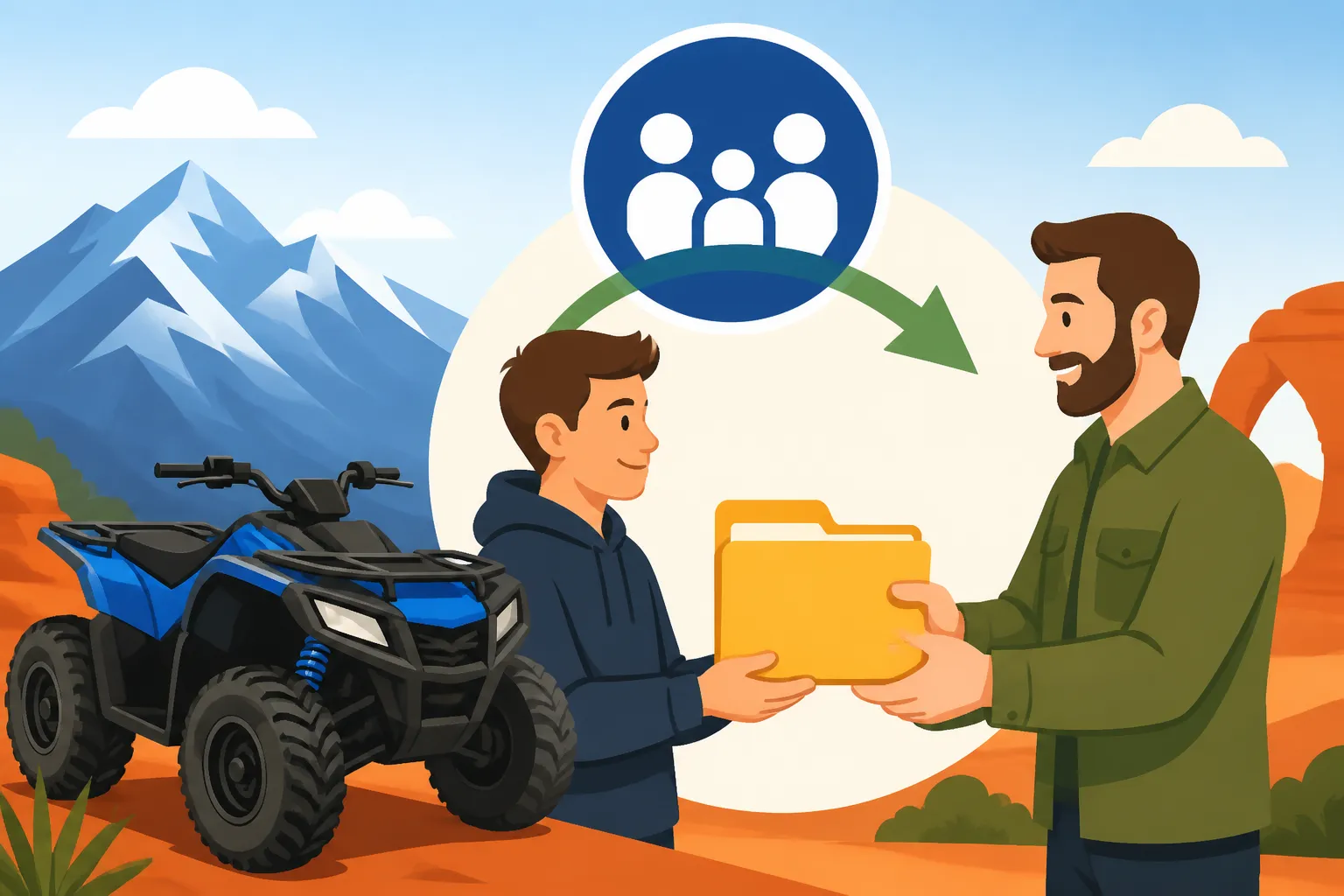
Trying to transfer an ATV or UTV to a family member in Utah can sometimes feel more complex than it needs to be, even though you'd think it would be straightforward. You might worry about missing a crucial form, paying unnecessary fees, or accidentally invalidating the title if you don't follow the exact rules. This guide is here to untangle that process, offering a clear, empathetic roadmap for ensuring your family OHV title transfer is smooth, legal, and stress-free, covering all the paperwork and steps involved.
Why Family Transfers Need Proper Paperwork
It might seem like just "keeping it in the family" means you can skip some of the official steps, but when it comes to vehicle titles, that's almost never the case. Utah's Division of Motor Vehicles (DMV) and county assessor's offices treat all title transfers seriously, regardless of whether the transaction is between strangers or loved ones. The rules are there to protect both the giver and the receiver, ensuring clarity of ownership and compliance with state regulations. Skipping steps, even with the best intentions, can lead to significant headaches down the road, from legal disputes to problems with future registrations.
The Importance of a Clear Title
Think of an OHV title as the ultimate proof of ownership. It's the official document that says, without a doubt, who legally owns that ATV or UTV. When you transfer an OHV within your family, you're not just handing over the keys; you're transferring that legal responsibility and privilege. A clear, properly transferred title means the new owner can register the machine in their name, obtain proper decals, and most importantly, prove it's theirs if it's ever stolen or involved in an accident. Without a clear title, they could face issues when trying to get [Utah OHV Decals and Where They Go] or even riding it on public lands.
Imagine a scenario where a parent gives their son a UTV for his birthday, and they simply write "gift" on the old title without completing any other forms or going to the DMV. A few years later, the son decides to sell the UTV to upgrade to a newer model. When the buyer tries to register it, they discover the title was never formally transferred, leading to a bureaucratic nightmare for both the son and the new buyer. The original "gift" now complicates everything, often requiring the original owner (the parent) to get involved again, sometimes years later, just to sort out the initial oversight.
Avoiding Future Headaches and Legal Issues
Properly completing the title transfer, even within a family, protects everyone involved. For the person giving the OHV, it officially removes their name from the vehicle's records, meaning they are no longer liable for any issues related to its ownership, such as property taxes or potential legal entanglements if the machine is involved in an incident. For the recipient, it solidifies their ownership rights, allowing them to register, insure, and eventually sell the OHV without complications. This also prevents issues with things like [The Age-Based Uniform Fee on Utah OHVs] and ensures these fees are correctly assigned to the new owner.
Consider what might happen if you transfer an ATV without formally changing the title, and then the original owner passes away. The "new" owner might find themselves in a difficult position trying to prove ownership to the estate or the DMV, especially if other family members dispute the transfer. This can lead to court orders, affidavits, and a lot of unnecessary stress during an already difficult time. Taking the time to do it right at the beginning saves everyone from potential legal battles, administrative hurdles, and emotional strain in the future. It's truly a small investment of time for significant peace of mind.
Key Documents for a Family Title Transfer
When you're transferring an OHV within the family, the paperwork isn't quite as minimal as you might hope, but it's certainly manageable if you know what to gather. The primary goal is to clearly document the change in ownership and provide all necessary information to the state of Utah. While every situation might have a slight variation, there are core documents that nearly all family title transfers will require. Getting these in order before you head to the DMV or county assessor's office will save you a lot of time and potential repeat trips. This proactive approach is key to a smooth experience, preventing the frustration of being told you're missing just one more piece of paper.
The Utah Certificate of Title
This is the absolute cornerstone of any OHV transfer. The Certificate of Title is the official document issued by the state that identifies the vehicle by its Vehicle Identification Number (VIN) and clearly states the legal owner. For a transfer, the current owner (the giver) will need to sign over this title to the new owner (the recipient). It's crucial that this document is the original, not a copy, and that it's in good condition with no alterations or erasures. If the title is lost, damaged, or has incorrect information, you'll need to address that first. Don't worry, there's a process for that, which you can learn about in [Replacing a Lost ATV Title in Utah].
When signing, the seller (the person giving the OHV) will sign in the designated "seller" or "assignor" section, and the buyer (the person receiving the OHV) will sign in the "buyer" or "assignee" section. Pay close attention to any odometer disclosure statements, even though many OHVs don't have odometers that apply to federal disclosure laws. However, some newer UTVs do. If it's required, ensure it's filled out accurately. Also, if there's an existing lien on the title (meaning the OHV was financed and the loan isn't fully paid off), the lienholder will need to release their interest before the title can be transferred. This typically involves them signing off on the title or providing a separate lien release document.
Bill of Sale and Its Role
Even if you're "gifting" an OHV to a family member, a Bill of Sale is still highly recommended, and sometimes legally required, especially for documenting the transaction value for tax purposes or proving the gift status. A Bill of Sale acts as a formal record of the transfer, even when no money changes hands. It should include the full names and addresses of both parties, a complete description of the OHV (make, model, year, VIN), the date of the transfer, and crucially, the agreed-upon price – which can be $0 if it's a gift. This document supports the title transfer and can be vital for tax exemptions. You can find templates online from sites like LawDepot or create your own, ensuring it contains all the necessary details outlined in [Utah Bill of Sale: What It Must Say].
For a family transfer, the Bill of Sale becomes especially important if you're claiming a sales tax exemption for a gift. By clearly stating a $0 sale price and noting it as a "gift" to a direct family member, you provide the necessary documentation to the DMV or county assessor. This also provides both parties with a written record of the transaction, which can be invaluable should any questions arise later regarding the date of transfer or the terms of the exchange. While Utah doesn't always require a notarized bill of sale for OHVs, it's generally a good practice for significant transactions, especially if you want to avoid future disputes, as covered in [Do You Need a Notarized Bill of Sale in Utah?].
Other Supporting Documents
Beyond the title and bill of sale, you might need a few other items to complete the transfer smoothly. Both parties should bring a valid form of identification, such as a driver's license or state ID. If the OHV is older than a certain year (Utah's title rule often applies to 1988 and newer machines, so you might be dealing with [Registering a 1987 ATV in Utah] or [Title Rules for a 1990s Four-Wheeler in Utah]), and has never had a title, the process can be a bit different, potentially requiring a VIN inspection or other affidavits to establish ownership.
Also, if the OHV is being gifted, especially to a minor, you'll want to be prepared for questions about the relationship between the giver and recipient. Sometimes, a simple statement of relationship on the Bill of Sale is enough, but having a clear understanding of the tax implications for [Taxes on an ATV Gifted Between Relatives] is wise. For minors, specific rules apply about [Putting a Utah OHV in a Minor's Name], often requiring a parent or guardian to be involved in the registration process. Always bring proof of your current Utah residency as well, like a utility bill or other official mail, as the DMV will want to confirm this for the new registration.
The Step-by-Step Process for Transferring a Family OHV Title
Okay, so you've gathered your documents, understood the 'why,' and you're ready to make it official. The actual process of transferring an OHV title in Utah, while requiring a few specific steps, is designed to be straightforward once you have everything in order. The key is to follow the sequence, ensuring each document is completed correctly before moving to the next. Rushing or skipping steps at this stage can lead to frustrating delays and extra trips to the office. Think of it as a clear path: prepare the title, complete the bill of sale, and then visit the appropriate state office. This systematic approach ensures a smooth transition of ownership, from one family member to another.
Preparing the Title for Transfer
The first critical step involves the existing Certificate of Title. The current owner must locate the physical title document. If it's lost, they'll need to apply for a duplicate title before the transfer can proceed. Once the original title is in hand, the seller will need to sign in the designated "Seller's Signature" or "Assignor" box. It's incredibly important to sign exactly as their name appears on the title, without any changes or alterations. Any discrepancies can flag the document and cause issues at the DMV.
Next, the new owner (the family member receiving the OHV) will also need to sign in the "Buyer's Signature" or "Assignee" section. They, too, should sign their name clearly and correctly. There are usually sections for recording the date of sale (or transfer) and the purchase price. Even if it's a gift, you'll typically enter "$0" or "Gift" in the price field. Some titles also have an odometer reading section. While many ATVs/UTVs don't have odometers, if yours does, and especially if it's a newer model, accurately record the mileage. Double-check that all signatures are present and legible, and that all relevant fields are filled out. Mistakes on the title itself can void the transfer, so take your time and review it carefully.
Completing the Bill of Sale
Once the title is prepared, your attention shifts to the Bill of Sale. As discussed earlier, this document formalizes the transfer. Both the giver and the receiver should fill out their full legal names and current addresses. The OHV itself needs to be thoroughly described, including the year, make, model, and the all-important Vehicle Identification Number (VIN). This ensures there's no ambiguity about which machine is being transferred. LawDepot, among other online resources, offers good templates for a bill of sale that you can customize to ensure all the necessary information is included for Utah requirements.
For family transfers, especially gifts, the "price" section is where you'll indicate "$0.00" or "Gift." This is vital for the sales tax exemption. You should also clearly state the date of the transfer. While not always legally mandated for OHVs in Utah, having the Bill of Sale notarized adds an extra layer of legal validity, making it harder for anyone to dispute the transaction later. This is particularly useful for substantial gifts or if there's any potential for future family disagreement. Once completed and signed by both parties, each person should retain a copy for their records. This document is a key piece of the puzzle when you visit the DMV, especially for establishing the value (or lack thereof) for tax calculations.
Visiting the Utah DMV or County Assessor's Office
With the title correctly signed and the Bill of Sale completed, the final step is to make it official with the state. The new owner (the recipient) must visit a Utah Division of Motor Vehicles (DMV) office or a county assessor's office. You can't typically transfer an ATV title online in Utah, so an in-person visit is usually necessary. It's highly recommended that both the giver and the receiver attend, if possible, as it can streamline the process if any questions arise. Be sure to bring all your documents: the signed-over Certificate of Title, the completed Bill of Sale, and valid photo identification for both parties.
At the office, you'll present your documents. The clerk will review them to ensure everything is correct and complete. The new owner will then apply for a new title and registration in their name. This will involve filling out a Vehicle Application form (often provided at the counter). You will pay any applicable fees (which we'll discuss next) and the Uniform Fee. Once processed, you'll receive a temporary registration, and the new title will be mailed to you, typically within a few weeks. The state wants to ensure the new owner has official proof of registration to carry with them, which is vital for any off-highway adventures, as discussed in [What Paperwork Utah Riders Must Carry].
Understanding Fees, Taxes, and Exemptions for Family Transfers
Navigating the financial side of an OHV transfer, even within family, can sometimes feel like trying to solve a puzzle with missing pieces. You might wonder if you'll have to pay sales tax on a gift, or what other hidden fees might pop up. The good news is that Utah does offer specific exemptions and clear fee structures that, once understood, make budgeting and planning much easier. The primary financial considerations are sales tax (and its potential exemptions), the annual registration fees, and the uniform fee. Understanding these components will ensure you're not caught off guard and can complete the transfer without unnecessary financial stress.
Sales Tax and the Gifting Exemption
One of the most common questions regarding family transfers is about sales tax. Normally, when you buy an ATV or UTV, you pay Utah sales tax on the purchase price. However, Utah law provides an exemption for gifts between certain direct family members. If you are genuinely gifting an OHV to a spouse, child, parent, grandparent, or sibling, you can usually avoid paying sales tax on the transfer. This is where your well-documented Bill of Sale, clearly stating the transaction as a "gift" with a $0 sale price, becomes absolutely crucial.
To claim this exemption, you'll typically need to attest to the family relationship and the gift status at the DMV or county assessor's office. Without a clear Bill of Sale indicating a gift, the state might try to assess sales tax based on the vehicle's fair market value, which is something nobody wants when they're trying to do a nice thing for a loved one. Be prepared to explain the relationship and the nature of the transfer. If you're transferring a machine for a nominal amount (e.g., $1), it's generally still considered a "sale" and sales tax would be applied based on that amount, or potentially the fair market value if the price is deemed too low. This nuance is important to understand when [Gifting an ATV to a Family Member in Utah] or dealing with [Taxes on an ATV Gifted Between Relatives].
Registration Fees and Uniform Fees
Regardless of whether you pay sales tax, the new owner will be responsible for the standard Utah OHV registration fees. These fees are typically renewed annually or biennially, depending on the option chosen, and help fund trail maintenance and OHV programs across the state. The specific amount can vary based on the type of machine and the chosen registration period, but it's a mandatory cost to make the OHV street-legal for trails. You can learn more about these costs and what they cover in [What the Utah OHV Registration Fee Pays For].
In addition to the basic registration fee, Utah also assesses a "Uniform Fee" on OHVs. This fee is paid annually and is based on the age of the vehicle, not its purchase price. Newer machines pay a higher uniform fee, which decreases as the vehicle ages. This fee is essentially a property tax on the vehicle and is collected at the time of registration. So, even if the OHV is a gift, the recipient will still need to pay this uniform fee and the regular registration fee to get their new plates and decals. This can significantly impact the overall [Utah OHV Registration Cost for One Machine].
County Fees and Other Potential Costs
While the sales tax, registration fee, and uniform fee are the primary costs, there might be other minor county-specific fees or administrative charges depending on where you register the OHV. These are usually small amounts, often just a few dollars, but it's good to be aware that the total might be slightly more than just the state fees. Always check with your local county assessor's office or the Utah DMV website for the most current and localized fee schedules.
Another potential cost, though not a fee per se, could arise if the OHV requires a VIN inspection. This is more common for machines coming from out of state, those without a clear title history, or those that have been heavily modified or rebuilt. While not strictly a fee for a family transfer of a Utah-titled machine, it's a process that might be required in unique circumstances, and some inspection facilities may charge a small service fee for their time. Knowing what to expect financially helps avoid any last-minute surprises at the counter.
Common Scenarios and Special Considerations
Family dynamics and vehicle histories can be complex, and a "standard" title transfer isn't always a perfect fit for every situation. You might be gifting an older machine that's never had a title, or transferring a newer one to a minor. These scenarios, while not necessarily harder, do come with their own specific rules and extra steps in Utah. Being prepared for these variations will ensure your family transfer goes smoothly, even if your circumstances are a little out of the ordinary. It's all about knowing the nuances and having the right information upfront.
Transferring a Gifted ATV or UTV
As we've touched upon, gifting an OHV to a direct family member (spouse, child, parent, grandparent, or sibling) generally allows for an exemption from sales tax in Utah. This is a huge benefit and makes a thoughtful present even more appealing. The key, again, is the Bill of Sale. It must explicitly state that the OHV is a gift and that no money or other valuable consideration was exchanged. This clear documentation, combined with the family relationship, is what the DMV or county assessor will look for. Without it, you might be asked to pay sales tax based on the vehicle's fair market value, which defeats the purpose of the gift exemption.
For instance, if a grandmother wants to gift her grandson her old ATV, she would ensure the Bill of Sale lists the grandson as the recipient and clearly marks the transaction as a gift. They would both sign it, and then the grandson would take it, along with the signed-over title, to the DMV. The DMV clerk would process the new title and registration, applying the gift exemption for sales tax, but still collecting the uniform fee and registration fees. Remember, it's about the clear intent and documentation. If you say it's a gift but there was a secret cash exchange, that's not just skirting the rules; it's misrepresenting the transaction and can lead to legal issues down the line.
Machines Without a Title or Older Models
What if the family OHV you're trying to transfer is an older model that, for whatever reason, never had a title? This is a surprisingly common scenario, especially with vintage ATVs or machines purchased privately many years ago without full paperwork. Utah's title rules primarily apply to OHVs manufactured in 1988 or newer. If you're dealing with [Registering a 1987 ATV in Utah] or even older, the process is different. For these older machines, proof of ownership might rely on a notarized Bill of Sale, old registration cards, or an affidavit of ownership. In some cases, a VIN inspection might be required to verify the machine's identity and ensure it's not stolen.
If the OHV is 1988 or newer and has never been titled, the process can be more involved. You might need to prove continuous ownership from the date of purchase, potentially requiring old bills of sale or affidavits from previous owners. The DMV will want to establish a chain of ownership before issuing a new title. This often involves submitting an application for a title with supporting documentation, and a VIN inspection is highly likely. It's a bit more legwork than a standard title transfer, but it's certainly doable with patience and thorough documentation. This is where researching [No Title From the Seller: What Utah Requires] becomes very important.
Minors and OHV Ownership
Transferring an OHV to a minor (someone under 18) in Utah comes with its own set of rules, primarily aimed at protecting the minor and ensuring responsible ownership. While a minor can legally own an OHV, the registration process typically requires a parent or legal guardian to sign on their behalf. The parent or guardian will usually be listed as the "responsible party" on the registration, accepting legal and financial responsibility for the OHV.
For example, if a father gifts his 15-year-old son a dirt bike, the father would still need to complete the title transfer as the giver, but when the son registers it, the father would likely need to co-sign the registration application or be listed as the primary contact and responsible party. This arrangement ensures that there's an adult legally accountable for the machine's use, registration, and any associated liabilities. It's a common practice to have the minor's name on the title, but the adult's involvement in the registration is crucial. This is specifically detailed in [Putting a Utah OHV in a Minor's Name]. Always confirm the specific requirements with the DMV, as these rules are designed for safety and legal protection.
After the Transfer: What the New Owner Needs to Do
Congratulations! You've successfully navigated the family title transfer. But the journey isn't quite over for the new owner. Once the paperwork is submitted and the state has processed the change of ownership, there are a few crucial follow-up steps to ensure everything is fully legal and ready for the trails. These steps are about completing the cycle of ownership, getting the machine officially recognized, and protecting your new investment. Don't let the excitement of the new OHV overshadow these important final administrative tasks; they're essential for peace of mind and hassle-free riding.
Getting New Registration and Decals
Once the title transfer is processed, the new owner will receive a new registration card and new OHV decals from the state of Utah. This might happen immediately if you complete the process in person at the DMV, or they might be mailed to you within a few weeks. It's absolutely critical to receive and properly display these decals. The decals act as proof that your OHV is currently registered and legal for use on Utah's extensive trail system. They usually need to be prominently displayed on the left-hand side of the OHV, often on the rear fender for ATVs or the body panel for UTVs. The specific placement is important and can be found in resources like [Utah OHV Decals and Where They Go] or [Where to Put the Decal on a Side-by-Side].
Riding an OHV without current and visible registration decals can lead to fines and legal trouble if you're stopped by law enforcement. Think of it like driving a car with expired plates – it's just not allowed. The registration card should always be carried with you when riding, either the physical card or a digital copy that is readily accessible, as covered in [What Paperwork Utah Riders Must Carry]. This ensures that if you're ever questioned, you have immediate proof of your machine's legal status. The new owner is now responsible for [Renewing Your Utah OHV Registration] when it comes due, which is typically every one or two years.
Updating Insurance and Records
Another vital step for the new owner is to update their insurance. While Utah does not universally mandate insurance for off-highway vehicles, it is always a smart idea to carry liability and comprehensive coverage. If the OHV is being used in a street-legal conversion, then insurance becomes mandatory. Even if not street-legal, an accident can be incredibly costly, and insurance provides a critical financial safety net. If the previous owner had the OHV insured, that policy likely terminated or needs to be transferred, and the new owner will need to establish their own coverage. Contact your insurance provider as soon as the title is transferred to discuss your options and get the OHV added to your policy.
Beyond insurance, it's a good practice for the new owner to keep a comprehensive file of all their OHV-related documents. This includes a copy of the Bill of Sale, the new Certificate of Title, the registration card, proof of insurance, and any maintenance records. This organized approach will simplify future transactions, such as selling the OHV, dealing with warranty claims, or providing documentation if it's ever involved in an incident. Having everything in one place saves time and stress down the line. Finally, make sure to update your address with the DMV if you move, so all official communications regarding your OHV reach you.
Transferring a Utah OHV Within the Family: Key Steps
| Step | Description | Required Documents | Fees/Taxes Considerations | Who Does It |
|---|---|---|---|---|
| 1. Prepare Original Title | Current owner signs off in the "Seller" section. New owner signs in "Buyer" section. Date and (if applicable) odometer reading filled. Ensure no alterations. | Original Utah Certificate of Title | N/A (this step is preparing documents) | Both Giver and Receiver |
| 2. Complete Bill of Sale | Formalizes the transfer. Include full names, addresses, OHV description (make, model, VIN), and clearly state if it's a "gift" ($0) or a sale price. Recommended for all family transfers. LawDepot can assist. | Bill of Sale (printed or template from LawDepot) | Crucial for sales tax exemption if a gift. | Both Giver and Receiver |
| 3. Gather Supporting Identification | Both parties should bring valid government-issued photo identification (e.g., driver's license). | Photo ID for Giver and Receiver | N/A | Both Giver and Receiver |
| 4. Visit DMV/County Assessor's | New owner (receiver) applies for new title and registration. Both parties attending is ideal. Present all prepared documents. Fill out Vehicle Application form. | Signed Title, Bill of Sale, IDs, Proof of Utah Residency | Registration fees, Uniform Fee. Sales tax exemption applied if a valid gift. | Primarily Receiver (Giver if available) |
| 5. Pay Fees & Receive Temp Docs | Pay the annual registration fee and the age-based Uniform Fee. If applicable, sales tax will be collected (or exempted). Receive temporary registration. New title mailed later. | N/A (payment method) | Registration Fee, Uniform Fee, (potentially) Sales Tax | Receiver |
| 6. Display Decals & Insure | Once new decals arrive, display them correctly. New owner must arrange for OHV insurance coverage. Carry registration/insurance proof when riding. | New registration card, Decals (mailed), Proof of Insurance | Insurance premium (optional but highly recommended, mandatory if street-legal) | Receiver |
Disclaimer
This article is for general informational purposes only and does not constitute professional advice. Laws, prices and regulations vary by location and change over time. Consult a qualified professional for guidance on your specific situation.