Steel Bender’s Ledges and Water Crossings
Steel Bender is one of the more demanding off-road routes near Moab, and its name is a fair warning: ledges, uneven rock, and water crossings can turn a casual outing into a long, tiring day. This guide explains what to expect, how to judge whether your machine and group are ready, and how to plan for changing trail conditions.
What to Expect on Steel Bender
A technical route, not a casual scenic drive
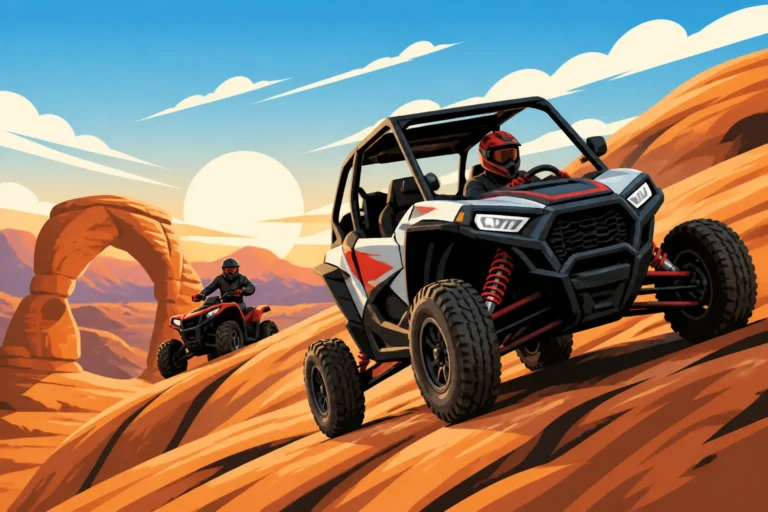
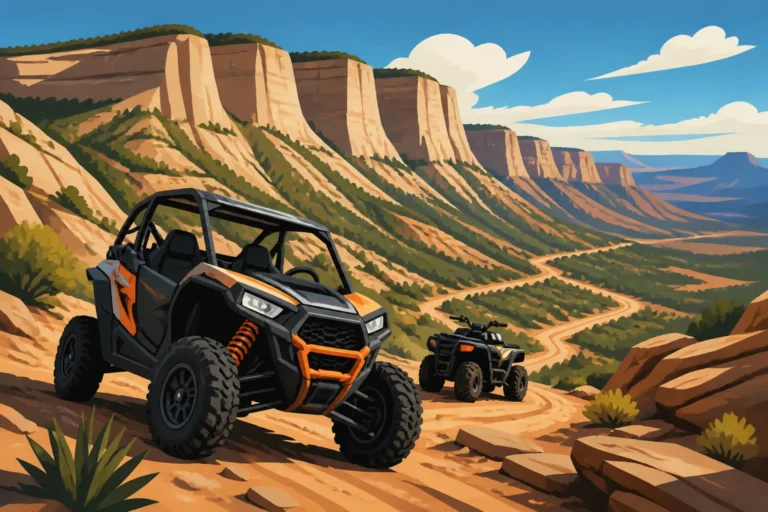
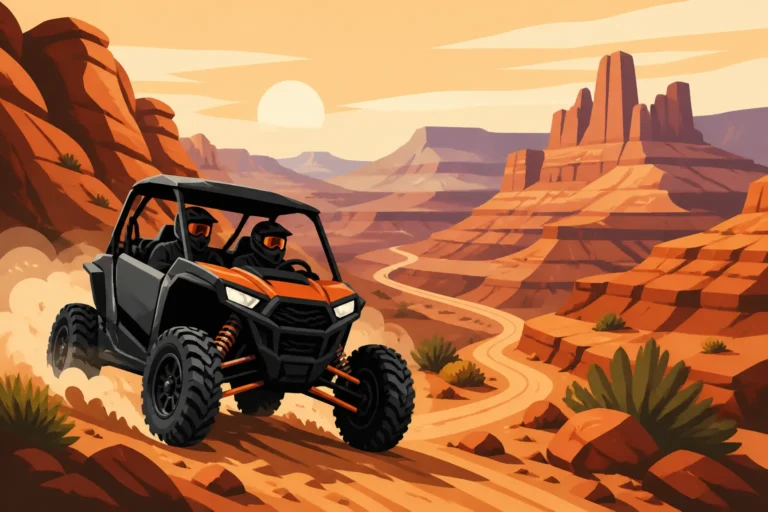
Steel Bender is known for rugged terrain and obstacles that call for deliberate driving. Riders may encounter steep rock ledges, uneven surfaces, tight turns, and sections where the line through the terrain matters. Conditions and the precise challenges you face can vary with weather, erosion, traffic, and the route you choose. Even if you have driven other Moab trails, it is worth treating this one as a serious outing rather than assuming your previous experience will transfer perfectly.
A difficult trail can also take more time than its distance suggests. You may need to stop to assess an obstacle, guide a driver through a line, or wait for another group to clear a narrow section. Passengers can feel every slow crawl and jolt, especially in a smaller or less cushioned machine. Build your schedule around the technical nature of the route, not just a quick estimate of driving time.
If you are comparing routes, [Choosing a Moab Trail by Machine Width] can help you think through a practical question before you leave: will your machine fit comfortably, or will width make tight sections more stressful? For a broader look at the area, [Riding Moab, Utah on a Side-by-Side] offers useful context for planning a Moab ride.
Ledges and changing surfaces
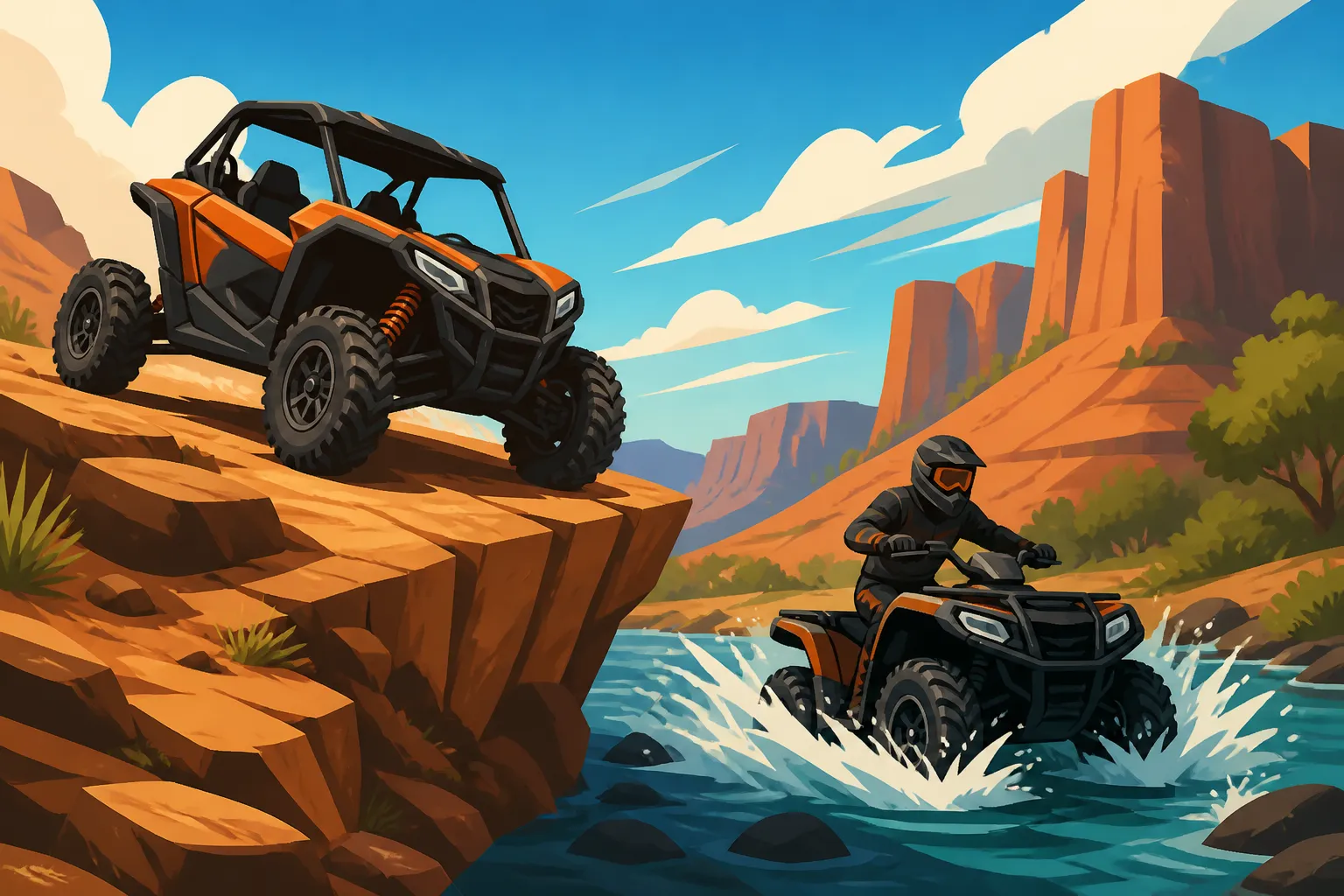
Rock ledges are not just bumps to power over. The height, shape, approach angle, traction, and room to maneuver all affect how a section feels. A ledge that seems manageable from the driver’s seat can look intimidating to a passenger watching the front end rise. Moving slowly and checking the approach before committing can help prevent a rushed decision.
Surface conditions change, too. Slickrock, loose dirt, sand, and embedded rock can appear close together, and tires may grip differently as you move from one surface to another. If a line looks uncertain, pause where it is safe to do so and take a moment to understand the obstacle. Avoid assuming that momentum will solve a problem; on technical terrain, speed can make a mistake harder to correct.
A useful approach is to treat every unfamiliar obstacle as a fresh decision. Check your clearance, consider your machine’s turning room, and make sure the driver can see the intended route. If the group is debating whether a section is within its comfort level, there is no shame in stopping to reassess rather than pressing on because the trail name or a previous rider’s report sounded manageable.
Water Crossings and Trail Conditions
Why a crossing deserves extra attention
Water crossings can look simple from a distance and feel quite different once you reach the bank. Water depth, current, the shape of the entry and exit, and the condition of the bottom can all change. Even a shallow-looking crossing may hide slippery rocks, ruts, or a soft edge. Do not assume that a crossing is safe because another vehicle passed through it earlier; water and trail conditions can shift.
Before entering, stop at a safe place and assess the crossing. Look for the route other vehicles have taken, but do not follow tracks blindly if they lead into a line that looks unstable or too deep for your machine. Consider how you would get out if the vehicle stalled or lost traction. If you cannot judge the depth or the exit, the conservative choice is to avoid entering until you have better information or assistance.
Water can also affect vehicle components and passenger comfort. Splashing may soak gear that is not in a dry bag, and wet surfaces can be slippery when people step out. Keep electronics, spare clothing, and essential documents protected. A crossing is one reason to avoid packing loosely or assuming that everything inside the cab will stay dry.
Conditions can change between visits
A description of the trail from a friend or an older trip report is only a starting point. Rain, snowmelt, heat, traffic, and maintenance can change the feel of the route. A familiar crossing may be different on a new visit, while a dry-looking approach can still have slippery patches or loose rock. Check current local trail information before setting out, and be prepared to adjust the plan once you reach the trail.
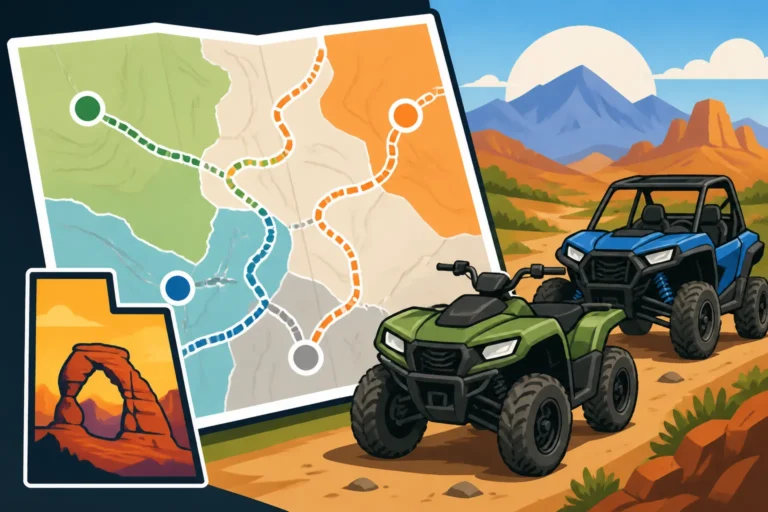
Mapping tools can help you understand where a route goes and how it connects with nearby roads, but they do not replace on-the-ground judgment. Some riders use onX Offroad to review route information and save maps for offline use before heading into areas with limited service. Cross-check the route with current land-management information, posted signs, and any closures you encounter. Never treat a line displayed on an app as permission to travel through a closed or restricted area.
If a storm has recently passed, take extra care with runoff, muddy sections, and washed-out edges. A route that was comfortable in dry weather may become harder to navigate after precipitation. For more trip-planning help, [Checking Utah Trail Conditions Before You Tow] and [Trail Closures Utah Riders Should Check First] are useful reminders to verify conditions before the trailer is loaded.
Choosing a Machine and Preparing Your Group
Match the vehicle to the terrain
A capable machine still needs to suit the route and the driver. Ground clearance, tires, turning space, vehicle width, and the driver’s experience all affect how comfortable Steel Bender feels. A vehicle that can handle uneven terrain may still be awkward in a tight section, while a wide machine can limit line choices where the trail narrows. Think beyond the question “Can it make it?” and consider whether you can drive it carefully and comfortably over the obstacles you expect.
Before the trip, check the machine’s condition. Look over the tires, brakes, steering, lights, and basic safety equipment. Make sure passengers know how to use seat belts and follow the driver’s instructions. If you are renting, ask the provider which routes are suitable for that specific machine and whether any restrictions apply. Rental terms and permitted routes can differ, so do not rely on a general assumption that every rental vehicle is allowed everywhere.
Groups with different machine types or experience levels should agree on a realistic plan before starting. The least experienced driver may need more time at obstacles, and a group can become separated if faster riders continue ahead. [Wide Side-by-Sides on Narrow Moab Routes] is a helpful read if you are weighing how a larger vehicle may affect route choice.
Set expectations for passengers and newer drivers
A technical ride can be tiring even when nobody gets stuck. Passengers may feel nervous on ledges or when the vehicle pitches over uneven ground. Talk through what to expect before the ride, including the possibility of delays, dust, and getting out to inspect an obstacle. A calm passenger who knows the plan is less likely to be startled when the driver stops to assess a section.
Newer drivers should avoid feeling pressured to keep up with the most confident person in the group. Agree in advance that anyone can ask for a pause, and that the group will not push a driver into an obstacle they are not comfortable attempting. If someone is unsure, it is reasonable to ask another experienced person to assess the line or to reconsider the route. Good judgment is part of off-road skill, not a failure of it.
If this is your first challenging Moab ride, consider building experience on a route that better matches your current comfort level before attempting a more technical outing. [Fins and Things for First-Time Slickrock] may help you compare another well-known Moab option, while [What Trail Difficulty Ratings Leave Out] is a useful reminder that ratings cannot capture every driver’s experience, vehicle setup, or conditions on the day.
| Planning factor | Why it matters on Steel Bender | Practical response |
|---|---|---|
| Ledges and uneven rock | The right line and careful control matter | Stop safely to assess unfamiliar obstacles |
| Water crossings | Depth, traction, and the exit can vary | Evaluate conditions before entering |
| Vehicle width | Tight terrain can reduce maneuvering room | Confirm your machine suits the route |
| Recent weather | Runoff and surface changes can affect difficulty | Check conditions and be ready to change plans |
| Group experience | Different skill levels affect pace and decisions | Agree on a conservative group plan beforehand |
Planning the Day and Staying Prepared
Allow time for stops and decisions
A technical route rarely unfolds like a simple drive from point A to point B. You may need to wait for other riders, inspect an obstacle, help a passenger, or rethink a line. Give yourself room to stop without feeling that you are already behind schedule. If you are planning around daylight, meals, or a return drive to town, leave a generous margin rather than building the day around a best-case pace.
Before departing, make sure everyone knows the meeting point and the general plan. Keep the group together at route junctions and after obstacles where riders may lose sight of one another. If someone needs to stop, the group should have an agreed way to regroup. In remote terrain, a small communication mix-up can create more stress than the obstacle itself.
Offline navigation can be useful when cell service is unreliable. Riders sometimes use onX Offroad to save maps before leaving coverage, but download them in advance and learn how to use them before the ride. Keep a backup plan as well: know the area you are entering, pay attention to signs, and avoid relying on a phone battery as your only way to navigate or communicate.
Pack for a slower, rougher ride
Bring water, sun protection, food, and clothing suited to the forecast and the time of year. Conditions can feel different when you are exposed to sun, dust, wind, or changing temperatures for several hours. Keep water accessible rather than buried under gear, and pack snacks that passengers can reach without unloading the vehicle. A small first-aid kit and basic recovery equipment can also be useful, provided someone in the group knows how to use them safely.
Secure loose items before driving. On a bumpy trail, an unsecured bottle, tool, or phone can become a distraction or get damaged. Protect important belongings from dust and water, and make sure anything mounted to the vehicle cannot interfere with visibility, seat belts, or safe movement. For a more complete packing checklist, see [What to Carry on a Utah Day Ride].
Prepare for the possibility that the outing takes longer than expected. Carry enough supplies to handle a delay, and let someone who is not on the ride know your general plan and expected return window. This is especially worthwhile if your group is unfamiliar with the area or if you are relying on limited phone service. [Satellite Messengers for Remote Utah Rides] can help you consider communication options for trips where ordinary cell coverage may not be dependable.
Riding Responsibly Near Moab
Respect other trail users and posted restrictions
Steel Bender is part of a busy outdoor region, so courteous riding makes a difference. Slow down near other people, give them room, and avoid creating unnecessary dust when conditions allow. Watch for signs, closures, and route markers, and stay on designated routes. A trail shown on a digital map does not override a closure sign or a land manager’s direction.
If you meet another group at a narrow or awkward section, communicate clearly and give everyone time to move safely. Avoid rushing another driver through an obstacle simply because your group is waiting. If you need to stop, choose a place where you are not blocking the route or creating a hazard. Patience is particularly helpful when visibility is limited and people cannot easily see what is happening farther ahead.
Plan your route using reliable maps and check that the route remains open. onX Offroad can be a useful planning aid for reviewing mapped routes, but compare what you see in the app with posted information and official guidance. For more on interpreting maps, see [Reading a Motor Vehicle Use Map] and [Telling Open Routes From Closed on a Forest Map].
Know when to change the plan
The best ride plan is one you can change. A crossing may look different than expected, a driver may feel uncomfortable, or weather may make the trail less suitable. Decide in advance that turning around, waiting, or choosing another route is acceptable. That conversation is easier before anyone is tired, frustrated, or committed to getting through a particular obstacle.
If someone in your group is uncertain, take the concern seriously. Reassess the terrain, vehicle setup, and conditions rather than framing the decision as a test of courage. A careful choice can prevent a damaged machine, an injury, or a difficult recovery. Even experienced riders sometimes decide an obstacle is not worth attempting on a particular day.
For visitors planning several rides around Moab, it can help to compare alternatives rather than make Steel Bender the only option. [The Best ATV and UTV Trails in Utah] provides broader ideas, and [Choosing Between Moab and Sand Hollow] can help with bigger-picture trip planning. Pick a route that fits your group’s experience and the conditions you actually encounter—not just the route you imagined at home.
Disclaimer
This article is for general informational purposes only and does not constitute professional advice. Laws, prices and regulations vary by location and change over time. Consult a qualified professional for guidance on your specific situation.