Riding Etiquette When You Meet Horses
When an ATV or UTV meets horses on a Utah trail, the hardest part can be knowing what to do without startling the animals or creating a risky squeeze on a narrow route. The safest approach is to slow down early, give the group room, and ask the horseback rider how they want you to pass. This guide walks through that moment, step by step.
Why meeting horses calls for extra care
Horses can react to noise and movement
Horses are prey animals, so an unfamiliar sound or sudden movement can make them tense, shy sideways, or bolt. A UTV engine, tires crunching over gravel, a helmeted rider appearing around a blind bend, or dust blowing toward the group may all cause concern. Even a horse that seems calm from a distance can react unpredictably when a machine approaches.
That is why the goal is not simply to avoid a collision. It is to give the horse and rider enough space and time to stay in control. Slowing down well before you reach the group makes your approach easier to notice and gives the rider a chance to signal what they need.
Keep in mind that the rider knows their horse better than you do. One horse may stand quietly beside a stopped UTV; another may be nervous around engines. Don’t assume that a group you passed safely last weekend will react the same way today.
Trail conditions can make a meeting more complicated
Utah riding areas include everything from broad, open routes to narrow forest trails, sandy tracks, rocky ledges, and steep sections. On a wide, level road, it may be easy to stop far to the side. On a narrow ledge or loose hillside, moving over could put your machine or the horse in a less stable position.
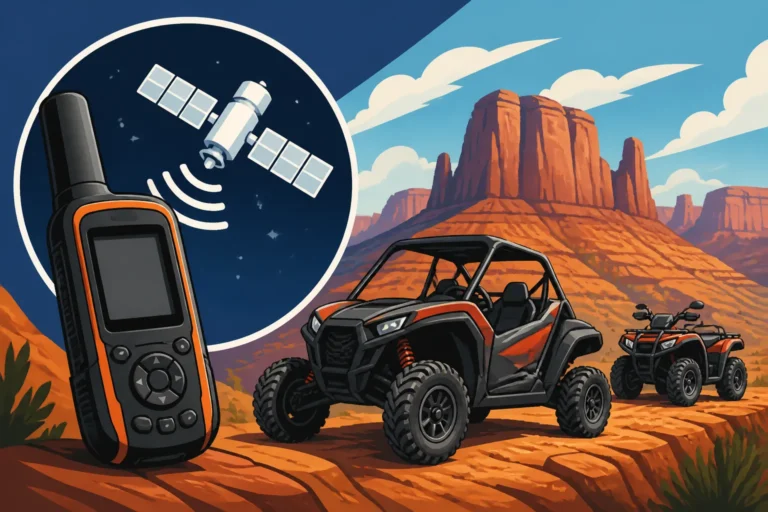
Blind corners and hill crests deserve special attention. Keep your speed low enough that you can stop within the distance you can see. On unfamiliar routes, use an appropriate trail map or navigation tool, such as onX Offroad, to plan where you are going and notice route context before you arrive. A map helps with preparation, but it does not replace posted signs, local closures, or what you can see on the trail.
If you’re choosing a route for a mixed group, What Trail Difficulty Ratings Leave Out is a useful reminder that a route description can’t capture every real-world condition. Loose gravel, limited sightlines, or a narrow spot can turn a routine pass into a situation that needs patience.
What to do when horses are approaching
Slow down, stop early, and stay predictable
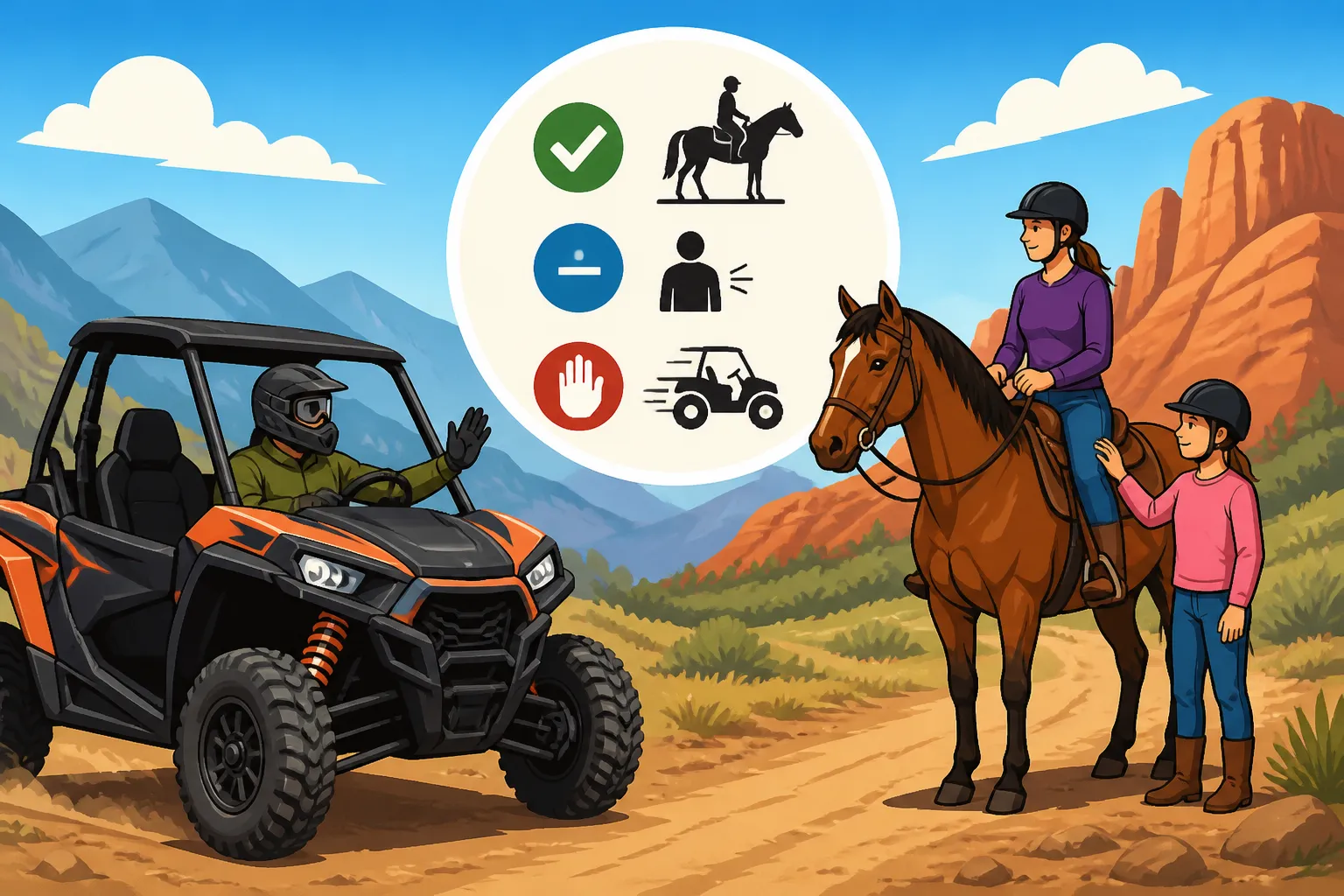
As soon as you see horses, ease off the throttle and reduce your speed gradually. Avoid accelerating toward them, spinning tires, or making a sudden turn. If the trail allows, stop at a safe distance and leave the engine idling only if the rider indicates that is acceptable. If they seem concerned, turn the engine off.
Give the horses room to assess the situation. Don’t crowd them while deciding where to pull over, and don’t park so close that the riders have no clear path forward. On a narrow route, stay where you are if moving would make things less safe. A calm pause is better than squeezing past to keep your group on schedule.
If you are riding with others, signal the group to stop before anyone reaches the horses. Keep following riders from bunching up behind the lead machine. A line of vehicles waiting quietly at a distance is easier for the horseback group to manage than several machines closing in from different directions.
Let the horseback rider guide the pass
Once you have stopped, communicate calmly and clearly. Ask the rider what they would like you to do: remain stopped, switch off the engine, move to a specific side, or pass slowly. If they give you instructions, follow them rather than trying to guess what will be easiest.
There is no single passing maneuver that works on every trail. A horse may need to see a machine approach, or the rider may prefer that you wait until they move to a wider section. Don’t assume that passing on the downhill side, uphill side, or shoulder is automatically safest. The rider can judge their horse and the immediate terrain better than you can.
When the rider says it is safe to proceed, move slowly and steadily. Avoid revving, sudden braking, honking, or stopping right beside the horse unless the rider asks you to. Leave as much space as the trail permits, and continue at a walking pace until you are clearly past the group. If the rider asks you to wait, wait.
For broader planning, Passing Hikers and Bikes on Shared Trails covers the same basic habit that matters here: yield with care, communicate, and avoid turning a trail encounter into a race to get through.
How to pass safely in different situations
On a narrow or steep trail
If there is no safe place for both machines and horses to pass, don’t force it. Stop in a stable, visible spot and ask the rider what they recommend. Depending on the terrain, the safest choice may be to let the horses continue to a wider section, or to back up slowly to a turnout. Only reverse if you can do so without creating a new hazard, and use a spotter if your group has one.
Be especially cautious about pulling onto a steep edge, loose slope, or soft shoulder. A vehicle that slides or tips can frighten the horse and put your passengers at risk. If the horses are already moving through a tight section, stay still and quiet unless the rider directs otherwise.
The same judgment applies to oncoming traffic around a bend. If you can’t see far enough to stop safely, reduce speed before the bend and be ready to yield. A route-planning app like onX Offroad can help you prepare for an unfamiliar ride, but conditions can change and a mapped route does not guarantee that every section has room to pass.
In dust, wind, or a large group
Dust can make a close pass stressful and can reduce visibility for everyone. If the surface is dusty, stop early and wait for the cloud to settle before moving again. Don’t idle close to the horses if exhaust or engine noise is bothering them; ask the rider whether turning off the machine would help.
Large groups need a little more organization. Have one person communicate with the horseback rider while the rest of the group waits quietly. Pass one machine at a time only when the rider says it is okay. Keep children and passengers seated, and make sure nobody walks toward the horses to take a closer look or a photo.
Before heading out, review group expectations and route choices together. Group Size Limits on Some Utah Routes can help riders think about how group size affects trail use, while Reading a Motor Vehicle Use Map is useful when you need to confirm which routes are open to motorized vehicles. Check signs and closures at the trailhead as well as your map.
Common mistakes and better trail habits
Avoid rushing, crowding, and making noise
A common mistake is waiting until the last moment to slow down. That leaves the horseback rider with little time to respond and may make your vehicle seem more threatening. Another is pulling close to the horse while trying to find a passing spot. Keep distance first; work out the pass second.
Avoid revving the engine to announce yourself, honking, or shouting suddenly. Speak in a normal, calm voice if you need to communicate. Don’t assume the horse is comfortable just because it has seen other vehicles, and don’t try to pass while the rider is still signaling or moving their horse into position.
Also, don’t follow directly behind horses at close range. If you meet a group traveling in your direction, give them plenty of room and ask before passing. The riders may want to pull over at a particular place, or they may prefer that you wait until the route widens.
Prepare before you reach the trail
Good etiquette starts before the ride. Choose routes that match your group’s experience, ride at a speed that allows you to stop safely, and brief passengers on what to do if you encounter horses. Children should know to stay seated, keep hands inside the vehicle, and avoid calling out or making sudden movements.
Use maps and trail information to plan, but treat them as preparation rather than permission. onX Offroad can help you review routes and get oriented before a ride; confirm access using current posted information and the land manager’s rules. If you’re uncertain whether a route is open to motorized use, don’t assume that a line on a screen settles the question. Trail Closures Utah Riders Should Check First and Utah OHV Trail Maps and How to Read Them offer useful context for planning responsibly.
A few simple checks can make a ride smoother:
- Reduce speed before blind corners, hill crests, and narrow sections.
- Keep a safe stopping distance and watch for riders, livestock, and trail signs.
- Stop early when you see horses and signal the rest of your group.
- Ask the horseback rider how they want you to pass.
- Move only when directed, passing slowly and leaving as much room as possible.
- Wait quietly if the terrain or the horse’s behavior makes passing uncertain.
If you are taking visiting riders out, share the expectations before you unload. What Utah Riders Must Carry on Public Land can help with general ride preparation, and Riding Etiquette When You Meet Horses should be treated as a reminder to make room for other trail users, even when a ride is running behind schedule.
A calm, courteous encounter may take only a few extra minutes. Those minutes are worth it: they help protect the horse, the horseback rider, your passengers, and everyone else sharing the route. When in doubt, stop, give space, and let the rider guide the next move.
Disclaimer
This article is for general informational purposes only and does not constitute professional advice. Laws, prices and regulations vary by location and change over time. Consult a qualified professional for guidance on your specific situation.