Whip Flag Rules at Sand Hollow
Sand Hollow’s open dunes can make a rider disappear behind a crest in seconds, especially when several machines are climbing or crossing at once. A whip flag helps other riders spot you before the vehicles themselves come into view. This guide explains when to use one, how to set it up for a Sand Hollow ride, and what to check before unloading.
When You Need a Whip Flag at Sand Hollow
Dune riding is the key situation
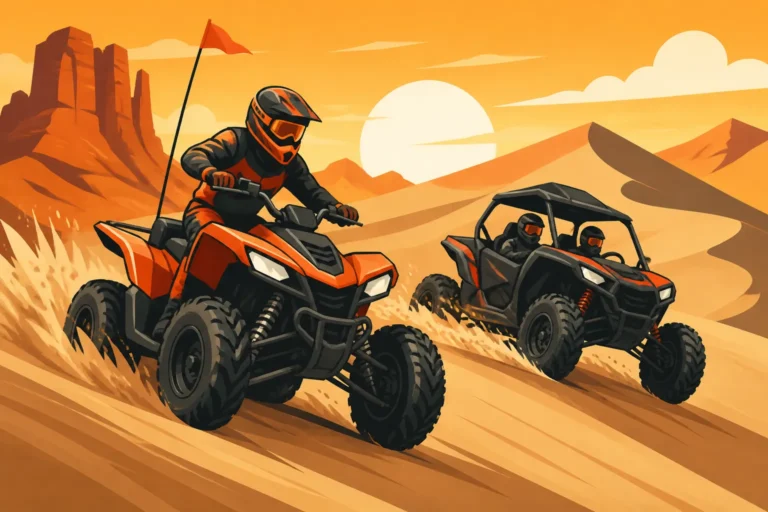
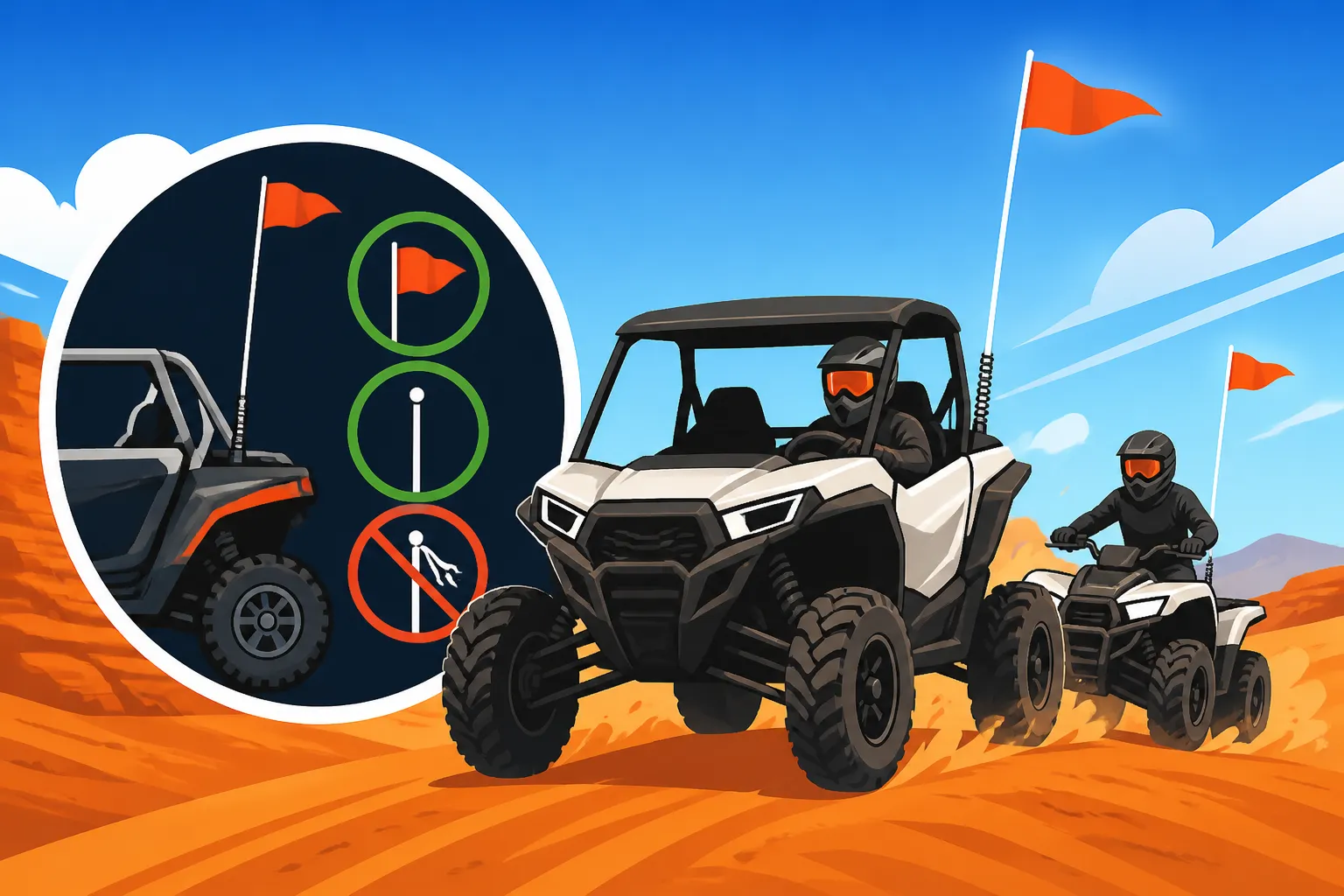
At Sand Hollow, the main reason to carry a whip flag is visibility on dune terrain. When a machine goes over a ridge or climbs a slope, the ground can hide it from riders approaching from the other side. A tall, bright flag can appear above the crest before the machine does, giving both riders more time to slow down or change course.
Treat a whip flag as required while riding in the dunes, and follow any park signs or instructions that apply to your route or staging area. The precise requirements can depend on the rules in effect and the area you are entering, so don’t rely on what a friend uses at another riding area as your only guide. Before you ride, check the posted rules at Sand Hollow State Park and review current Utah OHV requirements.
If your day includes a mix of dunes, roads, and established trails, don’t assume the flag is needed only when you are climbing a steep face. You may pass between different types of terrain without returning to your trailer. Keeping the flag mounted throughout the ride is often the simplest way to avoid removing it too early or realizing you need it again after you’ve left the dunes.
For a wider overview of the area’s terrain and access points, see [Sand Hollow and Sand Mountain: A Rider's Guide]. If you are planning your route from town, [Getting to Sand Mountain From St. George] can help you think through the approach and staging logistics.
A flag helps, but it does not make dune crossings safe by itself
A whip flag is a visibility aid, not a substitute for cautious riding. It can help make your vehicle easier to spot, but it cannot show another rider exactly where you will go, how fast you are moving, or whether you are about to turn. A flag can also be difficult to see in dust or against a bright sky.
Approach dune crests cautiously. Avoid charging over a blind ridge, and don’t assume the other side is clear because you cannot see a vehicle. If you are approaching a crest, reduce your speed enough to stop if another rider appears. When riding with a group, leave room between machines so a sudden stop by the lead rider does not turn into a pileup.
It also helps to establish simple group habits before leaving the staging area. Agree on where the group will regroup, how riders should signal a stop, and what to do if someone gets separated. These small conversations can prevent a stressful search when the dunes, engine noise, and dust make it hard to keep everyone in sight.
Choosing and Mounting a Whip Flag
Check the flag, pole, and attachment point together
A flag needs to be visible and securely attached. Check that the fabric is bright and in good condition, the pole is not cracked or bent, and the mount is firmly fastened to the machine. A flag that has faded, torn, or become difficult to see may not do its job well, even if it is still attached.
The correct height, color, size, and mounting requirements are matters to verify against the posted rules for the area and Utah OHV regulations. Don’t guess based on a photo or on a setup that someone else says worked somewhere else. Rules may set specific standards, and park signage is a sensible place to confirm them before riding.
The mount should suit your machine and riding plans. A secure attachment matters on a UTV, ATV, or other OHV because vibration and bumps can loosen hardware over time. Give the mount a firm check before each ride, and stop if the flag starts leaning, wobbling excessively, or coming loose.
| What to check | Why it matters | Before you ride |
|---|---|---|
| Flag visibility | A bright flag is easier to notice above dune terrain | Replace torn, dirty, or faded fabric |
| Pole condition | A damaged pole may bend or fail during the ride | Look for cracks, kinks, or loose sections |
| Mount security | A loose attachment can let the flag shift or detach | Check fasteners and the base |
| Posted requirements | Rules can specify the acceptable setup | Read signs and confirm applicable Utah requirements |
| Clearance | A flag or pole can interfere with loading or nearby equipment | Check how it sits with passengers, cargo, and the trailer |
Secure the setup without creating a new hazard
Before heading out, check that the flag is upright and can move as intended without catching on nearby equipment. On a UTV, make sure the mount does not interfere with passengers, belts, or the operation of the vehicle. On an ATV, check that the setup is firmly attached and does not interfere with your normal riding position or controls.
Think about the way the flag will behave in the wind and over rough ground. A pole that looks stable in the parking area may vibrate or flex during a ride. If it loosens, stop in a safe place and repair it before continuing. Don’t wait until the pole is dragging, swinging into another part of the vehicle, or creating a distraction.
If you carry tools or spare parts, include whatever you need to tighten or repair the mount. A quick pre-ride check is especially useful when several machines share a trailer: a pole may be bumped during loading, or someone may remove a flag to make room and forget to reinstall it. The checklist in [What to Carry on a Utah Day Ride] can help you plan other basic ride-day supplies.
Riding With a Whip Flag in the Dunes
Visibility changes with terrain and conditions
A flag is most useful when riders can see it, so pay attention to the conditions that make visibility worse. Dust from multiple machines can obscure a flag, and bright light or a pale background can make some colors harder to distinguish. When traffic is heavy, ride as though another vehicle could be approaching from beyond the next crest even if you can’t see its flag yet.
Sand Hollow’s dunes can draw riders with very different experience levels and machines. One group may be climbing a slope while another is crossing nearby, and a rider may not expect a vehicle to appear from the other side of a ridge. Maintain enough space to react, avoid following too closely, and use a cautious pace where sightlines are limited.
Conditions and crowding also affect how easy it is to keep track of your group. If your plan involves a busy day, [Sand Hollow's Busiest Days for Riders] offers useful context for thinking ahead about traffic and ride timing. You can also use a trail map or navigation app such as onX Offroad to plan a route and identify landmarks, but don’t let a mapped route distract you from watching the terrain and other riders.
Don’t rely on the flag as your only communication
A flag tells other people that a machine may be nearby; it does not communicate your intentions. Use clear, predictable riding habits instead of assuming other riders understand what you plan to do. Slow down when visibility is limited, avoid sudden direction changes near other vehicles, and give riders on climbs or descents room to move.
If you stop, choose a location where approaching riders have a chance to see you and react. Avoid stopping just beyond a blind crest or in the path of a common line through the dunes. When possible, pull well clear of active travel routes and make sure the rest of your group knows you have stopped.
For families and mixed-experience groups, agree on a meeting point before separating. A map app such as onX Offroad may help a group keep track of a planned route, but phone service and battery life should not be assumed. Use an offline map when appropriate, keep the group plan simple, and make sure every rider knows what to do if they lose sight of the others. [Utah OHV Rules for Visiting Families] is a helpful companion if children or newer riders are part of your outing.
A Practical Pre-Ride Check
Check the rules and your equipment at the staging area
Before unloading, read the posted signs and make sure each machine has the required safety equipment for the riding area you intend to enter. Confirm that the whip flag is securely mounted, plainly visible, and in acceptable condition. If anything about the stated flag requirements is unclear, get clarification before you ride rather than trying to interpret the rule once you are already out on the sand.
It’s also worth checking the rest of your ride paperwork and gear at the same time. Confirm that your machine and riders meet applicable registration, permit, and education requirements, and that each person knows what to carry. Requirements can differ depending on where you ride and whether a machine is registered in Utah or another state. [What Rangers Check at Utah Trailheads] and [Utah OHV Rules for Visiting Families] can help you build a more complete pre-ride checklist.
If your group uses a navigation app, open the route before you leave the staging area and identify a few recognizable landmarks. onX Offroad can be one option for organizing route information, but it should complement—not replace—park signs, posted closures, and safe judgment on the ground. If the route changes, stop somewhere safe to discuss it rather than trying to sort out a screen while moving.
Recheck after loading, stops, or a change in terrain
A pre-ride inspection is not a one-time task. Check the pole and mount again after unloading, after transporting the machine over rough roads, and after a stop where people have handled or moved the flag. If you switch from dunes to other routes, consult the posted requirements for that area and decide whether to keep the flag mounted for the rest of the ride.
Before heading home, inspect the setup for damage and remove it only when you are back in a safe area. A pole that has been bent or a mount that has started to loosen should be repaired before the next outing. Keeping the flag in good condition saves you from discovering a problem at the staging area on your next trip.
A reliable habit is to build the flag check into the same routine as checking tires, fuel, helmets, and communication plans. That way, it becomes part of preparing the machine rather than an afterthought. For more information on navigating the park’s dune access, read [Sand Hollow State Park's Tunnel to the Dunes]. And if you’re still deciding whether a particular machine is a good fit for the terrain, [Sand Hollow With a Two-Wheel-Drive Machine] provides related riding context.
Disclaimer
This article is for general informational purposes only and does not constitute professional advice. Laws, prices and regulations vary by location and change over time. Consult a qualified professional for guidance on your specific situation.