Utah’s Little Sahara and Its Sand Bowls
Little Sahara’s shifting dunes can turn a fun ride into a tiring day if you arrive without a plan. The bowls, open sand and steep faces each call for different skills and equipment. This guide explains how to choose terrain, ride more safely, plan your route and prepare for a visit to Utah’s Little Sahara Recreation Area.
Getting to Know Little Sahara’s Sand Terrain
What riders mean by bowls
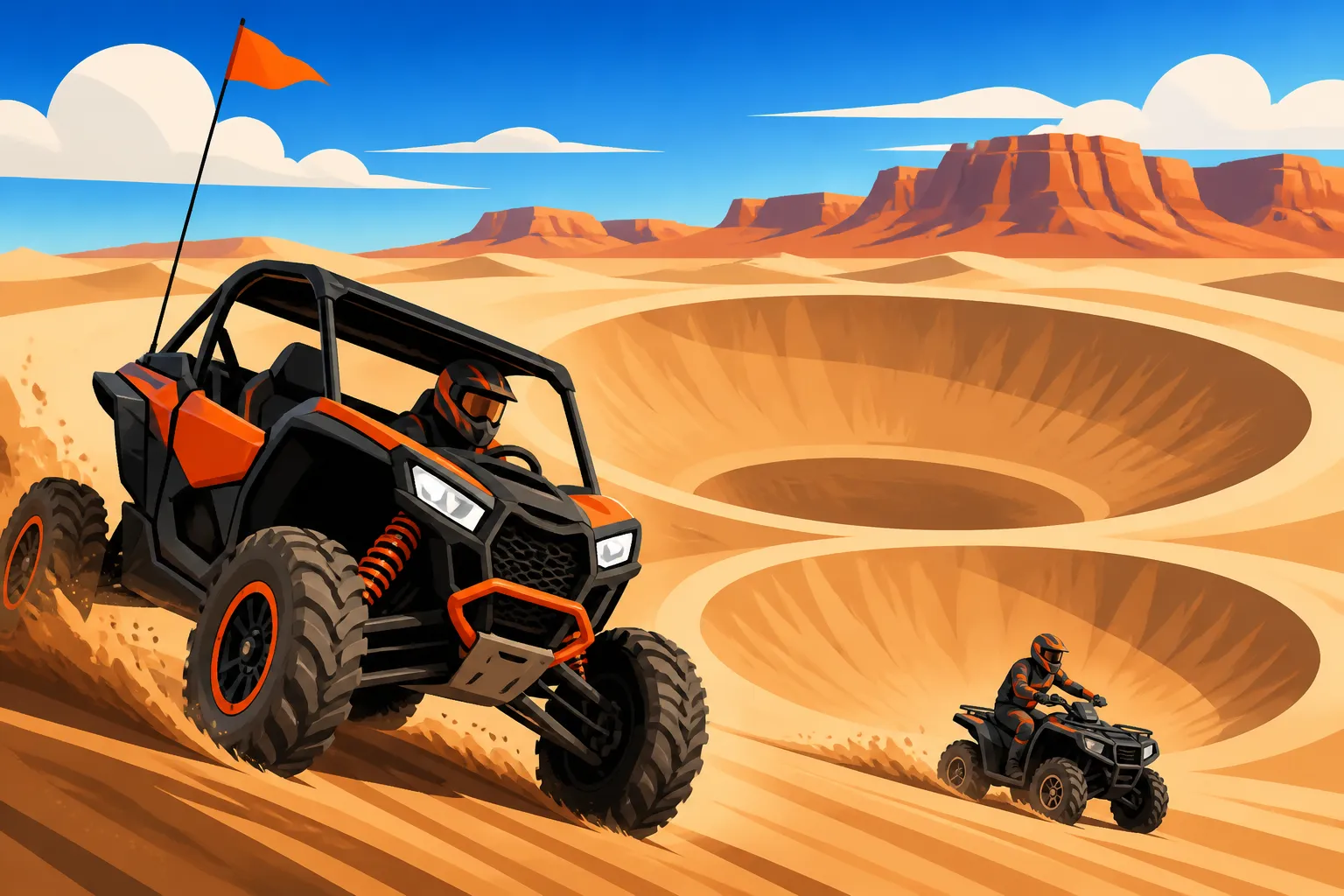
A sand bowl is a curved hollow or basin between dune ridges. From the rim, it can look like a broad, inviting slope. Once you ride down into it, though, the bowl may feel steeper, softer or more enclosed than it appeared from above. The shape can also hide other riders coming over a ridge, which is why visibility matters as much as machine capability.
The sand itself changes the experience. A machine that tracks well on a packed road may feel loose and heavy in soft sand, especially when turning uphill or climbing out of a low spot. Sand can also conceal abrupt changes in slope. A bowl that looks smooth from a distance may have ruts, chopped-up tracks or a sharp lip near the crest.
There is no single route through every bowl, and conditions vary with weather and traffic. Treat each descent as a decision, not a commitment: pause where you can see the slope, identify a clear way back out and avoid dropping into terrain you cannot confidently climb. For a wider overview of the area’s dune types, see [Utah's Sand Dune Riding Areas].
How the bowls fit into the riding area
Little Sahara Recreation Area is a large desert riding destination in Utah’s west desert, with dunes, open sand and other terrain around the dune fields. Sand Mountain is a prominent landmark and a well-known challenge for riders interested in climbing. But the bowls are not all alike, and the best choice depends on your experience, vehicle and the people riding with you.
Think in terms of terrain features rather than assuming every dune is a suitable hill climb. A broad, low-angle bowl may offer room to practice controlled turns, while a steep face or a narrow exit can quickly raise the difficulty. A route that feels comfortable in the morning can become harder after many vehicles have churned up the sand.
It helps to decide what kind of day you want before unloading. If you are there to explore, choose a route that keeps options open and allows regular regrouping. If your group is seeking technical climbs, agree on boundaries and turn-around points before anyone heads up. For a focused discussion of the area’s landmark climb, read [Climbing Sand Mountain at Little Sahara].
Choosing a Route That Fits Your Group
Match the terrain to the least experienced rider
When a group includes different ability levels, plan around the least experienced rider rather than the most confident one. A seasoned driver may be comfortable crossing a steep bowl, but a newer rider may have trouble judging whether the slope is safe or how much throttle is needed in loose sand. Keeping everyone on terrain they can manage makes it easier for the group to stay together and enjoy the ride.
A useful approach is to start with open, lower-angle terrain and use it to assess how each rider and machine handles the sand. Watch for signs of strain: a vehicle repeatedly bogging down, a driver making abrupt steering corrections or a rider needing several attempts to negotiate a feature. Those are cues to choose an easier route, not reasons to push harder.
Before taking on a steep climb, look at the whole line from a safe place. Consider the run-up, the slope, the crest and the route back down. If you cannot see the landing area or the far side of the ridge, do not assume it is clear. The guide [Are Little Sahara's Dunes Good for Beginners?] can help newer riders think through terrain selection and confidence-building.
Consider your machine and its setup
Soft sand places sustained demands on an ATV or UTV. Power, tires, ground clearance, vehicle weight and the driver’s technique all affect how a machine behaves. A larger side-by-side may feel stable across open ground but can be harder to turn around in a tight bowl. A utility quad may be versatile, yet its load and tire setup can affect how easily it floats over loose sand.
Avoid treating another rider’s successful line as proof that your machine will handle it the same way. A lighter vehicle, different tires or a more experienced driver can change the outcome. Carry only what you need for the ride, secure loose gear and check the machine before heading out. If you are riding a utility model, see [Little Sahara With a Utility Quad] for more terrain-specific considerations.
| Terrain or riding situation | What to consider | A cautious approach |
|---|---|---|
| Broad, lower-angle sand | Visibility, traffic and traction | Start slowly and leave room to turn |
| A bowl with a steep exit | Whether the full climb is visible and manageable | Inspect the route before descending |
| A busy dune face | Other riders approaching from above or below | Wait for a clear line and communicate |
| A long ride across open sand | Heat, fuel, water and regrouping points | Set a route and check in regularly |
| A technical climb | Machine capability and driver experience | Skip it if the exit or landing area is unclear |
Riding Sand Bowls More Deliberately
Read the slope before committing
A quick glance from the bottom can make a dune look gentler than it is. Whenever possible, assess a bowl from a position where you can see the slope, the top and the route out. Look for soft patches, churned tracks, abrupt lips and other riders. If the crest hides the other side, assume you do not have a complete picture of the line.
A descent deserves the same care as a climb. Before dropping in, consider whether you can turn around or climb out without crossing another rider’s path. Do not follow someone into a bowl simply because they made it through. Their machine, speed and skill may differ from yours, and the terrain may have changed by the time you arrive.
If the line is uncertain, choose another route. That may sound obvious, but it can be difficult to do when a group is watching or the slope looks close to manageable. A simple group agreement helps: anyone can call off a climb or descent, and nobody rides a feature until the route is clear. The article [What Trail Difficulty Ratings Leave Out] is useful for understanding why a route’s apparent rating cannot replace your own terrain assessment.
Keep visibility and spacing in mind
Dune crests and bowl walls can block sightlines. A rider approaching from the opposite side may not see you until both of you are close to the same ridge. Give other vehicles room, avoid stopping just below a crest and do not park where approaching riders may have limited visibility. If you need to regroup, move to a location that is visible and out of the active riding line.
Spacing matters on climbs, too. Let the rider ahead reach a safe point before the next person starts. That reduces the chance of a collision if someone loses momentum or needs to turn around. In a UTV group, use a clear method for signaling a stop, and make sure every driver knows where to wait if the group becomes separated.
A whip flag can improve visibility in dune riding areas, but it does not make a hidden line safe or give anyone the right of way. Check the relevant local rules and make sure the flag is properly secured and visible. Stay alert for vehicles coming from multiple directions, especially in heavily traveled areas. For preparation beyond terrain, [What to Carry on a Utah Day Ride] offers a practical checklist for a day away from the staging area.
Preparing for a Comfortable and Safer Visit
Plan around heat, water and distance
A ride can become uncomfortable well before anyone feels seriously overheated. Sand reflects sunlight, riding gear holds warmth and a route that looks short on a map may take longer when the group stops, navigates around terrain or helps a stuck vehicle. Bring more drinking water than you expect to need, and make a plan for where the group will pause and regroup.
Set a turnaround time rather than relying only on fuel or daylight. That gives the group a natural point to head back, especially if the ride is taking longer than expected. If someone feels unwell, unusually tired or overheated, stop in a safe place and address it rather than pressuring them to continue. The article [Water to Pack for a Summer Utah Ride] covers hydration planning in more detail.
Heat is not the only condition to consider. Wind can reduce visibility by lifting sand, and weather can change how comfortable it is to ride or camp. Check conditions before leaving and again before heading out onto the dunes. If visibility drops, slow down, increase spacing and stop somewhere safe if you cannot clearly see the route ahead.
Check access, permits and equipment before leaving home
Before towing to Little Sahara, confirm current access information, area rules, fees and camping arrangements through the relevant official sources. Those details can affect where you unload, where you can ride and what you need to bring. The practical guide [Little Sahara Entrance Fee and Camping Areas] is a useful place to start organizing that part of your visit.
Also check that your machine is properly registered for the type of riding you plan to do, and review any requirements that apply to your residency and the machine. Visitors from outside Utah can begin with [Utah's Non-Resident OHV Permit Explained]. Do not assume that a permit, registration or other paperwork requirement is the same for every rider or vehicle.
Inspect the ATV or UTV before the trip: tires, controls, brakes, lights, fuel system, belts where applicable and any cargo restraints. Bring basic recovery and repair items suited to your machine, and make sure someone in the group knows how to use them. A map is useful even when you have a phone; battery life and reception can become concerns during a long day. [Utah OHV Trail Maps and How to Read Them] explains how to plan with maps, while [Checking Utah Trail Conditions Before You Tow] can help you build a pre-trip check into your routine.
Navigation, Camping and a Better Day on the Dunes
Use maps as planning tools, not permission to ride anywhere
Digital mapping tools can make it easier to understand where you are, identify staging areas and plan a route before arriving. onX Offroad is one option riders use to review off-road routes and terrain. It can be helpful to save information in advance, since mobile service may be unreliable in remote areas. Still, a screen should support your judgment, not replace it.
A route displayed in an app is not automatically open, suitable for every vehicle or safe under current conditions. Confirm access with official area information, pay attention to posted signs and respect closures. On the dunes, your route may also change as you encounter other riders, soft sand or terrain that is harder than expected. Keep enough awareness of your surroundings to look up from the map and watch for traffic.
Before setting out, make sure the group can interpret the route and has a simple plan if people get separated. Agree on a meeting point and a way to communicate stops. onX Offroad or another navigation app may help with location awareness, but carry a backup plan for a dead phone or depleted battery. Use [Reading Utah's Official OHV Brochure] alongside digital tools when you need to check rules and responsibilities.
Make the staging area part of your plan
A smooth ride often starts before the machines move. Park and unload in designated areas, keep vehicles and trailers organized, and avoid blocking access for other visitors. Secure loose items so they do not blow away or spill, and keep fuel and equipment handled according to applicable site rules. A tidy staging setup makes it easier to find what you need when the group returns tired and dusty.
If you are camping, plan for the basics as well as the ride: drinking water, food, shade, lighting and a way to keep gear secure. Confirm which facilities are available before you go rather than assuming a particular campground has the services you want. Conditions and facility availability can vary, so check current information from the land manager and arrive with a backup plan.
Holiday periods and popular weekends can bring more visitors and make it harder to find the setup that suits your group. A quieter visit may give you more flexibility, but any visit benefits from arriving prepared and following posted directions. For additional planning, see [Little Sahara on a Holiday Weekend] and [Checking Utah Trail Conditions Before You Tow].
Common Mistakes That Make a Sand Ride Harder
Chasing a climb without a clear exit
One of the most avoidable mistakes is treating a steep face as a challenge to accept on the spot. A rider may reach the bottom, realize the slope is too soft or steep, and then have limited room to turn around. A failed climb can also leave a machine stopped in a place where other riders are approaching. Before entering a bowl or starting a climb, identify the exit and decide what you will do if the machine loses momentum.
If the route does not look clear, do not let group pressure make the decision for you. Wait for a better view, choose a different line or turn back. Riders should not crowd a machine that is stuck or struggling; give the driver space and approach only when it is safe. Recovery efforts should be planned carefully, with attention to where other vehicles are traveling and how the stuck machine can be moved without creating another hazard.
Underestimating fatigue and changing conditions
Sand riding takes concentration. Repeated turns, climbs and corrections can tire a driver faster than expected, and fatigue can make it harder to judge speed or spot traffic. Build in breaks before the group is exhausted. If someone is no longer comfortable, shorten the route rather than treating the original plan as fixed.
Conditions can shift during the day as traffic reshapes the sand or wind changes visibility. A line that was manageable earlier may become rougher or less visible. Check in with the group regularly and adjust the plan if the terrain, weather or energy level changes. A conservative decision is often what lets everyone finish the day in good spirits—and makes them more likely to want to come back.
Disclaimer
This article is for general informational purposes only and does not constitute professional advice. Laws, prices and regulations vary by location and change over time. Consult a qualified professional for guidance on your specific situation.