Poison Spider Mesa and Its Reputation
Poison Spider Mesa has a big reputation around Moab, and it is easy to see why: the route combines slickrock, rough ledges, expansive desert views, and access to a network of demanding four-wheel-drive trails. But its reputation can make it hard to judge whether it suits your ATV or UTV. This guide explains what to expect, how to assess fit, and how to plan a safer ride.
Why Poison Spider Mesa Has a Reputation
The landscape and the kind of riding it offers
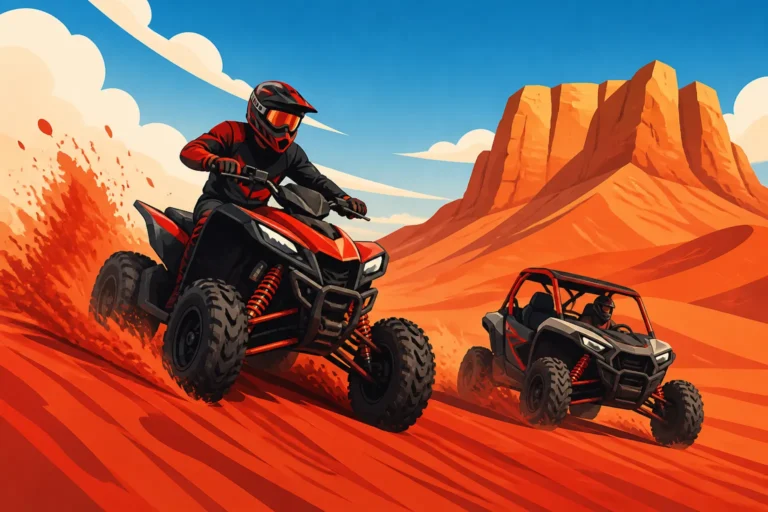
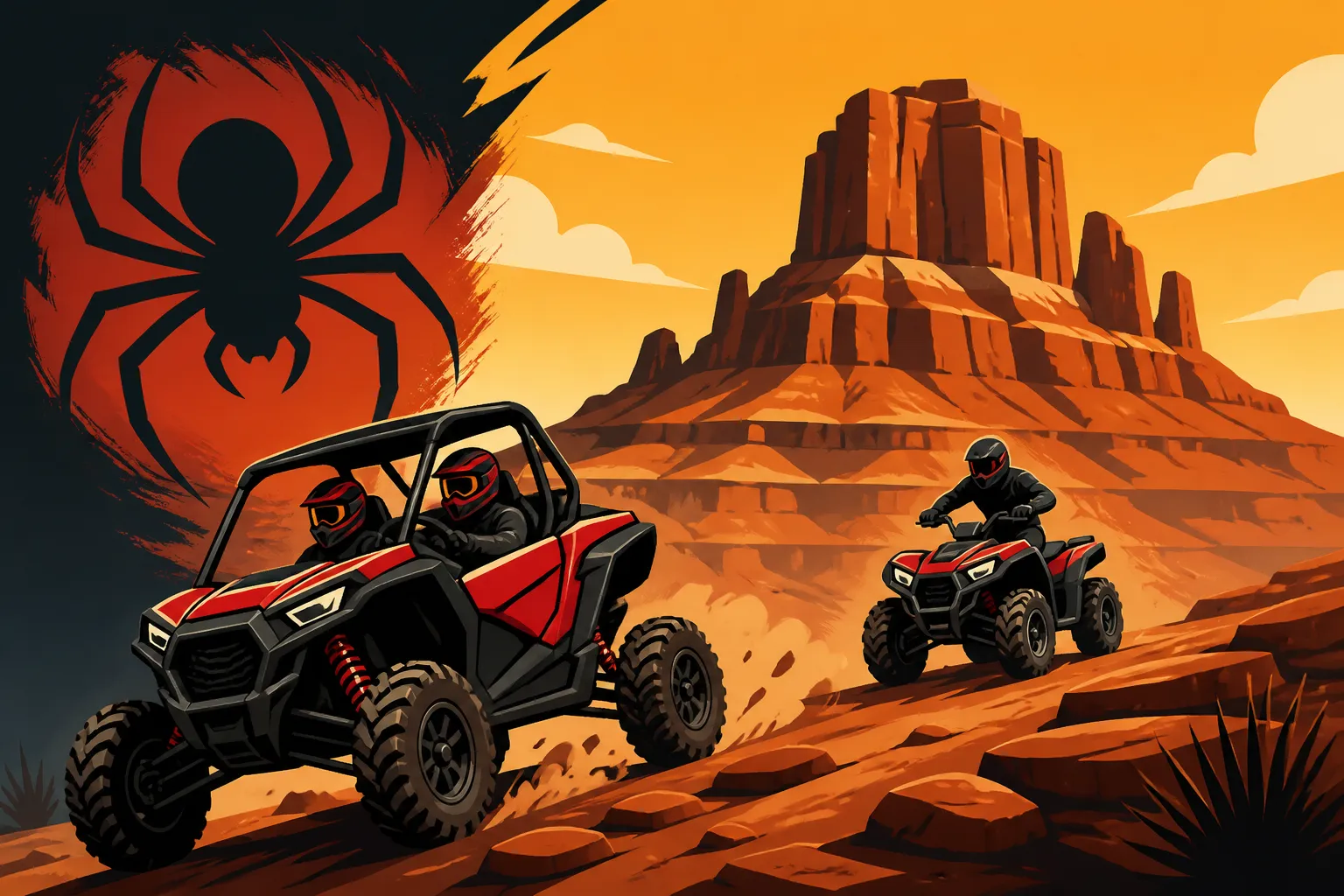
Poison Spider Mesa sits in the Moab area, where slickrock, sandstone ledges, and open desert create a very different experience from a forest trail or a groomed dirt road. Riders come for the scenery as much as the technical challenge: the route offers broad views of the surrounding red-rock country and the Colorado River corridor. The terrain can change quickly, though. A stretch that looks smooth from a distance may have uneven rock, abrupt transitions, or loose material that deserves a slower approach.
The trail is known primarily as a challenging four-wheel-drive route, so it helps to separate its general reputation from what a particular ATV or UTV can comfortably handle. A skilled driver in a capable machine may find some sections manageable, while another rider may consider the same terrain too exposed, steep, or rough. Vehicle setup, experience, weather, and the route you intend to follow all affect the day. “It’s famous” is not the same as “it’s right for my group.”
Poison Spider Mesa is also part of a broader Moab trail network. Some riders plan a shorter out-and-back visit; others are interested in connecting with nearby routes. Those options can change the length and difficulty of a ride considerably. Before you head out, decide whether your goal is to experience a section of the mesa or to tackle a longer route. If you are comparing the area with other destinations, [The Best ATV and UTV Trails in Utah] offers a wider starting point.
Why riders talk about its difficulty
The route’s reputation comes from a combination of uneven rock, ledges, traction changes, and the consequences of getting a line wrong. Slickrock can provide solid grip in suitable conditions, but it is not a guarantee of an easy ride. A steep approach, a sharp breakover, or a line that puts one wheel in a hole can challenge a machine and its driver. Momentum is not a substitute for judgment, especially when the next obstacle is difficult to see from the seat.
There is a mental side to the challenge, too. A rocky step can seem manageable until you are looking down at it from the driver’s seat, with passengers watching and other vehicles waiting behind you. Feeling pressured to keep up can lead to rushed decisions. Take the time to stop somewhere safe, study the obstacle, and decide whether your machine and skill level are a good match. Turning around is a sensible choice, not a failure.
Conditions can also change how a familiar route feels. Rain, snow, mud, dust, and recent trail use may affect traction and visibility. A line that worked for another group on a dry day may not be a good choice when the surface is wet or loose. For a helpful comparison, [What Trail Difficulty Ratings Leave Out] explains why a single label cannot capture every rider’s experience.
Is Poison Spider Mesa Suitable for Your ATV or UTV
Match the route to the machine, not the other way around
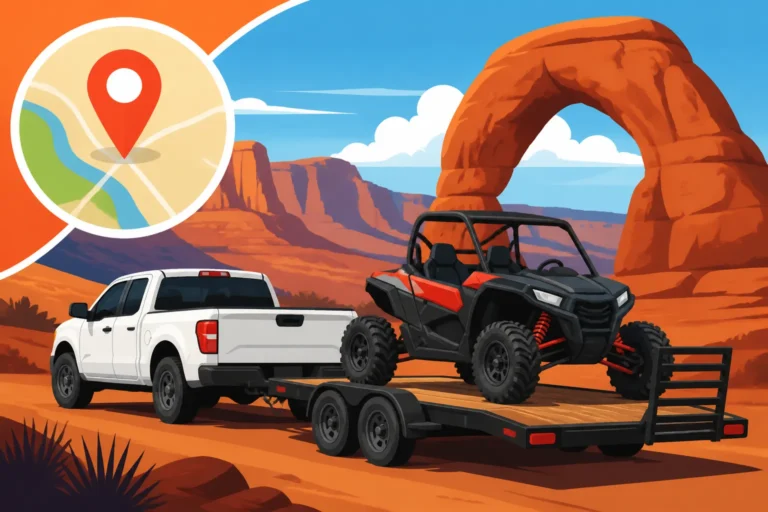
Before committing to Poison Spider Mesa, check that your specific vehicle is permitted on the route you plan to use. Do not assume that a trail suitable for a Jeep is automatically suitable for every ATV or UTV. Route designation, width limits, vehicle dimensions, and local restrictions matter. A wide side-by-side may not fit every route in a nearby trail network, and a vehicle’s ability to clear an obstacle does not mean it is legal to drive there.
Width is only one part of the assessment. Ground clearance, wheelbase, turning room, tire condition, drivetrain, and the driver’s ability to control the machine on steep or uneven terrain all matter. A long UTV may high-center where a shorter machine can pass. An ATV may be narrower, but that does not remove the need for good traction, careful line selection, or a rider who knows how to manage uneven ground. Use [Picking a Moab Trail by Machine Width] and [Wide Side-by-Sides on Narrow Moab Routes] when thinking through vehicle fit.
If you are uncertain whether a route is open to your machine, verify the route on current official maps before you travel. An app such as onX Offroad can help you examine the general route and surrounding network, but use it alongside official land-management maps and posted signs. A digital line on a screen is useful for planning; it should not override a closure sign or a route restriction.
Be honest about experience and comfort
A capable machine does not make a first-time driver experienced. If you have mostly ridden smooth roads or easy trails, Poison Spider Mesa may feel like a major jump in difficulty. Consider how you handle steep approaches, uneven rock, narrow sections, and situations where you need to stop and choose a line. If you are not comfortable making those decisions without pressure, start with an easier Moab ride and build experience first.
Passengers matter in the decision as well. A passenger who is uneasy with heights, rough movement, or exposed terrain may find the ride stressful even if the driver feels confident. Discuss the route honestly before setting out. If a child or a nervous passenger is coming along, consider whether the day’s terrain and duration are a good fit for them. A beautiful viewpoint does not make a demanding ride enjoyable for everyone.
For first-time Moab riders, the best plan may be to choose a less technical route, ride with an experienced local group, or hire a guide who can explain the terrain and help assess obstacles. That does not mean you must avoid Poison Spider Mesa forever. It means earning confidence on suitable terrain before taking on a route with a reputation for difficulty. For a broader range of options, see [Moab Trails That Fit a Half Day].
Planning a Ride Without Guessing
Check maps, access, and current conditions
Plan the exact route you intend to ride rather than searching for “Poison Spider Mesa” and assuming every route shown nearby is part of the same outing. The wider Moab network includes connections and branches that can alter distance, difficulty, and access. A route choice that looks like a small extension on a screen may add demanding terrain or take your group farther from the trailhead than expected.
Use an official Motor Vehicle Use Map or other current land-manager information to check route access and restrictions. The map helps show which routes are open to particular vehicle types, but it still needs to be read carefully. Learn the symbols and notes before you leave cell coverage. [Reading a Motor Vehicle Use Map] and [Utah OHV Trail Maps and How to Read Them] can help you understand how to plan from a map instead of relying on a name or an app pin alone.
onX Offroad can be useful for viewing a route and thinking through nearby connections, but do not treat any app as a substitute for posted signs or official information. Save the area for offline use before leaving town, and make sure everyone in the group can identify the intended route. If a sign indicates a closure or restriction, follow it even if your saved map appears to show the route as open. Check [Trail Closures Utah Riders Should Check First] as part of your planning routine.
Build a realistic day plan
Allow room for stops, route-finding, and slower travel over obstacles. A short distance on a map can take much longer than expected when the terrain is rough or the group needs time to assess each section. Set a turnaround time before you begin, and do not let a late start or a long lunch pressure you into rushing on the return. If you are linking routes, plan for the most difficult section rather than estimating the day from the easiest miles.
Share your route and expected return time with someone who is not riding with you. Choose a plan that still makes sense if a machine has a problem or a rider needs a break. Carry enough water, food, basic repair supplies, and warm or sun-protective clothing for a longer day than you expect. A ride can become uncomfortable quickly when heat, dust, or a minor mechanical issue slows the group.
Before departure, check local conditions and access information, then confirm again near the trailhead if notices are posted. onX Offroad may help you visualize your planned route, while official maps and signs help confirm whether it is appropriate to ride. This double-check takes a few minutes and can prevent a frustrating turn-around after you have already unloaded. If your trip includes other Moab routes, compare options using [Choosing Between Moab and Sand Hollow].
Riding the Trail With Good Judgment
Approach obstacles slowly and communicate
On technical ground, pause before an obstacle when you can do so safely. Look at the approach, the crest, and the landing area rather than focusing only on the first rock or ledge. Consider whether the machine has enough clearance and traction for the line, and whether there is room to maneuver if the first attempt does not go as planned. If you cannot see the full route through an obstacle, a spotter may help, provided they can stand in a safe place and communicate clearly.
Keep communication simple and agreed upon before the ride. Drivers and spotters should use clear signals, and passengers should know when the vehicle is moving or stopping. Leave room between machines so a rider can pause without another vehicle crowding them. If someone is unsure about an obstacle, let them take the time they need. Waiting a few minutes is preferable to making a rushed move that damages a machine or injures someone.
Avoid trying to match another group’s pace. Riders may have different vehicles, experience, and plans, and you cannot know their whole situation from behind them. If a line does not look safe for your machine, stop and reassess. If the obstacle remains beyond your comfort level, turn around when it is safe to do so. No photograph or trail story is worth risking a rollover or injury.
Prepare for the less glamorous parts of the day
Dust can make it difficult to see the vehicle ahead, so leave enough distance and slow down when visibility drops. Carry eye protection that suits dusty conditions, and secure loose items so they do not shift on rough terrain. In hot weather, drink water regularly rather than waiting until you feel thirsty. In cooler or changing weather, bring layers that protect you from wind and temperature drops.
Bring practical recovery and repair gear suited to your machine and your group’s experience. That might include a tire-repair kit, basic tools, a first-aid kit, and recovery equipment you know how to use. Carrying gear is not enough if nobody knows how to use it safely. [What to Carry on a Utah Day Ride] and [Recovery Gear for Utah Sand and Slickrock] can help you build a more thoughtful checklist.
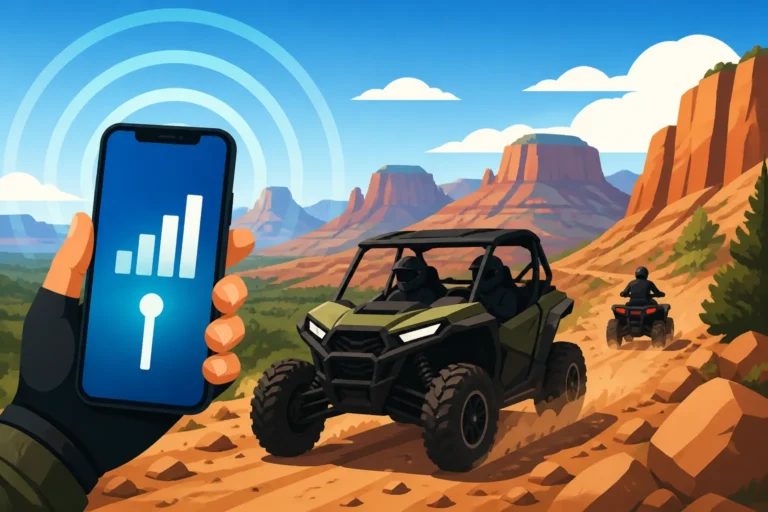
onX Offroad may help with navigation, but a phone can lose signal or battery power. Download maps before departure, keep your device protected, and consider carrying a separate navigation option or a paper map. Tell your group what to do if riders get separated, and agree on a simple meeting point plan. A little preparation makes a remote-feeling ride less stressful if the day does not go exactly as expected.
Weighing the Reward Against the Challenge
What makes the ride memorable
For riders who enjoy technical terrain and have the right machine and experience, Poison Spider Mesa can be memorable for more than its obstacles. The contrast between pale rock, red desert, and the distant river corridor gives the ride a strong sense of place. The route can feel adventurous without being a race, especially when the group has time to pause, look around, and choose lines carefully.
The challenge can also make the day feel earned. Working through a difficult section thoughtfully, supporting a less-confident rider, and reaching a scenic stopping point together can be more satisfying than simply covering miles. The best stories usually include good decisions, not just dramatic obstacles. A group that turns around when conditions or confidence change can still have had a worthwhile day.
That is why the trail’s reputation should be treated as useful context rather than a dare. It signals that you should research the route, match it to your equipment, and arrive prepared. It does not tell you that every rider should attempt it, or that the same route will feel identical on every visit.
When another trail is the better choice
Choose a different route if your vehicle’s access is uncertain, your group has limited experience, or anyone feels pressured to continue. A ride should fit the least comfortable person in the group, not only the most confident driver. If you are already behind schedule, dealing with a mechanical issue, or facing weather that makes traction or visibility questionable, changing plans is sensible.
Moab has a wide range of riding experiences, and choosing an easier route does not mean settling for a lesser trip. A smoother ride may allow your group to enjoy the landscape, practice navigation, or spend more time together without concentrating on every obstacle. Use route comparisons and official maps to find an option that matches the machines and people you actually have.
If Poison Spider Mesa is on your future list, you can prepare for it gradually: learn the area, practice on suitable terrain, improve your vehicle-handling skills, and revisit the route question when your group is ready. The most rewarding ride is not necessarily the toughest one. It is the one you can complete responsibly and remember for the right reasons.
Disclaimer
This article is for general informational purposes only and does not constitute professional advice. Laws, prices and regulations vary by location and change over time. Consult a qualified professional for guidance on your specific situation.