Reporting a Crash on a Utah Road
There's nothing quite like hitting the open road in your street-legal UTV, feeling the breeze, and exploring Utah's incredible scenery. But let's be honest, even the most careful riders can find themselves in an unexpected situation. A fender bender with a car, a single-vehicle incident, or even something seemingly minor can quickly become a major headache if you don't know the proper steps to take. This guide is here to walk you through exactly what to do when you're faced with reporting a crash involving your ATV or UTV on a Utah public road, helping you navigate the immediate aftermath and the paperwork that follows with confidence.
Understanding What Makes a Crash Reportable in Utah
When you're out riding your ATV or UTV on Utah's public roads—whether you're just cruising through town to get to a trailhead or exploring the incredible network of approved routes—it's crucial to understand the rules of the road, especially regarding accidents. Unlike a minor tumble on a dirt trail that you can usually dust off and continue, a crash on a paved or public gravel road comes with specific legal obligations.
When Does an OHV Accident Require Reporting?
The state of Utah, like most places, has clear criteria for when a vehicle crash, including those involving street-legal OHVs, must be reported to law enforcement. It's not just about who was at fault or how serious it feels at the moment. Generally, a crash needs to be reported if it results in injury, death, or significant property damage. Even if you think it's just a bent bumper on your side-by-side or a minor scrape on another vehicle, if the estimated damage exceeds a certain dollar amount (which can change, so always check the current state guidelines), or if anyone involved needs medical attention, then a formal report is likely required. This threshold isn't just for cars; it applies equally to your [Making a UTV Street Legal in Utah] adventures on public thoroughfares.
Many riders, especially those new to street-legal riding, might assume a small incident is no big deal, particularly if it's a solo mishap. However, even if you just slide off the road and hit a fence post, if the damage to your UTV or the fence is substantial, or if you sustained any injuries that require professional medical assessment, you're obligated to report it. Ignoring these requirements can lead to much bigger problems down the line, including fines, insurance complications, or even more serious legal trouble if injuries are discovered later. It's always better to err on the side of caution and get law enforcement involved if there's any doubt.
Types of Road Incidents Involving OHVs
Crashes involving OHVs on public roads can take various forms, and each might present unique challenges when it comes to reporting. The most straightforward, yet often traumatic, are multi-vehicle collisions where your ATV or UTV impacts another car, truck, or motorcycle. These situations instantly involve multiple parties, potential injuries, and certainly property damage, making a police report mandatory. The complexities of determining fault and exchanging information are magnified in these scenarios, and you'll quickly realize how important it is to have your [Insurance for a Street-Legal Machine in Utah] in order.
Then there are single-vehicle incidents. Perhaps you swerved to avoid an animal, lost control on a tricky curve, or encountered unexpected road debris, leading to an impact with a fixed object like a guardrail, a tree, or a utility pole. While these don't involve another driver, they still carry the same reporting requirements if there's significant damage or injury. Even collisions with animals, especially larger wildlife like deer or elk, can cause extensive damage and potential injuries, necessitating a police report. Understanding these different scenarios helps you mentally prepare for the steps you'd need to take, ensuring you don't miss any critical details in the heat of the moment.
Immediate Actions After an OHV Crash on a Utah Road
The moments immediately following a crash are often chaotic and stressful. Your adrenaline is pumping, and it can be hard to think clearly. But what you do in these first few minutes is absolutely critical, not just for your safety and the safety of others, but also for any future insurance claims or legal proceedings. Taking a few deep breaths and following a structured approach can make a world of difference.
Prioritizing Safety and Providing Aid
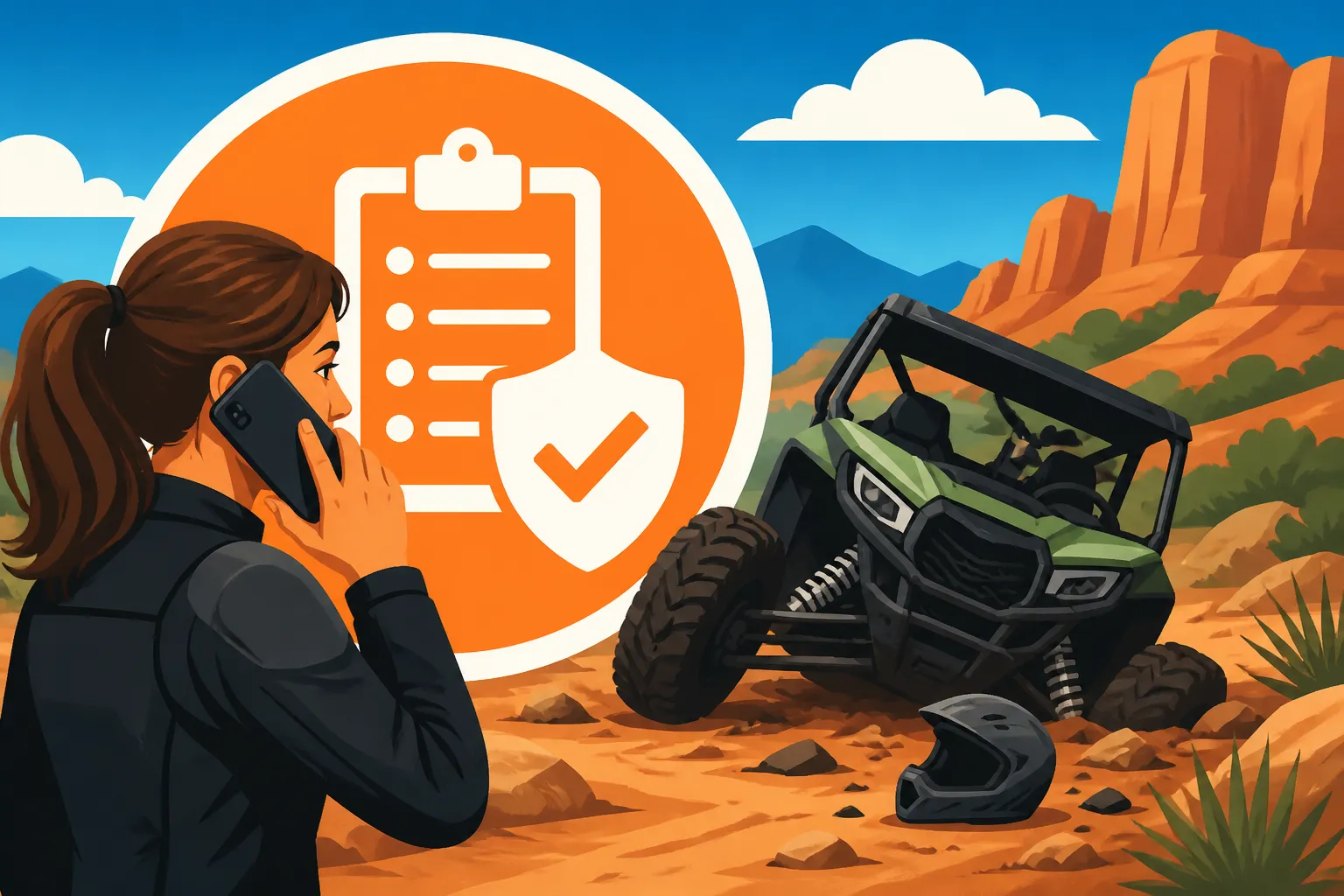
First and foremost, assess the situation for injuries. Check yourself and any passengers in your UTV. If you were involved with another vehicle, check on their occupants too. If anyone is injured, even if it seems minor, your absolute top priority is to call 911 immediately. Don't hesitate. Seriously injured individuals need professional medical attention as quickly as possible. While waiting for emergency services, if it's safe to do so, try to move your OHV and any other involved vehicles to the side of the road, out of the flow of traffic. This prevents further accidents and keeps you and others safe from oncoming vehicles. If you can't move your machine safely, activate your hazard lights and set up any emergency triangles or flares you might carry.
Remember, the goal is to prevent a bad situation from getting worse. If you or someone else is able to administer basic first aid, do so, but always prioritize calling for professional help. The law protects those who offer reasonable aid, but it's crucial not to put yourself in additional danger. It's also important to remain at the scene until law enforcement arrives and releases you. Leaving the scene of an accident, especially one involving injury or significant damage, can lead to serious legal consequences, regardless of fault.
Securing the Scene and Gathering Information
Once immediate safety and medical needs are addressed, your next crucial step is to gather as much information as possible. This is where your phone becomes your best friend. Take photos and videos of everything: the position of all vehicles, damage to your OHV (including any aftermarket parts like a SuperATV windshield that might be damaged), damage to other vehicles, road conditions, skid marks, traffic signs, and anything else that might be relevant. The more visual evidence you have, the better. Photos speak volumes and can often clarify details that verbal accounts might miss or dispute later.
Next, get contact and insurance information from any other drivers involved. This includes names, phone numbers, addresses, driver's license numbers, vehicle registration, and insurance policy details. If there are any witnesses, politely ask for their contact information as well. Their unbiased account can be invaluable. Avoid discussing fault or apologizing at the scene; emotions run high, and anything you say could potentially be used against you later. Stick to factual information and exchange what's necessary. Even if you feel shaken, calmly and systematically collecting this data will be hugely beneficial when you file your report and interact with your insurance company. Remember, when a Utah officer arrives, they'll be looking for specific items, so having this information ready is a huge help.
| Immediate Steps After a Utah OHV Road Crash | Description | Priority |
|---|---|---|
| 1. Stop Safely | Pull over to the side of the road if possible and safe. Turn on hazard lights. | Critical |
| 2. Check for Injuries | Assess yourself, passengers, and anyone else involved. Administer basic first aid if trained. | Critical |
| 3. Call Emergency Services | Dial 911 immediately for injuries, major damage, or if you're unsure. Give clear location details. | Critical |
| 4. Secure the Scene | Place warning triangles or flares if available. Do not move severely injured persons unless necessary for immediate safety. | High |
| 5. Gather Information | Take photos/videos of vehicles, damage, road conditions. Collect names, contact, insurance, and license info from others. Get witness contacts. | High |
| 6. Do NOT Admit Fault | Stick to facts when talking to others or law enforcement. Avoid apologies or speculating about who was at fault. | High |
| 7. Notify Insurance | As soon as possible, inform your insurance company about the crash, even if you're not filing a claim yet. | Medium (after scene is secure) |
| 8. Wait for Law Enforcement | Remain at the scene until police arrive, investigate, and release you. Cooperate fully with their investigation. | High |
Formally Reporting the Crash to Utah Authorities
Dealing with law enforcement after an accident can be intimidating, but it's a necessary part of the process for any reportable crash on a Utah road. Officers are there to investigate, document, and ensure everyone's safety and compliance with the law. Knowing what to expect and how to interact with them can help smooth the process.
Contacting Law Enforcement
As mentioned, if there are injuries, fatalities, or significant property damage, you must call 911. Even for less severe incidents that still meet Utah's reporting criteria, contacting the local police department (if within city limits), county sheriff's office, or Utah Highway Patrol is crucial. Don't assume someone else will do it. When you call, be prepared to give your exact location, a brief description of the incident, and whether there are any injuries. They'll dispatch an officer to the scene to conduct an investigation.
When the officer arrives, cooperate fully. They will ask you questions about what happened, so provide a clear, concise, and factual account. Avoid speculating or assigning blame. Show them your [Driver License Rules on Utah Roads], vehicle registration, and proof of insurance for your street-legal OHV. They will also inspect your machine, looking for things like proper [Utah Street-Legal ATV Equipment Requirements] and compliance. Officers are trained to observe details that might be critical to their report, such as potential violations like [DUI Rules on an ATV in Utah] or even minor infractions that could lead to [Tickets Utah Riders Get Most Often].
Understanding the Official Crash Report
The officer will typically complete an official Utah Crash Report. This document is incredibly important because it provides an objective, third-party account of the incident, including details like road conditions, vehicle positions, witness statements, and any citations issued. It's the official record that insurance companies, and potentially courts, will rely upon. Make sure to ask the officer how you can obtain a copy of this report. It usually takes a few days for the report to be processed and become available.
Carefully review the report once you receive it. While officers strive for accuracy, mistakes can happen. If you find any significant factual errors, contact the investigating agency to see if a correction can be made. This report is fundamental to your insurance claim and any potential legal action, especially in complex cases like [Accidents Between a Car and a UTV]. Having an accurate, official record of the crash is your best defense and ensures that all parties have the same factual foundation moving forward.
Navigating Insurance Claims and Further Steps
Once the immediate aftermath is handled and law enforcement has left the scene, the next phase involves dealing with insurance companies and any follow-up actions. This can be a labyrinth of phone calls and paperwork, but staying organized and proactive will serve you well.
Notifying Your Insurance Provider
This is a critical step, and it should happen as soon as reasonably possible after the crash. Don't delay. Contact your insurance company, even if you're not sure if you'll file a claim or if the other party seems to be at fault. Provide them with all the information you collected at the scene, including the police report number (if available), photos, witness contacts, and the other driver's insurance details. Your policy likely has specific timelines for reporting incidents, and missing these deadlines could jeopardize your coverage.
Your insurance company will guide you through the claims process. They'll typically assign an adjuster to your case, who will review the police report, your documentation, and possibly speak with witnesses or the other parties involved. They'll assess the damage to your UTV, whether it's the chassis, a busted headlight, or a bent suspension arm from SuperATV. Be honest and thorough in your communication. This process can sometimes feel drawn out, but prompt and clear communication from your side can help expedite things. If your machine was street-legal, your standard auto insurance policy or a specific OHV policy with road coverage will kick in, which is distinct from a [Insurance Claims After a Trailhead Collision] scenario.
Potential Legal and Financial Ramifications
Depending on the severity of the crash, the legal and financial ramifications can vary widely. If you were cited for a traffic violation, you might face fines, points on your driving record, or even a court appearance. If injuries were sustained, or if there's a dispute over fault, you could be facing civil lawsuits. This is why having comprehensive documentation and an accurate police report is so vital. Your insurance company will typically handle legal defense on your behalf if you're sued, up to your policy limits.
Financially, you'll need to consider repair costs, potential medical bills, and any lost wages if you were unable to work due to injuries. Your insurance policy will cover these aspects based on your coverage limits and deductibles. If the other party was at fault, their insurance should cover your damages. However, if there's a dispute or if the other party is uninsured or underinsured, things can get complicated. Understanding [The Utah Law Behind Street-Legal ATVs] can help clarify your rights and responsibilities on the road. It's a tough situation, but having all your ducks in a row with documentation, police reports, and prompt insurance notification will put you in the best possible position to navigate these challenging waters.
Disclaimer
This article is for general informational purposes only and does not constitute professional advice. Laws, prices and regulations vary by location and change over time. Consult a qualified professional for guidance on your specific situation.