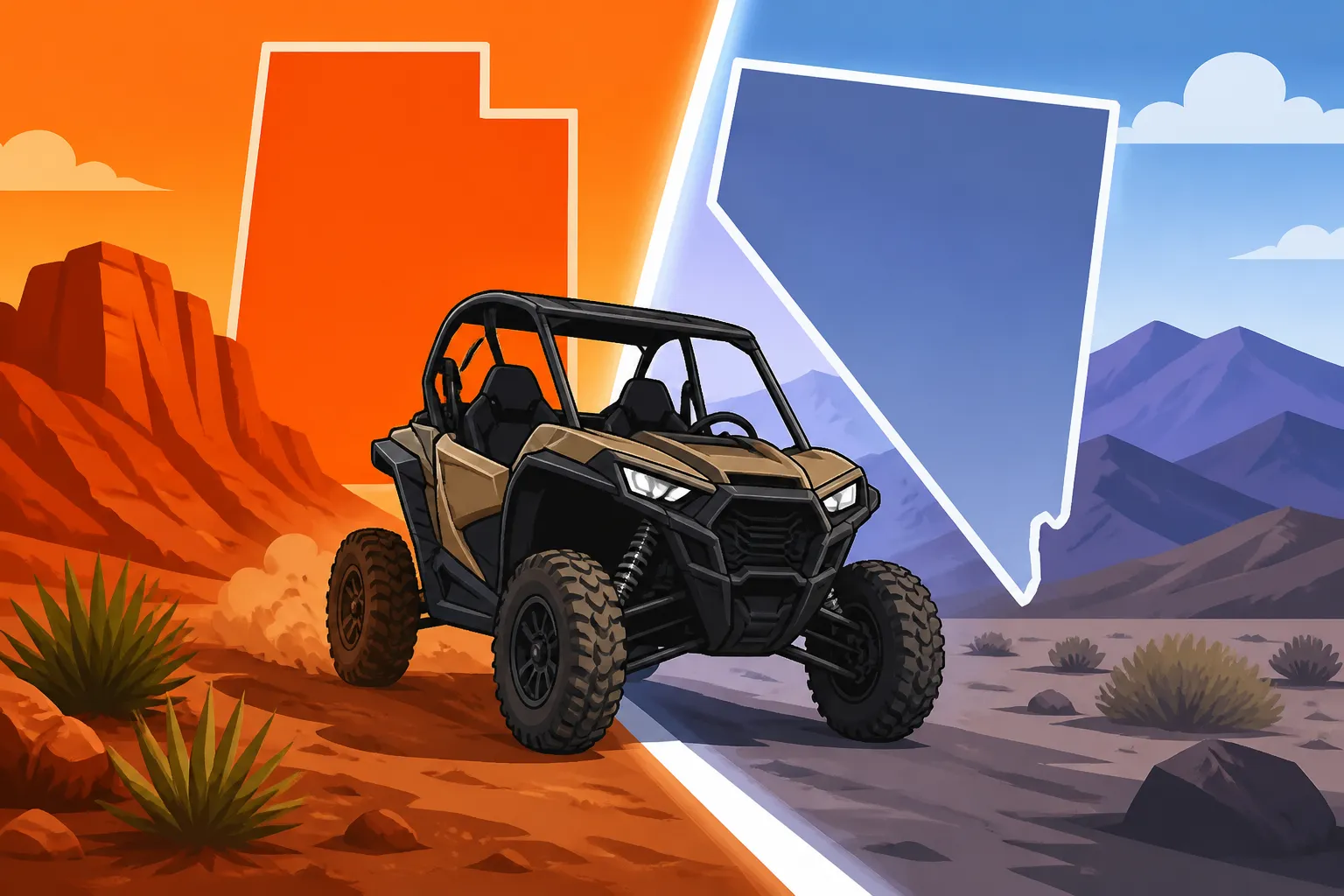
Crossing Into Nevada on a Utah-Plated UTV
It's always exciting to think about extending your riding adventures beyond the familiar trails of Utah, especially when destinations like Nevada with its vast deserts and unique landscapes beckon. But before you hitch up your trailer or even consider driving your Utah-plated UTV across the state line and directly onto Nevada's roads, you might be feeling a bit of apprehension. The rules around street-legal OHVs can be confusing enough within a single state, let alone when you're trying to figure out reciprocity with a neighbor. This guide is here to untangle that knot, helping you understand exactly what's required to legally enjoy Nevada with your Utah-plated side-by-side.
The Core Question: Is Your Utah-Plated UTV Legal in Nevada?
This is where the rubber meets the road, quite literally. Many riders assume that if their UTV is legally street-legal in Utah, they can just drive it anywhere. Unfortunately, that's not always the case. Each state has its own distinct set of laws, and while there's often some reciprocity, it's rarely a blanket "anything goes."
Understanding Reciprocity Between States
Think of reciprocity like a handshake agreement between states, but one where the terms of the handshake can change dramatically depending on what's being "shaken." For standard passenger vehicles, like your car or truck, registration and driver's licenses are almost universally recognized across state lines. You drive into Nevada, and your Utah license plate and driver's license are perfectly valid for highway use.
However, Off-Highway Vehicles (OHVs) like ATVs and UTVs exist in a different regulatory space. Even when they're modified and registered for street use, they're still fundamentally considered OHVs by many states. The laws governing them often reflect a patchwork of individual state preferences rather than a unified federal standard. This means what's perfectly legal for street use in St. George might raise an eyebrow (or worse, a ticket) from a law enforcement officer in Mesquite or Las Vegas. It's not about disrespecting your Utah registration; it's simply about different jurisdictions having different rules for a specific class of vehicle.
Nevada's General Approach to Out-of-State OHVs
Nevada has a fairly clear stance on out-of-state OHVs, and it's crucial to distinguish between off-highway use and street use.
For simply riding trails or designated off-road areas in Nevada, if your machine is registered and properly stickered in Utah, you're generally in good shape. Nevada usually honors out-of-state OHV registrations for off-highway purposes. You won't typically need to get a separate Nevada OHV registration or non-resident permit just to hit the trails, as long as your Utah registration is current and visible. This is where most states find common ground – they want to encourage visitors, and having to re-register for a temporary trail ride would be a major deterrent. You can learn more about general registration requirements in Utah by checking out [How to Register an ATV or UTV in Utah].
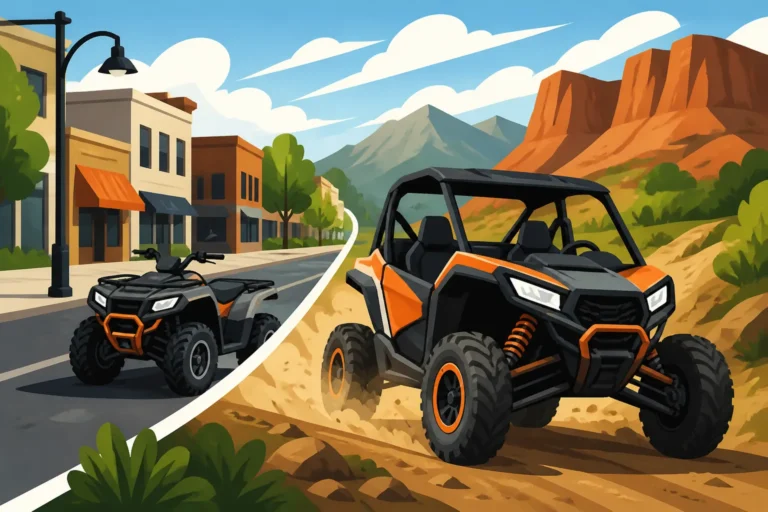
However, when you start talking about driving your UTV on Nevada streets and highways, that's a completely different ball game. Nevada has its own set of rules for making an OHV street-legal, and those rules don't automatically defer to Utah's. Your Utah "street legal" designation is essentially a permit for Utah's roads, based on Utah's equipment and inspection standards. Just because Utah approves your setup doesn't mean Nevada does.
Nevada's Street-Legal Requirements for UTVs
So, if you want to drive your Utah-plated UTV on Nevada roads, you're going to need to meet Nevada's criteria for a street-legal OHV. This isn't just about having a license plate; it's about specific equipment, and sometimes, even different interpretations of vehicle types.
Equipment Standards for Nevada Roads
Nevada has specific requirements for what makes an OHV legal to operate on public roads. While there's overlap with Utah's rules, there are also critical differences that can catch riders off guard. Here's a look at common requirements you'd need to consider, many of which mirror what you might find in Utah, but with their own specific twists:
- Headlights and Taillights: Like Utah, Nevada requires working headlights and taillights. These typically need to be DOT-approved and visible from a certain distance. If your UTV has aftermarket lights, ensure they meet the brightness and beam pattern standards.
- Brake Lights: Essential for road safety, working brake lights are a must.
- Turn Signals: This is a common requirement that some states are stricter about than others. Utah requires turn signals for street legality, and Nevada generally does too. If your current Utah setup has basic signals, ensure they are clearly visible from front and rear, and that they flash correctly. This is often where riders discover they need to upgrade components. Companies like SuperATV offer robust turn signal kits designed to meet various state requirements, which can be a lifesaver when trying to achieve multi-state compliance.
- Mirrors: You'll likely need at least one rear-view mirror, and often two (one on each side) to see traffic behind you. Check Nevada's specifics – some states require a certain field of view.
- Horn: A working horn, audible from a minimum distance, is a standard safety feature.
- Windshield or Eye Protection: Similar to Utah, Nevada typically requires either a windshield or that operators and passengers wear appropriate eye protection (goggles or safety glasses). The specifications for a windshield might vary slightly, so check if your half-windshield or full windshield meets their standard.
- License Plate and Light: Your Utah license plate needs to be securely mounted and illuminated by a working white light at night.
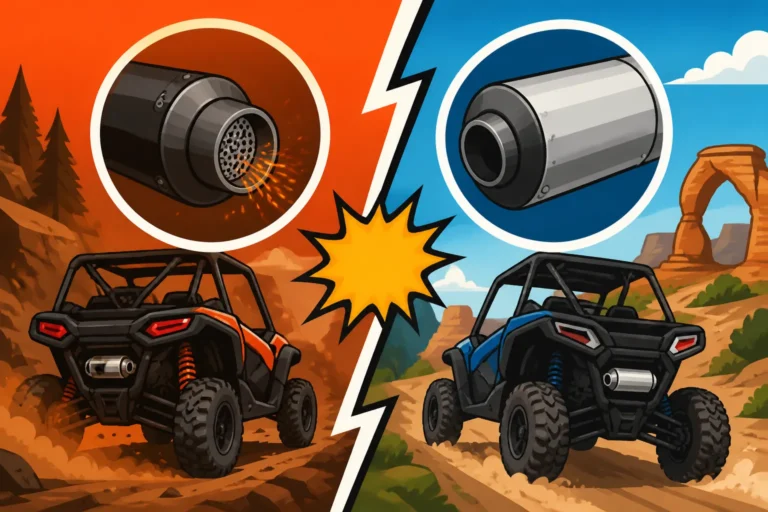
- Muffler and Spark Arrestor: While critical for trail riding, a muffler for street legal status needs to meet noise limits, and a spark arrestor is still important for fire prevention, especially when transitioning from road to trail.
- DOT-Approved Tires: This is a big one. Many off-road tires, while excellent for dirt, aren't rated for highway speeds or conditions. Nevada, like Utah, often requires tires that are Department of Transportation (DOT) approved for street use. This means they've been tested for durability and performance on paved surfaces. If you’re unsure about your current tires, check the sidewall for a "DOT" stamp. Upgrading to DOT-approved tires is a common step for street-legal conversions. For more on Utah's specific equipment, see [Utah Street-Legal ATV Equipment Requirements].
The key takeaway here is that while your Utah-plated UTV might have some of these components, Nevada's interpretation or minimum standards might be slightly different. It's not enough to simply have them; they must meet Nevada's legal definition.
Nevada's Inspection and Registration Nuances
Unlike Utah, where you might get a one-time inspection for street-legal conversion, Nevada's process can involve a few different steps. As a visitor, you won't be registering your UTV in Nevada, but you need to prove your Utah street-legal setup is equivalent to what Nevada would require.
- No Direct "Nevada Inspection" for Out-of-State Street Legality: You won't typically take your Utah-plated UTV to a Nevada DMV for a street-legal inspection. Instead, law enforcement on the road will be assessing your compliance with Nevada's equipment laws based on their visual inspection. This means your machine needs to look and function exactly as if it were a Nevada-registered street-legal OHV.
- Understanding "Street-Legal" vs. "Off-Highway" Registration: In Utah, you get one registration that allows for both off-highway and street-legal use, often identified by the OHV decal and a separate street-legal license plate. Nevada also differentiates these. If you're on a Nevada trail, your Utah OHV registration is typically fine. But for the road, your Utah street-legal plate needs to be backed up by equipment that meets Nevada's road rules. For more on the difference, you can read [Utah OHV Registration vs Street-Legal Registration].
- Local Ordinances: This is a crucial point. Even if your UTV meets state-level street-legal requirements, individual Nevada cities and counties might have their own ordinances regarding OHV use on local roads. For example, a city might ban OHVs from certain main thoroughfares or have stricter noise limits than the state. Always check the local rules for the specific area you plan to ride in, whether it's Mesquite, Laughlin, or around Lake Mead.
Practicalities and Planning Your Nevada Trip
Once you're confident your Utah-plated UTV meets Nevada's street-legal equipment standards, there are still some practical considerations for a smooth and legal trip.
What to Carry and Where to Ride
Being prepared is half the battle when crossing state lines. You don't want a fun adventure to turn into a roadside hassle.
- Essential Documents: Always carry your physical Utah driver's license, your UTV's current Utah registration card, and proof of insurance. While digital copies are often accepted in Utah, carrying physical documents provides an extra layer of security when dealing with out-of-state law enforcement. You can also review [What Paperwork Utah Riders Must Carry].
- Proof of Compliance (if possible): It's not required, but if you've gone out of your way to add specific DOT-approved components (like tires or turn signal kits from SuperATV), keeping receipts or product documentation in a waterproof bag might help clarify things for an officer who isn't familiar with your specific modifications.
- Road Access Rules: This is perhaps the most complex part of riding a street-legal UTV in another state.
- State Highways: Generally, if your UTV meets Nevada's street-legal requirements, you should be able to operate on most state highways, provided they don't have higher speed limits (like interstates) that UTVs generally can't legally maintain. Be aware of posted speed limits – UTVs typically have a maximum legal speed they can maintain on roads.
- County and City Roads: This is where local ordinances become incredibly important. Many cities and counties in OHV-friendly areas like Mesquite, Laughlin, or parts of rural Nevada do allow street-legal OHVs on their roads, sometimes with specific speed restrictions (e.g., 15-25 mph in residential or downtown areas). However, other cities might restrict them to certain routes or ban them entirely from busy commercial districts. Always look for signage or check with local visitor centers or law enforcement for the most current information. Don't assume that because Moab allows it, every Nevada town will too.
- Connecting Trails: Many riders want to use their street-legal UTVs to connect from their lodging to trailheads without trailering. Nevada has many areas where this is possible, but again, local rules dictate the specific roads you can use. For example, some areas might have specific "OHV connector routes" that are explicitly designated for UTV use.
Insurance and Liability Across State Lines
Your insurance policy is designed to protect you, but its coverage can sometimes get murky when you cross state lines, especially with a street-legal OHV.
- Review Your Policy: Before you leave Utah, contact your insurance provider. Specifically ask them:
- Does my current policy cover my street-legal UTV for road use in Nevada?
- Are there any limitations on liability coverage when operating out-of-state?
- What are the collision and comprehensive coverages if I have an accident on a Nevada road or trail?
- Are there any specific exclusions for OHVs used on public roads in other states?
Many standard auto policies won't automatically cover an OHV, even if it's street-legal. You might need a specialized OHV policy or an endorsement to your existing one. For more information on Utah's insurance requirements, read [Insurance for a Street-Legal Machine in Utah].
- Liability is Key: If you're involved in an accident in Nevada, especially on a public road, liability coverage is paramount. Without adequate coverage, you could be personally responsible for property damage or injuries to others. Nevada has mandatory minimum liability insurance requirements for vehicles operating on its roads, and your Utah policy needs to meet or exceed those minimums while you're there.
- Medical Coverage: Consider your personal health insurance as well. While not directly related to UTV legality, knowing you're covered for any injuries is crucial, especially if you're exploring remote Nevada terrain.
Common Pitfalls and How to Avoid Them
Even the most experienced riders can get tripped up by the nuances of multi-state OHV laws. Being aware of common misunderstandings can save you a lot of headache.
The "Street Legal Here, Street Legal Everywhere" Myth
This is by far the biggest trap riders fall into. The idea that once your UTV is street legal in one state, it automatically qualifies in all others, is simply not true. It's a convenient fiction, but a fiction nonetheless.
- Varying Definitions: What one state considers a "street-legal OHV" might be subtly different in another. It could be speed restrictions, specific lighting requirements, tire certifications, or even just the legal classification of the vehicle. For instance, Utah might allow certain machines on 55 mph roads, while Nevada might restrict them to 35 mph or less on local streets. You can explore [Where Street-Legal ATVs Can Drive in Utah] for Utah's specific road rules.
- No Uniform Standard: There's no federal standard for street-legal OHVs that dictates all states must recognize each other's conversions. Each state's Department of Motor Vehicles and highway patrol operates under its own jurisdiction.
- The Officer's Discretion: While many officers are reasonable, they are bound by the laws of their state. If your Utah-plated UTV doesn't meet Nevada's specific equipment requirements, an officer has every right to issue a citation, regardless of your Utah status. They're not looking for a loophole; they're looking for compliance with their state's rules.
Enforcement and Penalties
Getting pulled over with an unregistered or non-compliant vehicle is never fun, and the consequences can range from a warning to a hefty fine, or even impoundment.
- Fines and Citations: If your UTV is deemed non-compliant with Nevada's street-legal equipment requirements while on a public road, you could receive a citation. These fines can vary widely depending on the specific violation and the county, but they can quickly add up. For perspective, consider [The Fine for an Expired OHV Registration in Utah] to understand how serious states take compliance.
- Impoundment: In more severe cases, or for repeated offenses, an officer might have the authority to impound your vehicle. This is not only expensive due to towing and storage fees, but it's also a massive inconvenience that can ruin your trip.
- Driving Privileges: Depending on the nature of the offense, it could potentially impact your driving privileges, though this is less common for minor equipment violations.
- Ignorance Isn't a Defense: You can't successfully argue to a Nevada officer that you didn't know their state's laws were different from Utah's. As the operator of the vehicle, you are expected to know and follow the laws of the jurisdiction you are in.
To avoid these headaches, the best approach is proactive research. Before you cross that state line, spend some time on the Nevada Department of Motor Vehicles (DMV) website or contact their office directly for their most current OHV street-legal requirements. Local sheriff's departments in the areas you plan to visit can also be a valuable resource. It might seem like a lot of homework, but it’s a small price to pay for peace of mind and an uninterrupted riding experience.
Here's a quick comparison of general street-legal considerations between Utah and Nevada (note: specific laws, speed limits, and local ordinances can always vary, so always verify current rules).
| Feature | Utah (General) | Nevada (General) |
|---|---|---|
| Registration | OHV Decal + Street-Legal License Plate (from DMV) | OHV Decal for trails. Street-Legal conversion requires compliance with NV law. |
| Reciprocity (Trails) | Honors out-of-state OHV registrations for trail use. | Generally honors out-of-state OHV registrations for off-highway trail use. |
| Reciprocity (Roads) | Your street-legal setup is valid on UT roads. | Does NOT automatically honor UT street-legal status for NV roads. Must meet NV's equipment standards. |
| Headlights/Taillights | Required, DOT-compliant. | Required, DOT-compliant. |
| Brake Lights | Required. | Required. |
| Turn Signals | Required. | Required. |
| Mirrors | Required (usually 1 rear-view minimum, 2 often recommended). | Required (usually 1 rear-view minimum, 2 often recommended). |
| Horn | Required. | Required. |
| Windshield/Eye Prot. | Windshield OR eye protection. | Windshield OR eye protection. |
| License Plate Light | Required. | Required. |
| Muffler | Required, meets noise limits. | Required, meets noise limits. |
| DOT-Approved Tires | Required for street use. | Required for street use. |
| Insurance | Required minimum liability for street use. | Required minimum liability for street use. |
| Local Ordinances | Can vary by city/county. | Crucial. Can greatly restrict OHV road use in specific towns/counties. |
| Speed Limits | General rules, often restricted on specific roads. | General rules, very specific restrictions in cities (e.g., 15-25 mph often). |
This article is for general informational purposes only and does not constitute professional advice. Laws, prices and regulations vary by location and change over time. Consult a qualified professional for guidance on your specific situation.