Riding the Shoulder of a Utah Highway
It’s a common scenario: you’re out enjoying Utah’s incredible backcountry, and suddenly, you need to get from one trail system to another, or maybe just across a main road to reach a gas station or a local cafe. The thought of just hopping onto the shoulder of a highway might cross your mind. But can you actually do that with your ATV or UTV in Utah? This guide will dive deep into the specific rules, requirements, and crucial safety considerations for using highway shoulders with your off-highway vehicle, helping you navigate the asphalt safely and legally.
Understanding Utah's Highway Shoulder Rules for OHVs
Riding an off-highway vehicle (OHV) on any paved road can feel like stepping into a legal minefield, and highway shoulders are no exception. Many riders mistakenly assume that because it’s not the main lane of traffic, the rules might be more relaxed. Unfortunately, that’s rarely the case, and Utah has specific statutes that govern where and how OHVs can operate on or near public roads, including those often-tempting shoulders. The state's primary goal is safety for all road users, and the unique characteristics of OHVs – their speed, size, and handling – mean they're treated differently than a typical street-legal car or truck.
What Exactly is a Highway Shoulder in Utah OHV Law?
From a legal perspective, a highway shoulder isn't just a convenient extra strip of pavement. It's an integral part of the highway right-of-way, distinct from the travel lanes but still very much considered part of the roadway infrastructure. In Utah, the law often defines a "highway" broadly to include the entire width between the boundary lines of every way publicly maintained when any part thereof is open to the use of the public for purposes of vehicular travel. This means the shoulder falls squarely within that definition. It's not a separate trail, nor is it automatically open to all vehicles.
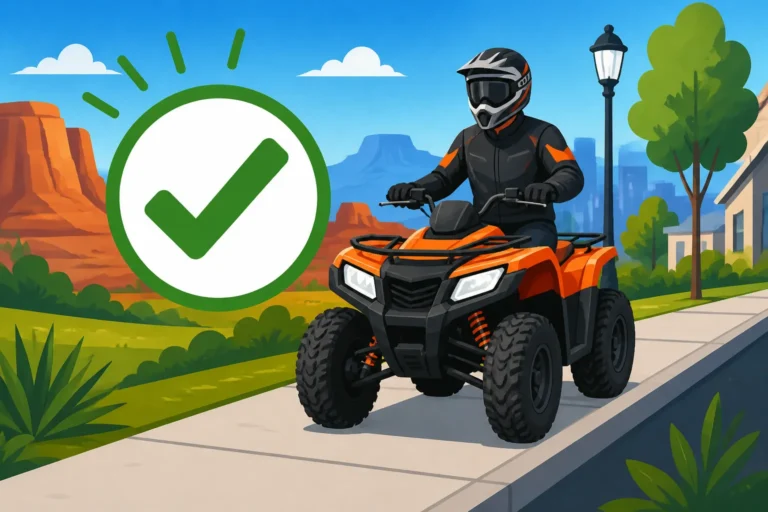
For OHVs, the shoulder’s primary function in Utah law is generally for emergencies or, under very specific circumstances, for brief crossings by otherwise unregistered machines. However, for fully street-legal OHVs, the shoulder can sometimes be used as an extension of the general rules for street-legal operation, but with critical caveats. Riders often confuse the shoulder with bike lanes or even sidewalks; these are entirely different zones with their own distinct rules, and OHVs are generally prohibited from using them unless explicitly marked as multi-use trails that specifically allow OHVs. It's a nuanced distinction that can lead to a hefty fine if misunderstood.
Distinguishing Shoulders from Other Roadside Areas
It's easy to look at a strip of gravel or pavement next to the main road and assume it's all the same, but Utah law makes important distinctions. A highway shoulder is typically designed to provide a runoff area for vehicles, emergency stopping space, or structural support for the road itself. It's usually paved or consistently graveled and directly abuts the traveled lanes. This is different from a dirt frontage road that parallels a highway, which might have different access rules, or a separate unpaved trail that just happens to run alongside a major thoroughfare.
The key here is the intent of the space and its designation. A bike lane, for instance, is clearly marked for bicycles and sometimes pedestrians, and operating an OHV there is generally illegal and dangerous. Sidewalks are exclusively for pedestrian traffic, and riding any motor vehicle on them is strictly prohibited unless it's a very specific, limited exemption (like crossing a driveway). The shoulder exists in a gray area where limited, conditional OHV use might be permitted, but only if your machine meets specific street-legal requirements and you understand the restrictive conditions laid out in Utah’s OHV statutes.
Conditions for Legally Riding on a Highway Shoulder
So, can you actually ride on the shoulder? The short answer for a street-legal ATV or UTV is "sometimes," and under very strict conditions. For any non-street-legal machine, the answer is almost always "no," with only a few highly specific exceptions. Utah's OHV laws are designed to integrate these vehicles onto public roads cautiously, and that caution extends to the less-trafficked parts of those roads. The fundamental requirement is that your OHV must be properly equipped and registered as street-legal. Without that, you're looking at significant penalties. For a full breakdown of how to prepare your machine, you'll want to review [Making a UTV Street Legal in Utah].
Street-Legal Status is a Must
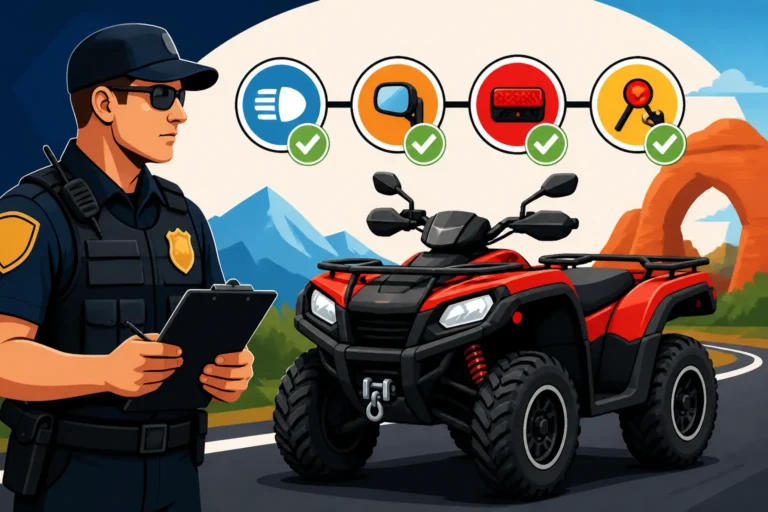
This cannot be stressed enough: if your ATV or UTV is not properly registered and equipped to be street-legal, riding it on any part of a public highway, including the shoulder, is generally illegal. To qualify as street-legal in Utah, your machine needs an array of specific equipment, including headlights, taillights, brake lights, turn signals, mirrors, a horn, and often a windshield or adequate eye protection. Many riders turn to aftermarket solutions, like those from SuperATV, to ensure their machines meet these stringent requirements for mirrors, turn signals, and other essential components. These components are vital not just for compliance, but for your safety when sharing any part of the road with other vehicles.
Once your machine is street-legal, you're then subject to the same traffic laws as any other motor vehicle. This means respecting speed limits, obeying traffic signals, and yielding right-of-way. However, even street-legal OHVs have restrictions on where they can travel on public roads. High-speed, limited-access highways like interstates are typically off-limits, even for street-legal machines, regardless of whether you're in the main lane or on the shoulder. This is covered in more detail in [Interstates, Freeways and Utah OHV Law].
Crossing Versus Traveling Along a Shoulder
Utah law distinguishes between briefly crossing a highway and traveling along it. A non-street-legal OHV can, in very specific circumstances, cross a highway at a right angle after coming to a complete stop, yielding to traffic, and ensuring clear visibility. This brief crossing is generally not done on the shoulder but directly across the main lanes from one side of the road to the other, usually to access an approved trail. However, this is a very narrow exception, and it absolutely does not permit traveling along the shoulder or any part of the highway. For more on these strict rules, check out [Crossing a Utah Highway on an Unregistered Quad].
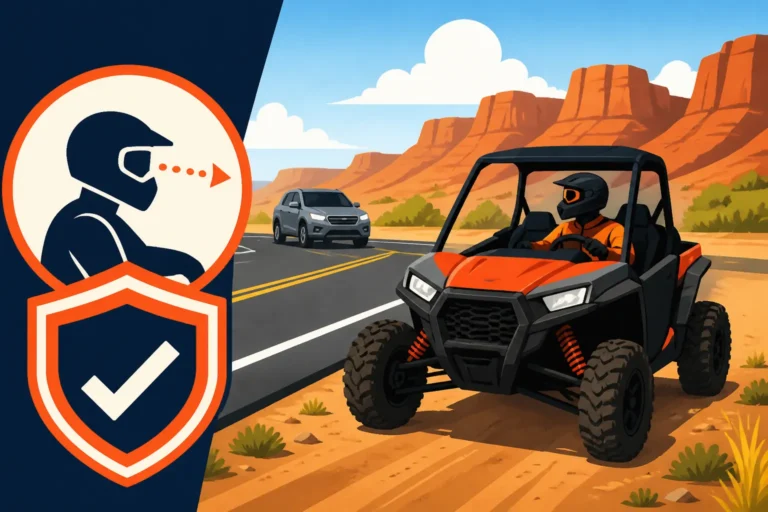
For street-legal OHVs, traveling along the shoulder is permissible only if the main travel lane is also open to OHVs. Essentially, the shoulder is treated as part of the road you're allowed to be on. If a road segment is open to street-legal OHVs, you can use the shoulder if it enhances safety, such as moving over to allow faster traffic to pass, or to avoid debris in the main lane. However, you should always return to the main lane as soon as it's safe and practical to do so. The shoulder is not a dedicated OHV lane, and riding primarily there when the main lane is clear could still raise questions from law enforcement about obstruction or unsafe operation.
Speed Limits, Highway Types, and Local Ordinances
Even with a street-legal OHV, you must always adhere to the posted speed limits. While many street-legal UTVs can reach highway speeds, some older ATVs might struggle. Utah law also dictates that street-legal OHVs cannot exceed a certain speed limit (typically 50 mph) on certain state highways, regardless of the posted limit for other vehicles. This means that even if you’re riding on a shoulder of a 65 mph highway, you are restricted to a lower speed, which can create a significant speed differential with surrounding traffic and elevate risk.
Furthermore, state highways (like US Routes or State Routes) often have different rules from county roads or city streets. While many cities and counties in Utah have embraced OHV access on their local roads, which often includes shoulders, state highways remain under more restrictive state statutes. It's crucial to understand [City and County OHV Rules Across Utah] as they can sometimes be more (or less) permissive than state law, but state law generally takes precedence on state-owned highways. Always consult local ordinances for specific areas you plan to ride through, especially when connecting trails near population centers.
Navigating the Risks: Safety on Utah Highway Shoulders
Even when legally permitted, riding on the shoulder of a Utah highway carries inherent risks that every rider needs to acknowledge and mitigate. The shoulder is not designed for continuous high-speed travel, and OHVs, while robust, are still vulnerable next to cars and trucks traveling at much higher speeds. Safety should always be your top priority, far above convenience.
High-Speed Traffic Hazards
The most obvious danger is the proximity to high-speed traffic. Vehicles often drift onto shoulders, either due to distracted driving, emergencies, or evasive maneuvers. As an OHV rider, you have minimal protection in a collision with a full-size vehicle. The speed differential can also be perilous; even if you’re doing 50 mph, a car approaching at 75 mph closes the distance incredibly fast. This creates a challenging environment where awareness, quick reflexes, and extreme caution are paramount. Always assume that other drivers don't see you, particularly if you are riding a smaller machine that is less visible.
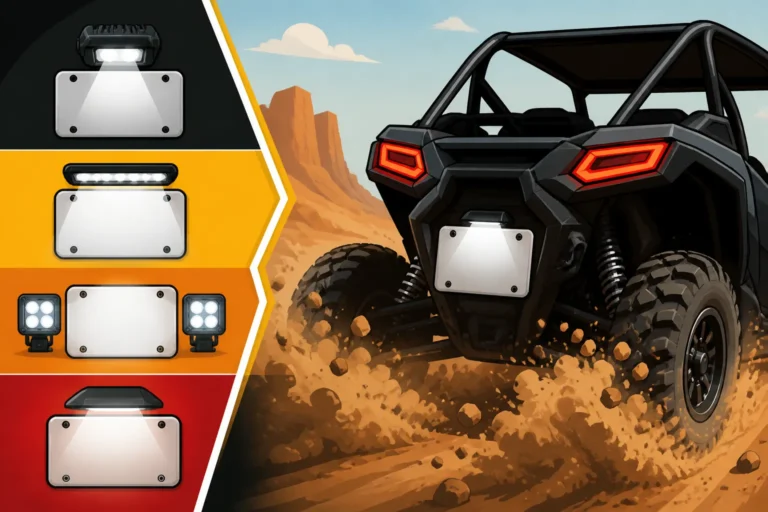
Visibility is also a two-way street. While you need to be constantly scanning for vehicles entering the shoulder, you also need to ensure drivers can see you. This means having fully functional [Headlights and Tail Lamps Utah Requires], brake lights, and turn signals. Brightly colored clothing, a whip flag (especially in dusty conditions), and proper [Mirrors Utah Requires on Both Sides] are not just legal requirements but life-saving tools. Some riders even add additional lighting or reflective tape to their machines, using accessories from companies like SuperATV, to maximize their presence on the road.
Road Debris, Gravel, and Uneven Surfaces
Highway shoulders are often collecting grounds for all sorts of road hazards. You'll find everything from tire fragments and broken glass to loose gravel, sand, and mud. These materials can be incredibly dangerous for an ATV or UTV, which handle very differently on varied surfaces. Loose gravel can cause a loss of traction, leading to skids or rollovers, while sharp debris can cause immediate tire damage. Potholes and uneven pavement transitions between the shoulder and the main lane are also common, posing significant risks.
Riding on such surfaces demands heightened attention and a reduced speed. You need to be constantly scanning the road ahead, not just for other vehicles, but for changes in the surface that could compromise your stability. While most street-legal UTVs are built tough, prolonged exposure to harsh road debris can also accelerate wear and tear on tires, suspension components, and even the undercarriage. Choosing durable tires and potentially adding underbody protection, like skid plates from a reputable manufacturer, can help mitigate some of these risks.
Rider Responsibility and Equipment
Ultimately, riding on a highway shoulder places a heavy burden of responsibility on the OHV operator. You must be sober, alert, and skilled enough to handle your machine in a demanding environment. This includes having a valid driver's license and any required OHV education certificates. Passengers must also be properly secured and comply with age and helmet rules. [Helmet and Age Rules on Utah Roads] are critical, especially for younger riders.
Beyond the legal minimums, consider additional safety gear: a full-face helmet, eye protection, sturdy gloves, and appropriate riding apparel can provide crucial protection in a crash. Ensure your OHV is in excellent mechanical condition, with properly inflated tires, functional brakes, and all lights working before you venture onto any highway shoulder. It’s also wise to carry a basic repair kit, first-aid supplies, and water, as roadside assistance might be delayed, especially in remote areas. Proper [Insurance for a Street-Legal Machine in Utah] is also non-negotiable for anyone considering road use.
When Riding the Shoulder is Absolutely Forbidden
While specific conditions can allow a street-legal OHV to briefly utilize a highway shoulder, there are many more scenarios where such action is strictly illegal and dangerous. Understanding these prohibitions is just as important as knowing the permissible uses, as violations can lead to hefty fines, impoundment, and even serious accidents.
Strict Prohibition for Non-Street-Legal Machines
Let's be crystal clear: if your ATV or UTV is not street-legal, you generally cannot ride it on the shoulder of any public highway in Utah. The only exceptions are typically very brief, direct crossings (as discussed earlier) to access an approved trail, which must be performed safely and after yielding to all traffic. Even then, you are prohibited from traveling along the shoulder. This rule is fundamental to [The Utah Law Behind Street-Legal ATVs]. An unregistered or unequipped machine does not belong on public roads, period.
This prohibition extends to riding home from the dealer, connecting private properties, or just trying to "sneak" past a busy intersection. The temptation might be high, especially if a trail seems just a stone's throw away across a highway, but the risks and penalties far outweigh any perceived convenience. Law enforcement in Utah is diligent about OHV compliance, and they know the difference between a street-legal machine and one that isn't.
Penalties for Violations
Ignoring the rules for riding on highway shoulders with an unapproved OHV can lead to serious consequences. Penalties can include significant fines, points on your driving record (if applicable), and your machine potentially being impounded. Beyond the legal repercussions, you face severe liability risks if you are involved in an accident while illegally operating your OHV on a highway shoulder. Your personal insurance may not cover damages or injuries if you were operating the vehicle outside of legal parameters. [Penalties for Riding Unregistered in Utah] outlines these risks in detail.
It's not just the monetary cost; it's the potential for injury or worse. A law enforcement officer observing an OHV operating illegally on a highway shoulder will likely stop the rider, not just for compliance, but for safety reasons. They are looking out for everyone's well-being, including yours. What a Utah officer looks for is a combination of proper registration, all required safety equipment, and safe operating practices.
Common Misconceptions to Avoid
One common misconception is that if a road has light traffic, it's okay to use the shoulder. This is false. Traffic volume does not change the legality of the roadway. Another is that if you're just going a "short distance," it's fine. Again, the distance doesn't matter; the law applies equally to all lengths of travel. Some riders also believe that rural roads are less regulated than urban ones; while urban areas might have more explicit city ordinances, state highways, rural or not, still fall under state law.
Finally, relying on what "everyone else does" is a dangerous game. Just because you see other riders breaking the rules doesn't make it legal or safe. Always check the official Utah OHV regulations and local ordinances for the specific areas you plan to ride. Investing in a [Street-Legal Conversion Costs in Utah] and ensuring all your paperwork is in order is a much safer and more responsible approach than risking a citation or an accident by cutting corners.
| Feature / Scenario | Street-Legal OHV (Permitted) | Non-Street-Legal OHV (Prohibited) |
|---|---|---|
| Machine Status | Fully equipped and registered street-legal | Not street-legal (off-highway only) |
| Purpose | To travel along a highway where OHVs are allowed; for safety if main lane allows OHVs | To briefly cross at a right angle (limited scenarios); never to travel along |
| Highway Type | Generally permitted on state/county roads open to OHVs (check local ordinances) | Strictly prohibited on all highways (except for brief, direct crossings) |
| Speed | Must obey posted speed limit, often with OHV-specific max (e.g., 50 mph) | N/A (not permitted for travel) |
| Duration | As needed for safe travel when main lane allows OHVs | Extremely brief (seconds to cross) |
| Visibility | Essential: functional lights, mirrors, bright clothing | N/A (not permitted for travel) |
| Common Hazards | Road debris, high-speed traffic, uneven surfaces | Road debris, high-speed traffic, uneven surfaces (illegal operation adds risk) |
| Penalties | None if operating legally; otherwise, fines for traffic violations | Significant fines, impoundment, liability |
Disclaimer
This article is for general informational purposes only and does not constitute professional advice. Laws, prices and regulations vary by location and change over time. Consult a qualified professional for guidance on your specific situation.