Tire Rules for Street-Legal Machines
It can be incredibly frustrating to go through all the effort of making your ATV or UTV street legal in Utah, only to find out at the inspection that your tires are what's holding you back. Many riders assume that if their tires are good enough for the trail, they're good enough for the road, but that's not always the case. This guide will clarify Utah's specific tire requirements for street-legal off-highway vehicles, helping you navigate the rules and ensure your machine is ready for both the trail and the tarmac.
Understanding Utah's Baseline Tire Requirements for Street Use
When you decide to take your beloved ATV or UTV from the dirt and rocks onto public roads in Utah, you're entering a different regulatory world. The state isn't just concerned with whether your tires can grip a steep climb; they're equally, if not more, concerned with how they perform on asphalt, especially regarding safety and longevity for other road users. This shift in focus is crucial to grasp because it dictates the kind of tires you'll need.
The "DOT Approved" Standard: What It Means for Your Ride
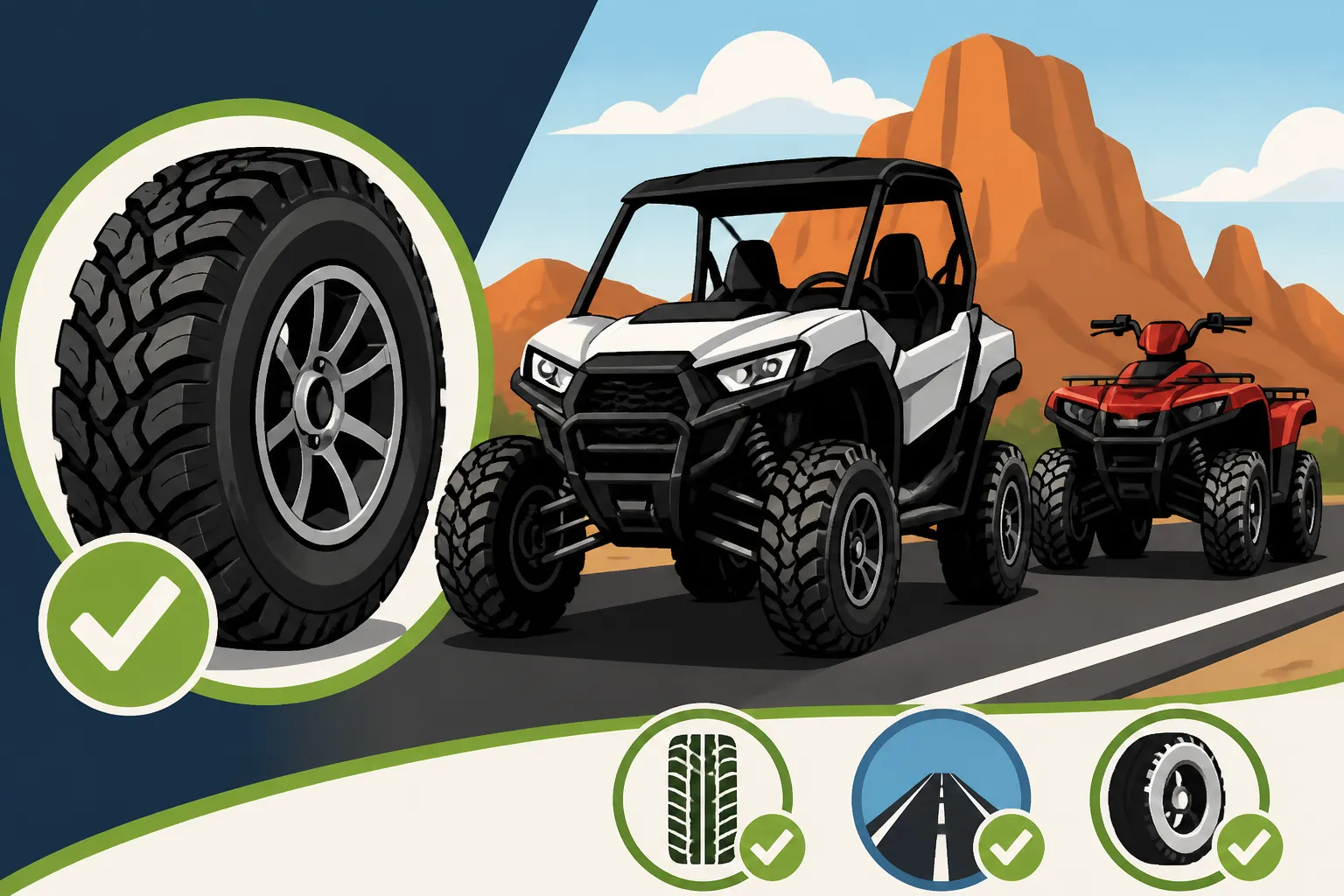
The most fundamental requirement for any tire you plan to use on a street-legal ATV or UTV in Utah is that it must be "DOT approved." This isn't just a suggestion; it's a non-negotiable legal standard. DOT stands for the U.S. Department of Transportation, and their approval signifies that the tire has met specific safety performance standards set by the federal government. These standards cover things like manufacturing quality, load capacity, and minimum tread depth, ensuring the tire is designed to handle the stresses of highway speeds and conditions.
How do you know if your tire is DOT approved? It's usually stamped right on the sidewall of the tire. You'll see the letters "DOT" followed by a series of numbers and letters, which are codes indicating the manufacturing plant, size, and other specifications. If you don't see that "DOT" stamp, or if it looks tampered with, then that tire is not legal for street use, regardless of how new or robust it might appear. Many aggressive off-road tires, while fantastic for pure trail riding, simply aren't engineered or tested for road use and therefore lack this crucial marking. Trying to pass an inspection without DOT-approved tires is a guaranteed way to fail, and driving on public roads with non-DOT tires could lead to a citation.
Tread Depth and Condition for Road Safety
Beyond the all-important DOT stamp, the condition of your tires' tread is also a critical factor for street legality and, more importantly, for your safety. Just like with cars, tires on street-legal OHVs need adequate tread depth to maintain traction, especially in wet conditions. Utah law generally requires a minimum tread depth, often mirroring passenger car standards, which is typically 2/32 of an inch. While 2/32" is the legal minimum, for optimal safety and performance, especially if you anticipate any rain or loose gravel on paved roads, you'll want significantly more.
Inspectors will be looking for signs of excessive wear, bald spots, or uneven tread wear that could compromise the tire's integrity. Cuts, bulges, or punctures that have been improperly repaired will also be red flags. Remember, street driving places different stresses on tires than trail riding. High speeds and hard braking on asphalt can generate more heat and wear, so a tire that might be perfectly fine for slow-speed trail use could be a hazard on the road if its tread is compromised. Regularly checking your tread depth with a simple gauge, and keeping an eye out for any damage, should be part of your routine maintenance for a street-legal machine. This attention to detail is part of the larger picture of ensuring your machine passes its initial inspection and continues to meet the requirements of [How Often Utah Re-Inspects a Street-Legal ATV].
Tire Size and Fender Coverage
Another key aspect that often catches riders off guard when going street legal is the interplay between tire size and fender coverage. While Utah doesn't have an explicit maximum tire size for OHVs, larger tires can become an issue if they extend beyond the vehicle's fenders. The primary concern here is safety for other road users: oversized tires that protrude past the fender line can kick up rocks, mud, and other debris, posing a serious hazard to other vehicles and pedestrians.
Therefore, adequate fender coverage is a critical requirement. Your fenders must effectively cover the full width of your tires. If you've installed a lift kit or opted for significantly wider or taller tires, you might find that your stock fenders no longer do the trick. In such cases, you might need to install fender flares or wider aftermarket fenders to ensure compliance. Companies like SuperATV offer a variety of fender extensions and flares designed to accommodate larger tire setups while maintaining a clean, functional look. It's a detail that's easy to overlook when you're focused on the fun of bigger tires and better ground clearance, but it’s a non-negotiable for street legality. Ignoring this can be a direct cause for [What Fails a Utah Street-Legal Inspection], so it's best to plan for it upfront, especially if you're exploring options for [Lift Kits and Utah Street-Legal Rules].
Common Tire Types and Their Street-Legal Viability
When you're outfitting your ATV or UTV for both trail and road, the type of tire you choose makes a world of difference. Not all tires are created equal, and their design dictates how well—or how poorly—they perform on different surfaces, especially paved roads. Understanding the nuances of various tire types can save you a lot of headaches and potential fines.
All-Terrain (AT) Tires: The Versatile Choice
For most riders looking to make their OHV street legal, all-terrain (AT) tires are often the easiest and most practical choice. These tires are designed as a compromise, offering decent traction on a variety of off-road surfaces like dirt, gravel, and light mud, while also being capable of handling paved roads. The key here is that many AT tires are manufactured with DOT approval right from the factory. Their tread patterns are generally less aggressive than pure mud tires, featuring smaller, more tightly packed lugs that provide a smoother, quieter ride on pavement and better wear characteristics.
The beauty of a good set of DOT-approved AT tires is their versatility. You can drive them on the highway to get to the trailhead, air them down slightly for better grip on dirt, and then air them back up for the drive home. They won't offer the extreme grip of a specialized mud or sand tire on their specific terrains, but they excel at being a "jack of all trades." This balance makes them ideal for riders who genuinely want to use their machine for both on-road travel and diverse off-road adventures, without constantly swapping tires. You’ll find many options, including those from reputable aftermarket suppliers like SuperATV, that fit this description and simplify the street-legal conversion process.
Mud Tires (MT) and Aggressive Treads: Navigating the Challenges
Mud terrain (MT) tires, with their deep, widely spaced lugs and aggressive tread patterns, are undeniably king when it comes to tackling serious mud and loose, technical terrain. They dig in, clean out, and provide incredible traction where other tires simply spin. However, bringing these beasts onto the asphalt presents a whole new set of challenges for street legality and practical use.
The biggest hurdle is often DOT approval. While some manufacturers do produce DOT-approved mud tires, many do not. The very characteristics that make them excellent off-road—the large, blocky lugs—tend to make them loud, prone to uneven wear, and sometimes less stable on pavement. They can significantly reduce braking performance on hard surfaces, and their aggressive treads can be surprisingly slippery on wet asphalt compared to a dedicated road or all-terrain tire. If you absolutely love your aggressive mud tires, you'll need to meticulously check for that "DOT" stamp on the sidewall. If it's there, and your tread depth is legal, they might pass inspection. However, be prepared for a much louder, rougher ride, and expect them to wear out much faster when regularly driven on pavement. This is a common dilemma, similar to the questions riders have about [Do Paddle Tires Void Street-Legal Status?].
Paddle Tires and Specialty Off-Road Tires: Not for the Street
This is where we draw a hard line: paddle tires and other highly specialized off-road tires, such as those designed exclusively for rock crawling (often bias-ply and non-DOT), are almost universally not street legal in Utah, or anywhere else for that matter.
Paddle tires, as their name suggests, feature large, scoop-like paddles designed to propel your machine through loose sand, like what you find at Sand Hollow or Little Sahara. They are incredibly effective in their intended environment but are completely unsuited—and downright dangerous—for paved roads. They offer virtually no lateral grip, create immense vibration, and can damage the road surface. They are not DOT approved and will never pass a street-legal inspection.
Similarly, many extreme rock crawling tires are built for maximum flexibility and grip on jagged rocks, often with softer compounds and non-DOT construction. They perform poorly, wear rapidly, and are unsafe at road speeds. If your riding involves these specialty tires, you'll need a separate set of DOT-approved tires for street use. This often means trailering your machine to the riding area and swapping tires there, which is a common practice for those who demand peak performance for specific off-road disciplines. The bottom line is, if a tire isn't designed with any semblance of on-road performance or safety in mind, it's not going to make your machine street legal.
Practical Considerations and What to Watch Out For
Navigating the world of street-legal OHV tires involves more than just reading a list of rules; it requires practical attention to detail and an understanding of how these rules play out in the real world. From checking cryptic markings to understanding how your machine will actually handle, there are several crucial points to consider.
Checking for DOT Stamps and Other Markings
We've talked about the "DOT" stamp, but let's get into the nitty-gritty of how to actually find it and what else to look for. The DOT certification is usually prominently displayed on the tire's sidewall, typically near the rim. It will be an uppercase "DOT" followed by a series of letters and numbers. Don't confuse it with other markings like brand names or tire size indicators. If it's not clearly visible, or if the tire looks worn to the point where the stamp is unreadable, you might have an issue.
Beyond the DOT stamp, look for other important information:
- Tire Size: This includes the width, aspect ratio, and wheel diameter (e.g., 28x10R14). Make sure this matches your machine's recommendations or that you've accounted for fender clearance if you've gone bigger.
- Load Index and Speed Rating: These are usually combined in a code after the tire size (e.g., 100/L). The load index indicates the maximum weight the tire can carry, and the speed rating indicates the maximum safe speed for the tire. While ATVs and UTVs aren't typically driven at high highway speeds, your tires must be rated for at least the maximum speed you anticipate traveling. Most DOT-approved OHV tires will have adequate ratings for typical street-legal use.
- Ply Rating/Load Range: This indicates the strength and durability of the tire. Ensure it's appropriate for your machine's weight and intended use.
Missing or unreadable DOT markings are an immediate fail for a street-legal inspection. It's a fundamental part of the [Utah's Street-Legal ATV Inspection, Step by Step] process, so take the time to verify every single tire.
Impact on Handling and Wear: What to Expect on Pavement
Driving an ATV or UTV with off-road biased tires on pavement is a very different experience than trail riding. It's important to understand these differences for safety and to manage your expectations.
- Handling: Aggressive tread patterns, while great for grip in loose terrain, can make your machine feel "squirmy" or less precise on hard pavement. The large lugs can flex and distort under cornering, leading to reduced stability and a less confident feel. Braking distances might also increase compared to a vehicle with dedicated street tires. Always drive cautiously and be aware of how your tires are responding.
- Wear: Pavement is incredibly abrasive, and it's a tire's worst enemy if it's not designed for it. Aggressive, soft-compound off-road tires will wear down very quickly on asphalt, especially if you're doing a lot of high-speed cruising or hard cornering. The lugs can "chunk" off, leading to rapid and uneven wear. This translates directly into more frequent tire replacements, adding to the [Cost to Make a UTV Street Legal in Utah]. It's a trade-off you need to be prepared for when choosing tires that serve a dual purpose.
- Noise: Those aggressive treads that claw at the dirt will sing a loud, often annoying, song on the highway. Don't be surprised if your ride becomes significantly noisier when you're cruising on pavement.
The Inspection Process and Your Tires
When you take your ATV or UTV in for a street-legal inspection in Utah, the inspector will be scrutinizing your tires thoroughly. They're looking for several key things:
- DOT Compliance: This is paramount. No DOT stamp, no pass.
- Tread Depth: They'll use a gauge to ensure you meet the minimum legal tread depth across the entire tire surface.
- Overall Condition: They'll check for cuts, bulges, exposed cords, or improper repairs. Any damage that compromises the tire's structural integrity will result in a failure.
- Fender Coverage: As discussed, if your tires protrude beyond your fenders, you'll need to add flares to pass.
- Mismatched Tires: While not always a specific legal rule, inspectors may frown upon wildly mismatched tire types or sizes on the same axle, as it can affect handling and safety. Consistency is key.
Understanding these points means you can preemptively address any tire issues before your inspection, saving you the hassle of a failed attempt and a re-inspection. For more details on the inspection process, check out [What Fails a Utah Street-Legal Inspection].
Choosing and Maintaining Street-Legal Tires for Longevity
Making your OHV street legal is an investment, and like any investment, you want to protect it and get the most out of it. This extends to your tires, which are your machine's only contact with the ground. Choosing the right set and maintaining them properly will not only keep you legal and safe but also save you money in the long run.
Selecting the Right Tires for Mixed Use
The "perfect" street-legal tire for your ATV or UTV is often a compromise. You're trying to balance off-road performance with on-road legality, safety, and durability. Here's how to approach the selection:
- Prioritize DOT Approval: This is non-negotiable. Start your search by filtering for DOT-approved tires only.
- Consider Your Primary Use: If you spend 80% of your time on pavement and only 20% on light trails, you might lean towards a more street-friendly all-terrain tire with good wear characteristics. If you're tackling more aggressive trails and only using the road for short connections, a more aggressive, but still DOT-approved, AT or mild MT tire might be better.
- Read Reviews: Look for reviews from other riders who use their machines in similar mixed-use scenarios. Pay attention to comments about on-road handling, noise, and tread life.
- Brand Reputation: Stick with reputable tire manufacturers. Many aftermarket leaders like SuperATV offer a range of high-quality, DOT-approved tires specifically designed for ATVs and UTVs that can handle both street and trail use effectively. They understand the unique demands of these machines and engineer products accordingly.
- Budget: Tires are a significant investment. Balance performance and durability with your budget, remembering that cheaper tires might wear out faster on pavement, costing you more over time. For a full breakdown of the financial side, consider [Street-Legal Conversion Costs in Utah].
Tire Pressure for Mixed Use: The Great Compromise
Proper tire pressure is crucial for safety, handling, and tire longevity. However, when you're running the same tires on both pavement and trails, finding the "right" pressure can feel like a constant negotiation.
- Pavement Pressure: For street driving, you typically want higher tire pressure. This reduces rolling resistance, improves fuel efficiency (marginally for an OHV), provides better stability, and reduces heat buildup, which is critical for preventing premature wear on asphalt. Always refer to the tire manufacturer's recommended street pressure, usually found on the tire's sidewall, or your vehicle's owner's manual. It's often higher than what you'd use off-road.
- Trail Pressure: Off-road, lower tire pressure increases the tire's footprint, providing better traction and allowing the tire to conform to obstacles, which can improve ride comfort and protect against punctures. However, this lower pressure is unsafe for street use.
- The Compromise: If you're constantly transitioning between pavement and trail, you'll need to develop a habit of airing up and airing down. Many riders carry a portable air compressor and a tire gauge for this exact purpose. Driving on the street with low trail pressure is not only dangerous (poor handling, increased blowout risk) but will also rapidly wear out your tires, especially the edges of the tread. For specific advice on different terrains, you might find some useful insights in [Tire Pressure for Utah Slickrock], even though it's focused on off-road.
Rotation and Alignment: Extending Tire Life
Just like with your car or truck, regular tire rotation and maintaining proper alignment can significantly extend the life of your street-legal ATV or UTV tires.
- Rotation: Because OHVs often have different loads on front and rear axles, and different steering dynamics, tires tend to wear unevenly. Rotating your tires periodically (e.g., every few thousand miles or seasonally, depending on your usage) helps to distribute this wear more evenly across all four tires, ensuring they all wear down at a similar rate. This means you replace the set all at once rather than having one or two bald tires while others are still good.
- Alignment: Hitting rocks, logs, and bumps on the trail can throw your machine's alignment out of whack. Misalignment leads to rapid and uneven tire wear, poor handling, and increased stress on steering components. If you notice your machine pulling to one side, uneven wear patterns on your tires, or loose steering, it's a good idea to have your alignment checked by a qualified mechanic. This is especially important for street-legal machines that see regular road use.
When to Replace Your Tires
Even with the best selection and maintenance, tires don't last forever. Knowing when to replace them is crucial for safety and continued street legality.
- Tread Depth: When your tread depth approaches the legal minimum (2/32"), it's time for new tires. Don't wait until they're completely bald.
- Age: Tires have a shelf life, typically around 5-7 years, even if they look okay and haven't been heavily used. The rubber compounds degrade over time due to UV exposure and oxidation, making them more brittle and prone to failure. Look for a date code (DOT code indicating week and year of manufacture) on the sidewall.
- Damage: Any significant cuts, bulges, punctures that can't be safely repaired, or visible cord layers mean the tire is compromised and should be replaced immediately. A professional can assess whether a repair is safe and viable.
- Uneven Wear: While rotation helps, severe or persistent uneven wear, despite correct pressure and alignment, can indicate an underlying issue with your suspension or steering components, or simply that the tire has reached the end of its useful life.
Staying on top of your tire condition is a vital part of responsible street-legal OHV ownership, ensuring you can confidently hit both the trails and the roads. It's all part of the overall readiness plan, from ensuring you have all your required documents like [What Paperwork Utah Riders Must Carry] to knowing where to put your [Utah OHV Decals and Where They Go].
Disclaimer
This article is for general informational purposes only and does not constitute professional advice. Laws, prices and regulations vary by location and change over time. Consult a qualified professional for guidance on your specific situation.