Spark Arrestors Versus Street-Legal Mufflers
One of the trickiest parts of setting up your ATV or UTV for Utah's incredible trails and road-legal adventures is making sure your exhaust system meets all the rules. It’s easy to get tangled up in the jargon—do you need a spark arrestor? A street-legal muffler? Are they the same thing? This guide is here to untangle that confusion, explaining the distinct roles of spark arrestors and street-legal mufflers in Utah, and helping you ensure your machine is compliant for whatever path you choose.
Understanding Spark Arrestors: The Basics for Off-Road Riding
When you're out on the vast, beautiful public lands of Utah, whether it's the national forests or BLM land, fire prevention isn't just a good idea—it's the law. That's where spark arrestors come into play. They are a critical component of your OHV's exhaust system, designed specifically to prevent wildfires.
What is a Spark Arrestor and Why Do You Need One?
Imagine your engine running at high RPMs, pushing exhaust gases through the muffler. Sometimes, tiny bits of incandescent carbon, essentially glowing embers, can be expelled from the exhaust pipe. On dry ground, in arid conditions like much of Utah experiences, even a tiny spark can ignite dry grass, leaves, or brush, leading to devastating wildfires. A spark arrestor is a device that is physically integrated into your muffler system, or sometimes an add-on, that captures or breaks up these hot carbon particles before they can escape into the atmosphere.
The requirement for a spark arrestor is primarily driven by federal land management agencies, like the U.S. Forest Service (USFS) and the Bureau of Land Management (BLM), which manage the vast majority of Utah's riding areas. It's a non-negotiable safety feature when you're riding on public lands. Most factory-installed OHV mufflers come equipped with a USFS-approved spark arrestor right from the dealership, which is why many new riders don't even realize it's there or its importance. If you've modified your exhaust or bought an older machine, however, it's something you absolutely need to check.
Checking for and Maintaining Your Spark Arrestor
Knowing if your OHV has a spark arrestor and if it's in good working order is crucial. The easiest way to check is to look for a stamp or label on your muffler, usually near the outlet, that explicitly states "USFS Approved Spark Arrestor" or "Spark Arrestor Included." Some manufacturers might use their own internal codes that indicate compliance, but a clear stamp is always the best verification. If you have an aftermarket muffler, this stamp becomes even more critical, as not all performance exhausts are built with an integrated spark arrestor. Many riders turn to popular brands for aftermarket parts, and when doing so, it's essential to confirm that any exhaust system you install still includes this vital component.
Maintenance is fairly straightforward. Over time, carbon deposits can build up inside the spark arrestor screen, reducing its effectiveness and potentially restricting exhaust flow. You'll typically need to remove a screw or a plate to access the screen, clean it with a wire brush, and ensure it's free of debris. Always refer to your OHV's owner's manual or the muffler manufacturer's instructions for specific cleaning procedures. Failure to have a functional, approved spark arrestor can lead to fines and even vehicle impoundment if a ranger or officer catches you on public lands. It's a small detail that carries significant consequences for both your wallet and the environment.
What Makes a Muffler "Street Legal" in Utah?
Stepping beyond the dirt trails and onto paved roads with your OHV in Utah brings a whole new set of rules, particularly concerning noise. While a spark arrestor is about preventing fire, a "street-legal" muffler is primarily about reducing noise pollution and ensuring your machine blends safely with other road traffic. When you begin to look into [Utah Street-Legal ATV Equipment Requirements], you'll quickly discover that your exhaust system is a key point of inspection.
Utah's Noise Regulations for OHVs on Public Roads
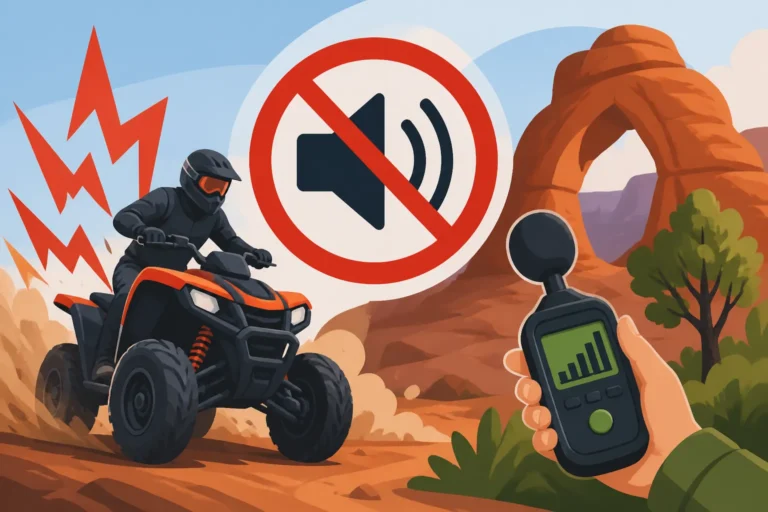
Utah, like many states, has specific noise regulations that apply to vehicles operating on public roads, and this extends to street-legal ATVs and UTVs. The primary goal is to prevent excessively loud vehicles from disturbing residents or creating a nuisance. While the exact decibel limits can vary slightly by jurisdiction or even within city limits, the general expectation is that your OHV's exhaust system should not be "excessively loud" or "modified to amplify sound."
For instance, places like Moab, a hub for OHV enthusiasts, have specific noise ordinances. [Moab's Noise Ordinance and What It Measures] indicates a focus on ensuring that machines are not creating excessive noise, especially within town limits. This means that a performance exhaust designed purely for maximum power and a throaty rumble on the trail might not pass muster for street-legal status. The street-legal designation demands a muffler that effectively quiets the engine to a reasonable and legally acceptable level, often comparable to passenger vehicles.
Modifications and Compliance for Street-Legal Status
Achieving street-legal status often means ensuring your muffler is not only equipped with a spark arrestor but also engineered to meet specific sound level criteria. Many aftermarket performance mufflers, while offering power gains, can be significantly louder than stock. If you're considering an upgrade, you need to research products specifically designed to be "street-legal" or "emissions compliant," as these typically incorporate advanced baffling and sound-deadening materials. Brands like SuperATV offer a range of parts, and while they cater to performance, you'd need to ensure any exhaust from them, or any other manufacturer, explicitly states it meets road noise standards if your goal is street-legal conversion.
When undergoing a street-legal inspection in Utah, the muffler will be scrutinized. Inspectors will look for evidence of modifications designed to increase noise, such as removed baffles or straight pipes. The goal is to ensure the exhaust system is substantially similar to the manufacturer's original design in terms of sound output, or if modified, that it still falls within acceptable noise limits. Remember, making your machine street-legal is more than just adding turn signals; it's about making sure your entire vehicle is a good neighbor on the road.
The Differences and Overlaps: Spark Arrestors Versus Street-Legal Mufflers
It's easy to get these two confused because they both relate to your OHV's exhaust system, but their purposes, primary concerns, and enforcement points are distinct. Understanding this difference is key to staying compliant whether you're ripping through the desert or cruising through a small town.
Distinct Purposes and Requirements
The fundamental difference comes down to their primary purpose:
-
Spark Arrestor: This is a fire safety device. Its sole job is to prevent hot carbon particles from escaping your exhaust and igniting dry vegetation. It's a requirement for riding on most public lands in Utah, especially those managed by federal agencies. The concern here is environmental protection and public safety from wildfires. [What a Utah Officer Looks for on a Street-Legal ATV] often includes checking for a spark arrestor even if you're just trail riding.
-
Street-Legal Muffler: This refers to an exhaust system's compliance with noise (and sometimes emissions) regulations for operation on public roads. Its job is to keep your OHV's sound output within legal limits, preventing noise pollution and ensuring harmonious road use. This requirement becomes relevant when you're converting your OHV to be street-legal and planning to drive it on city streets or state highways. [Horns, Mufflers and Utah Noise Limits] delve deeper into this aspect.
It's entirely possible to have a spark-arrested muffler that is not street-legal because it's too loud for road use. Conversely, a quiet, street-legal muffler must also have a spark arrestor if you plan to take that machine off-road on public lands. One does not inherently guarantee the other, though a well-designed street-legal system will almost certainly incorporate a spark arrestor.
When Both Are Required: The Sweet Spot for Utah Riders
For most Utah OHV enthusiasts who enjoy both extensive trail riding and the convenience of driving their machines on permitted public roads, the "sweet spot" is an exhaust system that fulfills both requirements. This means your muffler needs to be:
- Equipped with a USFS-approved spark arrestor: For all your off-road adventures on federal and state lands.
- Compliant with Utah's noise limits: For when you're driving on designated public roads as a street-legal vehicle.
Many stock OHV mufflers achieve this balance quite well. They come with integrated spark arrestors and are designed to meet initial noise standards. If you opt for an aftermarket exhaust, especially a performance-oriented one, you must confirm both aspects. For example, if you're looking at an exhaust upgrade from a brand like SuperATV, make sure to check its specifications for both spark arrestor inclusion and its estimated decibel output to determine if it will meet your specific needs for on-road and off-road compliance.
This dual requirement highlights the comprehensive nature of OHV regulations in Utah. Riders need to be mindful of not just the type of riding they're doing, but also the specific environment they are in, whether it's a remote forest trail or a bustling town street.
Here’s a quick overview of the key differences:
| Feature | Spark Arrestor | Street-Legal Muffler |
|---|---|---|
| Primary Purpose | Fire prevention; capture hot particles | Noise reduction; meet decibel limits |
| Main Concern | Wildfire safety on public lands | Noise pollution, public disturbance on roads |
| Where Required | Federal/State public lands (trails, OHV areas) | Public roads (city streets, highways, approved routes) |
| Key Enforcement | Forest Service, BLM, State Parks Rangers | Highway Patrol, local Police, DMV inspectors |
| Typical Check | USFS stamp, functional screen, no carbon buildup | No excessive noise, no illegal modifications |
| Penalties | Fines, impoundment, environmental damage liability | Fines, failure of inspection, unable to register |
Practical Considerations for Your Utah OHV
Navigating the world of OHV exhaust regulations can feel like a minefield, but with a bit of foresight and attention to detail, you can ensure your machine is compliant for all your Utah adventures. Whether you're a seasoned rider or just got your first side-by-side, these practical tips will help.
Choosing Aftermarket Exhausts Wisely
The aftermarket world offers a tempting array of exhaust systems promising increased horsepower, better torque, and that deep, aggressive sound. However, this is where many riders run into trouble with compliance. Before you click "add to cart" on that shiny new exhaust, do your homework.
- Check for Spark Arrestor: Always confirm that any aftermarket muffler you consider explicitly states it includes a USFS-approved spark arrestor. If it doesn't, you'll need to purchase and install one separately, assuming the muffler is designed to accommodate it. Brands like SuperATV, known for a wide array of OHV accessories, often provide clear specifications on their exhaust products regarding spark arrestor inclusion.
- Decibel Ratings: Look for decibel (dB) ratings or claims of being "street-legal" or "emissions compliant." While manufacturers might not always list precise dB numbers, they often indicate if the product is designed for regulated road use. If a muffler is advertised as "race-only" or "off-road only," it's a huge red flag for street-legal aspirations.
- Local Regulations: Remember that while Utah has statewide rules, individual cities and counties can impose stricter noise ordinances. If you frequently ride in specific areas, like Moab or Sand Hollow, it's wise to check their specific rules. [City and County OHV Rules Across Utah] can vary more than you'd think.
Making an informed decision on your exhaust system can save you headaches, fines, and the hassle of repeatedly modifying your machine.
What Inspectors and Officers Look For
When you're trying to get your OHV registered as street-legal, or even if you're just out on the trails, you might encounter an inspection. Knowing what to expect can ease any anxiety.
For off-road riding, a ranger or officer will primarily be looking for that USFS spark arrestor stamp on your muffler. They might also visually inspect the exhaust system for obvious modifications that would bypass a spark arrestor or create excessive noise. If they suspect an issue, they might ask you to demonstrate the spark arrestor or even conduct a sound test.
For street-legal inspections or roadside stops on public roads, the focus shifts. Inspectors will check:
- Overall Noise Level: Is your OHV excessively loud? Can you hear it from a block away when idling or driving slowly? This is often subjective but can lead to a ticket.
- Visible Modifications: Are there signs that the muffler has been tampered with? Baffles removed? Aftermarket tips that amplify sound?
- Smoke: While less common for modern OHVs, excessive smoke from the exhaust could also be a red flag during a street-legal stop.
Passing these inspections means having an exhaust system that is both fire-safe for the trails and neighbor-friendly for the roads. It’s definitely part of the [Cost to Make a UTV Street Legal in Utah], and not a place to cut corners. Regular maintenance, like cleaning your spark arrestor screen and inspecting your exhaust for damage, is key to staying compliant. [How Long a Street-Legal Inspection Takes] is usually quick, provided everything is in order.
Ensuring Ongoing Compliance
Even after you've successfully passed an inspection or installed a compliant exhaust, ongoing vigilance is necessary.
- Regular Checks: Periodically inspect your muffler for damage, loose components, or signs of wear that could affect its sound output or the integrity of the spark arrestor. A bent pipe or a damaged baffle can change everything.
- Manufacturer Guidelines: Always adhere to the manufacturer's guidelines for exhaust system maintenance and any specific recommendations for spark arrestor cleaning.
- Stay Informed: OHV laws and local ordinances can change. Stay connected with Utah's OHV division, local riding groups, or online forums to be aware of any updates to noise limits or equipment requirements.
By being proactive about your exhaust system, you not only avoid potential fines but also contribute to the positive image of OHV riders in Utah. It shows respect for the environment, local communities, and the incredible privilege we have to explore this state's diverse landscapes on our machines.
Disclaimer
This article is for general informational purposes only and does not constitute professional advice. Laws, prices and regulations vary by location and change over time. Consult a qualified professional for guidance on your specific situation.