Utah Restrictions Riders Miss in Salt Lake County
It's incredibly frustrating, isn't it, when you've done your homework on state-level street-legal requirements for your ATV or UTV, only to find out that local rules in a place like Salt Lake County throw a wrench in your plans? Many riders assume that if their machine is street-legal according to Utah state law, they're good to go anywhere a street-legal OHV is permitted. But Salt Lake County, with its dense population centers and unique urban-to-mountain interface, often has specific restrictions that can catch even seasoned riders off guard. This guide is here to unravel those often-missed local rules, helping you understand precisely where you can and cannot ride your street-legal OHV within Salt Lake County, and what you need to know to avoid a citation.
Understanding Utah’s OHV Street-Legal Framework
Utah has done a fantastic job of creating opportunities for off-highway vehicle (OHV) enthusiasts to enjoy our incredible landscapes, including the ability to make certain machines street-legal. This allows for a fantastic blend of trail riding and connecting those trails via public roads. However, the framework isn’t a one-size-fits-all solution for every corner of the state, especially when you venture into more urbanized areas.
The General Statewide Rules for Street Legal
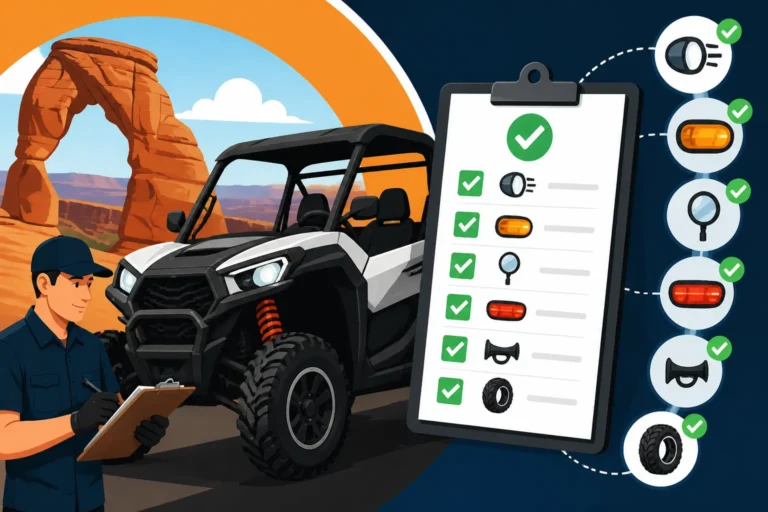
At the state level, the process of making your ATV or UTV street-legal involves ensuring your machine meets a comprehensive list of equipment requirements. We’re talking about essentials like headlights and tail lamps, turn signals, mirrors on both sides, a horn, and a windshield or appropriate eye protection. Your machine also needs to meet certain brake and tire standards, and you’ll definitely need a license plate properly mounted and illuminated. The idea here is to make your off-road machine behave like a regular street-legal vehicle when it’s on a public road, ensuring visibility and safety for everyone. You’ll typically undergo a safety inspection to confirm all these components are in place and functioning correctly. For many, this conversion is a game-changer, opening up access to trails that were previously cut off by stretches of pavement, or simply allowing them to ride from a campsite or lodging directly to the trailhead. You can read more about the specifics in [Utah Street-Legal ATV Equipment Requirements].
The benefits are clear: imagine riding your side-by-side directly from your garage to the trailhead, or using it to run into a small trail town for supplies. It connects the dots, literally. Companies like SuperATV offer a huge range of parts, from full street-legal kits to individual components like turn signals and horns, making the conversion process much more accessible for riders. However, simply having these parts installed and passing a state inspection is just the first hurdle, especially in a county like Salt Lake.
How Local Ordinances Add Layers of Complexity
Here’s where many riders hit a snag: while the state sets the baseline for what constitutes a “street-legal” OHV, individual counties and municipalities retain the right to impose *additional* restrictions within their own jurisdictions. Think of it like a tiered system: the state says “yes, you can generally do this,” but then local governments can say, “yes, but not *here*, or not *this way*.” This power to add local ordinances is rooted in ensuring public safety, managing traffic flow, and addressing community concerns like noise and congestion.
In Salt Lake County, which encompasses a wide variety of environments from bustling downtown Salt Lake City to quieter suburban neighborhoods and even some semi-rural canyons, these local rules become particularly important. A city might decide that, despite your OHV being street-legal statewide, it cannot be operated on roads with speed limits above a certain threshold, or it might be restricted entirely from specific high-traffic commercial districts. They might have stricter noise limits than the state, or specific hours of operation for OHVs on local streets. This creates a patchwork of rules where what's perfectly legal in, say, Marysvale, might land you a ticket just outside your Salt Lake City home. It's a common frustration, but it's crucial for riders to be aware of these local overlays. This is why checking [City and County OHV Rules Across Utah] is always a good idea, as it highlights the need to look beyond just the state statutes.
Specific OHV Restrictions in Salt Lake County
Salt Lake County’s diverse landscape means its OHV restrictions are not uniform. What applies in downtown Salt Lake City will be different from Cottonwood Heights, or even further out in Herriman. This variability is precisely what makes it so easy for riders to miss crucial details.
Road Classifications and Access Limits
One of the most significant areas of confusion revolves around specific road classifications and where street-legal OHVs are permitted. Utah state law generally allows street-legal OHVs on public roads with a posted speed limit of 50 mph or less, and not on interstate highways. However, local ordinances in Salt Lake County can—and often do—further limit this. For example, many cities within the county may restrict OHV access on particular arterial roads, even if those roads technically fall under the 50 mph state guideline.
Imagine you're trying to ride from your home in Sandy across a main thoroughfare to get to a different neighborhood. While that main road might be 45 mph, a specific city ordinance for Sandy might prohibit OHVs on that particular stretch due to heavy traffic, school zones, or commercial density. These aren't always intuitively obvious. You might see other vehicles, and your UTV is street-legal, so why not you? But the local rule creates an invisible barrier. It's not just about speed limits; it's about the type of road, its function, and the local government's assessment of safety and traffic impact. These restrictions can vary block by block, making it imperative to consult local city codes directly, especially if you plan to operate your machine beyond simply crossing a street. Don't assume that because a state highway is 50 mph, it's open season for OHVs; sometimes even state routes passing through municipalities have local exceptions. [Where Street-Legal ATVs Can Drive in Utah] covers the general state guidelines, but Salt Lake County adds its own flavor to this.
Noise Ordinances and Their Impact
Noise is a particularly sensitive issue in urban and suburban environments, and Salt Lake County’s municipalities are no exception. While Utah has state-level noise limits for OHVs (often related to muffler requirements and spark arrestors), local cities can, and frequently do, enforce stricter sound regulations. These local ordinances are usually designed to protect residential areas from excessive noise, especially during evening and nighttime hours.
Many aftermarket exhaust systems, while providing a performance boost and a satisfying roar on the trail, can easily exceed urban noise thresholds. What sounds fine out in the desert can be truly disruptive in a quiet suburban street. Riders with modified exhausts might find themselves receiving citations in Salt Lake County, even if their machine passes a general state inspection. Officers in populated areas are often more attuned to noise complaints from residents, and a loud OHV quickly draws attention. It’s not just about what you can hear; it’s about decibel levels measured at specific distances, and some cities might even have specific hours when any "excessive" noise, including from OHVs, is prohibited. If you're using aftermarket parts from companies like SuperATV, it's worth checking if they offer any "quiet core" inserts or street-legal compliant exhaust options designed to keep noise levels down, not just for the law, but for the sake of good neighborly relations. Ignoring these can lead to fines and, just as importantly, can give local communities more reasons to push for even stricter OHV bans. For a comparison of general noise regulations, [Moab's Noise Ordinance and What It Measures] highlights how even popular OHV destinations manage this issue.
Speed Limits Within Municipalities
While the state’s 50 mph speed limit is a broad guideline, many cities and towns within Salt Lake County have much lower speed limits on their local streets, often 25 or 35 mph, and sometimes as low as 15 mph in specific zones or downtown areas. The critical point here is not just that your OHV must obey the posted speed limit, but that the overall character of these lower-speed roads can change the dynamic of OHV operation.
Riding a powerful side-by-side at 25 mph through a residential street where kids are playing or people are walking dogs can feel very different, and potentially be perceived as more intrusive, than operating the same machine on a rural county road. Even if you're meticulously following the speed limit, the sheer presence and distinct sound of an OHV can draw attention from residents and law enforcement. Moreover, some local ordinances might explicitly state that OHVs cannot exceed a certain speed anywhere within city limits, regardless of the posted speed limit for other vehicles. This isn't common, but it's a possibility that underscores the need for local research. Always assume the lowest possible speed limit until you verify otherwise, especially when navigating residential or commercial zones. It’s better to be overly cautious than to find yourself explaining why you thought a 35 mph zone was appropriate for your UTV when a local rule says otherwise. [Utah Traffic Rules for Street-Legal Side-by-Sides] provides the basic rules of the road that apply, but local cities can tighten them.
Navigating Urban and Suburban Areas with a Street-Legal OHV
Operating a street-legal OHV in the bustling environment of Salt Lake County presents a different set of challenges than cruising open desert trails or connecting remote mountain paths. It requires a heightened awareness of not just the rules, but also the practicalities and perceptions of your machine in a more populated setting.
Designated Routes and Permitted Crossings
Even if your OHV is fully street-legal, many Salt Lake County cities might not grant it carte blanche access to every single road. Instead, some municipalities delineate specific “OHV-friendly” routes or require OHVs to only *cross* certain roads rather than travel *on* them for extended distances. This is a common tactic used by local governments to manage traffic, minimize disruption, and funnel OHV traffic away from sensitive areas like school zones, hospitals, or high-density commercial districts.
For instance, a city might allow OHVs to cross a four-lane arterial road at designated intersections but explicitly prohibit sustained travel along that road. Or, it might permit OHVs on a residential street to access a specific trail system but not for general transportation within the neighborhood. This creates a kind of "invisible maze" for riders. Without checking the local city ordinances or maps provided by the city, you might inadvertently turn onto a prohibited street. It’s not always about signage; sometimes, the absence of signage implies you should know the local rule. This is particularly challenging if you're unfamiliar with a specific city within Salt Lake County. Always seek out local government websites or city planning documents to identify any maps or lists of approved OHV routes within their boundaries. Don't rely solely on what you might see other OHVs doing, as they might also be unknowingly in violation.
Parking and Fueling Challenges
Beyond the act of riding, the practicalities of parking and fueling a street-legal OHV in an urban or suburban setting can also be overlooked. Your side-by-side, even if street-legal, is still larger and often wider than a typical car, and it can be awkward to maneuver and park in standard parking spaces, especially in crowded lots or parallel parking situations.
Finding appropriate parking can be a headache. Will you fit into a compact space? Are you blocking other vehicles or pedestrians? What about the public perception of an OHV parked prominently in front of a store or restaurant? While perfectly legal, it might not always be welcomed. Similarly, fueling up at a busy gas station can present minor inconveniences. The pump design, the flow of traffic, and the size of your machine might make it a more involved process than in a rural, wide-open setting. It's also worth considering how a street-legal machine, often decked out with trail accessories, might draw unwanted attention or scrutiny when left unattended in an urban area. While these aren't legal restrictions, they are practical challenges that impact the overall experience of using your OHV for street use in Salt Lake County. Plan your routes to include less congested gas stations and think about parking options before you arrive at your destination. [Fuel Stops Along the Paiute Loop] talks about planning for gas on trails, but urban fueling is a different beast.
Enforcement and Penalties for Overlooking Restrictions
The consequence of missing these local nuances in Salt Lake County can range from a simple warning to a costly ticket, or even the impoundment of your valuable machine. It’s a risk no rider wants to take, especially when the goal is to enjoy the sport.
Common Violations and Their Consequences
In Salt Lake County, common violations for street-legal OHVs often stem directly from the restrictions we’ve discussed:
* **Operating on a Prohibited Road:** This is perhaps the most frequent. Even if your machine meets all state requirements, if you’re on a city street that has an explicit local ban, you’re in violation. Fines for this can vary significantly but typically start in the hundreds of dollars.
* **Exceeding Local Noise Limits:** As mentioned, aftermarket exhausts can be problematic. A noise citation might come with a fine and a directive to fix the issue, potentially requiring you to revert to a stock or quieter exhaust system.
* **Disregarding Local Speed Limits:** While state law dictates a general 50 mph maximum, cities may have 25 mph zones or other restricted speed areas. Speeding tickets in OHVs carry the same weight as in a car, potentially adding points to your driving record.
* **Operating Without Proper Registration/Decals:** While not unique to Salt Lake County, any lapse in registration or incorrect display of decals (state OHV registration or street-legal plate) will attract attention. This is a fundamental violation. [The Fine for an Expired OHV Registration in Utah] outlines this statewide.
Beyond financial penalties, repeated or severe violations could lead to your machine being impounded, which means towing fees, storage fees, and the hassle of retrieving it, all adding up quickly. Furthermore, a history of violations could lead to more stringent local regulations or even outright bans on OHV use in certain areas, impacting all riders.
How Local Law Enforcement Interprets OHV Laws
One unique challenge in Salt Lake County is the potential for varying interpretations of OHV laws by different law enforcement agencies. Unlike rural areas or designated OHV trail towns where officers might be specialists in OHV law and accustomed to seeing these machines, officers in urban and suburban Salt Lake County often deal primarily with cars, trucks, and motorcycles.
This isn't to say they are uninformed, but their daily encounters with OHVs are less frequent. They might strictly adhere to the letter of the local ordinance, even if it seems overly restrictive to a rider coming from a more permissive area. They might be less familiar with the nuances of state-level OHV laws versus local addendums. This can sometimes lead to a situation where an officer issues a citation based on a local rule that a rider genuinely didn't know existed, or an interpretation that differs from what a rider might expect. It puts the onus squarely on the rider to be fully educated on all applicable laws—state, county, and municipal—before venturing out. When you're stopped, having a clear understanding of the specific rules can help you communicate effectively, but ultimately, the officer's interpretation of the local law will prevail. Always be respectful and cooperative, but be prepared to explain your understanding if necessary, and know that you may need to resolve any disputes through the legal process. [What a Utah Officer Looks for on a Street-Legal ATV] covers general inspection points, but local knowledge is key.
Tips for Salt Lake County OHV Owners
Given the complexities, being prepared is your best defense against unexpected restrictions in Salt Lake County. A little proactive effort can save you a lot of headache and potential fines.
Researching Local Ordinances Before You Ride
This is the single most important piece of advice for any OHV owner planning to operate a street-legal machine in Salt Lake County: **do your homework on the specific municipality you plan to enter.** Salt Lake County is a large, diverse area with many incorporated cities and towns, each with its own set of ordinances. The rules in Salt Lake City proper could be vastly different from those in West Jordan, Draper, or Sandy.
Before you even load up your machine, check the official websites of the city or town you intend to ride in. Look for sections on "City Ordinances," "Motor Vehicle Codes," or "Off-Highway Vehicles." Many cities will have specific maps or lists of approved streets, and equally important, lists of prohibited streets. Don't just assume; verify. Print out or save digital copies of the relevant ordinances to your phone. This information changes, so make it a habit to check periodically, especially if you haven't ridden in a particular area for a while. The effort involved pales in comparison to the cost and frustration of a ticket or impoundment. Your phone can be a powerful tool for this; use it to navigate to city websites and pull up the current code. When you're considering [Riding a UTV in a Utah Neighborhood], this research becomes absolutely critical.
Ensuring Your Machine Meets All Legal Standards
Beyond just knowing the rules, your machine itself needs to be in tip-top shape and compliant with *all* street-legal requirements, both state and local. This means not just having the basic equipment, but ensuring it’s all functional and meets specific standards.
- Lights: Are all your headlights, tail lights, brake lights, and turn signals working? Are they visible from the required distances? Are your headlights aimed correctly?
- Mirrors: Are both mirrors securely mounted and providing adequate rear visibility?
- Horn: Does your horn work and is it loud enough to be heard?
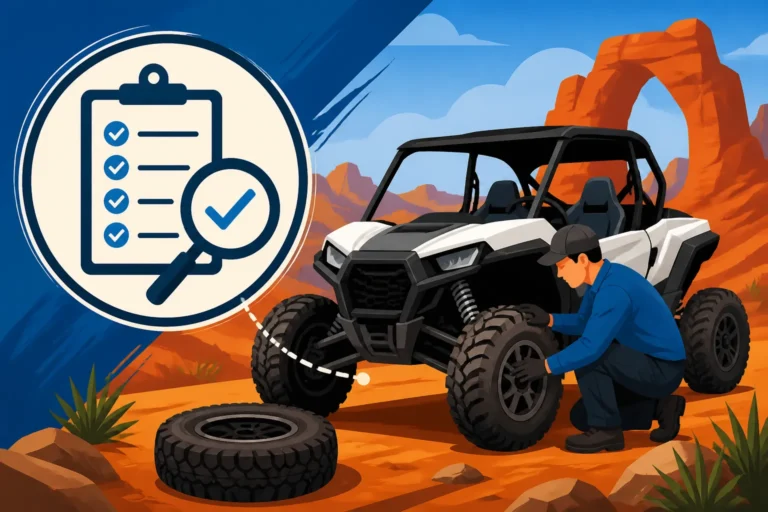
- Tires: Are your tires street-legal? This usually means DOT-approved tires with adequate tread depth, not just aggressive off-road tires. [Tire Rules for Street-Legal Machines] provides more insight.
- Muffler: Does your exhaust system meet state noise standards and any stricter local noise ordinances? This is where aftermarket systems can cause issues. Companies like SuperATV offer a range of products, from full street-legal kits to individual accessories like horns and mirrors, which can help ensure compliance. But it’s up to you to verify that they meet the specifics for Salt Lake County.
- Registration & Insurance: Is your state OHV registration current, and do you have a street-legal license plate displayed correctly? Do you have proof of insurance as required for street-legal operation? [Insurance for a Street-Legal Machine in Utah] is non-negotiable.
Regularly inspect your machine. A pre-ride checklist isn't just for the trails; it's even more important for street use where you interact with other traffic and are under more scrutiny. Don't give law enforcement any easy reasons to pull you over. Making sure your machine is flawlessly compliant gives you confidence and a strong position if you ever have to discuss a local ordinance with an officer. [Street-Legal Kits That Suit Utah's Rules] can give you a starting point for ensuring compliance.
| Feature | Utah State Requirement (General) | Potential Salt Lake County Municipality Restrictions |
|---|---|---|
| Road Access | Roads <= 50 mph speed limit; No interstates | Specific roads/districts prohibited; Designated routes only |
| Noise Levels | State muffler/spark arrestor standards | Stricter decibel limits; Time-of-day restrictions |
| Speed Limits | Obey posted limits (generally <= 50 mph) | May have lower maximum OHV speeds than posted car speeds |
| Equipment | Headlights, tail lights, turn signals, mirrors, horn, windshield | May have additional specific equipment requirements (e.g., mud flaps) |
| Hours of Operation | Generally unrestricted unless local rule exists | Curfew on OHV operation on city streets |
| Parking | Standard vehicle parking rules | May have specific OHV parking prohibitions or areas |
Remember, this table illustrates potential restrictions. Always verify with the specific city's ordinances within Salt Lake County for the most accurate and up-to-date information.
Disclaimer
This article is for general informational purposes only and does not constitute professional advice. Laws, prices and regulations vary by location and change over time. Consult a qualified professional for guidance on your specific situation.