Windshield or Eye Protection in Utah
One of the most common questions and biggest headaches for Utah riders trying to make their off-highway vehicles (OHVs) street legal is figuring out the rules around windshields and eye protection. It’s easy to get confused: Do you have to have a windshield? Can you just wear goggles? What kind of eye protection is actually considered legal? This guide is here to untangle all that jargon, validate your frustrations, and lay out exactly what Utah requires so you can hit the pavement with confidence and stay on the right side of the law.
Understanding Utah's Street-Legal Eye Protection Mandate
When you decide to take your ATV or UTV from the dirt to the street, you're stepping into a whole new world of regulations designed for public road safety. The eye protection rule is a big one, and it's where a lot of riders stumble.
The Core Rule: What Utah Law Says
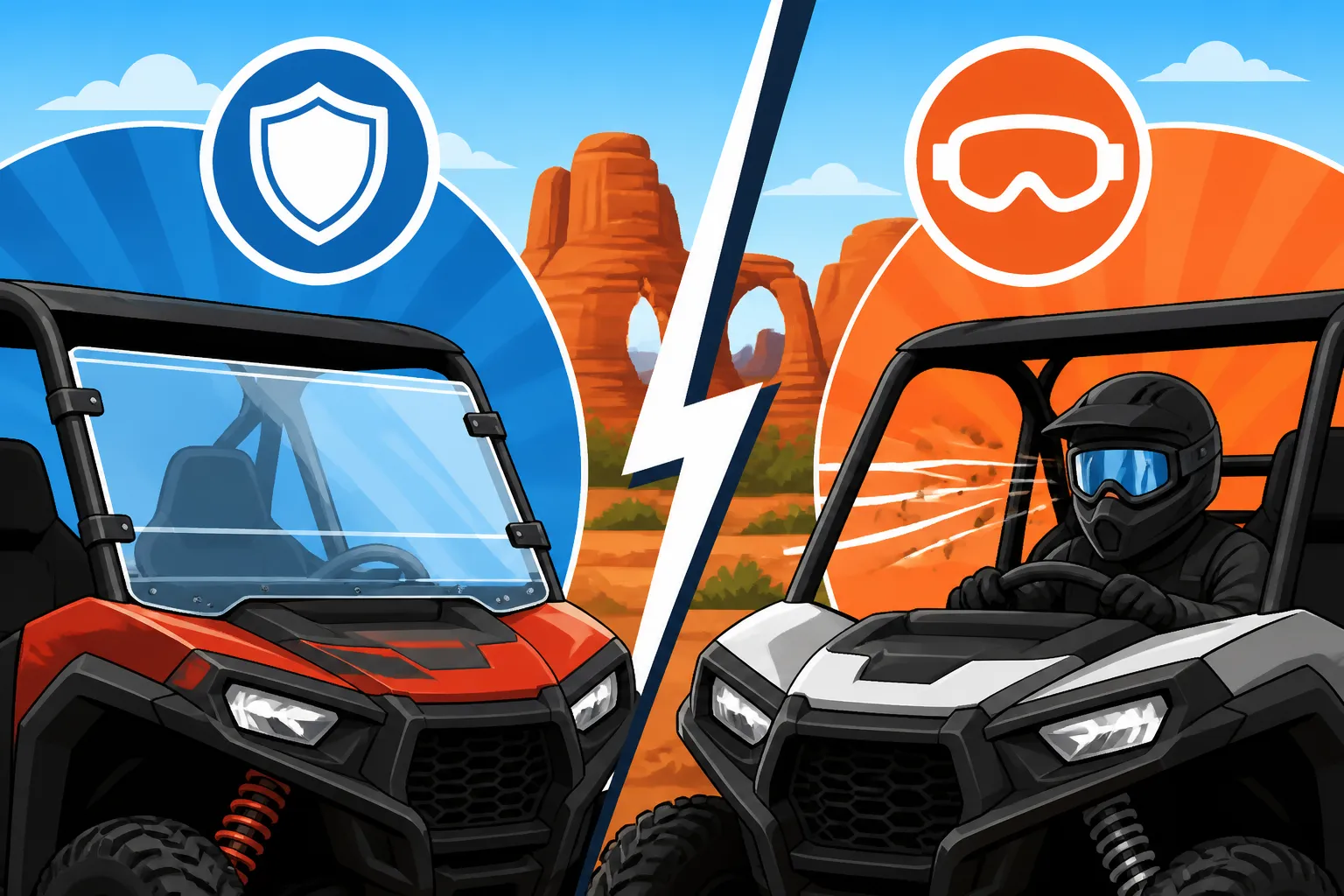
Utah’s laws are pretty specific when it comes to vision on the road, stating that a street-legal OHV must be equipped with either a windshield or the operator (and any passengers) must wear eye protection. It's a simple sentence in the statute, but its implications are far-reaching. The core idea here is safety: protecting your eyes from dust, debris, insects, or anything else that could impair your vision while operating a vehicle at road speeds. Think about it – a stone kicked up by a passing car, or even a determined bee, can become a serious hazard if it hits your eye, especially when you're focusing on traffic. This rule isn't just about avoiding a ticket; it's genuinely about preventing accidents and ensuring you can see clearly at all times.
For instance, imagine you're cruising down a scenic backroad near Kanab, heading towards Coral Pink Sand Dunes. The sun is bright, the wind is kicking up a bit of dust, and suddenly, a truck passes you from the opposite direction, flinging a tiny pebble. If you don't have a windshield or proper eye protection, that small pebble could cause you to flinch, lose control, or worse, suffer an injury that jeopardizes your ability to drive safely. This foundational rule is there to prevent exactly that kind of scenario, ensuring you have an unobstructed and protected field of vision, whether it's through a clear windshield or directly through your choice of eye gear.
When a Windshield is Required vs. When Eye Protection Suffices
This is where the nuance really comes into play. Utah law essentially provides an either/or scenario: a windshield or eye protection. However, there's a critical phrase in the law that often gets overlooked: "if equipped." This means if your OHV has a windshield, that windshield becomes part of the vehicle's required safety equipment for street use. It must be in good, clear condition, free from significant cracks, chips, or obstructions that would impair your view. If you have a windshield that's heavily scratched from years of trail abuse or cracked from an unfortunate incident, it might not pass muster, even if you're also wearing goggles. The presence of a windshield implies it should be functional and safe.
Conversely, if your side-by-side or ATV does not have a factory or aftermarket windshield installed, then the burden falls entirely on you and your passengers to wear approved eye protection. You are not required to install a windshield, but you are absolutely required to protect your eyes if you don't have one. This flexibility is great for riders who love the open-air feel of their machine or who frequently ride in conditions where a windshield might get covered in mud or dust, becoming more of a hindrance than a help. For example, a Polaris RZR owner might prefer to keep their rig open, enjoying the breeze and unobstructed views on the way to the trail, knowing that their dirt bike goggles meet the legal requirement. On the other hand, a Can-Am Defender owner who uses their UTV for both work and play, including some road commuting, might prefer the permanent protection and comfort of a full windshield. The choice is yours, but the safety standard remains.
Defining "Adequate" Eye Protection
So, what exactly counts as "adequate" eye protection in Utah? This isn't the time for your trendy fashion sunglasses that offer minimal coverage or flimsy protection. The spirit of the law implies something that will genuinely protect your eyes from impact and flying debris. While the law doesn't explicitly name ANSI standards, a general rule of thumb among experienced riders and law enforcement is that any eye protection should be shatter-resistant and designed for active use. This usually means motocross goggles, safety glasses (often marked with an ANSI Z87.1 rating), or robust riding glasses.
Your typical casual sunglasses might protect from UV rays, but they likely won't prevent a rock chip from reaching your eye or stay securely on your face during a sudden bump on the road. Prescription eyeglasses, while providing vision correction, are usually not designed for impact protection and may not offer sufficient side coverage. If you wear prescription glasses, it’s highly recommended to wear a pair of safety goggles over them, or invest in prescription safety glasses specifically designed for riding. Imagine riding down a highway at 50 mph – the force of even a small bug hitting your eye can be significant, let alone a piece of gravel. Officers are generally looking for a reasonable effort to protect your eyes. If you’re wearing thin, easily breakable sunglasses, you might find yourself explaining your choice to a Utah Highway Patrol trooper. Prioritize gear that offers a secure fit, good peripheral vision, and genuine impact resistance. [Goggles Instead of a Windshield in Utah] offers more detail on specific types.
The Benefits and Drawbacks of Running a Windshield
Deciding whether to equip your OHV with a windshield for street-legal use involves weighing several factors. There are clear advantages, but also some trade-offs that every rider should consider based on their typical riding conditions and personal preferences.
Advantages of Having a Windshield
The most immediate benefit of a windshield is the comprehensive protection it offers. It acts as a barrier against a multitude of elements you’ll encounter on the road, including dust, bugs, small debris, and weather. When you're driving your side-by-side on a paved road, especially at higher speeds, the amount of wind blast can be tiring. A windshield significantly reduces this, leading to a much more comfortable ride, particularly on longer journeys or when you're just trying to get from your lodging to the trailhead. Imagine driving through the cooler air in the Uinta Mountains, having a full windshield can mean the difference between shivering and staying comfortably warm.
Furthermore, a good windshield provides excellent protection from unexpected rain showers or even light snow, which can be a common occurrence in Utah's diverse climates. This means less gear to worry about, and a cleaner, drier cabin for you and your passengers. Many riders, especially those with UTVs used for utility or touring, find the comfort and protection invaluable. There's a wide variety of windshields available, too: full windshields for maximum protection, half windshields for a balance of protection and airflow, and even vented or flip-up options that offer versatility. Brands like SuperATV offer a fantastic range of aftermarket windshields designed to integrate seamlessly with popular OHV models, providing clear visibility and robust construction for both on-road and off-road durability. This allows riders to customize their level of protection based on their specific needs, from clear polycarbonate to scratch-resistant hard-coat options.
Disadvantages and Considerations for Windshields
While beneficial, windshields do come with their own set of challenges. One of the biggest complaints from riders, especially in dusty Utah conditions, is how quickly a windshield can become obscured. Dust and dirt adhering to the inside and outside can significantly reduce visibility, requiring frequent cleaning. On a long trail ride or a dusty road segment, you might find yourself stopping repeatedly to wipe it down. This issue can be compounded by glare from the sun, making it even harder to see.
Another consideration is cost and installation. A quality aftermarket windshield can be a significant investment, and while many are designed for DIY installation, some may require tools or expertise. Once installed, a windshield needs maintenance to prevent scratches, which can permanently impair visibility. Think about navigating a technical section of Hell's Revenge with a windshield that's been sandblasted and scratched over time; the distortions can make precise wheel placement challenging. While they offer protection from the elements, they can also impact airflow, potentially leading to a hotter cabin in summer months, especially in areas like Moab where temperatures can soar. Many windshields, especially full ones, also eliminate that direct connection to the open air that some riders cherish. It’s a trade-off between comfort and immersion. For more on how these choices affect your machine, you might want to look into [Does a Half Windshield Pass in Utah?] and other equipment requirements.
The Case for Relying Solely on Eye Protection
For many riders, the simplicity and versatility of relying on eye protection alone is the preferred route for street-legal OHV operation. It’s a valid and entirely legal choice, offering a different set of advantages.
When Eye Protection is the Primary Choice
Choosing to forgo a windshield and instead rely on proper eye protection often comes down to a preference for an open-air experience. There’s something undeniably exhilarating about feeling the wind, hearing the sounds of the trail (or road), and having an unobstructed view. For riders who primarily use their OHV for technical rock crawling, mudding, or fast-paced desert riding where clear vision is paramount, a windshield can sometimes be a liability. Mud splatters, dust clouds, and even rain can quickly render a windshield opaque, forcing you to constantly clean it or peer around it. With goggles, you can quickly wipe them clean, or even swap them out for a fresh pair if conditions get too extreme.
This approach is also generally more cost-effective. A high-quality pair of riding goggles or safety glasses is typically far less expensive than a full windshield setup, making it an attractive option for budget-conscious riders. Furthermore, eye protection offers immense flexibility. You can easily switch between different types of lenses (clear for night, tinted for day, amber for low light) or even different styles of goggles depending on the day's weather and riding conditions. This adaptability means you're always optimized for the moment, whether you're transitioning from a sunny desert trail to a shaded mountain road or facing a sudden change in weather.
Selecting the Right Goggles or Glasses
If you're going the eye-protection-only route, selecting the right kind of goggles or glasses is absolutely crucial. As discussed earlier, casual sunglasses typically won't cut it. You need something that offers genuine protection and stability at speed. Look for features like:
- Impact Resistance: This is non-negotiable. ANSI Z87.1 rated safety glasses or goggles are designed to withstand significant impact.
- Secure Fit: Your eye protection should fit snugly and comfortably on your face, without slipping or allowing dust and debris to get in. Many motocross goggles have adjustable straps and foam lining for an excellent seal.
- Peripheral Vision: Ensure the eyewear doesn't obstruct your side vision, which is vital for road safety.
- Ventilation and Anti-Fogging: Especially with goggles, good ventilation is key to prevent fogging, which can be a serious hazard. Anti-fog coatings on lenses are a huge plus.
- Lens Quality: Opt for lenses that are optically clear to prevent distortion, offer UV protection, and are scratch-resistant.
Consider carrying multiple sets if you ride in varying conditions. Clear lenses are essential for night riding, while polarized or tinted lenses are great for bright, sunny days in places like Sand Hollow. For example, a rider heading out for an all-day trip from Marysvale onto the Paiute Trail might start with tinted goggles for the morning sun, but pack a clear pair to swap into for the late afternoon or if they anticipate any dusty, low-light sections. The key is to be prepared and ensure your chosen eye protection offers robust, reliable safeguarding for your vision while driving on public roads.
Practical Implications for Street-Legal Riders in Utah
Making your OHV street legal isn't just about bolting on a few parts; it's about understanding the practical aspects of compliance, especially concerning critical safety items like eye protection.
Meeting Inspection Requirements
When you take your OHV in for a street-legal inspection in Utah, the inspector will meticulously go over various components, and your windshield or eye protection strategy will certainly be on their checklist. If your machine has a windshield, they will be checking its condition. This means looking for large cracks, excessive scratching, or any damage that could obstruct the driver's view. A windshield that's hazy, severely pitted, or has a large crack directly in the line of sight might cause you to fail the inspection. The expectation is that if you've chosen to have a windshield, it must be fully functional as a safety device.
If your OHV does not have a windshield, the inspector won't mark you down for lacking one. Instead, they will confirm that the operator and any passengers are aware of and prepared to meet the eye protection requirement. While they might not ask you to wear goggles during the inspection, they will expect you to confirm you have adequate eye protection available and understand the rule. It's often helpful to have your preferred goggles or safety glasses with you to demonstrate you're prepared. This is just one step in the process, as detailed in [Utah's Street-Legal ATV Inspection, Step by Step]. Understanding what an inspector is looking for can save you a lot of time and hassle.
Carrying Eye Protection as a Backup
Even if your OHV is equipped with a pristine, state-of-the-art windshield, it's always a smart move to carry a pair of reliable riding goggles or safety glasses as a backup. Why? Because the unexpected happens. A rock could fly up and crack your windshield mid-ride, or heavy mud on a quick detour through a county road might render it unusable. If your primary windshield becomes compromised and you don't have alternative eye protection, you're suddenly out of compliance and potentially in a dangerous situation.
Consider this scenario: You're driving your street-legal UTV on a gravel section of highway, and a semi-truck throws up a rock that spiderwebs your full windshield. Now what? If you have a pair of goggles stashed away in a cargo box, you can simply don them and continue your journey legally and safely. Without them, you'd be forced to either stop riding on public roads or risk a citation and compromised safety. This small addition to your gear can be a real lifesaver, ensuring you can maintain compliance and safety no matter what unforeseen events occur on your trip. It's like carrying a spare tire – you hope you never need it, but you're grateful when you do.
Passenger Considerations for Eye Protection
It's absolutely vital to remember that the eye protection rule applies not just to the operator, but to all passengers in the OHV when on public roads. This is a common oversight, especially for families or groups riding together. Just because you have your goggles on, doesn't mean your buddy in the passenger seat, or your kids in the back, are automatically covered. Each person in the vehicle must either be behind a functional windshield or wearing appropriate eye protection.
Imagine you're taking your family out for a scenic drive on the roads around St. George, transitioning between trailheads. You've got your goggles, but your kids in the back are just wearing their regular sunglasses. If pulled over, you could be cited for your passengers not having proper eye protection. This rule is designed for everyone's safety, preventing potential injuries for all occupants. So, before you head out, do a quick check to ensure everyone in your party is compliant. This includes equipping your passengers with age-appropriate and correctly fitting eye protection. For more on safety for all occupants, check out [Passengers and Seat Belts on Utah Roads].
Choosing What's Best for Your Riding Style
Ultimately, the decision to run with a windshield or rely solely on eye protection comes down to your personal riding style and the types of adventures you pursue.
- For mostly road-oriented use, touring, or colder weather riding: A full or half windshield offers superior comfort and protection from wind, debris, and weather. It's like being in a convertible, but with the added utility of an OHV. Many riders who commute short distances or frequently use their UTVs for errands in town find a windshield invaluable.
- For aggressive trail riding, mudding, or hot weather: Relying on robust goggles provides maximum airflow, easy cleaning, and an unobstructed field of view in challenging conditions where a windshield might quickly become a liability. Riders who love to tackle the technical trails of Moab or the dusty dunes of Little Sahara often prefer the freedom of no windshield.
- For a mix of both: Many riders opt for a removable or flip-up windshield. This gives them the best of both worlds, allowing them to enjoy the protection on the road and easily remove or adjust it for intense off-road sections.
Consider your primary use case. If you're frequently hitting speeds on highways or enjoying long cruising drives, a windshield offers significant comfort. If your street-legal status is mostly to connect trails or cross short sections of pavement, then quality eye protection might be all you need and prefer. Balancing comfort, safety, and legal compliance with your personal riding enjoyment is the goal.
Common Mistakes and Misconceptions
It's easy to misunderstand nuances in the law, especially when it comes to something as seemingly simple as eye protection. Clearing up these common mistakes can save you from a frustrating encounter with law enforcement or, more importantly, from potential injury.
Thinking Sunglasses are Always Enough
This is perhaps the most frequent misconception. Many riders assume that any pair of sunglasses, because they shield the eyes from the sun, will satisfy Utah’s street-legal eye protection requirement. This is a dangerous assumption. While some very robust, full-wrap sunglasses might offer sufficient protection, the vast majority of everyday sunglasses are simply not designed for the impact resistance or secure fit needed for operating an OHV on public roads.
Regular sunglasses can easily fly off your face during a bump or sudden stop, leaving your eyes exposed. They often lack side protection, allowing dust and debris to enter from the periphery. More critically, they are usually not shatter-resistant, meaning a small stone or bug could break the lens, potentially causing more damage than if you had no eye protection at all. Law enforcement officers are looking for protection that is genuinely effective against hazards encountered on the road. If your sunglasses look flimsy or insufficient, you risk being cited. Always opt for eyewear specifically designed for riding, like safety glasses or goggles that meet or exceed relevant safety standards for impact resistance.
Forgetting Eye Protection on Short Trips
"I'm just going to the gas station," or "It's only two blocks to the trailhead, I don't need my goggles for that." These are common thoughts, but they represent a significant legal and safety risk. The requirement for a windshield or eye protection applies any time your street-legal OHV is being operated on a public road in Utah, regardless of how short the distance or how slow you plan to go. A quick run to the store or a short hop across town to connect to another trail is still subject to the same rules as a long highway cruise.
The risk of an incident, though statistically lower on very short trips, is never zero. An unexpected stop, a sudden gust of wind, or a passing vehicle could still kick up debris. Law enforcement doesn't differentiate between a five-mile journey and a 50-yard hop when it comes to safety equipment. You need to be compliant from the moment you put your tires on public pavement. Make it a habit: if you're not behind a functional windshield, put on your eye protection before you start the engine on a public road. Consistency is key to staying safe and legal. For similar reminders, consider the advice in [Riding Through Town to the Trailhead in Utah].
The "If I Had One" Trap for Windshields
Earlier, we discussed that if your OHV is equipped with a windshield, it must be functional. The mistake here is thinking, "Well, the law says 'windshield or eye protection,' so even if my windshield is broken, I'll just wear goggles." While wearing goggles is certainly safer than having a broken windshield and no eye protection, a heavily damaged, cracked, or severely obscured windshield might still be considered a violation.
If the windshield is present but in a condition that significantly impairs your visibility or could shatter further, it might be deemed an unsafe piece of equipment that should either be repaired, replaced, or removed entirely. An inspector or officer might argue that the presence of a broken windshield itself creates a hazard, regardless of your goggles. So, if you've got a windshield, keep it in good repair. If it's too far gone, consider replacing it (many quality options are available from brands like SuperATV), or remove it completely and commit to always wearing proper eye protection. Don't fall into the trap of thinking a damaged windshield can simply be ignored because you have goggles.
Here's a quick comparison of common options for vision protection:
| Feature | Full Windshield | Half Windshield | Riding Goggles (e.g., Motocross) | Safety Glasses (ANSI Z87.1) |
|---|---|---|---|---|
| Protection | Excellent against wind, debris, weather | Good against wind/debris; some weather protection | Excellent against debris, wind | Good against direct impact; limited periphery |
| Visibility | Clear (if clean); prone to dust/glare | Good; improved airflow; less dust accumulation | Excellent; wide field of view; anti-fog options | Good; minimal obstruction |
| Comfort | High (reduced wind blast, warmer) | Moderate (good airflow, some wind protection) | Moderate (can feel bulky, some pressure) | High (lightweight, familiar feel) |
| Cost | High (initial purchase, installation) | Moderate | Low to Moderate | Low |
| Legal Status | Compliant (if functional/clear) | Compliant (if functional/clear) | Compliant | Compliant |
| Maintenance | Regular cleaning; prone to scratches | Regular cleaning; less prone to full obscuring | Regular cleaning; lens replacement | Occasional cleaning; scratch-resistant options |
| Best For | Touring, cold weather, road commuting | Mixed use, riders wanting more airflow | Technical off-road, dusty conditions, max protection | Casual street riding, combined with helmet |
No matter your choice, the ultimate goal is safe, legal, and enjoyable riding on Utah's fantastic roads and trails. By understanding and adhering to these requirements, you ensure that your adventures are memorable for all the right reasons.
Disclaimer
This article is for general informational purposes only and does not constitute professional advice. Laws, prices and regulations vary by location and change over time. Consult a qualified professional for guidance on your specific situation.