What to Check on Dealer Paperwork Before Driving Off
That moment you're about to drive off with your shiny new ATV or UTV from the dealership is absolutely exhilarating. The engine is purring (or humming, if it's electric!), the trails are calling, and all you want to do is hit the dirt. But hold your horses for just a minute! Many riders, in their excitement, rush through the final paperwork, only to find themselves stuck later with registration headaches or unexpected fees. This guide is here to walk you through exactly what crucial documents to scrutinize and what questions to ask before you leave the lot, ensuring your off-road adventures start on the right foot.
The Foundation: Your Bill of Sale and Purchase Agreement
Let's face it, after hours of negotiating and picking out the perfect machine, the last thing you want to do is pore over dense legal documents. But trust me, your bill of sale and purchase agreement are the absolute bedrock of your ownership. These aren't just pieces of paper; they are your legal proof of purchase and outline every single detail of the transaction. Skipping over them can lead to a world of frustration down the line, from disputes over pricing to issues proving you even own the machine.
Confirming the Details of Your Machine
First and foremost, you need to make sure the paperwork accurately describes the ATV or UTV you're taking home. It sounds obvious, but mistakes happen, and it's much easier to fix them at the dealership than trying to sort it out weeks later.
Take a good look at the vehicle description on your bill of sale. Does it list the correct make, model, and year? Is the color accurate? While color might seem minor, it can be a point of confusion. Most critically, verify the Vehicle Identification Number (VIN). This 17-character code is unique to your machine, just like a fingerprint. Double-check that the VIN on the paperwork matches the VIN stamped on the machine itself, which is usually found on the frame near the front suspension or under the seat. A mismatch here could prevent you from registering your OHV with the Utah Division of Motor Vehicles (DMV) and cause serious headaches with law enforcement if you're ever stopped. It’s a simple check that can save you immense trouble, so don't skip it.
Verifying the Purchase Price and Fees
This is where many buyers feel a little lost, especially with all the various lines and charges. Your purchase agreement or buyer's order should clearly lay out the price of the OHV itself, any optional accessories you added, and all the taxes and fees. Don't be shy about asking for an explanation of every line item if you don't understand it.
Look specifically for the sales tax amount. In Utah, you'll generally pay sales tax on the purchase of an ATV or UTV, even from a dealer. Then there's the uniform fee, which is an age-based annual fee that contributes to OHV programs in the state. [Utah ATV Sales Tax and Uniform Fees] breaks down how these are calculated. Make sure these figures align with what you discussed and expected. Also, inquire about any "dealer prep," "document," or "shipping" fees. While some of these might be legitimate, ensure they were disclosed upfront and seem reasonable. Sometimes, dealers will include a "registration service" fee, which means they'll handle the initial paperwork with the DMV for you. Understand exactly what this service covers and whether it’s optional.
Understanding Financing Terms
If you're financing your ATV or UTV, the purchase agreement will also detail the terms of your loan. This section is incredibly important and often gets skimmed over. Confirm the principal loan amount, which should be the total purchase price minus your down payment. Look at the interest rate (APR) and ensure it matches what you were quoted and approved for.
Then, examine the loan term – how many months you'll be making payments – and the exact monthly payment amount. Pay attention to any penalties for late payments or early payoff options. You should also be given a copy of the financing agreement separately, which will contain even more detailed legal language. If anything looks different from what you understood, speak up immediately. A small discrepancy now could mean hundreds or even thousands of dollars over the life of your loan. Don't leave the dealership until you're completely clear and comfortable with your financing terms. If you're looking for resources to understand common legal contract language, some riders find platforms like LawDepot helpful for reviewing general legal document templates, which can give you a better grasp of what to look for in your financing agreement.
Title and Registration Documents: The Keys to Legal Ownership
Beyond the purchase agreement, the documents related to your OHV's title and registration are perhaps the most critical. These are the papers that prove you legally own the machine and allow you to ride it on designated public lands in Utah. Without them, you're essentially riding an expensive paperweight.
The Manufacturer's Certificate of Origin (MCO)
For a brand-new ATV or UTV, the dealer should provide you with the Manufacturer's Certificate of Origin, often abbreviated as MCO or MSO (Manufacturer's Statement of Origin). This is like the birth certificate for your vehicle. It states that the manufacturer built the machine and that it's being transferred to you, the first owner.
The MCO is absolutely essential for titling your OHV in Utah. [Utah ATV Title Requirements Explained] goes into depth about why this document is so vital. Ensure your name and address are correctly listed as the purchaser on the MCO. Check that the VIN on the MCO matches the machine's VIN and your bill of sale. Without a properly executed MCO, the Utah DMV cannot issue you a title, which means you can't register your machine. If the dealer tells you the MCO will be mailed to you later, get that in writing, along with a clear timeline. Ideally, you want to leave with it in hand or have a very firm understanding of its delivery.
Temporary Permits and Initial Registration
Once you’ve bought your new machine, you can’t just hit the trails immediately unless it's already registered. Most dealers in Utah can issue you a temporary permit. This permit allows you to legally operate your newly purchased OHV for a short period while you complete the permanent registration process with the DMV.
Make sure you receive a temporary permit if the dealer isn't handling the full registration for you right away. Verify the effective dates on the permit to know how long you have before you need the permanent registration and decal. [Temporary Permits for a Newly Bought UTV] explains what these permits cover. If the dealer promises to mail you your permanent registration and decal, get a clear understanding of when that will happen. Some dealers offer a service where they handle the full registration process, submitting all paperwork to the DMV on your behalf. This can be a huge convenience, but ensure you receive proof of their submission and a clear timeline for receiving your permanent decal. Always ask for a copy of all submitted documents for your records.
Sales Tax Exemption Forms (If Applicable)
In specific scenarios, you might be exempt from paying Utah sales tax on your OHV purchase. This usually applies to certain agricultural uses or if you're a non-resident purchasing the machine solely for use out-of-state and meet strict criteria.
If you believe you qualify for a sales tax exemption, ensure the dealer has correctly filled out and provided you with the necessary exemption forms. These forms often require specific information about your intended use or residency. Without these forms, you could be liable for the sales tax later. It's crucial to understand the rules around these exemptions because incorrectly claiming one can lead to fines or penalties. Always confirm with the dealer and, if in doubt, consult the Utah State Tax Commission's guidelines.
The Dealer's Responsibilities and Your Final Checklist
The dealer has a responsibility to provide you with all the necessary documentation and ensure the transaction is smooth and legal. However, it's ultimately up to you to verify everything before you drive off. A quick double-check now can save you countless hours of headaches later.
What the Dealer Must Provide
Beyond the MCO and temporary permits, the dealer should also provide you with a copy of everything you signed. This includes the final purchase agreement, any financing documents, and often, an odometer disclosure statement (even though OHVs don't typically have odometers, it's a standard form).
A clear, legible copy of your bill of sale is paramount. This document serves as your proof that you bought the machine and that the sales transaction occurred. It's your initial defense against any future disputes. You can also refer to resources like LawDepot for examples of what a comprehensive bill of sale should contain, which can help you identify if anything is missing from your dealer's document. Additionally, if you traded in a machine, you should receive paperwork confirming the trade-in value and that ownership of your old machine has transferred to the dealer. This is especially important for liability reasons. For a comprehensive overview, [What a Utah Dealer Hands You at Delivery] provides a great checklist of what you should expect.
A Quick Check Before Driving Off
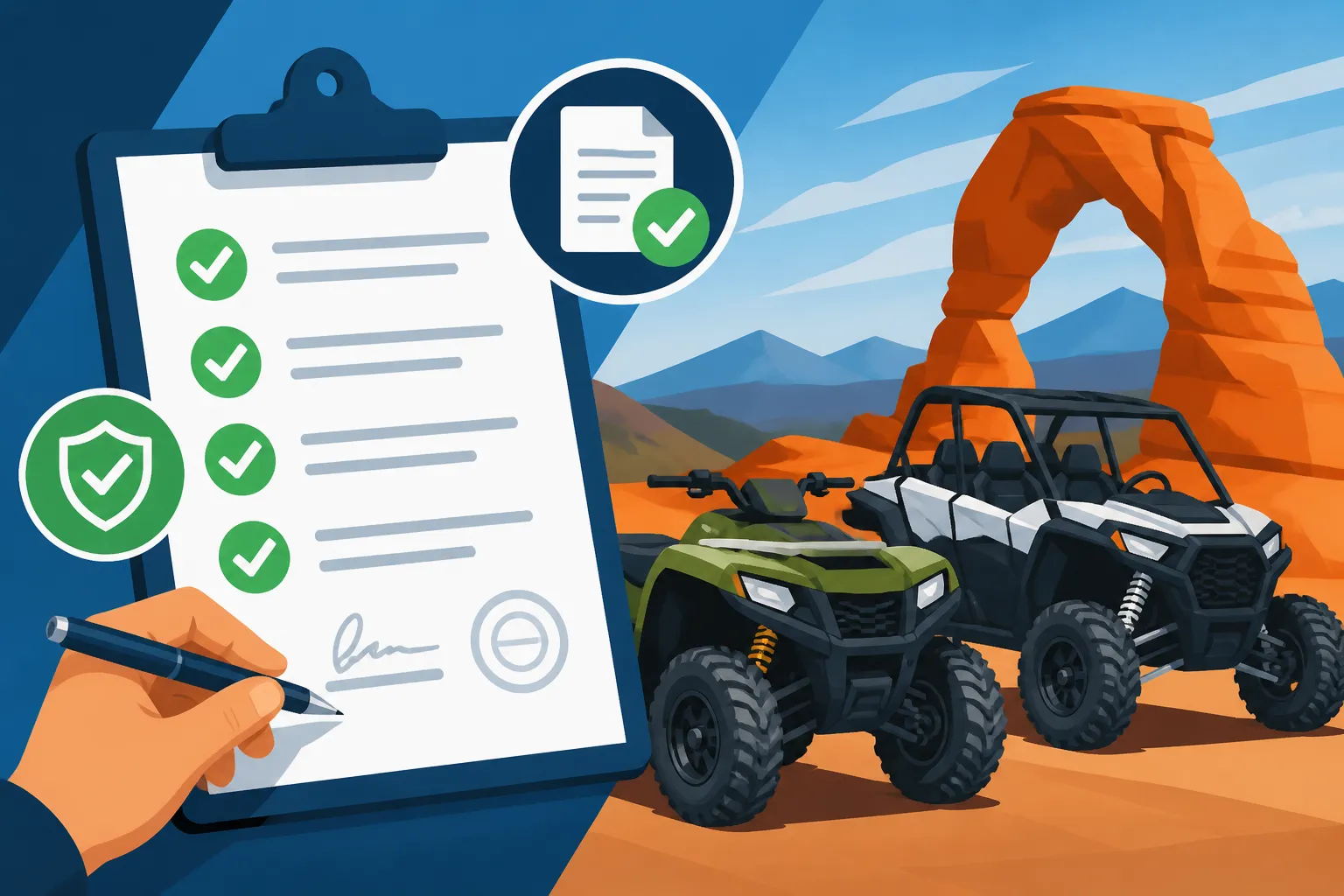
Before you even think about loading up your new machine, perform this rapid checklist. It might seem like overkill, but trust me, it’s worth the extra five minutes.
| Document / Item | What to Check | Why it Matters |
|---|---|---|
| Bill of Sale | Correct VIN, make, model, year. Your name & address. Final price. All fees itemized. Dealer signature. | Proof of ownership, critical for registration, and confirms agreed-upon costs. |
| Manufacturer's Cert. of Origin (MCO) | Correct VIN, make, model, year. Your name & address as purchaser. Dealer signature. New status. | Required to get your Utah title. Without it, you cannot legally title or register a new OHV. |
| Temporary Permit | Correct VIN. Valid dates. Clearly displayed. | Allows legal riding until permanent registration is processed. Avoids tickets. |
| Financing Agreement | Principal amount, interest rate (APR), monthly payment, loan term. Your signature. | Ensures you understand your financial commitment and agreed-upon loan terms. |
| All Signed Copies | You should have a copy of every single document you signed. | Your legal record of the transaction. Essential for disputes or reference. |
| Physical OHV Match | VIN on paperwork matches VIN on machine. Correct accessories installed. | Confirms you're taking the correct machine home; crucial for registration. |
If anything on this list doesn't match up or if you feel uneasy about any part of the paperwork, speak to the finance manager or sales manager before you leave. It is always easier to correct mistakes at the dealership when all parties are present. Don't let the excitement overshadow your diligence! This initial diligence sets the stage for a smooth registration process, as detailed in [The Order to Do Utah OHV Paperwork In].
What to Do If There's a Mistake
Let's say you're home, admiring your new ride, and you notice a typo on the MCO or a missing signature on the bill of sale. Don't panic, but act quickly. The first step is to contact the dealership immediately. Explain the issue clearly and politely, and have all your paperwork in front of you.
Often, minor errors can be corrected by mail or email, but sometimes you might need to return to the dealership to sign new documents or get a corrected MCO. If the dealer is unresponsive or uncooperative, document all your communication attempts. Keep emails, notes of phone calls, and any other correspondence. If you're struggling to get a resolution, you might need to contact the Utah Division of Motor Vehicles or even the manufacturer. In extreme cases, consumer protection agencies or legal counsel might be necessary, but usually, a reputable dealer will want to resolve issues quickly to maintain their reputation. Just remember, the sooner you address it, the easier it typically is to fix. Getting things right from the start means you can focus on enjoying your machine and getting it registered quickly, so you can worry less about [What a Utah Trooper Checks at a Trailhead].
Remember, buying an ATV or UTV should be a fun and exciting experience. By taking a few extra minutes to review your dealer paperwork thoroughly, you'll save yourself potential headaches down the road and ensure your ride is legal and ready for all the amazing trails Utah has to offer!
Disclaimer
This article is for general informational purposes only and does not constitute professional advice. Laws, prices and regulations vary by location and change over time. Consult a qualified professional for guidance on your specific situation.