Registering an ATV Built From Two Machines
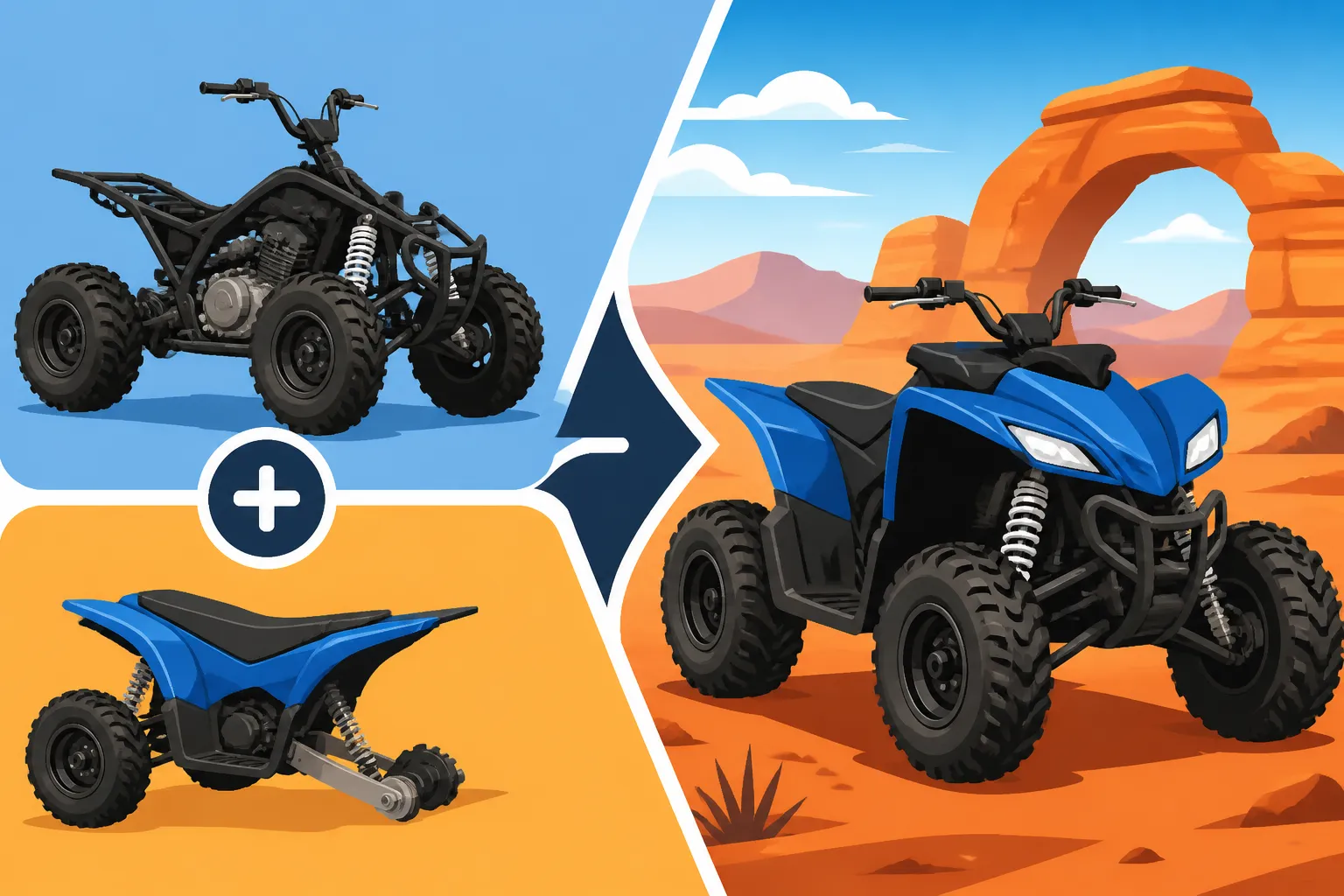
So, you've got a vision, a dream of taking the best bits from two different ATVs or UTVs and creating one ultimate trail machine. Maybe one had a killer engine but a busted frame, and the other a solid chassis but a dead motor. It's a smart, resourceful way to get back on the trails without buying brand new, but when it comes to registering that unique, custom-built beast in Utah, you might feel like you're entering a whole new dimension of paperwork. This guide is here to walk you through the often-confusing process of getting your Frankenstein-machine legally registered in the Beehive State, validating every weld, every bolt, and every document you'll need.
Understanding the Utah DMV's Stance on "Franken-Machines"
When you start blending parts from two different machines, you’re not just doing a repair; you're essentially creating a new identity for your off-highway vehicle (OHV). The Utah Division of Motor Vehicles (DMV) has a very specific way of looking at these kinds of builds, and it’s a bit different from simply registering a factory-new or even a used, unmodified machine. It requires a lot more diligence on your part to prove ownership and the legitimate origin of all the major components.
Why This Process Is Different From Standard Registration
Normally, when you register an ATV or UTV, the process is fairly straightforward: you present a title or a Manufacturer’s Statement of Origin (MSO), perhaps a bill of sale, and proof of identification, pay your fees, and off you go. But when you’ve combined two machines, there isn't one clean title that perfectly matches your new creation. The DMV needs to establish a clear chain of ownership for the primary components – usually the frame and the engine – to ensure the machine isn't made from stolen parts and that all proper taxes and fees have been handled previously. This extra layer of scrutiny protects both you and the public. You’re essentially asking the state to acknowledge a new vehicle, even if it’s comprised of older parts.
The Core Challenge: Proving Ownership and Origin
The biggest hurdle you'll face is proving that you legally own all the donor machines or their significant parts. It's not enough to say you bought a frame from one person and an engine from another. You need documentation. Think of it like a detective building a case: every part needs an alibi, a paper trail. If you don't have titles or detailed bills of sale for both original machines, or at least for the main components you're using, you're going to hit a wall. This is where meticulous record-keeping comes into play, and where a good template for a bill of sale, perhaps one you can find on sites like LawDepot, becomes invaluable, even for parts sales. Don't skimp on this step; incomplete paperwork here will cause major headaches later.
When a Machine is Considered "Built" Rather Than "Repaired"
This is a crucial distinction. If you simply replace an engine in an ATV using the original frame and its existing VIN, that's generally considered a repair, and you just carry on with your current registration. However, if you're taking a frame from one machine and an engine from another, especially if you're using a frame that didn't have a clear title or was heavily damaged, Utah might consider it a "reconstructed" or "assembled" vehicle. The key is often which VIN you're using as the primary identifier. If you're building around a frame that retains a clear, legible VIN from a titled machine, that VIN typically becomes the identity of your new creation. If you're starting from scratch with a frame that has no VIN or a salvaged VIN, the process becomes even more involved, potentially requiring the assignment of a new VIN by the state. This usually happens when the frame and engine come from two different vehicles that each had their own unique VIN.
Essential Paperwork: What You'll Need to Gather
Getting your custom-built ATV or UTV registered in Utah is largely about the paper trail. The more thoroughly you can document every component and every transaction, the smoother your experience at the DMV will be. This isn't the time to be casual about receipts or handshake deals.
Titles and Bills of Sale for Each Donor Machine
This is the absolute bedrock of your application. You'll need the original titles, or at least very comprehensive bills of sale, for both the machine donating the primary frame (the one whose VIN you intend to use as the identity of your new build) and the machine donating the engine. If you're building a machine from two previously titled vehicles, you need proof of ownership for both. If you acquired one of the donor machines without a title, perhaps it was a very old model or a parts machine, you’ll need a detailed bill of sale from the previous owner, ideally notarized, that clearly states the VIN and the parts being sold. For older machines, sometimes titles simply get lost over time. In those cases, having a strong bill of sale from a reputable seller, and even a statement that no title was issued or that it's lost, can help. Websites like LawDepot offer templates for bills of sale that can ensure you capture all the necessary information, even for parts-only transactions. This paperwork helps confirm that neither machine was stolen and that all prior ownership transfers were legitimate. [No Title From the Seller: What Utah Requires] offers more insight into these situations.
The Importance of a Detailed Bill of Materials/Parts List
Beyond the titles, you should create a comprehensive "bill of materials" for your new build. This document lists every major component you've used – frame, engine, transmission, axles, suspension, bodywork, etc. – and ideally notes its origin and any associated serial numbers. While the DMV might not scrutinize every single nut and bolt, they'll certainly want to see where the big, identifiable parts came from. If you sourced some parts new, keep those receipts. If you pulled parts from a third, non-titled machine, include a description and any available identification numbers. This document demonstrates transparency and helps the DMV understand exactly what you've put together. It's especially helpful if questions arise about the origin of a specific component.
Affidavits and Supporting Documentation
Sometimes, despite your best efforts, you might be missing a perfect piece of paper. Perhaps a title was lost decades ago, or a bill of sale wasn't as detailed as it should have been. In these instances, the DMV may require affidavits. An affidavit is a sworn statement, made under oath, confirming certain facts about the machine or its components. For example, if you can't get a title for an engine you bought, an affidavit from the seller stating they were the owner and that the engine wasn't stolen could be required. You might also include photos of the build process, especially if it shows the original VINs on the donor frames before they were stripped or modified. Any documentation that supports your claim of legitimate ownership and the creation of the machine is beneficial. This is where you want to over-prepare rather than under-prepare. The more evidence you have, the smoother the process tends to be.
The VIN Inspection and How It Applies
For any custom-built or significantly reconstructed OHV, a VIN inspection is an absolutely critical step. This isn't just a quick glance; it's a detailed verification process performed by an authorized agent. They're looking for legibility, consistency, and any signs of tampering.
Locating and Verifying the Primary VIN
When you combine two machines, you typically designate one of them to provide the primary Vehicle Identification Number (VIN) for the new creation. This is almost always the VIN on the frame. It needs to be clear, untampered with, and accessible for the inspector. Before you even think about heading to the DMV, physically locate this VIN on your frame. Is it still readable? Is it corroded or obscured by paint? Clean it up if necessary. The inspector will compare this VIN to the documentation you provide (title or bill of sale for that specific donor frame). If the VIN on the frame doesn't match the paperwork, or if it appears to have been altered, you'll have serious problems. You can find more details about this process in [VIN Inspections for Utah ATV Paperwork].
What Happens If You Can't Find a Usable VIN
This is where things can get complicated. If the frame you're using doesn't have a VIN, or if its VIN is illegible, missing, or appears to have been tampered with, you won't be able to simply proceed with registration. In such cases, the Utah DMV may require you to apply for an assigned VIN. This involves a much more extensive inspection and review process. You'll likely need to provide even more robust documentation about the frame's origin and why it doesn't have a usable VIN. The state wants to be absolutely sure that no stolen parts are involved. Sometimes, if a frame is severely damaged and its VIN destroyed, or if it was never designed to have a VIN (e.g., a home-fabricated chassis), you'll go down this route. [Registering a UTV That Was Never Titled Anywhere] can provide some parallel insights into registering a machine without an existing VIN.
The Role of a Certified Inspector
A VIN inspection for a custom build is usually performed by a certified peace officer or a DMV-approved inspector. They are trained to spot irregularities and ensure that the VIN matches the documentation and appears legitimate. They will check for physical tampering, ensure the number is properly affixed, and verify that the number itself corresponds to the vehicle type and year it purports to represent. Don't try to hide anything or make assumptions. Be honest and transparent about the origin of your machine. The inspector's job is to ensure legal compliance, and a clean inspection report is your ticket to moving forward with registration.
Navigating the Utah DMV Process for Custom Builds
Once you have all your paperwork meticulously organized and your VIN inspection passed, it's time to tackle the DMV itself. This part can feel daunting, but with preparation, you can streamline the process significantly.
Presenting Your Case at the DMV
When you arrive at the DMV, be ready to explain your situation clearly and concisely to the clerk. State upfront that you are registering an ATV/UTV built from two machines. Present all your gathered documentation:
- Original titles or detailed bills of sale for both donor machines.
- Your comprehensive bill of materials/parts list.
- The VIN inspection certificate.
- Any affidavits or supporting documents you've prepared.
- Proof of identity.
It’s a good idea to have copies of everything, just in case. The clerk will review all your paperwork. They will focus heavily on the VIN verification and the chain of ownership for the primary components. Be patient, be polite, and be prepared for questions. Having your paperwork organized in a binder or folder, clearly labeled, can make a positive impression and show you're serious about following the rules. This is where sites like LawDepot can assist, not just with a bill of sale, but even with affidavits if needed.
Potential Roadblocks and How to Prepare for Them
Let's be realistic: this isn't always a one-and-done trip. Here are some common roadblocks and how to anticipate them:
- Incomplete Paperwork: The most frequent issue. If a title is missing, or a bill of sale isn't detailed enough, they will send you home. Make sure your [Bill of Sale Requirements for a Utah ATV Sale] are met for all major components.
- Unclear VIN: If the VIN is difficult to read, or if there's any doubt about its authenticity, the inspector or DMV clerk may require further verification or even a re-inspection.
- Lack of Proof of Ownership for All Major Components: Even if you have a title for the frame, if you can't prove legitimate ownership of the engine, you might be stuck.
- Unusual Circumstances: If your build is particularly unique (e.g., a custom-fabricated frame), you might face additional questions or require review by a supervisor.
To prepare, gather even more documentation than you think you'll need. If you suspect an issue with a specific piece of paper, have a backup plan or an explanation ready. Don't be afraid to call the DMV ahead of time or visit their website for specific requirements related to "assembled" or "reconstructed" vehicles. Sometimes, a quick phone call can save you a wasted trip.
Final Steps: Plate, Decals, and Registration
If all your documentation passes muster, congratulations! The DMV will process your registration. You will pay the applicable registration fees, which include the uniform fee and any county fees. They will then issue you a new registration card, an OHV decal, and potentially a new title reflecting your machine's new identity and VIN. Make sure to affix your [Utah OHV Decals and Where They Go] correctly. This official registration makes your custom-built machine fully legal for use on Utah's incredible trail systems. Keep your registration card and any accompanying permits with you whenever you ride, as [What Paperwork Utah Riders Must Carry] is a must.
Here's a quick comparison of the typical registration process versus what you'll encounter for a custom build:
| Feature | Standard OHV Registration | "Built From Two Machines" Registration |
|---|---|---|
| Primary Document | Single title or Manufacturer's Statement of Origin (MSO) | Titles/Bills of Sale for each major donor machine |
| Bill of Sale | Often one, if purchased privately | Multiple, potentially for frame, engine, and other parts |
| VIN Inspection | Often required, but usually straightforward verification | Critical, highly scrutinized, may lead to VIN assignment |
| Proof of Ownership | One clear chain of title | Clear, documented chain for all significant components |
| Complexity | Relatively simple, routine | More complex, requires detailed preparation and explanation |
| DMV Visits | Often one | Potentially multiple, for questions or missing documents |
| Affidavits | Rarely needed | May be required for missing titles or unclear ownership |
| New Title Issue | Transfer of existing title or first-time title | New title issued, recognizing the "assembled" nature |
By understanding these nuances and preparing thoroughly, you can transform your two-part vision into a legally registered, trail-ready reality. Remember, patience and persistence are your best tools at the DMV!
Disclaimer
This article is for general informational purposes only and does not constitute professional advice. Laws, prices and regulations vary by location and change over time. Consult a qualified professional for guidance on your specific situation.